Norada Real Estate Investments

  • Home
  • Markets
  • Properties
  • Membership
  • Podcast
  • Learn
  • About
  • Contact

Mortgage Rates Today, Dec 15: 30-Year Refinance Rate Drops by 3 Basis Points

December 15, 2025 by Marco Santarelli

Mortgage Rates Today, Jan 1, 2026: 30-Year Refinance Rate Rises by 48 Basis Points

On December 15, 2025, the waters of the mortgage market showed a slight ripple of good news for those looking to refinance, as the popular 30-year fixed refinance rate nudged down by 3 basis points to 6.69%, according to data released by Zillow. While this small dip might seem insignificant to some, it’s part of a larger puzzle that homeowners should pay close attention to if they’re considering adjusting their current mortgage.

This change signals a subtle shift, reminding us that even minor movements can impact long-term savings. Today’s mixed signals – with fixed rates easing slightly and adjustable-rate mortgages (ARMs) climbing – highlight the ongoing need for careful consideration and shopping around.

Mortgage Rates Today, Dec 15: 30-Year Refinance Rate Drops by 3 Basis Points

What the Numbers Tell Us Today

Let’s break down the national average refinance rates as of December 15, 2025, based on Zillow's latest figures. It's a mixed bag, which is precisely why I find myself drawn to these updates.

Loan Type Current Rate Change (Basis Points) Previous Rate
30-Year Fixed 6.69% –3 6.72%
15-Year Fixed 5.65% –5 5.70%
5-Year ARM 7.40% +27 7.13%

What strikes me immediately is the difference in direction. The 30-year fixed and 15-year fixed rates are showing modest declines, which is generally welcomed news. However, the 5-year ARM has seen a rather significant jump. This isn't just random fluctuation; it reflects how lenders are pricing risk in different economic scenarios.

Diving Deeper into the Declines and Jumps

We saw the 30-year fixed refinance rate ease by 3 basis points to 6.69%. While this is a step in a positive direction, it’s worth noting that it's just a hair above last week’s average of 6.67%. My take on this? It’s a sign of stability, perhaps, but not yet a major incentive for those who secured rates much lower during the pandemic era. However, for someone holding a rate closer to 7% or higher, that 3-basis-point drop could be the nudge needed to start crunching numbers.

The 15-year fixed refinance rate dipped by 5 basis points to 5.65%. This is a more compelling drop, and it makes the 15-year option even more attractive for those who can manage the higher monthly payments. Refinancing into a shorter term not only saves on interest over the life of the loan but also allows homeowners to pay off their mortgages faster – a goal many aspire to.

On the flip side, the 5-year ARM refinance rate surged by a notable 27 basis points to 7.40%. This sharp increase is a red flag. It suggests lenders are growing more cautious about adjustable-rate products. They might be factoring in the possibility of interest rates continuing to climb or staying higher for longer, and they're pricing that uncertainty into ARMs. For me, this makes fixed-rate loans the more appealing option for many borrowers right now, especially if long-term predictability is a priority.

What This Means for Your Pocketbook

So, what does this mixed movement really mean for you and me as homeowners looking to refinance?

  • Fixed-Rate Stability Offers Predictability: For those seeking a sense of security, the slight dips in fixed rates are encouraging. The 15-year fixed at 5.65% is a particularly strong contender if you're looking to build equity faster and can handle a bit more out of your monthly budget. It’s a strategic move that can save you tens of thousands of dollars in interest over time.
  • ARM Volatility Calls for Caution: The significant jump in ARM rates is a clear signal. While ARMs often start with lower introductory rates, the rapid increase here shows the potential for future cost hikes. If you're considering an ARM, you need to be absolutely sure you can comfortably afford the payments if rates climb significantly after the initial fixed period. Given the current economic climate and lender sentiment, this seems like a riskier proposition for many.
  • Timing Your Move: With fixed rates holding relatively steady or even declining a bit, this could be a good moment to seriously consider refinancing. It's always a balancing act – waiting for rates to drop further versus locking in a rate that’s already favorable before the market potentially shifts again. Based on my experience, if you’re seeing a rate that significantly improves your monthly payment or the total interest paid over the loan's life, it's worth exploring, even if it's not the absolute lowest rate we’ve seen historically.

Recommended Read:

30-Year Fixed Refinance Rate Trends – December 14, 2025

Best Time to Refinance Your Mortgage: Expert Insights

Should You Refinance Your Mortgage Now or Wait Until 2026? 

Understanding the Bigger Picture: Market Context

It’s not just about these daily rate fluctuations. The broader economic environment plays a huge role. We're seeing a marketplace that’s still trying to find its footing.

Recent Activity and Trends paint an interesting story:

  • Surge in Refinance Applications: For the week ending December 5, 2025, Zillow reported a 14% week-over-week jump in refinance applications. Refinancing now makes up about 58% of all mortgage application activity. This tells me that many homeowners are actively seeking better terms, even if the rates aren't at historic lows. They're seeing opportunity.
  • Retention Levels Hit a High: “Servicer refinance retention” has reached its highest point in over three years, at 28%. This means a good chunk of homeowners are refinancing with their current mortgage lender. When rates decline, homeowners often move quickly to lower their monthly payments, and staying with their current servicer can sometimes streamline the process.
  • The “7% Group” is Active: The data suggests that much of the current refinancing activity is being driven by homeowners who originally locked in rates above 7% during 2023 or 2024. Those lucky enough to secure the ultra-low rates from the pandemic era (2–4%) are generally “locked in” and are not finding it financially beneficial to refinance. It’s a tale of two homeowners, really.

Looking Ahead: Short-Term Outlook

There's an expectation of continued volatility. Even though the Federal Reserve made a rate cut in December, mortgage rates actually saw a slight uptick afterward. This was attributed to investor sentiment leaning towards a “higher-for-longer” interest rate environment and technical market pressures.

For 2026 forecasts, experts generally anticipate rates to hover in the low 6% to high 5% range. It seems most economists don't foresee a return to the 3% rates without a significant economic downturn or major shock. This long-term perspective is crucial for strategic planning. Homeowners can use various calculators, like the Bankrate Refinance Calculator, to figure out their break-even point on refinancing costs. Knowing this allows for a more informed decision without just chasing headlines.

My Bottom Line Takeaway

As we wrap up December 15, 2025, the refinance market offers a nuanced picture:

  • 30-Year Fixed: 6.69% (Slightly down, offering stability)
  • 15-Year Fixed: 5.65% (More attractive for faster payoff and savings)
  • 5-Year ARM: 7.40% (Higher risk, significantly more expensive)

From my perspective, the message for homeowners is quite clear: fixed-rate loans continue to be the more predictable and often safer choice in this environment. The sharp rise in ARM rates underscores the potential cost of flexibility. My best advice, honed by years of hearing from homeowners and watching market trends, remains the same: always compare offers from multiple lenders. Don't settle for the first quote you get. Shopping around is the most effective way to ensure you secure the best possible savings on your mortgage.

“Invest Smart — Build Long-Term Wealth Through Real Estate”

Norada's team can guide you through current market dynamics and help you position your investments wisely—whether you're looking to reduce rates, pull out equity, or expand your portfolio.

Work with us to identify proven, cash-flowing markets and diversify your portfolio while borrowing costs remain favorable.

HOT NEW TURNKEY DEALS JUST LISTED!

Speak with a seasoned Norada investment counselor today (No Obligation):

(800) 611-3060

Get Started Now

Recommended Read:

  • When You Refinance a Mortgage Do the 30 Years Start Over?
  • Should You Refinance as Mortgage Rates Reach Lowest Level in Over a Year?
  • NAR Predicts 6% Mortgage Rates in 2025 Will Boost Housing Market
  • Mortgage Rates Predictions for 2025: Expert Forecast
  • Half of Recent Home Buyers Got Mortgage Rates Below 5%
  • Mortgage Rates Need to Drop by 2% Before Buying Spree Begins
  • Will Mortgage Rates Ever Be 3% Again: Future Outlook
  • Mortgage Rates Predictions for Next 2 Years
  • Mortgage Rate Predictions for Next 5 Years
  • Mortgage Rate Predictions for 2025: Expert Forecast

Filed Under: Financing, Mortgage Tagged With: mortgage, mortgage rates, Mortgage Refinance Rates

Today’s Mortgage Rates, December 14: 30-Year FRM at 6.13% Offers Great Buying Window

December 14, 2025 by Marco Santarelli

Today's Mortgage Rates, Jan 7: Stable Rates Continue for Buyers and Refinancers

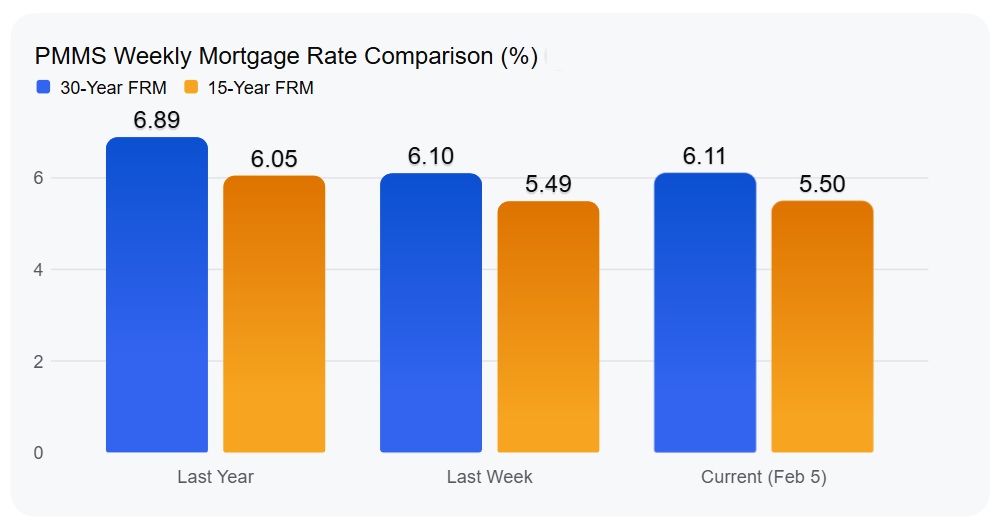
On December 14, 2025, the numbers are clear: the average 30-year fixed mortgage rate is sitting at 6.13%, and for a 15-year fixed mortgage, it's 5.53%. This might not sound like thrilling news, but for anyone in the market for a home or looking to refinance, this stability is actually quite significant. It means the rates you're seeing today are likely very similar to what you would have found a few weeks ago, and that predictability is a rare commodity in the world of home financing.

Today's Mortgage Rates, December 14: 30-Year FRM at 6.13% Offers Great Buying Window

Current Mortgage and Refinance Rates: 

Here's a snapshot of what the rates look like today, according to the data from Zillow. It's important to remember these are national averages, and your specific rate will depend on many factors, including your credit score, down payment, and the type of loan you choose.

Loan Type Current Rate
30-Year Fixed (Purchase) 6.13%
20-Year Fixed (Purchase) 6.08%
15-Year Fixed (Purchase) 5.53%
5/1 ARM (Purchase) 6.24%
7/1 ARM (Purchase) 6.31%
30-Year VA (Purchase) 5.60%
15-Year VA (Purchase) 5.14%
5/1 VA (Purchase) 5.36%

And for those looking to refinance their existing mortgage:

Loan Type Current Rate
30-Year Fixed (Refinance) 6.19%
20-Year Fixed (Refinance) 5.96%
15-Year Fixed (Refinance) 5.60%
5/1 ARM (Refinance) 6.40%
7/1 ARM (Refinance) 6.46%
30-Year VA (Refinance) 5.67%
15-Year VA (Refinance) 5.35%
5/1 VA (Refinance) 5.44%

All figures are national averages, rounded.

Key Observations from the Data

Looking at these numbers, a few things jump out at me:

  • The Stability is Real: The core numbers for the 30-year fixed (6.13%) and 15-year fixed (5.53%) are remarkably steady. This isn't a market that's flipping out over every news headline. Lenders are holding their ground, which suggests they feel confident about the current economic direction, or at least they aren't seeing enough risk to drastically change their pricing.
  • Refinancing is Slightly Pricier: You'll notice that refinance rates, especially on the 30-year fixed (6.19%), are just a bit higher than purchase rates. This is pretty common. Lenders sometimes price in a slight premium for refinances because they represent a different kind of transaction. It’s not a huge difference, but it’s something to be aware of if you’re comparing.
  • VA Loans Remain a Great Deal: My heart always goes out to our veterans and service members. The VA loan rates, particularly the 30-year fixed at 5.60%, continue to be impressively competitive. If you qualify for a VA loan, you are consistently getting a better deal. This is a long-standing benefit, and it's great to see it holding strong.
  • ARMs – A Cautious Approach: The adjustable-rate mortgages (ARMs), like the 5/1 ARM at 6.24% for purchase and 6.40% for refinance, are priced a little higher than their fixed-rate counterparts right now. This signals that lenders are a bit more cautious with ARMs. They know that if interest rates were to tick up, their costs might rise, and they want to be compensated for that potential risk.

What This Means for You, the Borrower

So, what does this all boil down to for someone trying to buy a house or looking to save money by refinancing?

For homebuyers, this stability is a breath of fresh air. It means you can budget with more certainty. The 6.13% 30-year fixed rate is a solid number. It's not the ultra-low rate we saw during the pandemic, but it's also nowhere near the terrifying peaks we experienced not too long ago. This steady rate environment allows you to focus on finding the right home and locking in a predictable monthly payment for decades to come. If you're looking for long-term security, a fixed-rate mortgage is still king.

For homeowners considering refinancing, these rates present a nuanced picture. While the 6.19% for a 30-year refinance isn't a screaming deal, it’s also significantly better than what many homeowners were facing last year. The question you need to ask yourself is: what are your goals? Are you looking to shorten your loan term, tap into your home equity, or simply lower your monthly payment? You need to do the math. Calculate the total closing costs for the refinance and then figure out how long it will take to break even. If you plan to stay in your home for many years, refinancing might still make a lot of sense.

The Bigger Picture: Why Aren't Rates Moving More?

You might be wondering, with all the economic news out there, why aren't mortgage rates doing more? It’s a question I get asked a lot. The Federal Reserve has been making some moves. They recently cut their benchmark federal funds rate for the third time this year, bringing it down to a range of 3.50% to 3.75%. Now, it’s important to understand that mortgage rates don’t directly follow the federal funds rate. Instead, they are more closely tied to longer-term Treasury yields, like the 10-year Treasury bond. Think of it this way: the Fed controls the short-term lending rate, but the market's expectations about the future economy and inflation heavily influence those longer-term rates, which in turn impact your mortgage.

The good news is that the Fed's actions, combined with other economic factors, have helped keep mortgage rates from climbing higher. However, the market had already anticipated these rate cuts. This means that lenders had already started to factor in lower borrowing costs into their mortgage pricing before the Fed even made the official announcement. That's why we didn't see a dramatic plunge in rates immediately after the Fed meetings.

Despite these somewhat more manageable rates, affordability remains a major hurdle for many potential homebuyers. Home prices have still been stubbornly high, and even with rates in the low 6% range, qualifying for a loan and affording a down payment can be incredibly challenging.

On the flip side, this dip has been a real lifeline for homeowners looking to refinance. I’ve seen reports of refinancing applications jumping significantly. It’s allowing people to lower their monthly payments, which is a huge relief for household budgets.

Looking Ahead: What Do the Experts Say for 2026?

The crystal ball for mortgage rates is always a bit cloudy, but there’s a general consensus among housing experts for the near future. The consensus is that rates will likely stay in the low to mid-6% range through the end of 2025 and into 2026.

  • Fannie Mae is forecasting an average rate of 6.0% for 2026, with the possibility of dipping below 6% by the end of the year.
  • The Mortgage Bankers Association (MBA) is a bit more conservative, predicting rates will hold steady around 6.4% throughout 2026.
  • The National Association of Realtors (NAR) also sees rates falling to an average of 6.0% in 2026. They believe this could open the door for an additional 5.5 million qualified homebuyers.

What's the takeaway from these forecasts? While we might see some occasional dips, don't expect a return to the record-low rates we saw during the pandemic anytime soon. Volatility is still part of the game, driven by inflation data, employment numbers, and global economic events.

The Bottom Line: Your Next Steps on December 14, 2025

To sum up, on December 14, 2025, the mortgage and refinance rate environment is characterized by remarkable stability.

  • 30-Year Fixed Mortgage: 6.13%
  • 15-Year Fixed Mortgage: 5.53%
  • 30-Year Fixed Refinance: 6.19%
  • 15-Year Fixed Refinance: 5.60%

This isn't a time for panic or wild speculation. It’s a time for thoughtful action. If you're a buyer, leverage this predictability to get your finances in order and find that perfect home. If you're a homeowner looking to refinance, crunch the numbers carefully. And no matter what, always compare loan offers from multiple lenders. Your future self, and your wallet, will thank you.

Invest in Turnkey Rentals for Smarter Wealth Building

With mortgage rates dipping to their lowest levels in months, savvy investors are seizing the opportunity to lock in financing. By securing favorable terms now, they’re maximizing immediate cash flow while positioning themselves for stronger long‑term returns.

Norada Real Estate helps you seize this rare opportunity with turnkey rental properties in strong markets—so you can build passive income while borrowing costs remain historically low.

🔥 HOT NEW LISTINGS JUST ADDED! 🔥

Talk to a Norada investment counselor today (No Obligation):

(800) 611-3060

Get Started Now

Also Read:

  • Mortgage Rates Predictions Backed by 7 Leading Experts: 2025–2026
  • Mortgage Rate Predictions for the Next 3 Years: 2026, 2027, 2028
  • 30-Year Fixed Mortgage Rate Forecast for the Next 5 Years
  • 15-Year Fixed Mortgage Rate Predictions for Next 5 Years: 2025-2029
  • Will Mortgage Rates Ever Be 3% Again in the Future?
  • Mortgage Rates Predictions for Next 2 Years
  • Mortgage Rate Predictions for Next 5 Years
  • Mortgage Rate Predictions: Why 2% and 3% Rates are Out of Reach
  • How Lower Mortgage Rates Can Save You Thousands?
  • How to Get a Low Mortgage Interest Rate?
  • Will Mortgage Rates Ever Be 4% Again?
Filed Under: Financing, Mortgage Tagged With: Interest Rate, mortgage, Mortgage Rate Trends, mortgage rates, Mortgage Rates Today

Mortgage Rates Today, Dec 14: 30-Year Refinance Rate Rises by 5 Basis Points

December 14, 2025 by Marco Santarelli

Mortgage Rates Today, Jan 1, 2026: 30-Year Refinance Rate Rises by 48 Basis Points

Today, December 14, 2025, homeowners looking to refinance will find that the 30-year fixed refinance rate has held its ground, remaining at 6.73%. After a slight uptick earlier in the week, this stability suggests that lenders are proceeding with careful consideration, and for many, it means a good opportunity to lock in a predictable rate. Today's numbers, as reported by Zillow, show a real sense of steadiness, especially with that 30-year fixed rate holding at 6.73%. This isn't a huge jump or a dramatic drop; it’s more like a firm pause.

Mortgage Rates Today, Dec 14: 30-Year Refinance Rate Rises by 5 Basis Points

What Are Today's Refinance Rates?

Let's break down the national average refinance rates as of Sunday, December 14, 2025:

Loan Type Current Rate Change (Basis Points) Previous Rate
30-Year Fixed 6.73% +5 6.68%
15-Year Fixed 5.71% 0 5.71%
5-Year ARM 7.29% 0 7.29%

As you can see, the 30-year fixed rate saw a small increase of 5 basis points, moving from 6.68% to 6.73%. This is the rate many homeowners are most familiar with, offering long-term predictability. The 15-year fixed rate remained solid at 5.71%, a great option if you're looking to pay off your mortgage faster and save on interest over time. Meanwhile, the 5-year adjustable-rate mortgage (ARM) is sitting at 7.29% and hasn't budged, but ARMs are a different beast altogether, and we'll touch on that later.

Why the Stability? A Look at the Market

It might seem like rates just fluctuate randomly, but there's a lot going on behind the scenes. While the Federal Reserve's actions always play a big role in overall interest rates, refinance rates have their own rhythm. Lenders are constantly trying to figure out the best way to balance the risk of lending money with how much demand there is from people like us who want to refinance.

My experience in this field tells me that this kind of steady environment often comes after periods of more dramatic movement. We've seen rates significantly lower in the past, particularly during the pandemic years (think 2-3% for a 30-year fixed!), but they've also been much higher. The current low-to-mid 6% range for the 30-year fixed is a reality many homeowners are now navigating. It means that the massive savings some saw a year or two ago might not be as dramatic, but there are still opportunities.

The market has become super sensitive to even small daily changes, and that's a sign of the caution out there. Even though hints of Federal Reserve rate cuts and moderating inflation have generally pushed rates downward in late 2025, they don't always move perfectly in sync. This careful balancing act by lenders results in these quiet periods where rates just hold steady.

Recommended Read:

30-Year Fixed Refinance Rate Trends – December 13, 2025

Best Time to Refinance Your Mortgage: Expert Insights

Should You Refinance Your Mortgage Now or Wait Until 2026? 

What This Means for You

So, what does this 6.73% 30-year fixed rate and overall stability mean for homeowners considering a refinance?

  • Predictability is Key: With both the 30-year and 15-year fixed rates holding firm, you get a clear picture of your monthly payments for the life of the loan. This is incredibly valuable for budgeting and financial planning. If you secured a mortgage with a rate significantly higher than 6.73% in 2023 or 2024, refinancing could still mean substantial savings, even if the headlines aren't screaming about record lows.
  • ARMs: A Higher Bar: The 5-year ARM at 7.29% is currently higher than the 30-year fixed. This makes it far less appealing for most people. ARMs are designed for borrowers who plan to move or refinance again before the initial fixed period ends, and who are comfortable with the possibility of higher payments down the line. For most, especially with rates this stable, the fixed-rate options are the safer, more attractive choice right now.
  • Now Might Be the Time to Act: If you've been on the fence about refinancing, a period of rate stability can be a golden opportunity. It allows you to plan your move without the pressure of a rapidly changing market. You can shop around, compare offers, and make an informed decision. Waiting too long might mean missing out if rates eventually tick up again, though most expert forecasts suggest a path of gradual decline or stability.

Expert Forecasts: What's Next?

Looking into the crystal ball is always tricky, but I always like to see what the smart folks are predicting. The general consensus among experts is that rates will likely stay within a relatively narrow band.

  • Fannie Mae has a slightly more optimistic outlook, suggesting the 30-year rate could dip below 6% by the end of 2026.
  • The Mortgage Bankers Association (MBA) predicts rates will hover around 6.4% throughout 2026.
  • Economists from Zillow and Realtor.com tend to agree that rates will stay above 6% in 2026, with Redfin hinting at occasional dips below 6% but not for extended periods.

These forecasts give us a good sense of the general direction, but they also highlight that we probably won't see those pandemic-era lows again anytime soon. The current 6.73% for the 30-year fixed, while higher than the dream rates of the past, is likely to be a common rate for the near future.

The Bottom Line

As of December 14, 2025, the refinance market is showing a steady hand. The 30-year fixed refinance rate is 6.73%, the 15-year fixed is 5.71%, and the 5-year ARM is 7.29%. This stability offers a clear path for homeowners. If you're looking to lower your monthly payment, shorten your loan term, or simply get more predictable housing costs, now is a good time to seriously explore your refinancing options. Weighing the comfort of fixed rates against the potential, but also risk, of adjustable rates is the key decision you'll need to make in this current lending environment.

“Invest Smart — Build Long-Term Wealth Through Real Estate”

Norada's team can guide you through current market dynamics and help you position your investments wisely—whether you're looking to reduce rates, pull out equity, or expand your portfolio.

Work with us to identify proven, cash-flowing markets and diversify your portfolio while borrowing costs remain favorable.

HOT NEW TURNKEY DEALS JUST LISTED!

Speak with a seasoned Norada investment counselor today (No Obligation):

(800) 611-3060

Get Started Now

Recommended Read:

  • When You Refinance a Mortgage Do the 30 Years Start Over?
  • Should You Refinance as Mortgage Rates Reach Lowest Level in Over a Year?
  • NAR Predicts 6% Mortgage Rates in 2025 Will Boost Housing Market
  • Mortgage Rates Predictions for 2025: Expert Forecast
  • Half of Recent Home Buyers Got Mortgage Rates Below 5%
  • Mortgage Rates Need to Drop by 2% Before Buying Spree Begins
  • Will Mortgage Rates Ever Be 3% Again: Future Outlook
  • Mortgage Rates Predictions for Next 2 Years
  • Mortgage Rate Predictions for Next 5 Years
  • Mortgage Rate Predictions for 2025: Expert Forecast

Filed Under: Financing, Mortgage Tagged With: mortgage, mortgage rates, Mortgage Refinance Rates

Recession in Real Estate: Smart Ways to Profit in a Down Market

December 13, 2025 by Marco Santarelli

Recession in Real Estate: Smart Ways to Profit in a Down Market

Is the word “recession” making you sweat? Especially when you hear it attached to “real estate”? I get it. The news can sound scary, painting pictures of crashing markets and lost dreams. But here’s the thing: fear sells headlines, and fortunes are often made when others are fearful. So, how do you make the real estate recession work for you?

By understanding that a recession isn't the end of the world, but rather a shift in the market that actually creates incredible opportunities for those who are prepared and willing to act smartly. It’s a chance to play the long game, to position yourself for future growth, and potentially snag deals you wouldn’t even dream of in a booming market.

How to Make the Real Estate Recession Work for You?

Understanding the Real Estate Recession: It's Not Always Doom and Gloom

Before we jump into how to make this recession work for you, let's take a deep breath and understand what a real estate recession actually is. It’s not some sudden apocalypse. It’s a phase in the real estate cycle, just like seasons changing. Think of it as a cooldown period after a hot streak.

What exactly does a real estate recession look like? You'll typically see a few key signs:

  • Falling Home Prices: This is probably the most noticeable sign. After years of prices going up and up, they start to come down or at least level off. Sellers might have to lower their asking prices to attract buyers.
  • Slowing Sales: Homes take longer to sell. There are fewer bidding wars, and open houses might feel a bit empty. The frantic pace of the market slows down considerably.
  • Increased Inventory: More homes are listed for sale, but fewer are being bought. This means buyers have more choices, and sellers have more competition.
  • Rising Interest Rates: Often, recessions are linked to or triggered by rising interest rates. Higher mortgage rates make it more expensive to borrow money, cooling down buyer demand.

Why are we talking about a real estate recession now? Well, if you've been following the news, you know that inflation has been stubbornly high, and to combat that, central banks have been raising interest rates. This impacts everything, including the cost of mortgages. Combine this with other global economic uncertainties, and you have the perfect recipe for a real estate market slowdown.

Now, is this really a recession or just a market correction? Honestly, the line can be blurry. Sometimes it's a bit of both. A “correction” implies a temporary dip, while a “recession” suggests a more prolonged period of economic downturn. Regardless of the label, the effects on the real estate market are similar: a shift from a seller's market to a buyer's market, and that, my friend, is where opportunity lies.

I've seen markets go up and down throughout my years watching real estate. What’s crucial to remember is that real estate is cyclical. Just like seasons change, so do markets. The boom times don't last forever, and neither do the downturns. And savvy folks understand this cycle and position themselves to benefit from it.

Opportunities Blooming in a Real Estate Recession: Where the Smart Money Moves

Okay, so prices might be softening, and things are slowing down. Instead of panicking, let's flip the script. A real estate recession isn't a curse; it's a reset button for the market. It’s a time when the balance of power shifts, and if you're smart, you can use this to your advantage.

Let’s break down the opportunities for different folks:

For First-Time Home Buyers: This might be your moment. For years, many first-time buyers have been priced out of the market, constantly outbid, and facing insane competition. A recession can be a game-changer.

  • Lower Prices, Less Competition: Finally, you might find homes within your budget. You won't have to compete with ten other offers, and you might even get the seller to come down on the price. Imagine – actually having time to think and make a reasoned decision, instead of rushing into an offer just to keep up!
  • More Inventory, More Choices: Remember those days of slim pickings? Now, you'll have more homes to choose from. You can be picky, take your time, and find a place that truly fits your needs and wants, not just grab whatever is available.
  • Negotiating Power is Back: Sellers are now more motivated. They might be willing to negotiate on price, repairs, or closing costs. This is your chance to get a better deal and potentially build in some equity from day one.
  • Long-Term Investment Potential: Real estate is still a solid long-term investment. Buying during a recession means you're likely buying at a lower point in the cycle. As the market recovers (and it always does, eventually), your property value should increase. Think of it as buying low and preparing to sell higher down the road (or simply enjoy the appreciation in your own home!).

For Real Estate Investors: For experienced investors, a recession can be like Christmas morning. It's a time of discounts and distressed deals.

  • Distressed Properties Galore: Recessions often lead to an increase in foreclosures and short sales. These are properties where homeowners are struggling financially and might need to sell quickly, often at below market value. This is where seasoned investors find opportunities to buy low, renovate, and either rent out or flip for a profit when the market recovers. This is not about preying on misfortune, but providing solutions for those who need to sell and creating value in the process.
  • Rental Demand Increases: As homeownership becomes less affordable or people become hesitant to buy, the demand for rentals often goes up. This can mean higher rental income and lower vacancy rates for rental property owners. Investing in rentals during a recession can provide a stable income stream and position you for long-term appreciation.
  • Creative Financing Opportunities: In a tighter credit market, sellers and investors might get more creative with financing options. Think seller financing, where the seller acts as the bank, or private lending. These alternative financing methods can open doors for investors who might not qualify for traditional bank loans in a recession.
  • Wholesaling and Flipping Comeback: While flipping got a bad name after the last big recession, the strategy itself is still valid. Buy low, fix it up, and sell when the market turns. A recession can be the perfect time to build a pipeline of deals, get properties under contract at discounted prices, and be ready to capitalize on the eventual market rebound. Wholesaling, which involves getting properties under contract and then assigning the contract to another buyer (often a rehabber) for a fee, can also be a lucrative strategy in this environment without requiring significant capital upfront.

For Existing Homeowners: Okay, you might be thinking, “What about me? I already own a home.” Don't worry; there are still ways to make a recession work for you, even if you're not planning to buy or sell right now.

  • Refinancing Opportunities (Eventually): Interest rates might be high now, but they are cyclical too. If rates eventually come down (which is often the case in or after a recession to stimulate the economy), you could refinance your mortgage at a lower rate. This can significantly reduce your monthly payments and save you a lot of money over the life of your loan. Keep an eye on rate trends and be ready to jump when the time is right.
  • Focus on Home Improvement and Value Adds: Instead of worrying about the market fluctuations, focus on making your current home even better. Invest in upgrades that increase your home's value and your enjoyment of it. A new kitchen, a finished basement, energy-efficient upgrades – these can all pay off in the long run, both in terms of your quality of life and your home's resale value when the market recovers.
  • Review Your Mortgage Terms: Take this time to review your current mortgage and explore your options. Could you prepay some principal? Are you on the best possible loan program? Talking to a mortgage advisor can help you optimize your financial situation, regardless of market conditions.
  • Ride Out the Storm and Think Long-Term: Real estate is a long-term game. If you're not planning to sell immediately, don't panic about short-term price dips. Historically, real estate values tend to recover and appreciate over time. Focus on your long-term financial goals and remember that your home is more than just an investment; it's your home.

Smart Strategies to Thrive in a Real Estate Recession: Playing Your Cards Right

Knowing the opportunities is one thing; seizing them is another. Here’s my take on some key strategies to really make a real estate recession work for you:

  • Cash is King (and Liquidity is Queen): In any downturn, cash is king. Having cash on hand gives you flexibility and power. You can jump on deals quickly, make all-cash offers (which are very attractive to sellers in a slower market), and weather any financial uncertainties. Don't overextend yourself financially. Maintain a healthy cash reserve. Liquidity is equally important. Make sure your investments aren't all tied up in illiquid assets. Being able to access funds quickly is crucial.
  • Due Diligence is Your Best Friend: In a hot market, people sometimes skip steps in their haste to buy. Don't do that in a recession. Due diligence becomes even more critical. Thoroughly inspect properties, research market values, understand the neighborhood, and don't rush into any deals. Get professional inspections, review disclosures carefully, and don't be afraid to walk away if something feels off.
  • Negotiation Skills Become Your Superpower: In a buyer's market, negotiation is key. Don't be afraid to make offers below asking price. Be prepared to negotiate on repairs, contingencies, and closing dates. Remember, sellers are likely more motivated, so you have leverage. Practice your negotiation skills or work with a real estate agent who is a skilled negotiator.
  • Think Long-Term, Act Short-Term Opportunistically: While real estate is a long-term investment, recessions present short-term opportunities. Think long-term about your goals – building wealth, owning a home, generating income – but be ready to act quickly and decisively when those opportunities arise during the downturn. Be patient but be ready to pounce.
  • Seek Expert Advice and Build Your Network: Don't go it alone. Work with experienced real estate agents, mortgage brokers, financial advisors, and real estate attorneys. They can provide valuable insights, help you navigate the complexities of the market, and guide you to make smart decisions. Build your network. Connect with other investors, attend real estate events, and learn from those who have been through market cycles before.

I've personally seen people make incredible gains by being smart and strategic during market downturns. It's not about being a financial wizard; it's about being informed, prepared, and willing to see opportunity where others see only risk.

Conclusion: Recessions are Stepping Stones, Not Roadblocks

Look, recessions aren't fun for anyone. They can bring challenges and uncertainty. But they are also a natural part of the economic cycle. And for those who are prepared and willing to shift their mindset, a real estate recession can be a powerful catalyst for growth and wealth building.

Instead of fearing the headlines, use this time to educate yourself, strategize, and position yourself for future success. Whether you're a first-time buyer, a seasoned investor, or a current homeowner, there are ways to make this market work for you.

Remember, the market will recover. It always does. And those who act strategically during the downturn will be the ones who reap the rewards when the market bounces back. So, take a deep breath, stay informed, and get ready to make this real estate recession your springboard to success. This isn't the time to panic; it's the time to plan and prosper.

Profit From Real Estate—Even in a Down Market

Recessions create rare opportunities for savvy investors to secure deeply discounted properties and build long-term wealth.

Norada helps you target resilient markets with strong rental demand, ensuring positive cash flow—even when home prices soften.

HOT NEW LISTINGS JUST ADDED!

Talk to a Norada investment counselor today (No Obligation):

(800) 611-3060

Get Started Now

Read More:

  • Will There Be a Real Estate Recession in 2025: A Forecast
  • Are We in a Recession or Inflation: Forecast for 2025
  • How To Invest in Real Estate During a Recession?
  • Should I Buy a House Now or Wait for Recession?
  • Will There Be a Recession in 2025?

Filed Under: Foreclosures, Housing Market, Real Estate Tagged With: Housing Market, Recession

Today’s Mortgage Rates, December 13: Rates Remain Steady Across the Board

December 13, 2025 by Marco Santarelli

Today's Mortgage Rates, Jan 7: Stable Rates Continue for Buyers and Refinancers

It's December 13, 2025, and if you're thinking about buying a home or refinancing your current one, you might be wondering if the Federal Reserve's latest move to cut interest rates has brought any good news for your wallet. Well, the short answer is: not much, at least not yet.

For today, December 13, 2025, today's mortgage rates are showing a surprising lack of reaction to the Fed’s actions, with the average 30-year fixed mortgage rate holding steady at 6.13% and the 15-year fixed rate at 5.53%, according to Zillow. It seems lenders are playing it safe, and here's a look at why that might be, and what it means for you.

Today's Mortgage Rates, December 13: Rates Remain Steady Across the Board

What's Happening with Mortgage Rates Right Now?

When the Federal Reserve makes a move, especially cutting its benchmark interest rate, everyone expects borrowing costs to go down. It’s like turning a big faucet that’s supposed to let money flow more freely and cheaply. But with mortgages, it's not quite that simple. While the Fed did lower its rate for the third time this year, mortgage lenders haven’t exactly rushed to pass those savings onto us.

My experience tells me this disconnect isn't all that unusual. Think of it this way: the Fed sets a target, but mortgage rates are influenced by a whole lot of other factors, like the bond market, what people expect inflation to do, and how risky lenders feel making loans. Right now, it seems lenders are taking a “wait and see” approach.

Here’s a look at the numbers directly from Zillow for today, December 13, 2025:

Loan Type Current Rate
30-Year Fixed 6.13%
20-Year Fixed 6.08%
15-Year Fixed 5.53%
5/1 ARM 6.24%
7/1 ARM 6.31%
30-Year VA 5.60%
15-Year VA 5.14%
5/1 VA 5.36%

Just a reminder, these are national average rates. Your actual rate might be a bit different based on your financial situation and the lender.

What About Refinancing? Is It Any Better?

If your goal is to refinance your existing mortgage, the picture is pretty much the same: not a lot of movement. While refinancing rates are generally very close to purchase rates, there's a tiny bit of a difference if you look closely.

Here’s the breakdown for refinance rates, again from Zillow for December 13, 2025:

Loan Type Current Rate
30-Year Fixed 6.19%
20-Year Fixed 5.96%
15-Year Fixed 5.60%
5/1 ARM 6.40%
7/1 ARM 6.46%
30-Year VA 5.67%
15-Year VA 5.35%
5/1 VA 5.44%

As you can see, the 30-year fixed refinance rate is at 6.19%. It's a little higher than the purchase rate, which can happen for various reasons, often related to how lenders price risk and manage their own portfolios.

My Take: Why the Fed Cut Isn't Like Flipping a Switch

It’s easy to think that when the “Fed cuts rates,” mortgage rates magically drop like a stone. From my perspective, this isn't how it works. The Federal Reserve controls the federal funds rate, which is the rate banks charge each other for overnight loans. Mortgage rates, especially the long-term fixed ones, are more closely tied to the 10-year Treasury yield.

Think of it like this: the Fed’s rate cut sends a signal, and that signal influences the bond market. But the bond market has its own mind, driven by all sorts of global economic factors, inflation expectations, and investor demand. So, while the Fed's move might push Treasury yields down, it doesn't guarantee a direct, immediate, or equal drop in mortgage rates. Lenders also have to consider their own costs and how much profit they need to make. If they’re uncertain about the future economy or see other risks, they’ll keep rates higher to protect themselves.

Key Things You Should Know Today

Let’s boil down what this means for you:

  • Rates are Staying Put (Mostly): Despite the Fed's recent cut, don’t expect your mortgage payment to change drastically overnight. Lenders are being cautious.
  • Fixed Rates Offer Predictability: The 30-year fixed rate at 6.13% and the 15-year fixed rate at 5.53% are solid numbers. They offer a good amount of stability.
  • Refinancing Isn't a Steal Right Now: The refinance rates are only slightly higher, but they aren’t dramatically lower than purchase rates, meaning the savings might not be as huge as some hoped.
  • Adjustable-Rate Mortgages (ARMs) are Still Pricier: ARMs are looking more expensive than fixed rates, especially for refinancing. This makes sense when lenders are unsure about the future direction of interest rates.

The Bigger Picture: Affordability and Future Forecasts

We’re still in a market where home prices are high, and while rates are much lower than they were a couple of years ago, they’re certainly not at the historic lows we saw back in 2020 or 2021. This combination continues to make buying a home a challenge for many.

Looking ahead, what can we expect? Experts are forecasting that rates will likely hover in the low to mid-6% range for a while. Some believe we might see them dip below 6% by the end of 2026, with forecasts from Fannie Mae suggesting an average of 5.9% for the year. However, the Mortgage Bankers Association is more conservative, predicting rates to stay around 6.4% throughout 2026.

Here’s a bit of seasoned advice: waiting for rates to drop significantly is a gamble. If rates do start to fall, it's very likely that more buyers will jump into the market, which could push home prices back up. It’s a bit of a balancing act.

15-Year Fixed vs. 30-Year Fixed: A Quick Refresher

This is a classic decision point for homebuyers.

  • 15-Year Fixed:
    • Generally comes with a lower interest rate.
    • You pay off your loan much faster, building equity quicker.
    • Your monthly payments are higher.
    • You save a significant amount on total interest paid over the life of the loan.
  • 30-Year Fixed:
    • Has lower monthly payments, offering more budget flexibility.
    • You pay more total interest over the loan term.
    • Gives you more wiggle room if your finances are tighter or you want to prioritize other savings or investments.

Which One Should You Choose?

Honestly, there's no single “right” answer. It’s deeply personal and depends on your financial situation and what you want to achieve.

  • If you have a solid, stable income and can comfortably afford the higher monthly payments of a 15-year loan, and your goal is to own your home free and clear as quickly as possible while saving on interest – it’s a fantastic option.
  • If you need the breathing room of lower monthly payments, perhaps to manage other expenses, save for retirement, or if you’re just starting out as a homeowner, a 30-year loan might be a better fit. Many people choose the 30-year for its flexibility and then make extra payments whenever they can to chip away at the principal faster.

The Bottom Line for December 13, 2025

For today, December 13, 2025, the mortgage and refinance rates are holding steady. The 30-year fixed mortgage is at 6.13%, and the 30-year fixed refinance is at 6.19%. The Federal Reserve’s latest rate cut hasn’t translated into lower mortgage rates for borrowers just yet. Instead, lenders seem to be in a cautious mode. Understanding these dynamics is key as you navigate your homeownership journey.

Invest in Turnkey Rentals for Smarter Wealth Building

With mortgage rates dipping to their lowest levels in months, savvy investors are seizing the opportunity to lock in financing. By securing favorable terms now, they’re maximizing immediate cash flow while positioning themselves for stronger long‑term returns.

Norada Real Estate helps you seize this rare opportunity with turnkey rental properties in strong markets—so you can build passive income while borrowing costs remain historically low.

🔥 HOT NEW LISTINGS JUST ADDED! 🔥

Talk to a Norada investment counselor today (No Obligation):

(800) 611-3060

Get Started Now

Also Read:

  • Mortgage Rates Predictions Backed by 7 Leading Experts: 2025–2026
  • Mortgage Rate Predictions for the Next 3 Years: 2026, 2027, 2028
  • 30-Year Fixed Mortgage Rate Forecast for the Next 5 Years
  • 15-Year Fixed Mortgage Rate Predictions for Next 5 Years: 2025-2029
  • Will Mortgage Rates Ever Be 3% Again in the Future?
  • Mortgage Rates Predictions for Next 2 Years
  • Mortgage Rate Predictions for Next 5 Years
  • Mortgage Rate Predictions: Why 2% and 3% Rates are Out of Reach
  • How Lower Mortgage Rates Can Save You Thousands?
  • How to Get a Low Mortgage Interest Rate?
  • Will Mortgage Rates Ever Be 4% Again?

Filed Under: Financing, Mortgage Tagged With: Interest Rate, mortgage, Mortgage Rate Trends, mortgage rates, Mortgage Rates Today

Why Your Loan Payment Isn’t Budging Despite Recent Fed Rate Cut

December 13, 2025 by Marco Santarelli

Why Your Loan Payment Isn't Budging Despite Recent Fed Rate Cut

It’s a common frustration: you hear on the news that the Federal Reserve has cut interest rates, and you’re hopeful your loan payment might finally get a little cheaper. But then, when your next bill comes, nothing has changed. If your loan payment isn't budging despite a recent Fed rate cut, it's almost certainly because you have a fixed-interest-rate loan, and those rates are locked in for the life of the loan, immune to the Fed's actions.

Why Your Loan Payment Isn't Budging Despite Recent Fed Rate Cut

I’ve seen this confusion time and time again. People assume that any change in the Fed’s benchmark rate automatically trickles down to their personal loans, car payments, or mortgages. While that’s true for some types of loans, it's not the universal rule many believe it to be. Understanding why your payment remains the same is key to managing your personal finances effectively, especially in a fluctuating economic environment.

The Fixed vs. Variable Game: Where Your Rate Stands

The main reason your loan payment is likely holding steady is the type of interest rate your loan carries.

  • Fixed-Rate Loans: The vast majority of consumer loans you’ll encounter – think most mortgages, auto loans, and personal loans – come with fixed interest rates. The moment you sign on the dotted line, you’ve agreed to a specific rate that won't change for the entire duration of the loan. Whether the Fed cuts rates or hikes them, your interest rate, and therefore your payment, stays the same. This predictability is a huge benefit for budgeting, but it also means you won't see immediate relief when rates fall.
  • Variable-Rate Loans: On the flip side, loans with variable interest rates are directly influenced by benchmark rates like the prime rate, which is tied to the Fed funds rate. Common examples include credit cards, home equity lines of credit (HELOCs), and adjustable-rate mortgages (ARMs). If you have one of these, you should expect to see your interest rate and monthly payment adjust, usually within one to two billing cycles after the Fed makes its move.

Understanding the Prime Rate and Its Connection to the Fed

For those with variable-rate loans, the mechanism is quite straightforward. The Federal Reserve directly influences the federal funds rate, which is essentially the overnight interest rate banks charge each other for borrowing money. This, in turn, has a direct and rapid impact on the prime rate.

Here’s how it typically works:

  • Prime Rate Adjustment: When the Fed cuts its target rate by, say, 0.25%, major banks usually follow suit and lower their prime rate by the same amount, often within a day or two.
  • “Plus 3%” Formula: The prime rate is consistently set about 3 percentage points above the upper limit of the federal funds rate target. This predictable relationship makes the adjustment straightforward for financial institutions.
  • Direct Impact: This adjustment directly affects variable-rate loans. If your credit card interest rate is “prime + 10%,” and the prime rate drops by 0.25%, your interest rate also drops by 0.25%.

The speed at which this happens is important. Because banks want to stay competitive and reflect the current cost of borrowing, they are quick to adjust their prime rates after an FOMC (Federal Open Market Committee) announcement.

Beyond the Fed Funds Rate: What Else Influences Your Loan Rate?

Even if you have a variable-rate loan, or if you're looking for a new loan, it’s crucial to remember that the Fed funds rate isn't the only player in town. Several other factors contribute to the interest rates you see offered by lenders.

The Fed Funds Rate is Just One Piece of the Puzzle

The federal funds rate is a short-term benchmark. It directly influences other short-term rates, but its connection to longer-term loan rates, like a 30-year mortgage, is more indirect.

  • Long-Term Rates: For longer-term loans, especially mortgages, lenders look more closely at the yields on longer-term government bonds, such as the 10-year Treasury note. These yields are influenced by a broader set of economic expectations.

Market Expectations and “Priced In” Rates

Here’s a fascinating aspect of financial markets: they are forward-looking.

  • Anticipating Moves: Often, the bond market and lenders will anticipate Fed rate cuts (or hikes) before they officially happen. This means that the rates offered for new loans may have already adjusted in the weeks leading up to the Fed’s announcement. So, even if the Fed just cut rates, the market might have already priced that in.
  • The Information Train: Think of it like this: if there's widespread expectation that the Fed will cut rates, lenders will start offering new loans at slightly lower rates in anticipation. By the time the official announcement is made, the market has already digested the news.

Other Economic Forces at Play

Beyond direct Fed actions and market expectations, a variety of other economic conditions influence lending rates:

  • Inflation Expectations: If lenders and economists expect inflation to rise, they will demand higher interest rates on loans to ensure their returns keep pace with rising costs.
  • Economic Growth: Strong economic growth can lead to increased demand for loans, which can push rates up. Conversely, fears of a recession might prompt a Fed cut to stimulate borrowing and investment.
  • Supply and Demand for Credit: Like any market, the cost of borrowing (interest rates) is affected by how much money lenders are willing to lend and how many people or businesses want to borrow.

Lender Discretion: Not Always a Straight Line

While the Fed sets the stage, individual lenders have some leeway.

  • Profit Margins: For certain products, like credit cards, the interest rate is often set at a significant margin above the prime rate. Lenders have discretion in how tight or wide those margins are.
  • Speed of Adjustment: While banks usually adjust their prime rates quickly, the actual implementation for your specific loan product might take a bit longer, depending on the lender's internal processes.

So, What Can You Do if Your Loan Payment Isn't Budging?

My personal philosophy on personal finance is to always be proactive. If you’re seeing lower interest rates in the market and you’re stuck with a higher fixed rate, don’t just sit on your hands. There are actionable steps you can take.

The Power of Refinancing Fixed-Rate Loans

If you have a fixed-rate loan and current interest rates are significantly lower than what you’re paying, refinancing is often your best bet.

  • What is Refinancing? Simply put, you're taking out a new loan to pay off your old loan. The goal is to secure a lower interest rate, which reduces your monthly payment and can save you a substantial amount of money over the life of the loan.
  • Is it Worth It? This is the million-dollar question. Refinancing isn't free. You’ll incur closing costs, which can include fees for loan origination, appraisals, title insurance, and more. These typically range from 2% to 6% of the new loan amount.
  • Calculating the Break-Even Point: To see if refinancing makes financial sense, you need to calculate your break-even point. This is the number of months it will take for your monthly savings to recoup the upfront closing costs.For example, if your closing costs are $4,000 and you’ll save $200 per month on your payments, it will take 20 months ($4,000 / $200) to break even. If you plan to stay in your home or keep the loan for longer than 20 months, refinancing is likely a sound move.
  • Other Factors to Consider:
    • How Long You Plan to Stay: This is crucial. If you plan to sell your home before you hit the break-even point, you’ll end up losing money.
    • The Interest Rate Drop: While the old rule of thumb was to aim for at least a 1% drop in interest rate, even a smaller reduction (0.50% or 0.75%) can be beneficial if your loan amount is large and you plan to keep the loan for many years.
    • Loan Term: Refinancing into a shorter term (e.g., from a 30-year mortgage to a 15-year) can save you a fortune in interest and build equity faster, though your monthly payment might increase slightly. Refinancing into a new, longer term can lower your monthly payment but increase the total interest paid over the life of the loan.
    • Home Equity and Credit Score: A good credit score (generally 620+) and significant home equity (owning at least 20% of your home’s value) are essential to qualify for the best refinance rates.
    • Other Financial Goals: You might consider refinancing for reasons beyond just a lower payment, such as a cash-out refinance to consolidate debt or fund a major expense. In these cases, the cost-benefit analysis becomes more complex.

Shop Around for New Loans and Credit Cards

If you're in the market for a new loan or a credit card, take advantage of the current rate environment.

  • Compare Offers: Don’t settle for the first offer you receive. Shop around with multiple lenders, credit unions, and online banks.
  • Read the Fine Print: Pay close attention to the advertised Annual Percentage Rate (APR), fees, and any terms and conditions. A slightly lower advertised rate might come with higher fees that negate the savings.
  • Understand Variable Rates: If you're getting a variable-rate product, understand how it's tied to the prime rate and what the potential for future increases looks like.

A Final Thought on Your Loan Payment

It’s easy to feel misled when you hear about Fed rate cuts and see no change in your loan payments. But understanding the difference between fixed and variable rates, and recognizing the many factors that influence lending, empowers you to make smart financial decisions. Don't be afraid to crunch the numbers, explore your options, and take proactive steps to ensure your borrowing costs are as low as they can be. Your financial future will thank you for it.

Invest in Real Estate While Rates Are Dropping — Build Wealth

Lower borrowing costs would boost cash flow and enhance overall returns, especially for those positioned to act quickly

Work with Norada Real Estate to find turnkey, income-generating properties in stable markets—so you can capitalize on this easing cycle and grow your wealth confidently.

NEW TURNKEY DEALS JUST ADDED!

Talk to a Norada investment counselor today (No Obligation):

(800) 611-3060

Get Started Now

Want to Know More?

Explore these related articles for even more insights:

  • How Does the Recent Fed Rate Cut Impact Your Personal Finances
  • How Will Today's Fed Rate Cut Impact Mortgage and Refinance Rates
  • Fed Interest Rate Decision Today: Latest News and Predictions
  • Fed Meeting Today is Poised to Deliver the Third Interest Rate Cut of 2025
  • Fed Interest Rate Predictions Signal 70% Chance of December 2025 Cut
  • Fed Meeting Minutes Expose Divide: Why December Rate Cut Odds Are Fading Fast
  • Fed Interest Rate Predictions for the December 2025 Policy Meeting
  • Fed Signals Growing Reluctance to Interest Rate Cut in December 2025
  • Fed Cuts Interest Rate Today for the Second Time in 2025
  • Fed Interest Rate Forecast for the Next 12 Months
  • When is Fed's Next Meeting on Interest Rate Decision in 2025?
  • Market Reactions: How Investors Should Prepare for Interest Rate Cut
  • Impact of Interest Rate Cut on Mortgages, Car Loans, and Your Wallet

Filed Under: Economy, Financing Tagged With: Economy, Fed, Federal Reserve, interest rates

Mortgage Rates Today, Dec 13: 30-Year Refinance Rate Rises by 5 Basis Points

December 13, 2025 by Marco Santarelli

Mortgage Rates Today, Jan 1, 2026: 30-Year Refinance Rate Rises by 48 Basis Points

As of Saturday, December 13, 2025, the 30-year fixed refinance rate has nudged up by 5 basis points, now sitting at 6.73%, according to Zillow's latest report. This isn't a dramatic leap, but it's a clear signal that the landscape for refinancing is shifting slightly. For homeowners looking to lower their monthly payments or tap into their home equity, understanding these daily movements is crucial.

The move we’re seeing today is a good reminder that rates don't always go in one direction. Even small shifts can influence whether a refinance makes financial sense for you right now. The current rate for a 30-year fixed refi is 6.73%, a slight increase from yesterday.

Mortgage Rates Today, Dec 13: 30-Year Refinance Rate Rises by 5 Basis Points

What the Numbers Tell Us Today

Let's break down exactly what's happening with national average refinance rates as of December 13, 2025, according to Zillow:

Loan Type Current Rate Change (Basis Points) Previous Rate
30-Year Fixed 6.73% +5 6.68%
15-Year Fixed 5.67% +3 5.64%
5-Year ARM 7.45% +18 7.27%

Key Takeaways from Today's Data

Looking at these figures, a few things stand out to me:

  • The 30-Year Fixed Tick Up: The 30-year fixed refinance rate climbing by 5 basis points to 6.73% is the headline. While a small increase, it’s worth noting because this is the most popular loan type for homeowners looking to refinance. It means that locking in a rate today is slightly more expensive than it was yesterday.
  • 15-Year Fixed Inches Up: The 15-year fixed refinance rate also saw a modest increase, moving up by 3 basis points to 5.67%. This loan type remains a solid option for those who can handle larger monthly payments and want to pay off their home faster, building equity more quickly.
  • ARMs Surge: The most significant jump is in the 5-year Adjustable Rate Mortgage (ARM), which shot up by a notable 18 basis points to 7.45%. This highlights the increased cost and potential volatility associated with ARMs right now.

How This Impacts Your Refinance Decision

So, what does this mean for you? If you were planning to refinance and lock in a rate today, that 6.73% for a 30-year fixed loan is your starting point. This small rise means your monthly payment could be slightly higher than if you had locked in yesterday.

For folks who are still considering a refinance, the 15-year fixed loan at 5.67% continues to be an attractive option if your budget allows for the larger monthly payments. Think about it: shaving six years off your mortgage term and potentially saving a significant amount of interest over the life of the loan is powerful. However, with the cost of borrowing ticking up across the board, it’s more important than ever to run the numbers carefully.

Now, about those ARMs. Seeing the 5-year ARM jump to 7.45% definitely makes me pause. While ARMs can offer a lower initial rate, this significant increase shows the risk involved. When short-term rates are rising, ARMs can become more expensive quickly, and that can be a tough pill to swallow if your financial situation isn't flexible.

The Bigger Picture: What’s Driving These Rates?

These daily rate movements, though small, are ripples from larger economic waves. We're seeing continued pressure from inflation and, importantly, what lenders expect the Federal Reserve to do about it. Even though the Fed has been making some positive moves lately by cutting its benchmark rate, their signals for 2026 suggest a more measured approach, with potentially only one more cut planned.

My experience tells me that mortgage rates don't just follow the Fed's one official rate. They are much more closely tied to what’s called the 10-year Treasury yield. This is like a crystal ball for where the market thinks long-term interest rates are headed, and it's heavily influenced by inflation expectations. If inflation continues to cool down and settle closer to the Fed's target of 2%, we could see mortgage rates follow suit. But if inflation stays stubbornly high, those rates will likely stay elevated or even creep up further.

Refinance Activity: A Surge Fueled by Rate Hopes

It’s interesting to note that even with this slight uptick, we've seen a significant surge in refinance applications lately. The Mortgage Bankers Association (MBA) reported a big jump (14% week-over-week) in their refinance index for the week ending December 5, 2025. In fact, refinance applications are now making up over half of all mortgage applications – 58.2% to be exact. This is happening because many homeowners who were locked into higher rates over the past few years are finally seeing an opportunity to get a better deal, or to tap into the equity they've built up in their homes.

Recommended Read:

30-Year Fixed Refinance Rate Trends – December 12, 2025

Best Time to Refinance Your Mortgage: Expert Insights

Should You Refinance Your Mortgage Now or Wait Until 2026? 

Looking Ahead: The 2026 Refinance Forecast

What’s the outlook for early 2026? Most experts are predicting a relatively stable to slightly lower rate environment for 30-year fixed refinance loans. We're generally looking at figures in the low-to-mid 6% range. Some are even hoping for a dip below 6% by the end of next year. However, a return to the incredibly low rates we saw during the pandemic (think 2%-3%) is highly unlikely.

Here’s a quick snapshot of what some major housing authorities are forecasting for the 30-year fixed rate in 2026:

  • Fannie Mae: Predicts an average of 6.2% in Q1 2026, potentially dropping to 5.9% by year-end.
  • Realtor.com: Averages around 6.3% for the entire year.
  • Redfin: Also sees an average of 6.3%, with possible brief dips below 6%.
  • National Association of Realtors (NAR): Projects an average close to 6.0%.
  • Wells Fargo: Estimates an average of 6.18% for the year.
  • Mortgage Bankers Association (MBA): Forecasts steady rates at 6.4% throughout 2026.

Crucially, the pace at which rates fall will depend heavily on inflation and the overall health of the economy. A strong economy generally keeps rates higher, while signs of a slowdown or increased unemployment could push them down.

My Two Cents: What I'd Be Thinking About

From my perspective, the data suggests that while today’s slight increase is a pause, the general trend seems to be pointing towards a more favorable refinancing environment in early 2026, if economic conditions cooperate. If you secured a mortgage at a rate significantly higher than the current numbers, say above 6.5% or 7%, then keeping an eye on these forecasts and potentially refinancing early next year could be a smart move.

However, I always advise people to remember that these are just predictions. Life happens. Your own financial situation is the most important factor. Can you comfortably afford the monthly payments, even if they're slightly higher than yesterday? Have you factored in all the closing costs associated with refinancing? Does it truly align with your long-term financial goals?

Bottom Line

Today, December 13, 2025, we're seeing a slight upward tick in mortgage refinance rates. The 30-year fixed rate is at 6.73%, the 15-year fixed rate is at 5.67%, and 5-year ARMs have seen a significant jump to 7.45%. While today’s numbers might be a reason to be a little more cautious, the broader outlook for 2026 suggests a potentially more affordable environment for refinancing. As always, it's vital to weigh the stability of fixed-rate loans against the variables of ARMs and compare your options carefully to make the best decision for your financial future.

“Invest Smart — Build Long-Term Wealth Through Real Estate”

Norada's team can guide you through current market dynamics and help you position your investments wisely—whether you're looking to reduce rates, pull out equity, or expand your portfolio.

Work with us to identify proven, cash-flowing markets and diversify your portfolio while borrowing costs remain favorable.

HOT NEW TURNKEY DEALS JUST LISTED!

Speak with a seasoned Norada investment counselor today (No Obligation):

(800) 611-3060

Get Started Now

Recommended Read:

  • When You Refinance a Mortgage Do the 30 Years Start Over?
  • Should You Refinance as Mortgage Rates Reach Lowest Level in Over a Year?
  • NAR Predicts 6% Mortgage Rates in 2025 Will Boost Housing Market
  • Mortgage Rates Predictions for 2025: Expert Forecast
  • Half of Recent Home Buyers Got Mortgage Rates Below 5%
  • Mortgage Rates Need to Drop by 2% Before Buying Spree Begins
  • Will Mortgage Rates Ever Be 3% Again: Future Outlook
  • Mortgage Rates Predictions for Next 2 Years
  • Mortgage Rate Predictions for Next 5 Years
  • Mortgage Rate Predictions for 2025: Expert Forecast

Filed Under: Financing, Mortgage Tagged With: mortgage, mortgage rates, Mortgage Refinance Rates

30-Year Fixed Mortgage Rate is Down Significantly by 38 Basis Points

December 13, 2025 by Marco Santarelli

30-Year Fixed Mortgage Rate is Down Significantly by 38 Basis Points

The 30-year fixed mortgage rate has dropped sharply by 38 basis points as compared to last year, averaging 6.22% as of December 11, 2025, according to Freddie Mac. While this is slightly up from last week's 6.19%, it is a significant improvement from the year-to-date average of 6.62%, providing some respite for potential homebuyers. Let's dive into what this means for you.

30-Year Fixed Mortgage Rate is Down Significantly by 38 Basis Points

What Does This Rate Drop Really Mean for Homebuyers?

Let's be honest, navigating mortgage rates can feel like trying to decipher a secret code. But trust me, this dip is significant. To truly appreciate the impact of this 38-basis-point drop, let's compare it to last year. We all know, even the slightest fluctuation can translate into substantial savings over the life of a loan.

Here is a breakdown of the current Mortgage scenario:

  • 30-Year Fixed-Rate Mortgage: 6.22% (as of Dec 11, 2025)
  • 15-Year Fixed-Rate Mortgage: 5.54% (as of Dec 11, 2025)

Now, Let's consider a hypothetical scenario:

Imagine you're buying a home priced at $400,000. Let’s calculate the monthly principal and interest (P&I) payment using both current and last year's rates to understand the savings:

Year Interest Rate Loan Amount Monthly P&I Payment
2024 6.60% $400,000 $2,544.76
2025 6.22% $400,000 $2,463.07

As you can see, the current 6.22% mortgage rate is lower than the 6.60% mortgage rates a year ago at this time. This lower rate translates to meaningful savings. Using the aforementioned example, by taking a loan now at 6.22% compared to last year’s 6.60%, you save $81.69 each month. That’s $980.28 a year. And over the life of a 30-year loan, you save a total of $29,408.4. That's a noticeable chunk of change!

Interest Rate Outlook & Forecasts

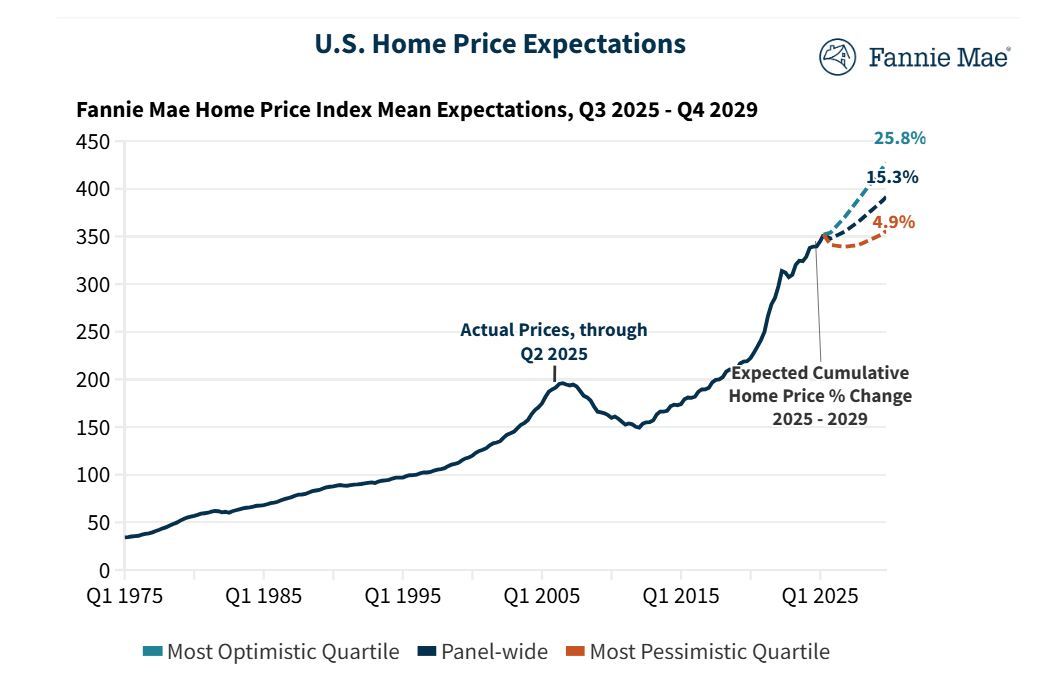
But what about the future? Will these lower rates stick around? Well, most expert forecasts suggest a gradual decline in mortgage rates through the end of 2025 and into 2026. However, don't expect a return to those ultra-low, pandemic-era rates. We're more likely to see averages hovering in the low-to-mid 6% range.

Here's a look at what the experts are predicting:

Source 2025 Forecast (Average/Year-End) 2026 Forecast (Average/Year-End)
Fannie Mae 6.4% (year-end) 6% (year-end)
National Association of Realtors (NAR) Near 6% 6%
Mortgage Bankers Association (MBA) 6.3% (year-end) 6.4% (year-end)
Redfin 6.6% (average) 6.3% (average)
Wells Fargo 6.52% (average) 6.18% (average)
Realtor.com N/A 6.3% (average)

Ultimately it is difficult to say exactly what will happen to mortgage rates. But, these are simply projections and are subject to change based on fluctuating economic conditions.

Decoding the Rate Fluctuations: Key Factors at Play

These predictions aren't pulled out of thin air. Several factors influence where mortgage rates are headed:

  • Federal Reserve Policy: The Fed plays a huge role by influencing interest rates. Their recent rate cuts signal a potential easing of monetary policy, but they're also being cautious about inflation.
  • Inflation: This dreaded “I” word is still a concern. Until inflation consistently trends downward, the Fed might be hesitant to make aggressive rate cuts.
  • Economic Conditions: A strong economy generally leads to higher rates. Conversely, an economic slowdown could trigger rate cuts to stimulate growth.
  • 10-Year Treasury Yield: This is a critical benchmark. Mortgage rates often mirror the movements of the 10-year Treasury yield, which is heavily influenced by investor sentiment and economic forecasts.

My Take on the Market

As someone who's followed the housing market for years, I believe this rate drop presents a window of opportunity. While it's unlikely we'll see a dramatic plunge to pre-pandemic levels, this easing offers some much-needed relief for buyers.

It's essential to remember that buying a home is a significant financial decision, and it’s not just about timing the market perfectly. Do your research, and consider your own financial situation, stability, and long-term goals. The worst thing you can do is rush.

The Bottom Line: Is Now the Right Time to Buy?

The lower rates combined with modest home price growth and rising incomes, are expected to slightly improve housing affordability and boost home sales activity in 2026. This could also spur a significant increase in refinancing activity

Ultimately, the decision of whether or not to buy a home depends on individual circumstances. However, the 30-year fixed mortgage rate drop could potentially present a significant opportunity for some buyers.

Invest in Turnkey Rentals for Smarter Wealth Building

With mortgage rates dipping to their lowest levels in months, savvy investors are seizing the opportunity to lock in financing. By securing favorable terms now, they’re maximizing immediate cash flow while positioning themselves for stronger long‑term returns.

Norada Real Estate helps you seize this rare opportunity with turnkey rental properties in strong markets—so you can build passive income while borrowing costs remain historically low.

🔥 HOT NEW LISTINGS JUST ADDED! 🔥

Talk to a Norada investment counselor today (No Obligation):

(800) 611-3060

Get Started Now

Also Read:

  • Mortgage Rates Predictions Backed by 7 Leading Experts: 2025–2026
  • Mortgage Rate Predictions for the Next 3 Years: 2026, 2027, 2028
  • 30-Year Fixed Mortgage Rate Forecast for the Next 5 Years
  • 15-Year Fixed Mortgage Rate Predictions for Next 5 Years: 2025-2029
  • Will Mortgage Rates Ever Be 3% Again in the Future?
  • Mortgage Rates Predictions for Next 2 Years
  • Mortgage Rate Predictions for Next 5 Years
  • Mortgage Rate Predictions: Why 2% and 3% Rates are Out of Reach
  • How Lower Mortgage Rates Can Save You Thousands?
  • How to Get a Low Mortgage Interest Rate?
  • Will Mortgage Rates Ever Be 4% Again?
Filed Under: Financing, Mortgage Tagged With: Interest Rate, mortgage, Mortgage Rate Trends, mortgage rates, Mortgage Rates Today

How Does the Recent Fed Rate Cut Impact Your Personal Finances

December 13, 2025 by Marco Santarelli

How Does the Recent Fed Rate Cut Impact Your Personal Finances

So, the Federal Reserve made a move, and you're likely wondering what that means for your hard-earned money. The recent quarter-point cut to the federal funds rate, bringing it to a target range of 3.50%-3.75%, is the third consecutive reduction, signaling a shift in economic strategy. This isn't just an abstract economic decision; it has very real, and often opposing, effects on your wallet. Simply put, borrowing just got a little cheaper, but your savings are likely to earn less.

How Does the Recent Fed Rate Cut Impact Your Personal Finances

It’s easy to get lost in the jargon, but understanding these fundamental shifts is crucial for making smart financial decisions. I've spent years watching how these moves ripple through everyday finances, and what I’ve learned is that while some people might cheer for lower loan payments, others might frown as their savings accounts offer a bit less. This is the dual nature of a Fed rate cut – it’s a two-sided coin, and you need to know how to play both sides to your advantage.

When Your Wallet Gets a Break: The Borrowing Side

One of the immediate effects of the Fed lowering its benchmark rate is that it generally makes it cheaper for banks to borrow money. This cost saving often gets passed on to consumers in the form of lower interest rates on various loans and credit products.

Credit Cards: A Little Breathing Room

If you carry a balance on your credit cards, especially those with variable interest rates, you might see a small dip in the interest you’re charged. These rates are often tied to the prime rate, which closely follows the federal funds rate. While a quarter-point might not seem like a lot, over months of carrying a balance, it can add up to a noticeable difference, potentially reducing your minimum payment slightly and meaning less of your payment goes toward just interest.

Mortgages: A Chance to Refinance or Buy

Mortgage rates are a bit more complex, influenced not just by the Fed but also by the bond market's outlook on inflation and the economy. However, a Fed rate cut often sends a signal that the market might expect lower rates in the future, and this can gradually lead to lower mortgage rates.

For those with an adjustable-rate mortgage (ARM), your payments could decrease. And if you’re in the market for a new home, you might find slightly more favorable rates. More importantly, if you have a mortgage with a decent interest rate but not a stellar one, a rate cut can be the perfect trigger to consider refinancing. This could potentially save you thousands of dollars over the life of your loan. I’ve seen clients significantly improve their monthly cash flow by strategically refinancing after a series of Fed cuts.

Auto Loans and Personal Loans: Making Big Purchases More Accessible

The affordability of larger purchases also gets a boost. Rates on new auto loans, personal loans, and even home equity lines of credit (HELOCs) tend to become more attractive. This can make that new car, a necessary home renovation, or even consolidating higher-interest debt into a more manageable loan a more financially sensible decision.

When Your Savings Get Less Love: The Flip Side

Now, for the savers among us, the news isn’t as rosy. As the cost of borrowing decreases for banks, so does the rate they can earn on their own money. This typically leads them to lower the interest rates they offer on savings products.

High-Yield Savings Accounts (HYSAs) and Money Market Accounts: Returns Soften

These are often the first places to feel the pinch. The annual percentage yields (APYs) on your HYSAs and money market accounts tend to drop relatively quickly after a Fed rate cut. While these accounts are still designed to offer better returns than traditional savings, the gap might narrow. If the Fed continues its path of rate cuts, expect these APYs to keep nudging downwards.

Certificates of Deposit (CDs): Lock in or Look Ahead

The beauty of a CD is its fixed rate. If you already have a CD, your interest rate is locked in, and you won't see any immediate change. However, any new CDs being offered by banks after a rate cut will likely come with lower APYs. This presents a strategic decision: If you believe rates will continue to fall, now might be a good time to lock in the current, still relatively decent, fixed rate for a CD.

Traditional Savings Accounts: Minimal Impact

For those who stick with basic savings accounts at large, traditional banks, the impact of a rate cut is usually minimal. These accounts typically offer very low interest rates year-round, so even a Fed cut might only shave off a fraction of a percentage point, if anything at all.

My Take: Navigating the Current Environment

As I see it, this recent move by the Fed is a clear signal: the era of chasing exceptionally high yields on the safest of savings vehicles might be winding down, at least for now. The central bank is likely trying to stimulate economic activity by making it cheaper to borrow, which is a delicate balancing act.

From my experience, people often react one of two ways: either they jump on the lower borrowing costs, or they fret about their savings. My advice? Don't just react; be deliberate. Understand both sides of the equation.

Strategic Moves for Savers in a Falling Rate World

When the Federal Reserve starts cutting rates, it's a cue for savers to become more proactive. Simply letting your money sit in a standard savings account means you’re likely losing purchasing power to inflation. Here’s what I’d be looking at:

Optimization for Short-Term Cash

  • Hunt for High-Yields: Even with slight decreases, online HYSAs and money market accounts still offer far better rates than most brick-and-mortar bank savings accounts, which can be as low as 0.40%. Don't overlook the online options for your emergency fund or any cash you need quick access to.
  • Stay Vigilant: These variable rates change. I make it a habit to periodically check the APY of my savings accounts and be ready to move my money if a competitor offers a significantly better rate. It’s a small effort for potentially a better return.
  • CDs as Anchors: If you have a portion of your savings that you won’t need for a year or three, consider opening a CD now to lock in a competitive, fixed rate before they potentially drop further.
  • CD Laddering: A smart play I often recommend is CD laddering. This means buying CDs with staggered maturity dates – say, one that matures each year for three years. This gives you periodic access to some funds while the bulk of your money is earning a higher, longer-term rate.

Revisiting Your Long-Term Investment Strategy

While safe havens might offer less, your longer-term goals might need a different approach.

  • Goals and Time Horizons: If you need money in under three years, stick to safe, liquid options like HYSAs or Treasury bills (T-bills). For goals five years or more away, you might consider investments with higher growth potential, where you can weather short-term market ups and downs.
  • Diversification is Key: In a lower-rate environment, earning decent returns often requires taking on a bit more risk or looking in different places. Consider diversifying into assets like stocks, real estate investment trusts (REITs), or dividend-paying stocks, which have historically performed well when interest rates are low.
  • Bonds: As interest rates fall, the value of existing bonds that carry higher yields tends to increase. Short-term bond funds or high-quality corporate bonds can offer a blend of yield and stability, but always remember they carry more risk than a CD.

General Financial Housekeeping

This is also a good time to shore up your overall financial health.

  • Employer Match: Never leave free money on the table. Contribute enough to your 401(k) or similar retirement plan to get the full employer match. This is one of the most straightforward ways to boost your savings significantly over time.
  • Debt Reduction: With borrowing costs potentially falling, it's an opportune moment to tackle high-interest debt, especially if you have variable-rate loans. Consider using any extra cash to pay down credit card balances or explore consolidating debt at a lower, fixed rate.

The Bottom Line

The recent Federal Reserve rate cut isn't a simple event with a single outcome. It’s a financial nudge that presents both a challenge to savers and an opportunity for borrowers. By understanding its dual impact, staying informed, and adapting your financial strategies accordingly, you can navigate these shifts effectively and keep your finances on the right track.

Invest in Real Estate While Rates Are Dropping — Build Wealth

Lower borrowing costs would boost cash flow and enhance overall returns, especially for those positioned to act quickly

Work with Norada Real Estate to find turnkey, income-generating properties in stable markets—so you can capitalize on this easing cycle and grow your wealth confidently.

NEW TURNKEY DEALS JUST ADDED!

Talk to a Norada investment counselor today (No Obligation):

(800) 611-3060

Get Started Now

Want to Know More?

Explore these related articles for even more insights:

  • How Will Today's Fed Rate Cut Impact Mortgage and Refinance Rates
  • Fed Interest Rate Decision Today: Latest News and Predictions
  • Fed Meeting Today is Poised to Deliver the Third Interest Rate Cut of 2025
  • Fed Interest Rate Predictions Signal 70% Chance of December 2025 Cut
  • Fed Meeting Minutes Expose Divide: Why December Rate Cut Odds Are Fading Fast
  • Fed Interest Rate Predictions for the December 2025 Policy Meeting
  • Fed Signals Growing Reluctance to Interest Rate Cut in December 2025
  • Fed Cuts Interest Rate Today for the Second Time in 2025
  • Fed Interest Rate Forecast for the Next 12 Months
  • When is Fed's Next Meeting on Interest Rate Decision in 2025?
  • Market Reactions: How Investors Should Prepare for Interest Rate Cut
  • Impact of Interest Rate Cut on Mortgages, Car Loans, and Your Wallet

Filed Under: Economy, Financing Tagged With: Economy, Fed, Federal Reserve, FOMC Meeting, interest rates

Jerome Powell Warns Fed Rate Cuts Won’t Fix Housing Market Troubles

December 12, 2025 by Marco Santarelli

Jerome Powell Warns Fed Rate Cuts Won't Fix Housing Market Troubles

So, the Federal Reserve just nudged interest rates down a tiny bit, and you might think that’s great news for anyone dreaming of buying a home, right? Wrong. Fed Chair Jerome Powell has thrown a bit of a reality check our way, warning that even with this rate cut, housing is still going to be a significant headache. The big takeaway? The problem isn’t just how much it costs to borrow money; it’s that there simply aren't enough homes to go around.

Jerome Powell Warns Fed Rate Cuts Won't Fix Housing Market Troubles

I've been following the housing market closely for years, and Powell's words hit home because they confirm what many of us in the industry have been observing for a while. This isn't a quick fix we're talking about; it's a deep-seated issue that won't disappear with a single quarter-point adjustment.

What Did Powell Actually Say?

Let's break down what Powell meant when he said housing will “be a problem” after the Fed’s latest quarter-point rate cut. This move brought the target for short-term interest rates into the 3.5%–3.75% range. While any reduction in rates might sound like music to a potential homebuyer’s ears, Powell was quite clear: this small cut, he stated, “won’t make much of a difference” for the majority of people looking to buy a place. He emphasized that the Fed, while it has tools to manage things like inflation, doesn't possess the power to magically create more houses.

This is a crucial distinction. When we talk about the Fed’s actions, we usually focus on their impact on borrowing costs. But Powell is highlighting that the core issue in housing is not just about the interest rate on your mortgage; it's a structural shortage of homes.

Why Housing is Still a “Problem”

Powell's main point is that the real culprit behind expensive and hard-to-find housing isn't just high interest rates. It's a fundamental lack of supply.

Think about it: during the pandemic, many homeowners were able to lock in historically low mortgage rates. Now, they're essentially “locked in” and don't want to sell their homes because moving would mean taking on a much higher interest rate on a new mortgage. This phenomenon, often called the “lock-in effect,” is a major reason why the number of homes available for sale (inventory) is so low. Fewer homes for sale means more competition among buyers, driving prices up.

But the “lock-in effect” is only part of the story. For years, the United States has simply not built enough new homes to keep pace with our growing population and the number of new households forming. This long-term supply gap has been brewing for a long time. Add to this the rising costs of insurance, building materials, and labor, and you have a situation where building new homes is more expensive than ever. Consequently, even as inflation in other areas has cooled down, housing prices and rents have remained stubbornly high.

The Impact of the Rate Cut on Mortgages

This was the Fed's third rate cut of the year, but it was described by many economists as a “hawkish” cut. This basically means that while they cut rates, they signaled that big rate reductions are probably not on the horizon.

What does this mean for your mortgage? Housing analysts and economists suggest that a small change in the Fed's policy rate is unlikely to cause a significant drop in 30-year mortgage rates. These rates have already been hovering in the low-6% range. In fact, some mortgage lenders had already adjusted their rates downward in anticipation of the Fed’s move.

So, for those buyers who were holding out hope for a dramatic plunge in mortgage rates, Powell’s comments, along with those of outside experts, suggest you might be disappointed. Current mortgage rates are unlikely to fall much further unless there's a bigger shift in the Fed's policy or the overall economy.

What This Means for You: Buyers and Sellers

Let's talk about what this situation means for both sides of the real estate equation.

For Buyers:

  • Modest Relief, Not a Revolution: A slightly lower interest rate can shave a small amount off your monthly payments. However, the huge hurdle of high home prices and limited choices remains the primary obstacle to affordability.
  • Gradual Improvement Expected: Even if mortgage rates stay around the low-6% mark, affordability is likely to improve only slowly. This will probably depend on continued income growth and slower home price appreciation.
  • Inventory is Key: The biggest challenge will continue to be finding a home you like that you can afford, given the scarcity of available properties.

For Sellers:

  • The “Lock-In” Effect Persists: If you have a mortgage with an incredibly low interest rate from the pandemic era (think 3% or less), there’s still a massive financial incentive not to sell. This continues to keep homes off the market, exacerbating the supply shortage.
  • A Long-Term Challenge: Powell’s remarks suggest that the Federal Reserve views the housing situation as a difficult sector for years to come. Solving it will likely require more than just tweaks to interest rates. We're talking about policy changes and increased home construction at both the local and national levels.

My Take: We Need More Than Just Cheaper Money

I can say this: Jerome Powell is absolutely right. The rate cut, while a policy action, doesn't touch the fundamental imbalance we're facing. It’s like trying to fill a leaky bucket with a tiny spout – you’re constantly fighting a losing battle.

The “lock-in” effect is a powerful force, keeping potential sellers on the sidelines. But even without that, we've been underbuilding for a decade. We need more houses, plain and simple. This requires action from local planning boards to allow for more density, from builders to actually construct homes, and from governments to explore incentives for new construction. Relying solely on the Federal Reserve to lower interest rates to solve this complex issue is like asking a mechanic to fix a broken leg – it’s simply not their domain, nor do they have the right tools.

The housing market is incredibly complex, and while interest rates play a role, they are far from the only, or even the main, driver of affordability when supply is this constrained. Expect the housing crunch to be a persistent issue that requires a multi-pronged approach from policymakers and developers alike.

2026 Housing Market Forecast for Investors

Most experts forecast steady but modest price growth, shifting affordability, and evolving rental demand in 2026—creating unique opportunities for each group.

Rising demand keeps rental markets competitive, but turnkey investors benefit from strong cash flow.

Norada Real Estate helps you navigate these shifts with fully managed rental properties—so whether you’re buying, selling, or renting, you can position yourself for success in 2026.

🔥 HOT NEW Investor Deals JUST ADDED! 🔥

Talk to a Norada investment counselor today (No Obligation):

(800) 611-3060

Get Started Now

Want to Know More About the Housing Market Trends?

Explore these related articles for even more insights:

  • Top 10 Housing Markets Facing Fastest Home Price Slowdown in 2026
  • Housing Market Predictions for 2026 Show a Modest Price Rise of 1.2%
  • Housing Market Predictions 2026 for Buyers, Sellers, and Renters
  • Why Are Home Prices Dropping in Over Half of Major US Cities in 2025?
  • Redfin's Bold Predictions About The Great Housing Market Reset in 2026
  • 5 Most Expensive Housing Markets Are Now Seeing the Biggest Price Cuts
  • Housing Market Predicted to See Strong Growth in 2026: Expert Forecast
  • Housing Market Predictions for the Next 12 Months by Zillow
  • Housing Market Regains Ground as Falling Mortgage Rates Unlock Buyer Savings
  • Hidden Costs of Homeownership Now Add Up to Nearly $16,000 a Year
  • Small Investors Dominate the Housing Market From Detroit to Vegas
  • Housing Market Predictions for the Next 4 Years: 2025 to 2029
  • Housing Market 2025 Splits Between Wealthy Buyers and First-Timers
  • Housing Markets at Risk of Double-Digit Price Decline Over the Next 12 Months
  • Will the Housing Market Shift to a Buyer’s Market in 2026?
  • Mid-Atlantic Housing Market Heats Up as Mortgage Rates Go Down

Filed Under: Housing Market, Real Estate Market Tagged With: Housing Market, Housing Market Trends

  • « Previous Page
  • 1
  • …
  • 68
  • 69
  • 70
  • 71
  • 72
  • …
  • 365
  • Next Page »

Real Estate

  • Birmingham
  • Cape Coral
  • Charlotte
  • Chicago

Quick Links

  • Markets
  • Membership
  • Notes
  • Contact Us

Blog Posts

  • 30-Year Fixed Mortgage Rate Drops by 37 Basis Points Year-Over-Year
    June 4, 2026Marco Santarelli
  • Today’s Mortgage Rates, June 4: 30‑Year Fixed at 6.29%, Adjustable Rates Drop Sharply
    June 4, 2026Marco Santarelli
  • Mortgage Rates Today, June 4, 2026: 30‑Year Refinance Rate Falls by 8 Basis Points
    June 4, 2026Marco Santarelli

Contact

Norada Real Estate Investments 30251 Golden Lantern, Suite E-261 Laguna Niguel, CA 92677

(949) 218-6668
(800) 611-3060
BBB
  • Terms of Use
  • |
  • Privacy Policy
  • |
  • Testimonials
  • |
  • Suggestions?
  • |
  • Home

Copyright 2018 Norada Real Estate Investments

Loading...