Norada Real Estate Investments

  • Home
  • Markets
  • Properties
  • Membership
  • Podcast
  • Learn
  • About
  • Contact

Average Down Payment on a House in Texas in 2025

March 17, 2025 by Marco Santarelli

Average Down Payment on a House in Texas in 2024

Buying a home is one of the most significant financial decisions many people will make in their lives. One critical aspect of this decision is the down payment, which serves as a percentage of the home's purchase price paid upfront. This blog post delves into the average down payment on a house in Texas, exploring various factors that influence this amount, the importance of down payment assistance programs, and tips for saving for a down payment.

Current Average Down Payment on a House in Texas

As of 2025, the average down payment on a house in Texas varies considerably depending on several factors, including location, type of mortgage, and market conditions. On average, Texas homebuyers are putting down 19% of the home’s purchase price, aligning closely with the national average of 18.5% according to the National Association of Realtors. However, this percentage can fluctuate significantly from city to city.

Breakdown by City

City Average Home Price (Est.) Average Down Payment (%) Average Down Payment Amount
Houston $367,000 19% $69,930
Dallas $400,000 20% $80,000
Austin $600,000 18% $108,000
San Antonio $350,000 17% $59,500

As shown in the table above, the down payment can vary widely. For example, buying a home in Austin, with its higher average home price, typically requires a larger down payment compared to cities like San Antonio or Houston.

Factors Influencing Down Payment Amounts

Several key factors influence the average down payment on a house in Texas:

Type of Loan

Different loan programs come with varying down payment requirements. For example:

  • Conventional Loans: Typically require a 20% down payment to avoid Private Mortgage Insurance (PMI).
  • FHA Loans: Allow for a minimum down payment of as low as 3.5%, making them attractive for first-time buyers.
  • VA Loans: Available to veterans, often require no down payment, which can make homeownership more accessible.

Cost of the Home

Home prices in Texas have been on the rise, especially in urban areas. Higher home values often lead to larger down payments. Home prices in Texas increased by approximately 15% in the past year alone, significantly impacting average down payments.

Buyers’ Personal Financial Situations

Buyers’ financial health plays a crucial role in determining their down payment:

  • Credit Scores: Higher credit scores may offer better mortgage terms, allowing buyers to afford a higher down payment.
  • Debt-to-Income Ratios: Lenders assess this ratio to judge a borrower's ability to repay a loan, influencing requirements for down payment amounts.
  • Savings: The amount of savings available also impacts how much a buyer can afford to put down.

Local Real Estate Market Trends

Texas is known for its dynamic housing market. In areas with increasing demand, down payments may trend higher as buyers compete for homes. Understanding these local trends can help buyers strategize their homebuying process effectively.

Typical Down Payment Percentages

While the traditional down payment percentage is 20%, recent trends indicate a shift. Here are some common down payment percentages:

  • 20%: Ideal for avoiding PMI and securing favorable mortgage rates.
  • 10%: A common choice for many buyers looking for a balance between upfront costs and monthly payments.
  • 5%: More manageable for first-time buyers, allowing them to enter the market sooner.

Impact of Down Payment Percentages on Mortgage Rates

A larger down payment can lower monthly payments and interest rates:

  • 20% Down Payment: Generally results in the best mortgage rates and no PMI.
  • 5% to 10% Down Payment: May lead to higher rates and PMI, impacting long-term costs.

The Importance of Down Payment Assistance Programs

Down payment assistance programs can significantly reduce the barrier for buyers in Texas. Various state and local programs offer financial aid, making homeownership more attainable.

Overview of Assistance Programs

  • Texas Department of Housing and Community Affairs (TDHCA): Offers down payment assistance through grants and loans for eligible low- to moderate-income buyers.
  • Local Programs: Cities like Houston and Dallas have their assistance programs, often tailored to first-time homebuyers.

Eligibility Criteria

These programs commonly have specific criteria, including income limits and property location. First-time buyers often receive favorable terms, helping them manage the financial burden of homeownership.

Pros and Cons of Different Down Payment Amounts

Choosing the right down payment involves balancing immediate financial capacity with long-term financial goals.

Higher Down Payments

Pros:

  • Lower Monthly Payments: A significant down payment reduces the principal and, consequently, the monthly mortgage payment.
  • Reduced Interest Rates: Lenders often view higher down payments as lower risk, which can lead to better rates.
  • Avoidance of PMI: Paying at least 20% eliminates the additional cost of PMI, such as the private mortgage insurance required by many lenders.

Cons:

  • Less Cash for Other Expenses: Committing a large sum to a down payment can limit funds available for home repairs, renovations, and emergencies.
  • Potential Investment Loss: The capital used for a larger down payment might yield more returns if invested elsewhere.

Lower Down Payments

Pros:

  • More Cash on Hand: Lower down payments keep more money available for other uses, such as renovations or personal savings.
  • Easier Entry into Homeownership: Programs allowing smaller down payments can help first-time buyers purchase homes sooner.

Cons:

  • Higher Monthly Payments: A smaller down payment increases the size of the mortgage, leading to higher monthly payments.
  • Possibility of PMI: Buyers with lower down payments often have to pay PMI, which can add hundreds of dollars to monthly costs.

Tips for Saving for a Down Payment in Texas

Saving for a down payment doesn't have to be an insurmountable task. Here are several strategies to consider:

  1. Create a Budget: Establish a savings plan outlining monthly contributions toward the down payment goal. Utilize budgeting apps to track expenses.
  2. Utilize High-Yield Savings Accounts: Consider putting your savings into a high-yield savings account to earn more interest versus traditional accounts.
  3. Employ Employer Benefits: Some employers offer homebuyer assistance in the form of grants or matched savings accounts.
  4. Set Up Automatic Transfers: Automate savings by setting up monthly transfers to your down payment fund.
  5. Cut Unnecessary Expenses: Identify areas to cut back on discretionary spending and redirect that money into savings.

FAQs About Down Payments on a House in Texas

Q: What is the minimum down payment I need for a house in Texas?
A: Depending on the loan type, the minimum down payment can vary. For conventional loans, it's typically 20%, while FHA loans can be 3.5%.

Q: How can I calculate my down payment?
A: To calculate your down payment, take the home purchase price and multiply it by your desired down payment percentage. For instance, for a $300,000 home with a 10% down payment: $300,000 x 0.10 = $30,000.

Q: Are there any programs that help with down payments in Texas?
A: Yes, various state and local programs offer financial assistance for down payments, particularly for first-time homebuyers.

Q: What areas in Texas require larger down payments?
A: Urban areas, particularly Austin and Dallas, often require larger down payments due to higher average home prices.

Q: How does my credit score affect my down payment?
A: A higher credit score can lead to better mortgage terms, which may lower the required down payment and help secure lower interest rates.

In conclusion, the average down payment on a house in Texas is influenced by various factors, including loan types, personal finances, and local market conditions. Understanding these nuances is essential for potential homebuyers navigating the Texas housing market. Whether you’re considering a larger down payment for lower monthly payments or looking for assistance programs to ease the burden, careful planning and awareness can significantly impact your homebuying journey.
Read More:

  • This Texas Housing Market is the Best in the U.S. [2024 Rankings]
  • Texas Housing Market: Prices, Trends, Predictions
  • Are Texas Home Sales Dropping ?
  • How Much Do Real Estate Agents Make in Texas?
  • 10 Cheapest Places to Live in Texas
  • Is Texas a Good Place to Live: Explore the Cost, Jobs and Lifestyle

Filed Under: Financing, Housing Market, Mortgage Tagged With: Down Payment, Housing Market, mortgage, Real Estate Market, Texas

Average Down Payment on a House in Florida in 2025

March 17, 2025 by Marco Santarelli

Average Down Payment on a House in Florida in 2024

Buying a home is a significant milestone for many individuals and families, representing a blend of financial investment and personal achievement. One of the most important factors in the home-buying process is the down payment. In this article, we will explore the average down payment on a house in Florida, the factors that influence it, and tips for prospective buyers, including assistance programs and practical saving strategies. Our goal is to equip you with the information you need to navigate the real estate landscape in Florida efficiently.

What is a Down Payment?

A down payment is an initial payment made when purchasing a home, typically expressed as a percentage of the home's purchase price. For example, if you're buying a house for $300,000 and you make a $30,000 down payment, you're putting down 10%. The remaining amount is financed through a mortgage, which is a loan specifically for real estate.

Down payments are crucial for several reasons:

  • Equity: The down payment builds equity in your home from day one. Higher equity means you own more of your home outright, which can be beneficial in the event of a sale.
  • Interest Rates: A larger down payment can result in lower mortgage rates. Lenders often view buyers with substantial down payments as less risky.
  • Avoiding Private Mortgage Insurance (PMI): A down payment of 20% or more typically allows buyers to avoid PMI, which is an additional monthly fee that protects the lender if you default on the loan.

The Average Down Payment on a House in Florida

As of 2025, the average down payment on a house in Florida hovers around 10% to 20% of the home's purchase price. This range can fluctuate based on various factors, including the housing market's status and individual buyer situations.

Comparison to National Averages

In comparison, the national average down payment is approximately 12%. This indicates that down payments in Florida are generally in line with, or slightly below, national figures.

Table: Average Down Payment Statistics in Florida vs. National Averages

Location Average Home Price Average Down Payment % of Home Price
Florida $350,000 $35,000 10%
National Average $360,000 $43,200 12%

Factors influencing the average down payment in Florida include:

  • Housing Market Trends: Florida's real estate market has experienced fluctuations, with prices rising significantly in the past few years. Buyers may struggle to save the needed down payment.
  • Regional Variations: Areas like Miami or Orlando may have higher average down payments due to increased demand and higher home prices compared to rural areas.

Variations in Down Payment Requirements

First-Time Homebuyers

First-time homebuyers often have different requirements. On average, first-time buyers in Florida usually make a down payment of around 7%, with many utilizing down payment assistance programs to help them secure their new home.

Programs like the Florida Housing First Time Homebuyer Program can provide financial assistance, sometimes covering part of the down payment.

Conventional Loans vs. FHA Loans

When exploring down payment options, it's essential to consider the differences between loan types.

  • Conventional Loans: These often require a minimum down payment of 5% to 20%, depending on the borrower's credit score.
  • FHA Loans: Designed for low to moderate-income borrowers, FHA loans allow down payments as low as 3.5%. This option can be appealing for many first-time buyers.

Comparison Table: Down Payment Requirements

Loan Type Minimum Down Payment Pros Cons
Conventional 5% – 20% Flexible terms, avoid PMI at 20% Higher credit score needed
FHA 3.5% Lower down payment, easier qualifying PMI required regardless of down payment

Cash Offers

Cash offers can significantly reduce or eliminate the need for a down payment altogether. Cash buyers do not rely on financing, thus not subjecting themselves to the same requirements as traditional buyers. This can create a competitive edge in a tight housing market, especially in sought-after areas.

Factors That Affect the Average Down Payment on a House

Location and Neighborhood Trends

The price of homes can vary dramatically across Florida. For example:

  • Miami: Known for its luxury real estate market, average home prices can exceed $500,000, leading to a down payment in the range of $100,000 (20%).
  • Orlando: A more balanced market, where average home prices are about $350,000, resulting in a down payment of $35,000 (10%).
  • Tampa: Offering competitive prices at about $320,000 on average, where the down payment would similarly fall into the range of $30,000 (10%).

Property Types

Different property types can also affect down payment requirements. For instance:

  • Condos: Average prices may be lower, along with down payment requirements. Many condos sell for under $300,000, translating to lower initial costs.
  • Single-Family Homes: Typically require more significant down payments, especially in suburban areas.
  • Luxury Homes: Homes priced over $1 million will generally require more substantial down payments, often 20% or more.

Personal Financial Situation

Your financial health significantly impacts your down payment decision. Factors to consider include:

  • Credit Score: Higher credit scores typically result in better loan terms and lower down payments.
  • Income Level: A higher income may make it easier to save for a larger down payment.
  • Savings: The amount saved and the buyer’s financial habits greatly influence down payment capability.

Down Payment Assistance Programs in Florida

Florida offers several programs aiming to assist potential homebuyers. These may help lower the burden of down payments.

  • Florida Housing's First Time Homebuyer Program: Provides substantial assistance, sometimes up to $15,000 in down payment assistance for qualified buyers.
  • Local Government Programs: Many counties and cities have specific programs that offer grants and loans for down payments and closing costs.

How to Apply for Assistance

To qualify for these programs:

  1. Check Eligibility: Look into requirements such as income limits and first-time buyer status.
  2. Gather Documentation: Prepare necessary financial documents, proof of residency, and any other required information.
  3. Apply: Complete the application process either online or through local agencies.

Tips for Saving for a Down Payment in Florida

Saving for a down payment can feel daunting, but there are practical strategies to ease the process.

  1. Create a Budget: Track your expenses and create a budget that allows you to allocate a specific amount each month to your down payment fund.
  2. Set Savings Goals: Determine how much you need and set achievable milestones to keep you motivated.
  3. Utilize High-Yield Savings Accounts: Consider putting your savings in a high-yield savings account to earn more interest over time.

The Importance of Financial Planning

Engaging with a financial advisor can further enhance your saving strategy, providing tailored advice based on your financial situation and goals.

Frequently Asked Questions (FAQs)

What is the minimum down payment required to buy a house in Florida?

The minimum down payment can be as low as 3.5% for FHA loans or 5% for conventional loans.

Can I put less than 20% down on a house in Florida?

Yes, many options are available that allow down payments of less than 20%, particularly for first-time homebuyers.

Are there specific grants or programs for down payments in Florida?

Yes, Florida has numerous programs like the Florida Housing First Time Homebuyer Program that provide financial assistance with down payments.

How do down payments impact mortgage insurance?

A down payment of less than 20% typically requires private mortgage insurance (PMI), which adds to monthly mortgage payments.

Read More:

  • Florida Housing Market Predictions: Will it Crash?
  • Florida Housing Market Predictions for Next 5 Years
  • Florida Housing Market: Coastal Crisis vs Inland Opportunity
  • Will Housing Market Crash in Florida: Supply Soars to 7-Year High
  • Florida Housing Market Crash: 3 Cities on High Risk of Decline
  • Florida Housing Market Predictions for Next 2 Years
  • 10 Best Places to Live in Florida

Filed Under: Financing, Housing Market, Mortgage Tagged With: Down Payment, Florida, Housing Market, mortgage, Real Estate Market

First Time Home Buyer Loans with Bad Credit and Zero Down

March 17, 2025 by Marco Santarelli

First Time Home Buyer Loans with Bad Credit and Zero Down

Imagine standing in your own home, feeling the excitement and pride of ownership wash over you. For many, this picture represents a significant milestone, symbolizing investment in both stability and the future. However, the journey toward homeownership can seem daunting, especially for those exploring first-time home buyer loans with bad credit and zero down.

If you find yourself in a challenging financial situation, you may believe that owning a home is an unreachable dream. But the reality is, there are options available that can help transform that dream into a tangible reality—even if your credit history isn’t perfect and your savings are minimal.

First Time Home Buyer Loans with Bad Credit and Zero Down

Key Takeaways

  • Zero Down Payment Options: Some programs exist that allow buyers to purchase a home with no down payment required.
  • Bad Credit Doesn’t Mean No Home: Many lenders cater to buyers with less than perfect credit scores.
  • Government-Backed Loans: Options like FHA, VA, and USDA loans can assist first-time buyers with lower credit scores.
  • Importance of Credit Repair: Improving your credit score can significantly expand your borrowing options and potential interest rates.
  • Pre-Approval is Crucial: Understanding your budget helps streamline your home search and secures competitive offers.

Navigating the path to homeownership can be achieved with the right knowledge, strategies, and support. In this comprehensive guide, we will explore various first-time home buyer loans with bad credit and zero down options. We will discuss government-backed programs, how lenders assess applications with bad credit, and what you can do to improve your chances of qualifying for a loan.

Understanding the Challenges of Bad Credit

Bad credit can generally be defined as having a credit score below 650, although different lenders may have varying thresholds. This situation can result from multiple factors, such as late payments, high debt-to-income ratios, or even prior bankruptcy or foreclosure. When seeking a mortgage, many lenders view bad credit as high risk, often leading to denials or unfavorable terms.

However, dismissing the possibility of homeownership just because of bad credit is a mistake. It’s essential to recognize that numerous financial institutions and programs cater specifically to buyers with imperfect credit histories. Understanding what constitutes bad credit and how it impacts lending decisions can significantly empower you to make informed choices on your journey to owning a home.

Zero Down Payment Home Buyer Programs

One of the compelling aspects of purchasing a home is the potential to do so without a large initial investment. Numerous programs exist that allow buyers to purchase homes with no down payment required, especially aimed at first-time home buyers. Here are a few noteworthy options:

  1. VA Loans: Available for veterans and active members of the military, VA loans are among the most advantageous home financing options. These loans enable eligible borrowers to purchase homes without a down payment and do not require private mortgage insurance (PMI). VA loans benefit not only from favorable terms but also from competitive interest rates, making them a robust choice for service members.
  2. USDA Loans: If you're considering purchasing in rural or suburban areas, USDA loans may be your gateway to affordable homeownership. These loans offer zero down payment financing to eligible low to moderate-income buyers who meet specific requirements. The USDA loan program aims to promote homeownership in less populated areas, making it a fitting choice for many.
  3. FHA Loans: Although FHA loans typically require a down payment (as low as 3.5%), they are generally available to borrowers with lower credit scores. FHA loans can help individuals with bad credit gain access to financing that might otherwise be unavailable through conventional means. It is important to note that the FHA insures loans, which allows lenders to offer more lenient terms, including those for buyers with poor credit.

How Do Lenders Evaluate Bad Credit?

When considering a mortgage application, lenders analyze a comprehensive view of your financial state, rather than simply focusing on your credit score. The components that contribute to a successful mortgage application include:

  • Debt-to-Income Ratio (DTI): This crucial measurement evaluates the proportion of your monthly income allocated to debt payments, including loans and proposed mortgage payments. A lower DTI indicates that you are less risky to lenders, thereby improving your chances of securing a loan.
  • Employment History: A stable employment record showcases reliability when applying for a mortgage. Most lenders prefer candidates who have maintained consistent employment for at least two years.
  • Down Payment: Providing a larger down payment can positively impact your application, even with bad credit. A bigger down payment reduces the lender’s risk and demonstrates your commitment and financial responsibility.
  • Credit Repair Efforts: Prior to applying for a mortgage, many buyers take proactive measures to enhance their credit scores. This may involve paying down debts, ensuring bills are paid on time, and disputing any inaccuracies on their credit reports.

The Importance of Pre-Approval

Before embarking on your house-hunting journey, securing a pre-approval for a mortgage is paramount. Pre-approval signifies that a lender has assessed your financial situation and is willing to provide a specified loan amount. The benefits of being pre-approved include:

  • Understanding Your Budget: Knowing you have a pre-approval helps clarify your budget, ensuring you do not fall in love with homes that are financially out of reach.
  • Competitive Offer: When sellers see that you have been pre-approved, it signifies that you are a serious buyer who is financially capable. This can make your offer more appealing compared to those of non-pre-approved buyers.
  • Streamlined Process: With financing already arranged, you can save considerable time during negotiations, allowing you to move quickly when you discover the perfect home.

Navigating the Home Loans Market with Bad Credit

Engaging with real estate agents who specialize in assisting first-time home buyers can greatly ease the process. These professionals often possess invaluable knowledge about local housing markets, properties suited to your needs, and neighborhoods that align with your budget.

Additionally, it’s important to be aware of local programs designed to help buyers facing challenges due to bad credit. Many states have initiatives aimed at first-time homebuyers, offering mortgage assistance, grants, and even educational programs to guide individuals through the purchasing process.

Potential Pitfalls to Consider

While the opportunities abound for homebuyers with bad credit, it's critical to remain aware of potential pitfalls associated with these financing options:

  • Higher Interest Rates: Individuals with bad credit may face higher interest rates, resulting in more significant monthly payments and inflated overall home costs.
  • Fewer Loan Choices: With a lower credit score, mortgage options can be more limited. This limitation may restrict your flexibility regarding loan terms and conditions.
  • Private Mortgage Insurance (PMI): Loans like FHA often require PMI, which can considerably raise your monthly expenses. It’s essential to factor this additional cost into your home-buying budget.

A Journey of Hope and Possibility

Finding first-time home buyer loans with bad credit and zero down might appear to be a daunting task filled with obstacles, yet with the right preparation and knowledge, it is absolutely achievable. Understanding the available options, working alongside reputable professionals, and being cognizant of your financial status are vital steps in navigating the buying process smoothly.

In a marketplace where many buyers remain hesitant due to the fear of bad credit, it’s crucial to recognize that several pathways exist for first-time buyers, especially those who may feel cornered by their financial history.

A journey toward homeownership extends beyond merely financial considerations; it encapsulates the aspiration to create a place called home—a unique endeavor that countless individuals yearn for.

In this landscape of possibilities, it is vital to remain optimistic and proactive. Equip yourself with knowledge, remain open to various funding options, and approach the experience with enthusiasm and preparedness. Soon enough, you could be enjoying the many rewards of homeownership that come from diligence and determination.

Frequently Asked Questions (FAQs)

1. Are there specific lenders that focus on first time home buyer loans with bad credit and zero down?

Yes, several lenders specialize in programs for first-time homebuyers with bad credit. It’s wise to research various lenders and inquire about their willingness to work with lower credit scores and recommend the best loan options tailored to your situation.

2. What credit score do I need to qualify for a zero down payment loan?

While specific requirements vary, most agencies and lenders prefer a minimum credit score of at least 580 to qualify for FHA loans with a low down payment. VA loans typically do not have a minimum credit score requirement, making them a strong option for veterans.

3. Can I still get a mortgage if I have collections on my credit report?

Yes, you can still qualify for a mortgage with collections on your credit report. However, lenders may consider the age of the collections and how recent they are when making their decision. Some lenders may require a certain period has passed since resolving collections or may ask for higher down payments.

4. How can I improve my chances of getting a loan with bad credit?

To improve your chances, try working on your credit score before applying. Ensure timely payments, reduce credit card balances, and dispute any inaccuracies on your credit report. Additionally, saving for a down payment—even a small one—can significantly enhance your application.

5. What documents do I need to apply for a first-time home buyer loan?

Typically, you’ll need several documents, including proof of income, tax returns for previous years, bank statements, and documentation verifying your identity. Specific requirements can vary by lender, so it’s beneficial to check with your chosen bank or mortgage company for their unique requirements.

Read More:

  • Who Qualifies for Kamala Harris' $25,000 Homebuyer Program?
  • Biden Administration's Bold Move for Affordable Housing Plan
  • Biden's Student Debt Relief Plan: A Beacon of Hope for Borrowers
  • FHA Mortgage Rates by Credit Score: 620, 700, 580, 640
  • What Credit Score Do You Need to Buy House With No Money Down?
  • How Long Does It Take to Get a 700-800 Credit Score?
  • How To Improve Your FICO Credit Score: A Guide
  • FHA Credit Score Requirements for Homeownership
  • 10 Proven Methods to Elevate Your FICO Credit Score
  • Mortgages for Low Credit Scores: Your Complete Guide

Filed Under: Financing, Mortgage Tagged With: credit score, FICO, First Time Home Buyer Loans with Bad Credit and Zero Down, mortgage

Today’s Mortgage Rates March 16, 2025: Rates Increase Slighty

March 16, 2025 by Marco Santarelli

Today's Mortgage Rates March 16, 2025: Rates Increase Slighty

Are you keeping an eye on mortgage rates today? For March 16, 2025, the news is that mortgage rates have seen a slight uptick. According to the latest data from Zillow, the average 30-year fixed mortgage rate has nudged up to 6.59%, an increase of 10 basis points. If you're considering refinancing, you'll see a similar trend with the 30-year fixed refinance rate averaging 6.61%. Let's dive deeper into what these rates mean for you, whether you're buying a new home or looking to refinance your current mortgage.

Mortgage Rates Today, March 16, 2025: Slight Increase in 30-Year Fixed Rate

Key Takeaways:

  • 30-Year Fixed Mortgage Rate: Averaging 6.59%, up by 10 basis points.
  • 15-Year Fixed Mortgage Rate: Averaging 5.93%, increased by 15 basis points.
  • Refinance Rates: Refinance rates are also elevated, with the 30-year fixed at 6.61%.
  • Shopping Around is Crucial: In this market, comparing lenders is more important than ever to find the best deal.
  • Rates Expected to Remain High: Experts suggest rates will likely stay at these levels for the next few months.

Current Mortgage Rate Trends

It's Sunday, March 16, 2025, and if you're in the market for a home, understanding today's mortgage rates is essential. Interest rates play a huge role in how much house you can afford and your monthly payments. We're seeing a bit of movement in the rates today compared to last week. Let’s break down the specifics for different types of mortgages.

According to the latest information from Zillow, here’s a snapshot of the current average mortgage rates across the nation. Remember, these are averages, and the rate you personally qualify for could be different based on your credit score, down payment, and other financial factors. Your location can also influence the rates you see. Areas with higher housing costs might see slightly higher average rates.

Breaking Down Today's Mortgage Rates

Loan Type Interest Rate
30-Year Fixed 6.59%
20-Year Fixed 6.45%
15-Year Fixed 5.93%
5/1 ARM 6.85%
7/1 ARM 7.13%
30-Year VA 6.15%
15-Year VA 5.59%
5/1 VA 6.15%

As you can see, the 30-year fixed-rate mortgage – the most common choice for homebuyers – is currently averaging 6.59%. The 15-year fixed-rate mortgage, which allows you to pay off your home faster and with less total interest, is at a lower average of 5.93%. If you're comfortable with rates that can adjust over time, you might consider an Adjustable-Rate Mortgage (ARM). For example, a 5/1 ARM is averaging 6.85%, and a 7/1 ARM is at 7.13%. It's worth noting that these ARM rates are currently higher than the 30-year fixed rate, which is an interesting situation. Typically, ARMs start with lower rates, but the market is a bit unusual right now.

For those who qualify for a VA loan, which is a fantastic benefit for veterans, active-duty military, and eligible surviving spouses, the rates are generally a bit lower. The 30-year VA is at 6.15%, and the 15-year VA is even lower at 5.59%.

Refinance Rates: What's the Picture Today?

Thinking about refinancing your mortgage? It's a big decision, and understanding today's refinance rates is key. Refinancing can be a smart move to lower your monthly payments, shorten your loan term, or even tap into your home equity. However, just like purchase mortgage rates, refinance rates fluctuate.

Let's look at the current average mortgage refinance rates, also based on Zillow data:

Current Mortgage Refinance Rates

Loan Type Interest Rate
30-Year Fixed 6.61%
20-Year Fixed 6.19%
15-Year Fixed 5.90%
5/1 ARM 7.18%
7/1 ARM 7.02%
30-Year VA 6.09%
15-Year VA 5.82%
5/1 VA 6.09%
30-Year FHA 6.00%
15-Year FHA 5.75%

In general, refinance rates tend to be slightly higher than purchase rates, and today is no exception for many loan types. For instance, the 30-year fixed refinance rate is at 6.61%, a tad higher than the 30-year purchase rate. However, the 15-year fixed refinance rate at 5.90% is actually slightly lower than the 15-year purchase rate. This isn't always the case, and it highlights the dynamic nature of the mortgage market.

If you're considering an FHA refinance, which is backed by the Federal Housing Administration and can be helpful for homeowners with lower credit scores, the rates are also worth noting. The 30-year FHA refinance rate is at 6.00%, and the 15-year FHA refinance rate is 5.75%.

Understanding the Impact of Loan Term: 30-Year vs. 15-Year Mortgages

One of the most important choices you'll make when getting a mortgage is the loan term, most commonly 30 years or 15 years. The term affects your monthly payment and the total amount of interest you'll pay over the life of the loan.

A 30-year mortgage is the more popular option because it offers lower monthly payments. Spreading your payments over 30 years (360 months) makes each payment smaller. This can be really helpful for managing your monthly budget.

On the other hand, a 15-year mortgage comes with a lower interest rate and you pay off your loan in half the time. This means you’ll build equity faster and save a ton of money on interest in the long run. However, your monthly payments will be higher because you're paying off the same loan amount in a shorter period.

Let's look at an example to see the difference. Imagine you're borrowing $300,000.

  • 30-Year Mortgage at 6.59%: Your estimated monthly payment for principal and interest would be around $1,914. Over 30 years, you'd end up paying approximately $389,038 in interest. That's a lot of interest on top of the original $300,000!
  • 15-Year Mortgage at 5.93%: Your estimated monthly payment would jump to about $2,520. While that's a significant increase each month, you'd only pay around $153,643 in interest over the 15 years. That's a savings of over $235,000 in interest compared to the 30-year loan!

The choice between a 30-year and 15-year mortgage really depends on your financial situation and goals. If lower monthly payments are your priority, a 30-year might be the way to go. If you can afford higher monthly payments and want to save big on interest and own your home sooner, a 15-year mortgage is a powerful option.

Recommended Read:

Mortgage Rates Trends as of March 15, 2025

Mortgage Rates Drop: Can You Finally Afford a $400,000 Home?

Mortgage Rates Forecast March 2025: Will Rates Finally Drop?

Expect High Mortgage Rates Until 2026: Fannie Mae's 2-Year Forecast

Will Mortgage Rates Rise Back Above 7% or Go Down in 2025?

Mortgage Interest Rates Forecast for Next 10 Years

Fixed-Rate vs. Adjustable-Rate Mortgages: Choosing Stability or Potential Savings (and Risk)

Another critical decision is whether to go with a fixed-rate mortgage or an adjustable-rate mortgage (ARM). These two types of mortgages work very differently.

With a fixed-rate mortgage, the interest rate stays the same for the entire life of the loan, typically 15 or 30 years. This provides predictability and stability. Your monthly payment for principal and interest will not change, regardless of what happens with interest rates in the wider economy. This makes budgeting easier and gives you peace of mind.

An adjustable-rate mortgage (ARM), on the other hand, has an interest rate that is fixed for an initial period, and then it adjusts periodically based on market conditions. For example, a 5/1 ARM has a fixed rate for the first five years, and then the rate can change once a year for the remaining 25 years. Similarly, a 7/1 ARM has a fixed rate for seven years, and then adjusts annually.

ARMs often start with lower interest rates than fixed-rate mortgages. This can make them attractive initially, as you'll have lower monthly payments in the early years of the loan. However, after the fixed-rate period ends, your interest rate could increase, potentially leading to higher monthly payments. There's also the chance that rates could go down, which would lower your payments, but there's always the risk of increases.

Recently, the situation has become a bit unusual. Sometimes, fixed rates have been starting lower than adjustable rates. This flips the typical scenario and is something to pay close attention to when you're shopping for a mortgage.

Choosing between a fixed-rate and adjustable-rate mortgage depends on your risk tolerance, how long you plan to stay in the home, and your expectations for future interest rates. If you value predictability and plan to stay in your home for the long haul, a fixed-rate mortgage is generally the safer bet. If you expect to move or refinance within a few years, or if you believe interest rates will fall, an ARM might be worth considering, but it comes with more uncertainty.

What Will Your Mortgage Payments Be Today Under Current Rates?

Let's get down to brass tacks and see what your monthly mortgage payments might look like today, based on these current rates. We'll calculate the estimated principal and interest payment for different loan amounts using the average 30-year fixed rate of 6.59%. Keep in mind, these are just estimates and don't include property taxes, homeowners insurance, or other potential costs like PMI (Private Mortgage Insurance) if your down payment is less than 20%.

Monthly Payment on a $150,000 Mortgage

If you were to take out a $150,000 mortgage at today's average 30-year fixed rate of 6.59%, your estimated monthly payment for principal and interest would be approximately $957. This is a manageable payment for many households and could be a realistic option in areas with more affordable housing prices.

Monthly Payment on a $200,000 Mortgage

Stepping up to a $200,000 mortgage at the same 6.59% rate, your estimated monthly payment would be around $1,276. This payment is starting to get a bit higher, but still within reach for many buyers, especially in areas with moderate home prices.

Monthly Payment on a $300,000 Mortgage

For a $300,000 mortgage at 6.59%, your estimated monthly payment jumps to approximately $1,914. This is a more substantial monthly commitment and is typical in many average-priced housing markets across the country.

Monthly Payment on a $400,000 Mortgage

If you're looking at a $400,000 mortgage, your estimated monthly payment at 6.59% would be roughly $2,552. At this payment level, affordability becomes a bigger consideration, and it's crucial to carefully assess your budget and income.

Monthly Payment on a $500,000 Mortgage

Finally, for a $500,000 mortgage at 6.59%, your estimated monthly payment would be around $3,190. This is a significant monthly housing expense and is more common in higher-cost housing markets. It’s important to remember that for a loan of this size, even small fluctuations in interest rates can make a big difference in your monthly payment and total interest paid over the loan term.

These payment examples are just for principal and interest. When you factor in property taxes, homeowners insurance, and potentially PMI, your total monthly housing payment will be even higher. It's always wise to use a comprehensive mortgage calculator that includes these additional costs to get a more accurate picture of your total monthly housing expenses.

Remember, getting pre-approved for a mortgage is a crucial step in the home-buying process. It not only tells you how much you can borrow but also gives you a clearer idea of your potential interest rate and monthly payments based on your specific financial situation. Shopping around with multiple lenders is especially important in a market like this to ensure you're getting the best possible deal.

Work With Norada, Your Trusted Source for

Real Estate Investments

With mortgage rates fluctuating, investing in turnkey real estate

can help you secure consistent returns.

Expand your portfolio confidently, even in a shifting interest rate environment.

Speak with our expert investment counselors (No Obligation):

(800) 611-3060

Get Started Now

Recommended Read:

  • Mortgage Rate Predictions 2025 from 4 Leading Housing Experts
  • Mortgage Rates Forecast for the Next 3 Years: 2025 to 2027
  • 30-Year Mortgage Rate Forecast for the Next 5 Years
  • 15-Year Mortgage Rate Forecast for the Next 5 Years
  • Why Are Mortgage Rates Going Up in 2025: Will Rates Drop?
  • Why Are Mortgage Rates So High and Predictions for 2025
  • Will Mortgage Rates Ever Be 3% Again in the Future?
  • Mortgage Rates Predictions for Next 2 Years
  • Mortgage Rate Predictions for Next 5 Years
  • Mortgage Rate Predictions: Why 2% and 3% Rates are Out of Reach
  • How Lower Mortgage Rates Can Save You Thousands?
  • How to Get a Low Mortgage Interest Rate?
  • Will Mortgage Rates Ever Be 4% Again?

Filed Under: Financing, Mortgage Tagged With: Interest Rate, mortgage, Mortgage Rate Trends, mortgage rates, Mortgage Rates Predictions, Mortgage Rates Today

Today’s Mortgage Rates March 15, 2025: Rates Edge Higher After Inflation Data

March 15, 2025 by Marco Santarelli

Today's Mortgage Rates March 15, 2025: Rates Edge Higher After Inflation Data

Mortgage rates are on the rise today, March 15, 2025. The average 30-year fixed mortgage rate has increased to 6.59%, while the 15-year fixed rate now sits at 5.93%, according to Zillow data. This increase follows the release of recent inflation reports, suggesting that the Federal Reserve may delay cutting interest rates.

Mortgage Rates Today, March 15, 2025: Rates Edge Higher After Inflation Data

Key Takeaways:

  • Mortgage rates are up today across the board.
  • The 30-year fixed rate is currently at 6.59%.
  • The 15-year fixed rate has climbed to 5.93%.
  • Recent inflation data is influencing the rate hike.
  • The Federal Reserve is less likely to cut rates soon.

Current Mortgage Rates on March 15, 2025

The latest figures indicate a general increase in mortgage rates. Let's break down the specifics, referencing data sourced from Zillow, as reported by Yahoo Finance:

Loan Type Interest Rate
30-year fixed 6.59%
20-year fixed 6.45%
15-year fixed 5.93%
5/1 ARM 6.85%
7/1 ARM 7.13%
30-year VA 6.15%
15-year VA 5.59%
5/1 VA 6.15%

It's important to remember that these are national averages. Your individual rate could be different, depending on factors like your credit score, down payment, and the location of the property.

Refinance Rates: What's the Picture Today?

If you're considering refinancing your mortgage, here's how the rates look as of today:

Loan Type Interest Rate
30-year fixed 6.61%
20-year fixed 6.19%
15-year fixed 5.90%
5/1 ARM 7.18%
7/1 ARM 7.02%
30-year VA 6.09%
15-year VA 5.82%
5/1 VA 6.09%
30-year FHA 6.00%
15-year FHA 5.75%

Generally, refinance rates can be slightly higher than purchase rates, but it's not always the case. It is important to consider your financial goals when considering a refinance.

Factors Influencing Today's Mortgage Rates

Several economic factors are driving today's mortgage rates. The most significant is the recent inflation data. The Consumer Price Index (CPI) and the Producer Price Index (PPI) both came out this week. While these reports showed that inflation slowed down in February, the decrease wasn't significant enough to push the Federal Reserve to cut the federal funds rate anytime soon.

The Federal Reserve (also known as “The Fed”) uses the federal funds rate to influence borrowing costs throughout the economy. When inflation is high, the Fed tends to keep the federal funds rate high in order to slow down the economy and control prices. When inflation is low, the Fed may lower the federal funds rate to encourage economic activity.

Many experts had hoped the Fed would start lowering rates as early as May 2025, but now June looks more likely.

Recommended Read:

Mortgage Rates Trends as of March 14, 2025

Mortgage Rates Drop: Can You Finally Afford a $400,000 Home?

Mortgage Rates Forecast March 2025: Will Rates Finally Drop?

Expect High Mortgage Rates Until 2026: Fannie Mae's 2-Year Forecast

Will Mortgage Rates Rise Back Above 7% or Go Down in 2025?

Mortgage Interest Rates Forecast for Next 10 Years

Understanding Different Mortgage Types

Choosing the right type of mortgage is crucial. Here's a quick rundown of some common options:

  • 30-Year Fixed-Rate Mortgage: This is a very common choice because it provides predictable monthly payments over a long period, making it easier to budget. The downside is that you'll pay more interest over the life of the loan, and the interest rate is usually higher than shorter-term loans.
  • 15-Year Fixed-Rate Mortgage: This option offers a lower interest rate and allows you to pay off your mortgage faster, saving you a ton on interest in the long run. However, your monthly payments will be higher compared to a 30-year mortgage.
  • Adjustable-Rate Mortgage (ARM): ARMs have an interest rate that's fixed for a certain period (like 5 or 7 years), then it adjusts periodically based on market conditions. They often start with lower introductory rates, but there's a risk that your rate could increase later on. This option can be good if you plan to move before the rate adjusts.

What Will Be Your Mortgage Payments Today Under Current Rates

Let's get down to specifics and see how these rates translate into monthly payments. Remember, these are estimates and don't include property taxes, homeowners insurance, or other fees, so they should be regarded as a principal and interest calculation only.

Monthly Payment on $150k Mortgage

If you were to take out a $150,000 mortgage at today's average 30-year fixed rate of 6.59%, your estimated monthly payment (principal and interest only) would be approximately $954.

Monthly Payment on $200k Mortgage

For a $200,000 mortgage at 6.59%, the estimated monthly payment (principal and interest only) would be around $1,272.

Monthly Payment on $300k Mortgage

A $300,000 mortgage at the same rate would result in an estimated monthly payment (principal and interest only) of roughly $1,908.

Monthly Payment on $400k Mortgage

Stepping up to a $400,000 mortgage means your estimated monthly payment (principal and interest only) at 6.59% would be approximately $2,544.

Monthly Payment on $500k Mortgage

Finally, a $500,000 mortgage at 6.59% would have an estimated monthly payment (principal and interest only) of around $3,180.

Remember to factor in additional costs such as property taxes, homeowner's insurance, and possible PMI (Private Mortgage Insurance) when calculating your true monthly housing expenses.

Work With Norada, Your Trusted Source for

Real Estate Investments

With mortgage rates fluctuating, investing in turnkey real estate

can help you secure consistent returns.

Expand your portfolio confidently, even in a shifting interest rate environment.

Speak with our expert investment counselors (No Obligation):

(800) 611-3060

Get Started Now

Recommended Read:

  • Mortgage Rate Predictions 2025 from 4 Leading Housing Experts
  • Mortgage Rates Forecast for the Next 3 Years: 2025 to 2027
  • 30-Year Mortgage Rate Forecast for the Next 5 Years
  • 15-Year Mortgage Rate Forecast for the Next 5 Years
  • Why Are Mortgage Rates Going Up in 2025: Will Rates Drop?
  • Why Are Mortgage Rates So High and Predictions for 2025
  • Will Mortgage Rates Ever Be 3% Again in the Future?
  • Mortgage Rates Predictions for Next 2 Years
  • Mortgage Rate Predictions for Next 5 Years
  • Mortgage Rate Predictions: Why 2% and 3% Rates are Out of Reach
  • How Lower Mortgage Rates Can Save You Thousands?
  • How to Get a Low Mortgage Interest Rate?
  • Will Mortgage Rates Ever Be 4% Again?

Filed Under: Financing, Mortgage Tagged With: Interest Rate, mortgage, Mortgage Rate Trends, mortgage rates, Mortgage Rates Predictions, Mortgage Rates Today

Today’s Mortgage Rates March 14, 2025: Rates Dip Below 52-Week Average

March 14, 2025 by Marco Santarelli

Today's Mortgage Rates March 14, 2025: Rates Dip Below 52-Week Average

As of March 14, 2025, the average rate for a 30-year fixed mortgage is around 6.49%. While rates have fluctuated, they are currently slightly below the 52-week average. It's been a bit of a rollercoaster ride watching mortgage rates lately. They dipped slightly, giving hope to potential homebuyers, but various economic factors are keeping them from plummeting. Let’s dive into the details.

Today's Mortgage Rates March 14, 2025: Rates Dip Below 52-Week Average

What Are the Current Mortgage Rates?

Alright, let's get straight to the numbers. Knowing the interest rates is essential, and here’s a snapshot from Zillow of what the market looks like right now:

Loan Type Interest Rate
30-Year Fixed 6.49%
20-Year Fixed 6.20%
15-Year Fixed 5.78%
5/1 ARM 6.66%
7/1 ARM 6.89%
30-Year VA 5.98%
15-Year VA 5.46%
5/1 VA 5.90%

Important Note: Remember that these are national averages, and your actual rate may vary based on your credit score, down payment, and other financial factors. It's always best to shop around and get quotes from multiple lenders.

What About Refinancing?

If you're already a homeowner, you might be wondering about refinance rates. Here's what the refinance market looks like on March 14, 2025:

Loan Type Interest Rate
30-Year Fixed 6.47%
20-Year Fixed 6.15%
15-Year Fixed 5.76%
5/1 ARM 7.06%
7/1 ARM 7.47%
30-Year VA 6.03%
15-Year VA 5.67%
5/1 VA 6.03%
30-Year FHA 6.00%
15-Year FHA 5.63%

Generally, refinance rates are sometimes a bit higher than purchase rates, but as you can see above that is not always the case. This can be attributed to various lender assessments and risk factors associated with refinancing existing loans. Before making the decision to refinance, it's best to assess your specific financial situation and future goals.

Should You Buy a House Now? My Take.

That's the million-dollar question, right? The simple answer is: it depends. We're in a tricky situation where rates aren't expected to drastically drop anytime soon. According to the CME FedWatch tool, there’s a very high probability (around 97%) that the Federal Reserve will hold steady on the federal funds rate at their next meeting. That means we likely won't see any major shifts in mortgage rates in the immediate future.

From my perspective, I wouldn't wait for a massive drop that might never come. If you find a house you love, and the numbers work for your budget, now could be a perfectly reasonable time to buy. Remember, real estate is a long-term investment.

Understanding How Mortgage Interest Rates Work

Mortgage interest rates are essentially the cost of borrowing money to buy a home, expressed as a percentage. You'll encounter two primary types of rates: fixed and adjustable.

Fixed-Rate Mortgages: These offer stability. The interest rate remains constant throughout the entire loan term. This predictability is great for budgeting, as your monthly principal and interest payment stays the same.

Adjustable-Rate Mortgages (ARMs): ARMs start with a fixed rate for a set period (e.g., 5 or 7 years). After that initial period, the rate adjusts periodically (usually annually) based on a benchmark index, such as the Prime Rate or the Secured Overnight Financing Rate (SOFR). While ARMs often start with lower rates, the uncertainty of future rate adjustments can be risky.

How do factors such as down payment and loan type impact monthly payment?

Your mortgage rate significantly influences your monthly payment. Other critical factors include your down payment, the type of loan you choose, and whether you are required to pay mortgage insurance.

Shorter Term vs Longer Term Mortgage: What's Right for You

Choosing the right mortgage term is an important step when financing a home. Let's take a look at some common mortgage terms.

30-Year Fixed-Rate Mortgage

A 30-year fixed-rate mortgage is a solid pick if you're after lower monthly payments and the reliability of a fixed rate. Keep in mind, though, that you'll likely face a higher interest rate than shorter-term options, and you'll end up paying more in interest over the life of the loan.

15-Year Fixed-Rate Mortgage

If you're eager to pay off your home quickly and save on interest, a 15-year fixed-rate mortgage could be your best bet. These mortgages typically come with lower interest rates, which means you'll save significantly on interest over the loan's duration. However, be prepared for higher monthly payments.

Adjustable-Rate Mortgages

An adjustable-rate mortgage (ARM) might be suitable if you plan to move or refinance before the initial fixed-rate period ends. ARMs often start with lower rates than fixed-rate mortgages, but the rate can change after the fixed period, so do your research and be aware of the risks.

Recommended Read:

Mortgage Rates Trends as of March 13, 2025

Mortgage Rates Drop: Can You Finally Afford a $400,000 Home?

Mortgage Rates Forecast March 2025: Will Rates Finally Drop?

Expect High Mortgage Rates Until 2026: Fannie Mae's 2-Year Forecast

Will Mortgage Rates Rise Back Above 7% or Go Down in 2025?

Mortgage Interest Rates Forecast for Next 10 Years

Factors Influencing Mortgage Rates: A Deeper Dive

Mortgage rates are not set in stone. They're influenced by a variety of economic factors:

  • The Federal Reserve: The Fed's monetary policy plays a huge role. Changes to the federal funds rate can indirectly impact mortgage rates.
  • Inflation: Higher inflation generally leads to higher interest rates. Lenders want to be compensated for the eroding effect of inflation on the value of their money.
  • Economic Growth: A strong economy typically leads to higher interest rates as demand for borrowing increases.
  • The Bond Market: Mortgage rates are closely tied to the 10-year Treasury yield. When bond yields rise, mortgage rates tend to follow.

The Trade War and Its Impact

The trade war has had a significant impact on mortgage rates in recent years. Tariffs and trade tensions can lead to inflation and economic uncertainty, which in turn affects bond yields and mortgage rates. It's something to keep an eye on as it continues to evolve.

Has There Been a Trade War? Yes, there has been a trade war that directly relates to Mortgage Rates. Prior to that, unemployment and inflation would dictate those rates. When inflation surged, mortgage rates climbed as high as 8% in late 2023.

The Role of Economic Data

Economic reports, such as CPI (Consumer Price Index) and jobs reports, can also influence mortgage rates. Strong economic data might push rates up, while weaker data could lead to lower rates.

Is Uncertainty Good for Mortgage Rates?

Uncertainty can sometimes be good for mortgage rates, as investors may seek safety in bonds, driving down yields. However, the uncertainty related to trade wars and other economic factors can have the opposite effect, leading to higher rates.

What's the Bottom Line?

Navigating the mortgage market can be tricky, but understanding the factors influencing rates can help you make informed decisions. As of March 14, 2025, mortgage rates are relatively stable, slightly below their 52-week average. Whether now is a good time to buy or refinance depends on your individual circumstances and financial goals. Always shop around, compare rates, and consult with a mortgage professional to find the best option for you.

I hope this gives you a clearer picture of today's mortgage rates and helps you make the best decision for your financial future.

Work With Norada, Your Trusted Source for

Real Estate Investments

With mortgage rates fluctuating, investing in turnkey real estate

can help you secure consistent returns.

Expand your portfolio confidently, even in a shifting interest rate environment.

Speak with our expert investment counselors (No Obligation):

(800) 611-3060

Get Started Now

Recommended Read:

  • Mortgage Rate Predictions 2025 from 4 Leading Housing Experts
  • Mortgage Rates Forecast for the Next 3 Years: 2025 to 2027
  • 30-Year Mortgage Rate Forecast for the Next 5 Years
  • 15-Year Mortgage Rate Forecast for the Next 5 Years
  • Why Are Mortgage Rates Going Up in 2025: Will Rates Drop?
  • Why Are Mortgage Rates So High and Predictions for 2025
  • Will Mortgage Rates Ever Be 3% Again in the Future?
  • Mortgage Rates Predictions for Next 2 Years
  • Mortgage Rate Predictions for Next 5 Years
  • Mortgage Rate Predictions: Why 2% and 3% Rates are Out of Reach
  • How Lower Mortgage Rates Can Save You Thousands?
  • How to Get a Low Mortgage Interest Rate?
  • Will Mortgage Rates Ever Be 4% Again?

Filed Under: Financing, Mortgage Tagged With: Interest Rate, mortgage, Mortgage Rate Trends, mortgage rates, Mortgage Rates Predictions, Mortgage Rates Today

Mortgage Rates Plunge to Near 3-month Low in March 2025: Lock in Now?

March 13, 2025 by Marco Santarelli

Mortgage Rates Plunge to Near 3-month Low in March 2025: Lock in Now?

As of March 2025, mortgage rates remain near a 3-month low, hovering around 6.65% for a 30-year fixed mortgage, according to Freddie Mac. For many potential homebuyers, this presents a significant opportunity, and the answer is leaning towards yes, it might be a good time to lock in a rate now. Given the current market conditions and economic factors, now could be an opportune time to secure a rate before they potentially rise again.

I've been watching the housing market closely for years, and I can tell you that timing is everything. It’s not an exact science, but understanding the trends can give you a real edge.

Mortgage Rates Remain Near 3-Month Low: Should You Lock in Now?

Mortgage rates are a bit like the weather – they change constantly! Several key ingredients go into the mix that determines where they land:

  • Inflation: When prices for goods and services rise (inflation), mortgage rates tend to follow suit. Lenders want to protect themselves against losing money, so they charge higher interest rates.
  • Employment: A strong job market often leads to higher consumer confidence and spending. This can also push inflation upwards, ultimately affecting mortgage rates.
  • Economic Stability: A stable economy usually results in more predictable mortgage rates. Uncertainty in the market can cause rates to fluctuate more wildly.

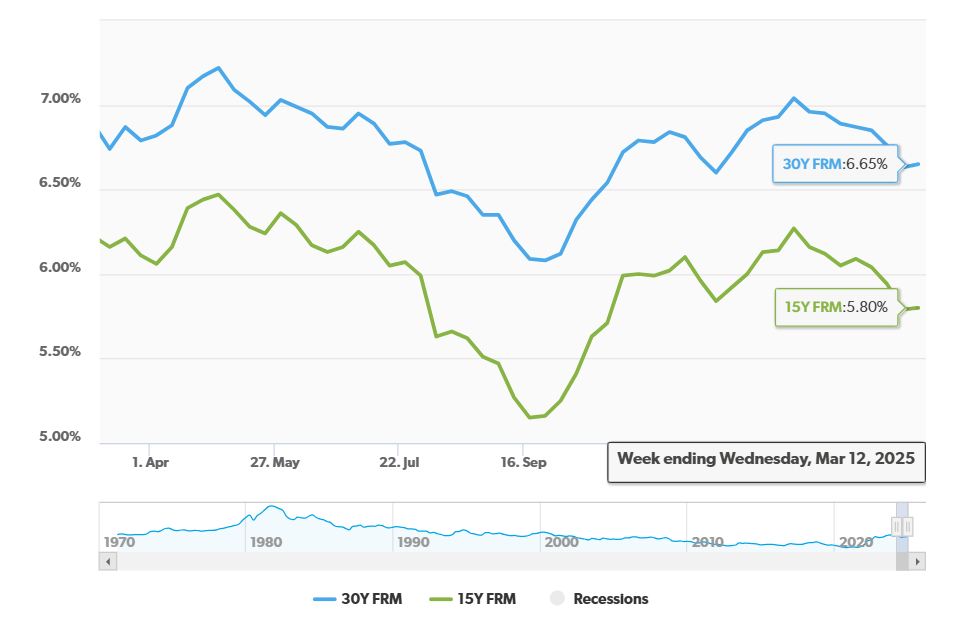
Freddie Mac's latest report shows the average rate for a 30-year fixed mortgage at 6.65%. While this is a slight increase from the previous week's 6.63%, it's still below the 6.74% we saw a year ago. It's pretty much flat. But what does this mean for you?

Freddie Mac's latest report shows the average rate for a 30-year fixed mortgage at 6.65%
Source: Freddie Mac

A Look Back: Where We've Been

To truly understand the current rates, it's important to take a quick trip down memory lane. 2024 was a tough year for the housing market. It was the slowest year since 1996! High rates and limited inventory made it difficult for buyers to find and afford homes. I remember talking to so many frustrated families who had to put their dreams on hold.

That's why this slight dip in rates feels so significant. Even a small decrease can make a big difference in your monthly payment and overall affordability.

Signs Pointing Towards a Buyer-Friendly Market

I'm seeing several shifts in the market that could be beneficial for those looking to buy:

  • More Homes to Choose From: Inventory levels are rising, which means you have more options than you did last year. The competition for homes isn’t as fierce.
  • Sellers are Lowering Prices: Sellers are starting to realize they can't ask for sky-high prices anymore. Price reductions are becoming more common, giving buyers more negotiating power.
  • Spring is Blooming: The spring homebuying season is upon us. This is traditionally the busiest time of year for real estate, with more homes hitting the market and more buyers actively searching.
Trend Impact on Buyers
Increased Inventory More choices, less competition
Price Reductions Potential to find homes at lower prices
Spring Buying Season Increased activity, more options available

Thinking Beyond the 30-Year Fixed: The 15-Year Fixed Mortgage

While the 30-year fixed mortgage gets most of the attention, let's not forget about the 15-year fixed option. The average rate for a 15-year fixed mortgage is currently around 5.8%, a slight increase from 5.79% last week but still lower than the 6.16% from a year ago.

I personally love the 15-year option for those who can afford the higher monthly payments. You'll pay off your mortgage in half the time and save a ton on interest over the life of the loan.

Is Now the Right Time For You to Lock In?

This is the million-dollar question, isn't it? The answer isn't the same for everyone. You need to consider your unique situation:

  • Are you Financially Ready?: Do you have a stable income and a good credit score? Can you comfortably afford the monthly payments at the current rate?
  • How Long Do You Plan to Stay?: If you plan to stay in the home for a long time, securing a lower rate now could save you a significant amount of money.
  • What are the Economic Winds Saying?: Keep an eye on economic indicators. If inflation is expected to rise, or if interest rates are forecasted to increase, locking in a rate now might be a smart move.

Recommended Read:

Mortgage Rates Drop: Can You Finally Afford a $400,000 Home?

Housing Demand Surges as Mortgage Rates Drop Significantly

Mortgage Rates Forecast March 2025: Will Rates Finally Drop?

Expect High Mortgage Rates Until 2026: Fannie Mae's 2-Year Forecast

Will Mortgage Rates Rise Back Above 7% or Go Down in 2025?

Mortgage Interest Rates Forecast for Next 10 Years

Navigating the Lock-In Decision: A Deeper Dive

Okay, so you're thinking about locking in a mortgage rate. Here's a more in-depth look at some of the factors you should consider:

  • Understanding Lock-In Agreements: Make sure you fully understand the terms of your lock-in agreement. How long is the rate locked for? What happens if the closing is delayed? Are there any fees involved?
  • The Float-Down Option: Some lenders offer a “float-down” option, which allows you to take advantage of a lower rate if rates happen to decrease during your lock-in period. This can be a great perk, but make sure you understand the terms and any associated costs.
  • Shop Around: Don't just settle for the first rate you're offered. Shop around and compare rates from multiple lenders. Even a small difference in the interest rate can save you thousands of dollars over the life of the loan. I have personally saved my clients thousands of dollars by just rate shopping.
  • Get Pre-Approved: Getting pre-approved for a mortgage will give you a better idea of how much you can afford and will also strengthen your offer when you find the right home.

A Word of Caution: Don't Try to Time the Market Perfectly

I've seen so many people try to time the market perfectly, and they almost always end up missing out on opportunities. Trying to predict the future is a fool's errand. Focus on what you can control: your finances, your credit score, and your research.

My Personal Take: Act Now, But Do Your Homework

In my opinion, with rates hovering near a three-month low and the housing market showing signs of shifting in favor of buyers, now is a good time to seriously consider locking in a mortgage rate.

However, don't rush into anything. Take your time, do your research, and consult with a qualified mortgage professional. This is a big decision, so make sure you're making the right one for you and your family.

  • Consult a Pro: Talking to a mortgage broker or financial advisor can provide personalized advice.
  • Review Your Credit: A better credit score can get you a better rate.
  • Calculate All Costs: Don’t forget to factor in closing costs, property taxes, and insurance.

In Conclusion: Seize the Opportunity

The housing market is a dynamic beast, and it can be difficult to predict what will happen next. But right now, the conditions seem favorable for buyers. Mortgage rates are relatively low, inventory is improving, and sellers are becoming more willing to negotiate. If you're ready to buy, now might be the time to take the plunge.

Remember to assess your finances, consider your long-term plans, and stay informed about market trends. By doing your homework and making a well-informed decision, you can seize this opportunity and achieve your dream of homeownership.

Work With Norada, Your Trusted Source for

Real Estate Investments

With mortgage rates fluctuating, investing in turnkey real estate

can help you secure consistent returns.

Expand your portfolio confidently, even in a shifting interest rate environment.

Speak with our expert investment counselors (No Obligation):

(800) 611-3060

Get Started Now

Recommended Read:

  • Mortgage Rate Predictions 2025 from 4 Leading Housing Experts
  • Mortgage Rates Forecast for the Next 3 Years: 2025 to 2027
  • 30-Year Mortgage Rate Forecast for the Next 5 Years
  • 15-Year Mortgage Rate Forecast for the Next 5 Years
  • Why Are Mortgage Rates Going Up in 2025: Will Rates Drop?
  • Why Are Mortgage Rates So High and Predictions for 2025
  • Will Mortgage Rates Ever Be 3% Again in the Future?
  • Mortgage Rates Predictions for Next 2 Years
  • Mortgage Rate Predictions for Next 5 Years
  • Mortgage Rate Predictions: Why 2% and 3% Rates are Out of Reach
  • How Lower Mortgage Rates Can Save You Thousands?
  • How to Get a Low Mortgage Interest Rate?
  • Will Mortgage Rates Ever Be 4% Again?

Filed Under: Financing, Mortgage Tagged With: Interest Rate, mortgage, Mortgage Rate Trends, mortgage rates, Mortgage Rates Predictions, Mortgage Rates Today

Housing Demand Surges as Mortgage Rates Drop Significantly

March 13, 2025 by Marco Santarelli

Housing Demand Surges as Mortgage Rates Drop Significantly

Housing demand is surging as mortgage rates have dropped significantly. The recent dip in mortgage rates, reaching levels not seen since mid-December, has sparked a noticeable increase in homebuyer activity. This increased demand hasn't yet translated into closed sales, but the data clearly shows that more people are actively looking at homes. I believe that if rates continue to fall steadily, and economic confidence increases, sales will inevitably follow.

Housing Demand Surges as Mortgage Rates Drop Significantly

A Sigh of Relief for Potential Homeowners?

Let's be honest, the last couple of years haven't been easy for anyone trying to buy a home. Rising interest rates pushed monthly mortgage payments to uncomfortable levels, effectively sidelining many potential buyers. It felt like the dream of homeownership was slipping further away for many.

Now, with mortgage rates beginning to soften, it's like a pressure valve has been released. People who were previously priced out of the market are starting to cautiously dip their toes back in.

Here's what the data is telling us:

  • Mortgage rates are down: According to Mortgage News Daily, the daily average 30-year fixed mortgage rate was at 6.82% on March 12, lower than the 6.87% rate a year prior. Freddie Mac data showed that the weekly average 30-year fixed mortgage rate for the week ending March 6 was 6.63%, the lowest since mid-December.
  • Mortgage applications are up: The Mortgage Bankers Association reported a 7% increase in mortgage-purchase applications for the week ending March 7. This is the highest level we've seen since early February.
  • Homebuyer interest is soaring: Google searches for “homes for sale” are up 10% year-over-year. Redfin's Homebuyer Demand Index, which measures home tours and other buying services, has hit its highest point since the beginning of the year, reflecting a 5% increase year-over-year.
  • Touring Activity on the rise: Touring activity is up by 32% from the start of the year.

Why the Disconnect Between Demand and Sales?

While the increased interest in buying is encouraging, it's important to note that this hasn't yet translated into a significant increase in actual home sales. Pending home sales were down 6.1% year-over-year during the four weeks ending March 9. This begs the question: why the disconnect?

I think there are a few factors at play here.

  • Economic Uncertainty: As Redfin's Economic Research Lead Chen Zhao pointed out, the decline in mortgage rates is partly due to concerns about the overall economic outlook. Issues like tariffs and a slightly weaker job market are making people hesitant to make major financial commitments. People are worried about job security and the possibility of a recession, and that fear outweighs the temptation of slightly lower mortgage payments.
  • Affordability Concerns: Even with lower mortgage rates, home prices are still relatively high in many markets. People are still carefully considering whether the lower monthly payments are enough to justify a home purchase. It's a matter of balancing the desire for homeownership with the realities of their personal budgets.
  • Waiting for the “Perfect” Moment: Some potential buyers may be waiting for rates to drop even further before jumping into the market. They might be hoping to snag an even better deal, but this strategy could backfire if prices start to rise due to increased demand. I believe it's a balancing act between timing the market and finding the right home that fits your needs and budget.

A Look at the Selling Side of the Equation

The good news for potential buyers is that new listings are also up. According to Redfin, for the four weeks ending March 9, new listings of homes for sale increased by 3.1% year-over-year. This is a positive sign that more homeowners are becoming confident enough to put their properties on the market.

As we head into the spring homebuying season, I anticipate that we'll continue to see an increase in listings. Homeowners will likely take notice of the increasing demand from buyers and decide that now is a good time to sell.

Key Housing Market Data: What's Really Happening?

To get a clearer picture of what's happening in the housing market, let's take a look at some key data points from Redfin for the four weeks ending March 9, 2025:

  • Median Sale Price: $381,975 (Up 3.2% year-over-year)
  • Median Asking Price: $421,225 (Up 6.1% year-over-year)
  • Median Monthly Mortgage Payment: $2,773 (at a 6.63% mortgage rate) (Up 5.2% year-over-year)
  • Pending Sales: 77,182 (Down 6.1% year-over-year)
  • New Listings: 88,739 (Up 3.1% year-over-year)
  • Active Listings: 925,690 (Up 9.3% year-over-year)
  • Months of Supply: 4.1 (Up 0.6 pts.)
  • Share of Homes Off Market in Two Weeks: 34.6% (Down from 39%)
  • Median Days on Market: 52 (Up 7 days)
  • Share of Homes Sold Above List Price: 22.9% (Down from 25%)
  • Average Sale-to-List Price Ratio: 98.3% (Down from 98.6%)

These numbers tell a mixed story. While prices are still rising, the rate of increase is slowing down. The increase in active listings is also a positive sign for buyers, as it gives them more options to choose from. However, the decrease in pending sales suggests that buyers are still hesitant to commit.

Here is the data in a table form for ease of understanding

Metric Value Year-over-Year Change
Median Sale Price $381,975 3.2%
Median Asking Price $421,225 6.1%
Median Monthly Mortgage Payment $2,773 5.2%
Pending Sales 77,182 -6.1%
New Listings 88,739 3.1%
Active Listings 925,690 9.3%
Months of Supply 4.1 +0.6 pts.
Share of Homes Off Market in 2 Weeks 34.6% Down from 39%
Median Days on Market 52 +7 days
Share of Homes Sold Above List Price 22.9% Down from 25%
Avg. Sale-to-List Price Ratio 98.3% Down from 98.6%

The Local Picture: Where are Prices Rising and Falling?

It's important to remember that the housing market is not a monolith. Conditions can vary significantly from one metro area to another.

Here's a look at some metro-level highlights:

  • Metros with Biggest Year-Over-Year Increases in Median Sale Price:
    • Milwaukee (15.7%)
    • Cleveland (13%)
    • Anaheim, CA (11.7%)
    • Nassau County, NY (11.5%)
    • San Jose, CA (10.3%)
  • Metros with Biggest Year-Over-Year Decreases in Median Sale Price:
    • Austin, TX (-3.9%)
    • Jacksonville, FL (-2.6%)
    • Tampa, FL (-2%)
    • Atlanta (-1%)
    • San Antonio (-0.8%)

This data shows that prices are still rising rapidly in some markets, particularly in the Midwest and on the West Coast. However, prices are actually declining in a few metro areas, primarily in the South.

Pending Sales:

  • Increased in Los Angeles, Anaheim, Columbus and Sacramento
  • Decreased in Fort Lauderdale, Warren, Houston, Atlanta and Detroit.

New Listings:

  • Increased in San Jose, Sacramento, Oakland, Phoenix and Los Angeles.
  • Decreased in Detroit, Warren, Austin, Fort Worth, and Milwaukee.

Recommended Read:

Mortgage Rates Drop: Can You Finally Afford a $400,000 Home?

Mortgage Rates Forecast March 2025: Will Rates Finally Drop?

Expect High Mortgage Rates Until 2026: Fannie Mae's 2-Year Forecast

Will Mortgage Rates Rise Back Above 7% or Go Down in 2025?

Mortgage Interest Rates Forecast for Next 10 Years

What Does This All Mean for You?

If you're a potential homebuyer, the current market conditions present both opportunities and challenges.

  • The Opportunity: Lower mortgage rates make homeownership more accessible and affordable. The increase in active listings gives you more options to choose from.
  • The Challenge: Economic uncertainty and affordability concerns may make you hesitant to commit. You'll need to carefully weigh your options and determine what you can realistically afford.

My advice is to do your research, get pre-approved for a mortgage, and work with a knowledgeable real estate agent who can guide you through the process. Don't be afraid to negotiate, and be prepared to walk away if you don't find the right home at the right price.

If you're a homeowner, the current market conditions may be a good time to sell. Demand is still relatively strong, and prices are still rising in many markets. However, it's important to be realistic about your expectations. Be prepared to negotiate, and don't overprice your home.

Looking Ahead: What's Next for the Housing Market?

Predicting the future is always difficult, but I think there are a few key factors that will shape the housing market in the coming months.

  • Mortgage Rates: The trajectory of mortgage rates will be crucial. If rates continue to decline, we can expect to see a further increase in homebuyer demand and, eventually, an increase in sales.
  • The Economy: The overall health of the economy will also play a significant role. If the economy remains strong, consumer confidence will increase, and more people will be willing to make major financial commitments. However, if the economy weakens, we could see a slowdown in the housing market.
  • Housing Supply: The level of housing supply will also be a key factor. If new construction continues to lag behind demand, prices will likely continue to rise. However, if we see a significant increase in new construction, prices could stabilize or even decline in some markets.

Overall, I expect the housing market to remain somewhat volatile in the coming months. There will be opportunities for both buyers and sellers, but it's important to be informed and prepared. Keep a close eye on the data, and work with experienced professionals who can help you navigate the market.

My Final Thoughts

The housing market is always evolving, and it's important to stay informed about the latest trends and data. While the recent surge in housing demand is encouraging, it's important to remember that the market is still facing some challenges. By understanding the factors that are shaping the market, you can make informed decisions about buying or selling a home.

Work With Norada, Your Trusted Source for

Real Estate Investments

With mortgage rates fluctuating, investing in turnkey real estate

can help you secure consistent returns.

Expand your portfolio confidently, even in a shifting interest rate environment.

Speak with our expert investment counselors (No Obligation):

(800) 611-3060

Get Started Now

Recommended Read:

  • Mortgage Rate Predictions 2025 from 4 Leading Housing Experts
  • Mortgage Rates Forecast for the Next 3 Years: 2025 to 2027
  • 30-Year Mortgage Rate Forecast for the Next 5 Years
  • 15-Year Mortgage Rate Forecast for the Next 5 Years
  • Why Are Mortgage Rates Going Up in 2025: Will Rates Drop?
  • Why Are Mortgage Rates So High and Predictions for 2025
  • Will Mortgage Rates Ever Be 3% Again in the Future?
  • Mortgage Rates Predictions for Next 2 Years
  • Mortgage Rate Predictions for Next 5 Years
  • Mortgage Rate Predictions: Why 2% and 3% Rates are Out of Reach
  • How Lower Mortgage Rates Can Save You Thousands?
  • How to Get a Low Mortgage Interest Rate?
  • Will Mortgage Rates Ever Be 4% Again?

Filed Under: Financing, Mortgage Tagged With: Interest Rate, mortgage, Mortgage Rate Trends, mortgage rates, Mortgage Rates Predictions, Mortgage Rates Today

Today’s Mortgage Rates March 13, 2025: Rates Rise in Response Inflation Data

March 13, 2025 by Marco Santarelli

Today's Mortgage Rates March 13, 2025: Rates Rise as Inflation Impacts Markets

As of today, March 13, 2025, mortgage rates have increased slightly in response to the latest inflation data, with the 30-year fixed mortgage rate now at 6.34% and the 15-year fixed rate at 5.65%. This uptick comes after weeks of declining rates, showing just how sensitive mortgage interest rates can be to shifts in economic conditions and consumer sentiment. Continuing economic improvements, as indicated by the latest Consumer Price Index (CPI) report, have contributed to the current trajectory of mortgage rates.

Today's Mortgage Rates March 13, 2025: Rates Rise in Response Inflation Data

Key Takeaways

  • Current Mortgage Rates: 30-year fixed at 6.34% and 15-year fixed at 5.65%.
  • Inflation Influence: Rates reacted to February's Consumer Price Index (CPI), which shows a year-over-year inflation increase of 2.8%.
  • Refinance Rates: Today's refinance rates are slightly higher than purchase rates.
  • Trends: The increase in rates reflects a recovering economy and rising consumer confidence, potentially impacting future home purchases and refinancing strategies.

Current Mortgage Rates

Understanding the variety of mortgage rates available today is crucial for both prospective home buyers and those considering refinancing their existing mortgage. Here's a detailed look at current averages from Zillow's data:

Type of Mortgage Interest Rate (%)
30-year fixed 6.34
20-year fixed 6.11
15-year fixed 5.65
5/1 ARM 6.38
7/1 ARM 6.79
30-year VA 5.86
15-year VA 5.28
5/1 VA 5.76

As reflected in the table, the rates have progressed over the last few months. Notably, the 30-year fixed mortgage is widely recognized for its stability and robustness in the fluctuating financial environment. Conversely, the 5/1 ARMs are marketed with initial lower rates but can increase after five years, making them a gamble for borrowers who value budget predictability.

Today's Mortgage Refinance Rates

Refinancing your mortgage can lead to lower monthly payments and other advantages. Knowing current rates is essential for making informed financial decisions. Below are today’s average refinance rates:

Refinance Type Interest Rate (%)
30-year fixed 6.43
20-year fixed 6.08
15-year fixed 5.70
5/1 ARM 6.89
7/1 ARM 7.05
30-year VA 5.91
15-year VA 5.49
30-year FHA 5.85
15-year FHA 5.58

It's essential to note that refinance rates can sometimes be higher than those for purchasing a new mortgage, depending on individual circumstances and lender policies.

Understanding Mortgage Payments Today

For anyone contemplating taking out a mortgage or refinancing, understanding how interest rates impact monthly payments is vital. Below, we break down what you might expect to pay on various mortgage amounts based on today’s interest rates.

Monthly Payment on a $150,000 Mortgage

For a $150,000 mortgage at a 30-year fixed rate of 6.34%, your monthly payment would be approximately $932.59. Over the life of the loan, you would pay about $115,530 in interest. This scenario shows how even a manageable loan amount can build up considerable interest, which emphasizes the importance of securing the best possible rates.

Monthly Payment on a $200,000 Mortgage

Taking on a $200,000 mortgage at a 30-year fixed rate of 6.34%, your monthly payment would come to about $1,243.45. In total, you could end up paying approximately $154,042 in interest over the full mortgage period.

Monthly Payment on a $300,000 Mortgage

If you need to borrow $300,000 at a 6.34% fixed rate, expect your monthly payment to be around $1,865.17. Over 30 years, this translates to about $231,063 in interest costs.

Monthly Payment on a $400,000 Mortgage

For a higher-end mortgage of $400,000 at 6.34%, your monthly payment would be about $2,486.89, resulting in around $308,084 paid in interest throughout the loan term, clearly showing the financial commitment required.

Monthly Payment on a $500,000 Mortgage

Finally, if you’re looking at a $500,000 mortgage at 6.34%, your potential monthly payment would be around $3,108.62. Calculate approximately $385,105 in interest over the life of the loan.

Recommended Read:

Mortgage Rates Trends as of March 12, 2025

Mortgage Rates Drop: Can You Finally Afford a $400,000 Home?

Mortgage Rates Forecast March 2025: Will Rates Finally Drop?

Expect High Mortgage Rates Until 2026: Fannie Mae's 2-Year Forecast

Will Mortgage Rates Rise Back Above 7% or Go Down in 2025?

Mortgage Interest Rates Forecast for Next 10 Years

How Mortgage Rates Work

Mortgage rates can seem intricate, but they simplify down to key principles. A mortgage interest rate represents the cost you incur for borrowing money from a lender, expressed as a percentage of the loan amount.

Types of Mortgage Rates

There are two main types of mortgage rates:

  1. Fixed-Rate Mortgages: These lock in your interest rate for the entirety of your loan period, making your monthly payments predictable and consistent.
  2. Adjustable-Rate Mortgages (ARMs): These start with lower rates than fixed-rate mortgages but will adjust to market conditions after a predetermined period.

While fixed-rate mortgages provide stability and protection against future rate increases, adjustable-rate mortgages can allow you to enjoy lower initial payments. However, the risk lies in potential rate increases, which can lead to higher payments after the introductory period ends.

The Amortization Cycle

When you first take out a mortgage, a substantial portion of your early payments go toward interest rather than paying down the principal. As time goes on, the balance shifts, and a larger portion of each payment goes toward reducing the principal. This illustrates how the amortization process works and emphasizes the costs involved.

Understanding Rate Determinants

Mortgage rates are significantly influenced by two categories of factors: those within your control and those that are not.

Factors You Can Control

  • Credit Score: Generally, higher credit scores lead to lower interest rates.
  • Debt-to-Income Ratio: Borrowers should keep their debt levels low to improve chances of securing better loan offers.
  • Lender Comparison: Shopping around and comparing offers from different lenders can help you find the best rates available.

Factors You Cannot Control

  • Economic Conditions: Rates typically rise when the economy is performing well since lenders anticipate more borrowing and spending. Conversely, if the economy is struggling, rates might fall.
  • Inflation Rates: The impact of inflation directly affects mortgage rates; as inflation rises, lenders increase rates to maintain profitability.

Current Economic Context

The recently released CPI data for February 2025 indicates that inflation has increased by 2.8% year-over-year, which is lower than the 3% increase recorded in January 2025. These statistics can lead to increased consumer confidence but also higher mortgage rates, as lenders react to economic trends.

Understanding these dynamics can empower potential homeowners to navigate their mortgage decisions more effectively and with clarity.

Mortgage Types Explained

30-Year vs. 15-Year Fixed Mortgages:

  • The 30-year mortgage is highly favored due to its lower monthly payment structure, making it more accessible for many people. However, this option usually comes with a higher interest rate, and borrowers end up paying far more interest over the long haul.
  • In contrast, a 15-year mortgage typically carries a lower rate and allows homeowners to build equity faster. While the monthly payments are higher, it can result in substantial interest savings over time.

Conclusion

As we see rising mortgage rates reflective of improving economic conditions, it's essential for potential homebuyers or those considering refinancing to be proactive in understanding their options as well as the current market trends. The interplay between interest rates and economic indicators like inflation can greatly influence your home buying strategy, making being informed a crucial element of any purchasing decision.

Work With Norada, Your Trusted Source for

Real Estate Investments

With mortgage rates fluctuating, investing in turnkey real estate

can help you secure consistent returns.

Expand your portfolio confidently, even in a shifting interest rate environment.

Speak with our expert investment counselors (No Obligation):

(800) 611-3060

Get Started Now

Recommended Read:

  • Mortgage Rate Predictions 2025 from 4 Leading Housing Experts
  • Mortgage Rates Forecast for the Next 3 Years: 2025 to 2027
  • 30-Year Mortgage Rate Forecast for the Next 5 Years
  • 15-Year Mortgage Rate Forecast for the Next 5 Years
  • Why Are Mortgage Rates Going Up in 2025: Will Rates Drop?
  • Why Are Mortgage Rates So High and Predictions for 2025
  • Will Mortgage Rates Ever Be 3% Again in the Future?
  • Mortgage Rates Predictions for Next 2 Years
  • Mortgage Rate Predictions for Next 5 Years
  • Mortgage Rate Predictions: Why 2% and 3% Rates are Out of Reach
  • How Lower Mortgage Rates Can Save You Thousands?
  • How to Get a Low Mortgage Interest Rate?
  • Will Mortgage Rates Ever Be 4% Again?

Filed Under: Financing, Mortgage Tagged With: Interest Rate, mortgage, Mortgage Rate Trends, mortgage rates, Mortgage Rates Predictions, Mortgage Rates Today

Mortgages for Low Credit Score: Your Complete Guide

March 12, 2025 by Marco Santarelli

Mortgages for Low Credit Scores: Your Complete Guide

Dreaming of owning a home but worried about your less-than-perfect credit score? Don't hit the panic button just yet! Getting a mortgage with a low credit score is entirely possible, although it might require a bit more legwork and strategizing. While a good credit score undoubtedly smooths the homebuying process, it’s not the be-all and end-all.

Think of it like this: your credit score is like a financial report card, giving lenders a glimpse into your creditworthiness. A lower score might raise some eyebrows, but it doesn't automatically disqualify you from the mortgage game.

This comprehensive guide is your roadmap to navigating the world of mortgages for low credit scores. We'll delve into understanding credit scores, exploring your loan options, and uncovering effective strategies to improve your chances of approval. Let’s turn that dream of homeownership into a reality!

Understanding Credit Scores and Their Impact on Mortgages

Before diving headfirst into mortgage options, let's demystify credit scores and understand how they affect your homebuying journey.

What Exactly is a Credit Score, and Why Does it Matter?

In simple terms, your credit score is a three-digit number that represents your creditworthiness, calculated based on your credit history. It tells lenders how responsibly you've managed your finances in the past, giving them an idea of the risk they take by lending to you.

Think of it as a trust score – the higher your score, the more confident lenders are in your ability to repay the loan. Several factors contribute to this magical number, including:

  • Payment History: Paying your bills on time is crucial, accounting for a significant portion of your score.
  • Amounts Owed: This refers to how much you owe on credit cards, loans, etc. Keeping your credit utilization low is vital.
  • Length of Credit History: A longer credit history generally reflects positively, showing lenders you can manage credit over time.
  • Credit Mix: Having a mix of credit types (credit cards, installment loans) can demonstrate responsible credit management.
  • New Credit: Opening too many new credit accounts in a short period can negatively impact your score.

Credit Score Ranges: Where Do You Stand?

Credit scores typically range from 300 to 850, categorized as follows:

Credit Score Range Category Mortgage Eligibility
760-850 Excellent Ideal Candidate
700-759 Good Generally Eligible
620-699 Fair May face stricter terms
580-619 Poor Challenging but possible
300-579 Very Poor Extremely Difficult

Don't despair if your score falls below the “good” range! While securing a conventional mortgage might be challenging, various loan options cater specifically to borrowers with low credit scores.

Mortgage Options for Low Credit Scores: Exploring Your Choices

Here comes the good news: even with a lower credit score, several mortgage options can pave your path to homeownership. Let's explore some popular choices:

1. FHA Loans: Backed by the Federal Housing Administration

FHA loans are government-backed loans designed to make homeownership accessible to a broader range of borrowers, including those with lower credit scores.

  • Minimum Credit Score: The minimum credit score requirement for an FHA loan can be as low as 500, although a score of 580 or higher generally qualifies you for more favorable terms.
  • Down Payment: One of the significant advantages of FHA loans is the low down payment requirement, which can be as low as 3.5% for borrowers with credit scores of 580 or above.
  • Mortgage Insurance: Keep in mind that FHA loans come with mortgage insurance premiums (MIP), protecting the lender in case of default. You'll pay an upfront MIP and an annual premium, usually rolled into your monthly mortgage payments.

2. VA Loans: A Benefit for Eligible Veterans and Service Members

VA loans offer incredible benefits for eligible veterans, active-duty military personnel, and surviving spouses, often requiring no down payment and featuring competitive interest rates.

  • Credit Score Requirements: While the VA doesn't set a minimum credit score requirement, most lenders look for a score of 620 or higher. However, some lenders may work with borrowers with lower scores.
  • No Down Payment: VA loans often come with the significant advantage of requiring no down payment, making homeownership more attainable.
  • Funding Fee: Instead of mortgage insurance, VA loans have a funding fee that can be paid upfront or rolled into the loan amount.

3. USDA Loans: Supporting Rural Development and Homeownership

USDA loans, offered by the U.S. Department of Agriculture, aim to make homeownership affordable in designated rural areas.

  • Credit Score Requirements: While USDA loans don't have a set minimum credit score, most lenders prefer borrowers with a score of 640 or higher.
  • No Down Payment: Similar to VA loans, USDA loans typically require no down payment, making them an attractive option for eligible borrowers.
  • Geographic Restrictions: It's important to note that USDA loans have specific geographic eligibility requirements. You can use the USDA's property eligibility tool to determine if a property qualifies.

4. Non-QM Loans: Expanding Options for Diverse Borrowers

Non-QM loans (Non-Qualified Mortgages) offer an alternative for borrowers who don't meet the strict criteria of conventional loans. These loans often have more flexible underwriting guidelines, allowing lenders to consider various factors beyond traditional credit scores.

  • Credit Score Flexibility: Non-QM loans can be a viable option for borrowers with lower credit scores, as lenders may consider alternative credit data or focus on factors like income and assets.
  • Variety of Loan Programs: Non-QM loans encompass a range of loan products, each with specific eligibility criteria and terms, so it's essential to shop around and compare options.
  • Higher Interest Rates: It's important to note that non-QM loans might come with higher interest rates compared to conventional loans due to the perceived higher risk by lenders.

Boosting Your Chances of Approval: Strategies for Success

Securing a mortgage with a low credit score requires strategic planning and effort. Here are some proven strategies to increase your likelihood of approval:

1. Know Your Credit Score and Understand Your Credit Report

Before approaching lenders, obtain your credit report from all three major credit bureaus (Equifax, Experian, and TransUnion). Review it carefully for any errors or inaccuracies that might be dragging down your score.

  • Dispute Inaccuracies: If you find any errors, dispute them immediately with the respective credit bureau. Correcting even small errors can positively impact your score.
  • Understand Your Credit History: Analyze your credit report to identify areas for improvement. This will give you a clearer picture of what factors might be affecting your score and allow you to focus your efforts on improving them.

2. Improve Your Credit Score: Take Action for a Brighter Future

While it takes time to improve your credit score significantly, even small improvements can make a difference.

  • Pay Your Bills on Time: Consistently paying your bills on time is crucial for building a positive payment history, a significant factor in your credit score calculation. Set up automatic payments or reminders to avoid late payments.
  • Reduce Credit Utilization: High credit utilization (the amount of credit you use compared to your total available credit) can negatively impact your score. Aim to keep your credit utilization below 30%.
  • Avoid Opening New Credit Accounts: Each time you apply for new credit, it results in a hard inquiry on your credit report, potentially lowering your score. Avoid opening unnecessary credit accounts, especially in the months leading up to your mortgage application.
  • Become an Authorized User: If a family member or trusted friend has a credit card with a good payment history, ask if they can add you as an authorized user. This can give your credit score a boost, especially if you're starting with limited credit history.

3. Save for a Larger Down Payment: Demonstrating Financial Stability

A larger down payment can be a game-changer when applying for a mortgage with a low credit score.

  • Reduces Lender Risk: A larger down payment signifies a lower loan-to-value ratio (LTV), reducing the lender's risk and increasing your chances of approval.
  • Lower Monthly Payments: A larger down payment translates to a smaller loan amount, resulting in lower monthly mortgage payments and potentially qualifying for better interest rates.
  • Explore Down Payment Assistance Programs: Research down payment assistance programs (DPAs) offered by various organizations and government agencies. DPAs can provide grants or low-interest loans to help cover down payment costs.

4. Seek Guidance from a Mortgage Professional: Your Expert Guide

Navigating the mortgage process, especially with a low credit score, can be complex. Consulting with an experienced mortgage professional can provide invaluable guidance.

  • Understanding Your Options: A mortgage broker or loan officer can assess your financial situation, credit history, and homebuying goals to recommend suitable loan programs.
  • Getting Pre-Approved: Getting pre-approved for a mortgage can strengthen your position as a borrower, showing sellers you're serious and giving you a clearer picture of what you can afford.
  • Negotiating on Your Behalf: Mortgage professionals can negotiate with lenders on your behalf, helping you secure the best possible loan terms and interest rates.

5. Build a Strong Application: Presenting Your Best Financial Self

When applying for a mortgage, presenting a well-organized and complete application package is essential.

  • Gather Necessary Documentation: Collect all required financial documents, including pay stubs, tax returns, bank statements, and credit reports, to ensure a smooth application process.
  • Maintain Consistent Employment: Lenders prefer borrowers with a stable employment history. Aim for at least two years of continuous employment in the same field or industry.
  • Be Transparent About Your Financial Situation: Be upfront and honest with your lender about any past credit challenges. Transparency can build trust and demonstrate your commitment to responsible homeownership.

Final Thoughts:

Remember, obtaining a mortgage with a low credit score is achievable with the right approach. By understanding your credit, exploring loan options, and implementing strategic improvements, you can increase your chances of securing a mortgage and stepping into your dream home. Patience, perseverance, and expert guidance are your allies on this exciting journey!

FAQs

1. Can I really get a mortgage with a low credit score?

Yes, it's definitely possible to get a mortgage even with a lower credit score. While it might be more challenging than with a high score, there are several loan options designed for borrowers with less-than-perfect credit. This guide explores these options and strategies for improving your chances of approval.

2. What are some of the best mortgage options for people with low credit scores?

FHA, VA, and USDA loans are great options for borrowers with lower credit scores, as they often have more lenient credit requirements. Additionally, non-QM loans offer flexibility for those who may not meet traditional loan criteria.

3. How much can I expect to pay for a mortgage with a lower credit score?

Interest rates for borrowers with low credit scores are typically higher compared to those with good credit. This is due to the higher perceived risk for lenders. However, you can still get a mortgage, and by improving your credit and exploring various loan options, you can potentially negotiate better terms and lower rates.

4. What if I have a history of late payments or credit card debt?

Don't despair! While a history of late payments and credit card debt can impact your credit score, it doesn't necessarily disqualify you from getting a mortgage. By taking steps to improve your credit, such as paying your bills on time and managing your debt responsibly, you can demonstrate your commitment to financial stability and improve your chances of approval.

5. Where can I find help navigating the mortgage process with a low credit score?

Consulting with a mortgage professional is highly recommended. A mortgage broker or loan officer can guide you through the entire process, explain your options, and help you secure the best possible terms for your individual situation. They can also assist you with pre-approval, which strengthens your position as a buyer and provides a clear understanding of your affordability.

Read More:

  • FHA Mortgage Rates by Credit Score: 620, 700, 580, 640
  • What Credit Score Do You Need to Buy House With No Money Down?
  • How Long Does It Take to Get a 700-800 Credit Score?
  • How To Improve Your FICO Credit Score: A Guide
  • FHA Credit Score Requirements for Homeownership
  • 10 Proven Methods to Elevate Your FICO Credit Score

Filed Under: Financing, Mortgage Tagged With: credit repair, credit score, FICO, mortgage

  • « Previous Page
  • 1
  • …
  • 105
  • 106
  • 107
  • 108
  • 109
  • …
  • 131
  • Next Page »

Real Estate

  • Birmingham
  • Cape Coral
  • Charlotte
  • Chicago

Quick Links

  • Markets
  • Membership
  • Notes
  • Contact Us

Blog Posts

  • Today’s Mortgage Rates, August 21: 30-Year Rate Drops to 6.50%, Lowest in a Week
    August 21, 2026Marco Santarelli
  • 30-Year Fixed Mortgage Rate Drops for Second Consecutive Week
    August 21, 2026Marco Santarelli
  • Mortgage Rates Today, August 21, 2026: 30-Year Refinance Rate Drops by 16 Basis Points
    August 21, 2026Marco Santarelli

Contact

Norada Real Estate Investments 30251 Golden Lantern, Suite E-261 Laguna Niguel, CA 92677

(949) 218-6668
(800) 611-3060
BBB
  • Terms of Use
  • |
  • Privacy Policy
  • |
  • Testimonials
  • |
  • Suggestions?
  • |
  • Home

Copyright 2018 Norada Real Estate Investments

Loading...