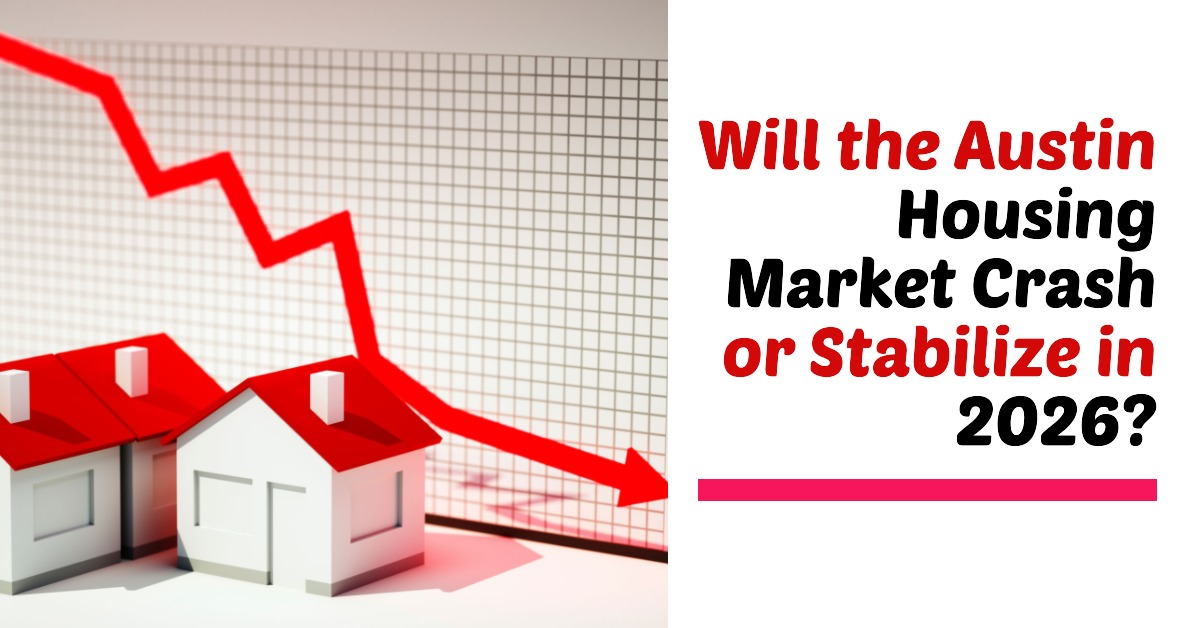
I don't think the Austin housing market is going to crash in 2026. Instead, what we're seeing is more of a reset, a settling down after the wild ride of the past few years. If you're looking to buy or sell in Austin right now, understanding this shift is key.
I've been following the Austin real estate scene for a while now, and this current period feels like a much-needed breath of fresh air for buyers. The days of bidding wars and waiving contingencies are largely behind us, replaced by a more balanced environment. Think of it less like a sudden earthquake and more like a slow, gentle adjustment.
Will the Austin Housing Market Crash or Stabilize in 2026?
The “Reset” – What It Means for You
Right now, the data from early 2026 paints a clear picture: the market is transitioning. We're not talking about a freefall, but rather a stabilization that could see some minor price softening. Some experts are predicting a modest drop of up to 5% in median home prices in certain areas, especially in the first half of the year, before things likely bottom out in the latter half. My own observations align with this – I'm seeing more homes sitting on the market a bit longer, and sellers are becoming more willing to negotiate.
This is fantastic news for buyers. For a long time, Austin was firmly a seller's market, meaning sellers had all the power. Now, it's flipped. We're looking at around 4.5 to 5+ months of housing supply. What does that mean in plain English? If no new homes were built, it would take that long to sell all the homes currently available. This gives you, the buyer, significant leverage. You can actually ask for things like price reductions, help with closing costs, or even a mortgage rate buydown. I've seen deals come together that just a year or two ago would have been unthinkable.
Mortgage Rates: A Steadying Influence
One of the biggest factors that had people hesitant to buy was the high cost of borrowing. Thankfully, mortgage rates seem to have found a more stable footing. As of early 2026, a 30-year fixed mortgage is hovering in the low 6% range, somewhere around 6.06% to 6.2%. This is a huge relief compared to where we were. These more predictable rates are bringing buyers back into the market who might have been waiting on the sidelines.
Key Market Indicators (Early 2026): A Snapshot
To give you a clearer picture, let's look at some of the numbers from the beginning of 2026:
| Metric | Current Value | Year-Over-Year Change |
|---|---|---|
| Median Home Price (MSA) | $435,000 | -2.4% |
| Average Days on Market | 88 Days | +12% |
| Active Listings | 12,803 | +11.8% |
| Months of Inventory | 4.0 Months | +0.1 Months |
Source: Based on current market trends and data.
What these numbers tell me is that while prices have seen a slight dip, and homes are taking longer to sell, there are more homes available. This isn't a sign of panic selling; it's a sign of a market balancing out.
Why a Full-Blown Crash Seems Unlikely
So, what's preventing a total collapse? Several strong factors are at play:
Strong Economic Fundamentals Keep Austin Humming
Austin isn't just a fly-by-night boomtown. It's got serious, long-term economic drivers. We're talking about major tech companies like Apple, Google, and Tesla continuing to grow and hire here. Plus, massive infrastructure projects are underway, like the expansion of the Austin-Bergstrom International Airport, and significant industrial developments like the Samsung semiconductor plant in Taylor are operational. These aren't fleeting trends; they represent sustained job growth and a steady influx of people wanting to live and work here.
Inventory is High, But It's Also Being Absorbed
Yes, we've seen a surge in new construction over the past few years, which has added to the housing supply. However, this isn't necessarily a bad thing when paired with demand. The market is now beginning to absorb this excess inventory more steadily as buyer confidence returns, thanks to more stable interest rates and the shift towards a buyer's market. It’s about finding a balance, and I believe Austin is on its way to achieving that.
The Rental Market Acts as a Buffer
Something else I've noticed is the apartment market. There was a big wave of new apartment buildings that came online in 2024 and 2025. This has actually led to rents dropping by about 5% year-over-year. This is significant because it acts as a release valve. Without the pressure of rapidly rising rents, people aren't forced into buying the first house they can find out of desperation. This slowdown in rental price growth helps take some of the frantic energy out of the overall housing demand.
My Two Cents: Patience and Opportunity
From my perspective, the Austin housing market in 2026 is offering opportunity. It's a chance for buyers to get into the market with more negotiation power than they've had in years. For sellers, it means being realistic and working with buyers to find common ground.
I don't see the dramatic price drops that would define a “crash.” What I do see is a market that's maturing, moving away from the unsustainable highs of the pandemic era. If you're thinking about real estate in Austin, this is a time to be informed, patient, and strategic. The sky isn't falling. It's more like the market is taking a deep, steadying breath.
In 2026, select U.S. cities are projected to see surging demand, rising rents, and appreciation—creating prime opportunities for investors seeking passive income and long‑term wealth.
Work with Norada Real Estate to find stable, cash-flowing markets beyond the bubble zones—so you can build wealth without the risks of ultra-competitive areas.
Recommended Read:
- Austin Housing Market: Trends and Forecast
- Austin Real Estate Market Forecast 2025 to 2030
- Is The Austin TX Housing Market in Big Trouble?
- Will the Austin Housing Market Crash?
- Is the Austin Housing Market Shifting? Here's What Experts Say
- Austin House Prices Are ‘Going Back To Normal’
- Austin Housing Market is Losing Homebuyers to Other Cities