Norada Real Estate Investments

  • Home
  • Markets
  • Properties
  • Membership
  • Podcast
  • Learn
  • About
  • Contact

Mortgage Rates Today, March 23, 2026: 30-Year Refinance Rate Rises by 2 Basis Points

March 23, 2026 by Marco Santarelli

Mortgage Rates Today, July 21, 2026: 30-Year Refinance Rate Drops by 2 Basis Points

As of Monday, March 23, 2026: The 30-year fixed refinance rate ticked up to an average of 6.74%, a small climb of 2 basis points from where we were last week. While this might seem like a tiny shift, it's part of a bigger story that's making homeowners pause and think about whether refinancing is still the smart move right now.

Mortgage Rates Today, March 23, 2026: 30-Year Refinance Rate Rises by 2 Basis Points

What's Happening with Refinance Rates?

It feels like just yesterday we were talking about rates heading in a different direction, but lately, things have gotten a bit choppy. According to Zillow's latest figures for March 23, 2026, the average rate for a 30-year fixed refinance has settled at 6.74%. This is up from last week's 6.72%. You might notice that other loan types are also showing similar trends:

  • 30-Year Fixed Refinance: 6.74%
  • 15-Year Fixed Refinance: 5.93%
  • 5-Year Adjustable-Rate Mortgage (ARM) Refinance: 7.15%

These numbers are pretty steady on a day-to-day basis, but looking at the bigger picture for the month, there's definitely an upward pressure that's hard to ignore.

Why Are People Refinancing (or Not)?

It’s no surprise that when rates nudge higher, fewer people rush to refinance. The Mortgage Bankers Association reported a pretty significant drop of 27% week-over-week in conventional refinance applications. This tells me that a lot of folks are seeing these rates and deciding to hold off for now.

However, I've worked in this space for a while, and I know that not everyone is in the same boat. Homeowners who secured their mortgages back in the peak years of 2023 and 2024, when rates were hovering around 7% to 8%, might still find today's rates quite attractive. For them, refinancing could still mean a noticeable reduction in their monthly payments, even with this small uptick.

Interestingly, while refinance applications are down, the purchase market is showing some life. Applications for buying a home actually rose by 7.8% recently. This makes sense as we head into spring, a traditionally busy time for home sales. People are still buying houses, even if borrowing is a bit more expensive than it was a few months ago.

The Big Picture: What's Driving These Moves?

It’s easy to just look at the number, but what’s actually causing these mortgage rates to fluctuate? There are a few major players at work:

  • Global Unrest: Let’s be honest, the ongoing conflict in Iran is a huge anxiety for the markets. It's pushing oil prices up, and with them, broader concerns about global inflation. When inflation fears rise, it often means higher interest rates. Think about it: oil is used to make almost everything, so when its price goes up, costs for businesses and consumers tend to follow.
  • The Federal Reserve's Strategy: The Federal Reserve made its latest decision on March 18th, keeping its main interest rate steady in the 3.50%–3.75% range. What’s more telling, though, is their forecast: they're now anticipating only one rate cut for the entire year of 2026. Fed Chair Jerome Powell has made it clear that these cuts are on hold until they see more solid proof that inflation is truly cooling down. This signals a more cautious approach from the central bank, which has a direct impact on borrowing costs across the economy.
  • Treasury Yields – The Silent Partner: Mortgage rates tend to follow the 10-year Treasury yield very closely. Right now, that yield has climbed to 4.32%. When investors are worried about the economy or inflation, they often demand higher returns on bonds, pushing yields up. Since mortgages are essentially long-term bonds, when Treasury yields go up, mortgage rates usually follow suit. It’s a pretty direct correlation that affects millions of homeowners.
  • Inflation Numbers Don't Lie: We’ve seen the latest reports on Producer Price Index (PPI) and Consumer Price Index (CPI), and unfortunately, they’ve come in a bit hotter than economists predicted. This means prices are still climbing, both for businesses at the wholesale level and for us as consumers. Persistent inflation is a major signal to the Fed and the markets that further rate hikes or at least sustained higher rates are necessary.

My Take: What You Really Need to Know

From my experience, the current market feels… well, a little nervous. The CNN Fear & Greed Index often shows a “fear” sentiment, which can lead to pretty wild swings in rates from day to day. It’s this uncertainty that makes planning tough for everyone.

One thing I’ve been telling clients is this: if you were planning to refinance and felt good about rates around 6.0% to 6.5% for 2026, we might be seeing those higher ends of that spectrum becoming the norm, at least for now. Given the global tensions and the Fed's stance, locking in a rate sooner rather than later might be a wise move if you’re ready to refinance. Waiting for rates to drop significantly might mean missing out on the best opportunities available.

And what about the housing shortage? While higher rates do make buying a home less affordable, we're also seeing housing inventory start to level off. This means that even with the higher borrowing costs, people looking to buy might actually have more choices to look at than they did just a few months ago. It’s a bit of a balancing act between affordability and availability.

Key Takeaways for Today:

  • The 30-year fixed refinance rate is now at 6.74%, a slight increase of 2 basis points from last week.
  • Refinancing demand has dipped, but people are still buying homes, with purchase applications showing seasonal strength.
  • The main forces pushing up borrowing costs are stubborn inflation, global geopolitical issues, and rising 10-year Treasury yields.
  • Experts are still forecasting rates to stay within the 6.0% to 6.5% range for 2026, but expect more twists and turns.
  • If you've been thinking about refinancing, it might be a good time to consider locking in your rate sooner rather than later.

The Bottom Line

Right now, mortgage refinance rates are at some of their highest points of 2026. This is definitely changing how homeowners are approaching refinancing – a lot fewer applications are coming in. For most people, refinancing might not make as much financial sense as it did a few months back. However, if you’ve got an older mortgage with a really high interest rate, there might still be some good deals to be found. With ongoing worries about inflation and global stability, interest rates are likely to stay elevated. The housing market is facing a bit of a challenge this spring, but maybe, just maybe, the slight increase in available homes will offer some folks a glimmer of hope if they're looking to buy.

🏡 2 New Rental Properties With Strong Cash Flow

Cibolo, TX
🏠 Property: Columbia Dr
🛏️ Beds/Baths: 3 Bed • 2 Bath • 1758 sqft
💰 Price: $245,000 | Rent: $1,795
📊 Cap Rate: 5.2% | NOI: $1,052
📅 Year Built: 2007
📐 Price/Sq Ft: $140
🏙️ Neighborhood: A

VS

San Antonio, TX
🏠 Property: Burning Lamp
🛏️ Beds/Baths: 3 Bed • 2 Bath • 1415 sqft
💰 Price: $237,500 | Rent: $1,750
📊 Cap Rate: 5.4% | NOI: $1,069
📅 Year Built: 2012
📐 Price/Sq Ft: $168
🏙️ Neighborhood: A

Two Texas rentals in A‑rated neighborhoods—Cibolo’s larger home vs San Antonio’s newer build with stronger cap rate. Which fits YOUR investment strategy?

We have much more inventory available than what you see on our website – Let us know about your requirement.

📈 Choose Your Winner & Contact Us Today!

Speak to a Norada Investment Counselor (No Obligation):

(800) 611-3060

View All Properties

Invest Smart — Build Long-Term Wealth Through Turnkey Real Estate in 2026

Market forecasts suggest steady demand, making turnkey real estate one of the most reliable paths to passive income and wealth creation.

Norada Real Estate helps investors capitalize on these trends with turnkey rental properties designed for appreciation and consistent cash flow—so you can grow wealth securely while others wait for clarity in the market.

🔥 HOT 2026 INVESTMENT LISTINGS JUST ADDED! 🔥
Send Us An Email or Request a Call Back

Contact Us

Recommended Read:

  • 30-Year Fixed Refinance Rate Trends – March 22, 2026
  • Best Time to Refinance Your Mortgage: Expert Insights
  • Should You Refinance Your Mortgage Now or Wait Until 2026?
  • When You Refinance a Mortgage Do the 30 Years Start Over?
  • Should You Refinance as Mortgage Rates Reach Lowest Level in Over a Year?
  • Half of Recent Home Buyers Got Mortgage Rates Below 5%
  • Mortgage Rates Need to Drop by 2% Before Buying Spree Begins
  • Will Mortgage Rates Ever Be 3% Again: Future Outlook
  • Mortgage Rates Predictions for Next 2 Years
  • Mortgage Rate Predictions for Next 5 Years

Filed Under: Financing, Mortgage Tagged With: mortgage rates, Mortgage Rates Today, Refinance Rates

Mortgage Refinance Demand Drops Sharply by 19% in March 2026

March 22, 2026 by Marco Santarelli

Mortgage Refinance Demand Drops Sharply by 19% in March 2026

If you've been thinking about refinancing your mortgage, you're probably not alone in rethinking that strategy right now. My own gut feeling, supported by the latest numbers from the Mortgage Bankers Association, tells me that mortgage refinance demand in the United States took a sharp and sudden turn south in mid-March 2026. We saw the Refinance Index drop by a significant 19% for the week ending March 13th, officially putting an end to a month-long period of growth and signaling that rising borrowing costs are making homeowners pause.

It’s always interesting to watch how quickly market sentiment can shift, isn't it? Just when it seemed like homeowners were getting comfortable with slightly better rates, the rug was pulled out from under them. As someone who's followed the housing market for a while, this kind of volatility isn't entirely unexpected, especially when you factor in the bigger global picture.

Mortgage Refinance Demand Drops Sharply by 19% in March 2026

What's Behind This Sudden Slump?

Several factors are clearly colliding to create this perfect storm for refinancers.

1. The Interest Rate Rollercoaster:

The most immediate and impactful reason is the sharp rise in interest rates. The average contract rate for a 30-year fixed-rate mortgage climbed to 6.30% for the week ending March 13th. This might not sound like a massive jump on its own – it’s a 11 basis point increase from the previous week – but it's the highest we've seen this year, beating out December 2025 levels. When you're talking about mortgages, even small percentage point changes translate into significant dollar amounts over the life of a loan, making borrowers think twice.

2. Global Tensions Brewing:

Beyond just our mortgage rates, the wider economic environment is a big player. Rising Treasury yields, which are closely tied to mortgage rates, have been pushed higher by a pretty tense international situation. Geopolitical conflict in the Middle East has kept oil prices elevated, and this is stoking a familiar fear: a broader inflationary shock. When inflation heats up, it often leads to higher interest rates across the board, and that’s exactly what we're seeing reflected in mortgage markets.

3. The Fed's Balancing Act:

While the Federal Reserve decided to keep interest rates steady at their March meeting, the lead-up to that decision was anything but calm. Earlier volatility and the pause in anticipated rate cuts by the Fed have contributed to this upward pressure on mortgage yields. It feels like the Fed is walking a tightrope, trying to control inflation without completely derailing the economy, and this uncertainty trickles down into all borrowing costs.

A Closer Look at the Numbers

Let’s break down what happened during the week ending March 13, 2026, according to the Mortgage Bankers Association:

Metric Change (Week-over-Week) Current Level/Status
Refinance Index -19% Leading the overall decline
30-Year Fixed Rate +11 bps 6.30% (Highest in 2026)
Purchase Index +1% Showing resilience into spring season
Total Applications -10.9% Sharpest drop since Sept. 2025

Notice how the Purchase Index actually saw a slight increase? This suggests that while people looking to buy homes are still active, those aiming to refinance existing mortgages are hitting the brakes pretty hard. It’s a Tale of Two Markets, if you will.

Still Better Than Last Year?

Now, before we get too gloomy, it’s important to put this sharp weekly drop into perspective. Even with this recent plunge, refinance activity is still significantly higher than it was around this time last year. We’re talking about activity levels 69% to 70% higher than the same week in 2025.

And here’s another key point: current rates, at 6.30%, are still lower than they were a year ago. Back in early March 2025, the average rate for a 30-year mortgage was around 6.67%. That's a difference of about 42 to 45 basis points. So, while rates have gone up recently, they haven't completely erased the advantage homeowners might have had compared to a year ago.

However, the conventional refinance applications felt the brunt of this downturn, dropping by a considerable 27% over the week. This segment of the market is often the most sensitive to rate changes, and its significant decline underscores just how much impact the current rate environment is having.

What Does This Mean for Homeowners and the Market?

My take on this is that we're seeing a very natural market correction. Homeowners who were aggressively refinancing to capture lower rates have likely already done so. Now, with rates ticking up and uncertainty in the air, the financial incentive to refinance diminishes considerably for many. The cost savings just aren't as compelling when rates are on the rise, and the risk of higher payments if rates continue to climb might make people hesitant.

This lull in refinance activity could also have a ripple effect. Less refinancing means fewer transactions, which can impact lenders, mortgage brokers, and related industries. It also means homeowners are likely to be more settled in their current mortgages for longer.

Looking ahead, I'll be watching to see if this trend continues or if rates stabilize or even decline again. The Federal Reserve's next moves, along with developments in global markets, will be critical. For now, it seems the refinance party has been put on hold.

🏡 2 New Rental Properties With Strong Cash Flow

Cibolo, TX
🏠 Property: Columbia Dr
🛏️ Beds/Baths: 3 Bed • 2 Bath • 1758 sqft
💰 Price: $245,000 | Rent: $1,795
📊 Cap Rate: 5.2% | NOI: $1,052
📅 Year Built: 2007
📐 Price/Sq Ft: $140
🏙️ Neighborhood: A

VS

San Antonio, TX
🏠 Property: Burning Lamp
🛏️ Beds/Baths: 3 Bed • 2 Bath • 1415 sqft
💰 Price: $237,500 | Rent: $1,750
📊 Cap Rate: 5.4% | NOI: $1,069
📅 Year Built: 2012
📐 Price/Sq Ft: $168
🏙️ Neighborhood: A

Two Texas rentals in A‑rated neighborhoods—Cibolo’s larger home vs San Antonio’s newer build with stronger cap rate. Which fits YOUR investment strategy?

We have much more inventory available than what you see on our website – Let us know about your requirement.

📈 Choose Your Winner & Contact Us Today!

Speak to a Norada Investment Counselor (No Obligation):

(800) 611-3060

View All Properties

Invest Smart — Build Long-Term Wealth Through Turnkey Real Estate in 2026

Market forecasts suggest steady demand, making turnkey real estate one of the most reliable paths to passive income and wealth creation.

Norada Real Estate helps investors capitalize on these trends with turnkey rental properties designed for appreciation and consistent cash flow—so you can grow wealth securely while others wait for clarity in the market.

🔥 HOT 2026 INVESTMENT LISTINGS JUST ADDED! 🔥
Send Us An Email or Request a Call Back

Contact Us

Recommended Read:

  • 30-Year Fixed Refinance Rate Trends – March 19, 2026
  • Best Time to Refinance Your Mortgage: Expert Insights
  • Should You Refinance Your Mortgage Now or Wait Until 2026?
  • When You Refinance a Mortgage Do the 30 Years Start Over?
  • Should You Refinance as Mortgage Rates Reach Lowest Level in Over a Year?
  • Half of Recent Home Buyers Got Mortgage Rates Below 5%
  • Mortgage Rates Need to Drop by 2% Before Buying Spree Begins
  • Will Mortgage Rates Ever Be 3% Again: Future Outlook
  • Mortgage Rates Predictions for Next 2 Years
  • Mortgage Rate Predictions for Next 5 Years

Filed Under: Financing, Mortgage Tagged With: mortgage rates, Mortgage Rates Today, Refinance Rates

Today’s Mortgage Rates, March 22: 30-Year Fixed Rises to 6.31%, a Six-Month High

March 22, 2026 by Marco Santarelli

Today's Mortgage Rates, July 21: Buyers Catch a Small Break as 30‑Year Fixed Dips to 6.40%

If you're thinking about buying a home or refinancing an existing mortgage, you've probably been keeping a close eye on interest rates. As of Sunday, March 22, 2026, today's mortgage rates have reached their highest point since September of last year, a trend that’s making waves in the housing market. The 30-year fixed mortgage rate is now averaging a solid 6.31%, and the 15-year fixed rate has ticked up to 5.77%. This isn't just a small blip; it reflects a broader economic story that's worth understanding if you're navigating the current real estate environment.

It feels like just yesterday we were seeing rates dip below the 6% mark, and honestly, it’s a bit of a jolt to see them climb again. This shift is a stark reminder of how sensitive the housing market is to larger economic forces. From my perspective, when rates move like this, it signals that several factors are at play, and it’s not just a random fluctuation.

Today's Mortgage Rates, March 22: 30-Year Fixed Rises to 6.31%, a Six-Month High

Let’s break down the numbers you need to know, directly from Zillow, which is a go-to source for this kind of data. As of March 22, 2026, these are the rates we're seeing:

Mortgage Type Interest Rate
30-Year Fixed 6.31%
20-Year Fixed 6.29%
15-Year Fixed 5.77%
5/1 ARM 6.36%
7/1 ARM 6.34%
30-Year VA 5.85%
15-Year VA 5.47%
5/1 VA 5.39%

These figures are significant because they represent the highest we’ve seen in about six months. This means that for anyone taking out a new mortgage or considering refinancing an older, higher-rate loan, the costs involved have just gone up. It puts a bit more pressure on wallets, plain and simple.

Why Are Rates Going Up? It's Not Just One Thing.

There are a few big reasons why we're seeing this upward trend in mortgage rates. It’s a confluence of global events and domestic economic policy that's pushing borrowing costs higher.

  • Inflation Woes: The biggest story continues to be inflation. Even though the Federal Reserve has been working to keep it in check, stubborn inflation concerns are making lenders nervous. When inflation is high, the money you borrow today is worth less in the future, so lenders need to charge more interest to compensate.
  • Global Economic Jitters: The world feels a little uncertain right now. The ongoing conflict with Iran, for instance, has really shaken global markets. When oil prices jump above $100 a barrel, as they have recently, it directly contributes to inflation. This kind of global instability always makes investors a bit more cautious, and that caution gets passed on to borrowing costs.
  • The Fed's Tightrope Walk: The Federal Reserve held its benchmark interest rate steady at 3.5%–3.75% during its March 18 meeting. While this might seem like good news, keeping the federal funds rate high signals the Fed's continued focus on fighting inflation. It also means the cost of borrowing money for banks remains elevated, which in turn influences the rates they offer to consumers. They’ve only projected one rate cut for late 2026, which doesn't offer much immediate relief.
  • Bond Market Signals: Longer-term government bonds are a key indicator for mortgage rates. The 10-year Treasury yield recently shot up to 4.303%. When Treasury yields rise, it generally means investors are demanding more return for lending their money, and this directly correlates with higher mortgage rates.

How This is Affecting Homeowners and Buyers

When mortgage rates rise, it doesn’t just affect the numbers on a spreadsheet; it has real-world consequences for real people.

  • The Affordability Squeeze: For those looking to buy, especially for the first time, this jump is noticeable. Moving from rates below 6% just a month ago to over 6.3% can mean an extra few hundred dollars on your monthly mortgage payment. That can make a significant difference in what kind of home people can afford or even if they can enter the market at all. I’ve seen firsthand how quickly affordability can change when rates shift even a quarter of a percent.
  • Refinancing Gets Less Appealing: Homeowners who locked in rates below 6% are likely feeling pretty good about that decision right now. With rates climbing, the incentive to refinance has dwindled significantly. Why would you trade a 5.5% rate for a 6.31% rate? This is why we're seeing a shift in how people access home equity.
  • Turning to HELOCs and Home Equity Loans: Instead of refinancing their primary mortgage, many homeowners are tapping into their home equity through Home Equity Lines of Credit (HELOCs) or home equity loans. The average rates for these are currently around 7.20% for HELOCs and 7.47% for home equity loans. While these rates are higher than primary mortgages, they allow homeowners to keep their existing low mortgage rate and still access cash for renovations, debt consolidation, or other needs. It’s a smart move for many to preserve their prime mortgage terms.
  • Demand Takes a Hit: Unsurprisingly, this rate environment has cooled down buyer demand. Mortgage applications fell by 10.9% last week, and the drop in refinance activity was particularly sharp. When rates move further away from the magic 6% mark, people tend to put their buying or refinancing plans on hold.

What Does the Future Hold? Expert Predictions

Looking ahead, there’s a lot of discussion about where rates might go. While nobody has a crystal ball, some of the smartest minds in the industry have offered their insights.

  • Fannie Mae's View: Fannie Mae is predicting that by the end of 2026, rates could potentially settle back down to the 5.7%–5.9% range. This optimistic outlook assumes that economic growth will slow down from its current pace, which would typically lead to lower interest rates.
  • The Mortgage Bankers Association (MBA) Perspective: The MBA, on the other hand, is a bit more cautious. They forecast that rates will likely remain in the 6% to 6.5% range for the rest of 2026. Their view suggests that persistent inflation will keep borrowing costs elevated, even if they don't climb much higher from here.

From my experience, these predictions often come with a caveat: the economic situation is fluid. If there are unexpected developments, these forecasts could change.

Key Takeaways for Today's Market

If you're trying to make sense of all this, here are the most important things to remember as of March 22, 2026:

  • Rates are High (for now): We've hit a six-month high for mortgage rates, with the benchmark 30-year fixed at 6.31%.
  • Inflation and Global Issues Drive This: Persistent inflation, geopolitical conflicts, and rising bond yields are the main reasons for these higher costs.
  • Homeowners are Being Creative: To avoid higher primary mortgage rates, people are increasingly using HELOCs and home equity loans.
  • Buyers are Pulling Back: Demand has softened, although there's more inventory available, which can create opportunities for determined buyers.
  • Expect More of the Same (for a while): Analysts anticipate rates will stay elevated, with only modest potential for relief towards the end of the year.

The Bottom Line: Today's mortgage rates, March 22, have climbed to their highest levels since last fall, impacting both those looking to buy and those considering refinancing. The current economic climate, fueled by inflation and global uncertainty, is keeping borrowing costs high. While there's hope for stabilization later in 2026, the near future suggests continued challenges for affordability in the housing market. It’s a time for careful consideration and strategic planning for anyone involved in real estate.

🏡 Two Rentals With Strong Investor Potential

Pleasant Grove, AL
🏠 Property: 4th Ave (1549 sqft)
🛏️ Beds/Baths: 3 Bed • 2 Bath • 1549 sqft
💰 Price: $265,000 | Rent: $1,850
📊 Cap Rate: 6.2% | NOI: $1,368
📅 Year Built: 2026
📐 Price/Sq Ft: $172
🏙️ Neighborhood: B+

VS

Pleasant Grove, AL
🏠 Property: 4th Ave (1856 sqft)
🛏️ Beds/Baths: 3 Bed • 2 Bath • 1856 sqft
💰 Price: $410,000 | Rent: $3,200
📊 Cap Rate: 5.8% | NOI: $1,981
📅 Year Built: 2026
📐 Price/Sq Ft: $221
🏙️ Neighborhood: B+

Two Pleasant Grove rentals—one affordable with higher cap rate vs one larger with stronger NOI. Which fits YOUR investment strategy?

We have much more inventory available than what you see on our website – Let us know about your requirement.

📈 Choose Your Winner & Contact Us Today!

Speak to a Norada Investment Counselor (No Obligation):

(800) 611-3060

View All Properties

Build Passive Income & Wealth with Turnkey Rentals in 2026

Mortgage rates remain high in 2026, but rental properties continue to deliver strong cash flow and appreciation. Savvy investors know that turnkey real estate is the path to passive income and long‑term wealth.

Norada Real Estate helps you secure turnkey rental properties designed for immediate cash flow and appreciation—so you can invest smartly regardless of interest rate trends.

🔥 HOT 2026 INVESTMENT LISTINGS JUST ADDED! 🔥
Request a Callback / Fill Out the Form Online

Contact Us

Also Read:

  • Mortgage Rates Predictions Backed by 7 Leading Experts: 2025–2026
  • Mortgage Rate Predictions for the Next 3 Years: 2026, 2027, 2028
  • 30-Year Fixed Mortgage Rate Forecast for the Next 5 Years
  • 15-Year Fixed Mortgage Rate Predictions for Next 5 Years: 2025-2029
  • Will Mortgage Rates Ever Be 3% Again in the Future?
  • Mortgage Rates Predictions for Next 2 Years
  • Mortgage Rate Predictions for Next 5 Years
  • Mortgage Rate Predictions: Why 2% and 3% Rates are Out of Reach
  • How Lower Mortgage Rates Can Save You Thousands?
  • How to Get a Low Mortgage Interest Rate?
  • Will Mortgage Rates Ever Be 4% Again?
Filed Under: Financing, Mortgage Tagged With: mortgage, mortgage rates, Today’s Mortgage Rates

Top 5 Florida and Texas Housing Markets for Investors in 2026

March 22, 2026 by Marco Santarelli

Top 5 Florida and Texas Housing Markets for Investors in 2026

Thinking about putting your money into real estate? If you're looking for sunshine, growth, and solid property investments, the Sun Belt is calling your name. Specifically, I've found Dallas and San Antonio in Texas, along with Jacksonville, Cape Coral, and Port St. Lucie in Florida, to be particularly compelling in 2025 for investors seeking strong returns and steady appreciation.

This isn't just a feeling; it’s backed by solid data showing robust job markets and a consistent flow of people moving in. While the real estate market nationwide is seeing shifts, these five cities are holding their own and often outperforming.

As an investor myself, I'm always on the lookout for markets that offer balance – a mix of current opportunities and long-term potential. The Sun Belt cities I've highlighted tick those boxes. They’re attracting new residents thanks to lower living costs, favorable tax environments, and, let's be honest, great weather. While some of us might be expecting a dramatic price surge across the board, the reality for 2025 is a bit more nuanced.

We're seeing inventory levels increase, which can be a good thing for buyers and investors looking for better deals. Interest rates are becoming more stable, creating a more predictable environment. It’s a dynamic picture, but one that favors smart, informed decisions. This article will break down exactly why these cities are worth your serious consideration, digging into the numbers, the lifestyle factors, and the potential risks so you can invest with confidence.

Why the Sun Belt Still Shines for Investors

The appeal of the Sun Belt has only grown stronger, especially after the pandemic. People are moving in droves from higher-cost, densely populated areas seeking a better quality of life and more affordable living. Think about it: no state income tax in Texas and Florida, abundant sunshine, and generally lower housing prices compared to places like California or the Northeast. This migration has fueled consistent population growth, which directly translates into demand for housing – both for sale and for rent.

In 2025, we’re seeing a slight cool-down in the national housing market, with prices stabilizing in many areas. However, the Sun Belt continues to show resilience. The key drivers are strong job markets and continued population influx. We're looking at job growth rates that are often higher than the national average, supported by diverse industries like technology, healthcare, manufacturing, and tourism. This economic stability keeps people employed and able to afford homes.

For folks new to real estate investing, these cities often present a welcoming entry point. Median home prices are generally below those of major coastal metros, meaning you can potentially acquire properties with more favorable cash flow from rentals. The forecast for interest rates around 6% in 2025 is also a positive sign. While inventory has increased nationally by about 36% year-over-year, this often means more choices and potentially better negotiation power for investors. The focus for many is on single-family rentals, which tend to offer steady income, and in these cities, you can often find properties well under the $400,000 mark.

Top 5 Florida and Texas Housing Markets for Investors in 2026

To give you a quick idea of where these markets stand, here’s a look at some key figures for late 2025. Keep in mind that these are estimates based on current trends and data from sources like Zillow and Redfin.

City Median Home Price (2025 Estimate) Year-over-Year Price Change Estimated Population Growth Rate Estimated Rental Yield
Dallas, TX ~$425,000 ~0% ~1.7% ~6.5%
San Antonio, TX ~$309,000 ~-3.3% ~1.6% ~6.8%
Jacksonville, FL ~$282,000 ~-4.4% ~1.2% ~6.2%
Cape Coral, FL ~$338,000 ~-10.4% ~4.1% ~5.9%
Port St. Lucie, FL ~$383,000 ~-4.7% ~2.5% ~6.0%

As you can see, San Antonio offers a particularly attractive entry point with its lower median home price. Cape Coral, despite a recent dip in prices, boasts impressive population growth. Dallas leads in median home price but comes with a robust job market. Jacksonville provides a strong balance of affordability and growth, while Port St. Lucie shows consistent appeal for retirees and a solid price point.

Deep Dive: Texas Cities – Engines of Growth

Texas, with its zero state income tax and booming economy, is a major draw for both new residents and investors. Dallas and San Antonio represent two distinct opportunities within the Lone Star State.

Dallas, Texas: The Economic Powerhouse with a Future

Dallas is more than just a big city; it’s a hub for innovation and opportunity. The Dallas-Fort Worth metroplex, one of the largest in the U.S., continues to see strong population growth, estimated at around 1.7% annually in 2025. This isn't just random growth; it's driven by a powerful economic engine. Major industries like tech, finance, and logistics are not only thriving but also expanding, attracting companies and skilled workers. We’ve seen significant investments from companies like Tesla, which bolsters the entire region.

The housing market here has shown remarkable stability. While national price growth might be flat or slightly negative in some areas, Dallas experienced a stabilization around the $425,000 median mark in late 2025, even showing a modest uptick from earlier in the year. Historically, Dallas has seen appreciation rates around 3-3.5% annually, and many of its suburbs, like Frisco, have seen even more dramatic spikes.

For investors focused on rental income, Dallas offers solid opportunities. Rental yields typically hover around 6.5%, with vacancy rates kept in check at about 6.5% due to consistent demand. The average rent for a two-bedroom apartment is around $1,800 a month. The area around DFW Airport, in particular, is a hot spot for multifamily investments, with potential ROI reaching up to 10% thanks to the constant flow of business travelers and corporate relocations. Beyond the numbers, Dallas offers a high quality of life with excellent school districts and relatively lower crime rates compared to many other large cities, though traffic can be a challenge. Insurance costs are generally manageable, often averaging around $2,000 per year, a significant plus.

Here’s a quick summary for Dallas investors:

  • Population Growth: Consistent at ~1.7% annually.
  • Job Market: Strong with major growth in tech, finance, and logistics.
  • Investment Focus: Multifamily properties near transportation hubs, suburban single-family homes.
  • Rental Yield: Attractive at ~6.5%.
  • Key Advantage: Diversified and robust economy.

San Antonio, Texas: Affordability Meets Growing Opportunities

San Antonio offers a slightly different, but equally compelling, investment profile. It’s known for its affordability, which is a huge draw for residents and investors alike. Population growth is steady at around 1.6% annually, bringing roughly 25,000 new residents each year. This growth is supported by a strong job market, particularly in the military sector (due to major bases like Lackland Air Force Base and Joint Base San Antonio) and the ever-expanding healthcare industry. The city also benefits from its vibrant tourism sector, which injects billions into the local economy.

In 2025, San Antonio's housing market has seen a slight dip in median prices, settling around the $309,000 mark. This 3.3% year-over-year decrease, rather than being a sign of weakness, actually presents a fantastic opportunity for buyers looking for value. Sales volume has picked up, indicating renewed buyer interest in these more accessible price points. Long-term appreciation is predicted to be around 3% in 2026, which is a healthy and sustainable rate.

The rental market here is a sweet spot for cash flow investors. With estimated yields around 6.8% and a low vacancy rate of about 5.8%, properties tend to stay occupied. Average rents for a two-bedroom place are about $1,400 per month. Areas in the northern part of the city (like Northside ISD) have seen significant demand from families. San Antonio also boasts lower crime rates compared to the national average and highly-rated school districts, further enhancing its appeal for long-term renters and homeowners. Insurance costs are also relatively low, often under $1,800 annually.

San Antonio offers these key highlights:

  • Affordability: One of the most accessible major Texas cities.
  • Key Industries: Military, healthcare, tourism, and growing tech presence.
  • Investment Focus: Single-family homes in well-regarded school districts for long-term rentals.
  • Rental Yield: Excellent at ~6.8% with low vacancy.
  • Key Advantage: Strong demand driven by affordability and stable job growth.

Deep Dive: Florida Cities – Retirement Havens and Growth Corridors

Florida continues to attract retirees and families, driving demand across its diverse cities. Jacksonville, Cape Coral, and Port St. Lucie showcase different aspects of the Sunshine State's real estate appeal.

Jacksonville, Florida: Logistics Hub with Coastal Appeal

Jacksonville is a major port city and a growing hub for finance and logistics. Its population is expanding at a steady pace of about 1.2% annually, attracting people drawn to its coastal amenities and growing job market. Companies in the finance sector, like Fidelity, have significant presences here, alongside the bustling port operations.

In 2025, Jacksonville's housing market has seen a price correction, with median home prices around $282,000. This 4.4% year-over-year dip offers a buyer's market. While overall appreciation has slowed to about 1.3% recently, new developments, particularly along the riverfront, signal potential for higher growth in the coming years, possibly around 5%.

Rental yields in Jacksonville are estimated at 6.2%, with vacancy rates around 7.5%. This isn't the lowest, but it's manageable, especially for properties near employment centers or the popular beaches. Average rents for two-bedroom units are about $1,500 per month. The city offers a good balance of amenities and relative affordability within Florida. Crime rates are moderate, and school performance is decent, making it attractive for families. The main risk here, as with all Florida properties, is insurance costs tied to hurricanes. Expect premiums to be higher, potentially averaging $3,500 annually, especially for homes closer to the coast.

Key takeaways for Jacksonville:

  • Economic Drivers: Logistics, finance, port activity.
  • Market Position: Affordable coastal city with growth potential.
  • Investment Focus: Properties near employment centers and beachfront areas for rentals.
  • Rental Yield: Decent at ~6.2%.
  • Key Consideration: Insurance costs due to hurricane risk.

Cape Coral, Florida: Rapid Growth Faces Market Adjustment

Cape Coral stands out with its impressive population growth rate, estimated at over 4% annually in 2025. This surge is largely fueled by retirees and people seeking a more relaxed lifestyle, drawn to its extensive canal system and sunny weather. The healthcare and construction sectors are key employers here.

However, this rapid growth has led to a significant inventory increase, causing prices to correct. The median home price in late 2025 was around $338,000, reflecting a sizable drop of over 10% year-over-year. While this might seem like a red flag, for investors, it can represent an opportunity to buy at a lower entry point. New construction is also up, which contributes to the inventory. Appreciation is expected to be around 2.9% in the near term, suggesting a period of stabilization.

Rental yields are around 5.9%, which is on the lower side for this list, partly due to the higher vacancy rate at 15.3%. This elevated vacancy might be more suitable for short-term rental strategies (like Airbnb) in tourist-heavy areas, or it could indicate a market that’s adjusting to a faster pace of development. Average rents for two-bedroom units are around $1,600. Cape Coral scores highly on safety, with low crime rates, and offers good schools. The major hurdle, typical for Southwest Florida, is the very real threat of hurricanes, which significantly impacts insurance costs, often exceeding $4,000 annually and requiring a close look at elevation and flood zones.

Cape Coral's investor profile:

  • Population Growth: Very strong at ~4.1% annually.
  • Market Dynamic: High growth has led to price correction and increased inventory.
  • Investment Focus: Potentially short-term rentals, or long-term holds in appreciating sub-regions.
  • Rental Yield: Moderate at ~5.9%, with higher vacancy.
  • Key Risk: Hurricane vulnerability and associated insurance costs.

Port St. Lucie, Florida: Retiree Favorite with Steady Gains

Consistently ranked as one of Florida's top markets for homebuyers and investors, Port St. Lucie embodies desirable Sun Belt living. Its population is growing at a healthy 2.5% per year, attracting retirees and those seeking a quieter lifestyle while still being within reach of major hubs like the Palm Beaches. The local economy is supported by sectors like biotech and logistics, with steady job growth.

Port St. Lucie has seen its median home prices rise steadily, reaching around $383,000 in late 2025. While there was a slight year-over-year dip of 4.7%, the market has shown month-over-month increases, indicating resilience. This city has a strong track record of appreciation, with cumulative gains of nearly 70% over the past five years, significantly outpacing many other markets.

Rental yields here are around 6.0%, which is solid, especially considering the area's stability. Vacancy rates are around 8%, which is manageable. Average rents for two-bedroom properties are about $1,700 per month. The appeal for retirees and families is undeniable, with excellent safety ratings (one of the lowest crime rates) and top-tier schools. It's a market that offers a good combination of long-term appreciation potential and decent rental income. Again, hurricane insurance is a factor, with premiums likely around $3,800 annually, but the strong intrinsic appeal of the city balances this out.

Port St. Lucie for investors:

  • Growth Driver: Strong retiree and lifestyle migration.
  • Market Strength: Proven, consistent appreciation and stability.
  • Investment Focus: Long-term holds targeting retiree demographics, condos, and single-family homes.
  • Rental Yield: Good at ~6.0%.
  • Key Advantage: High quality of life and consistent demand.

Navigating the Real Risks: Climate, Economy, and Beyond

While these cities offer fantastic opportunities, it's crucial to acknowledge and plan for the risks.

  • Climate Risks: This is the big one, especially for Florida. Hurricanes can significantly impact insurance costs, which have been rising, by as much as 20-30% or more in recent years following major storm seasons. In Florida, it's estimated that 34% of homes are vulnerable to storm surge. Texas isn't immune; flash floods are a concern. It's wise to factor in higher insurance premiums and consider properties with elevated foundations or in lower-risk zones. Investing in reliable insurance, including flood coverage where necessary, is non-negotiable.
  • Economic Fluctuations: While these economies are strong, they aren't immune to national or global downturns. Diversifying your real estate portfolio—perhaps across different property types (residential, commercial) or within different cities—can help mitigate risk.
  • Vacancy Rates: Florida cities, particularly those reliant on tourism or seasonal residents like Cape Coral, can see higher vacancy rates (8-15%) compared to Texas markets (6-7%). This can impact your net operating income (NOI) if properties sit empty for extended periods. Strategic marketing, competitive pricing, and understanding local rental trends are key.

I always advise investors to conduct thorough due diligence on specific neighborhoods, look at flood maps, and understand local building codes related to wind resistance. Tools that assess climate risk for specific properties are increasingly valuable.

My Personal Take: Strategic Recommendations

Based on my experience, here's how I’d approach these markets:

  • For the Beginner Investor: San Antonio is a fantastic starting point. Its affordability means you can get into the market with a lower initial investment, potentially around $300,000. Focus on single-family homes in family-friendly neighborhoods with good schools. Consider using them for short-term rentals (like Airbnb) initially to maximize cash flow, aiming for yields in the 8% range during peak seasons.
  • For the Experienced Investor: Dallas, with its robust economy and demand for housing, is ideal for scaling up. Look into multifamily properties, especially in the suburbs or near major employment centers. The potential for higher ROI (8-12%) is there, particularly if you can capitalize on the slight slowdown in new construction, which can lead to more stable rental income.
  • For the Florida Enthusiast: Port St. Lucie offers a great balance. It has a proven track record of appreciation and attracts a stable demographic of retirees and families. Investing in condos or well-maintained single-family homes here could provide a steady rental income and long-term capital gains. The demand is consistent, and the lifestyle appeal is undeniable.

Always remember to stay informed about interest rate changes. If rates continue to moderate, moving towards 5.5%, we could see property values climb by an additional 5% or more in these hot markets by 2026. Local knowledge is also invaluable, so connect with real estate agents and property managers who specialize in these areas. Tools like Redfin's market heat maps can help you identify emerging neighborhoods.

Ultimately, these five cities represent the vibrant heart of the Sun Belt's real estate opportunity in 2025. They aren't without their challenges, but with careful research and a strategic approach, they offer a compelling path to building wealth through property investment. The ongoing migration and economic strength in these regions suggest that they will continue to be prime destinations for years to come.

The Ultimate Guide to Passive Real Estate Investing

Download Your FREE Guide to Passive Real Estate Wealth

Real estate investing has created more millionaires than any other path—and this guide shows you how to start or scale with turnkey rental properties.

Inside, you’ll learn how to analyze cash flow and returns, choose the best markets, and secure income-generating deals—perfect for building long-term wealth with minimal hassle.

🔥 FREE DOWNLOAD AVAILABLE NOW! 🔥

Download

Smart Investors Are Buying Turnkey Deals in These Hot Markets

From Jacksonville to San Antonio, savvy investors are locking in cash-flowing rental properties in high-demand cities—before prices rise and inventory tightens.

Norada Real Estate offers exclusive access to turnkey deals in Cape Coral, Charlotte, Cleveland, Dallas, Indianapolis, Jacksonville, Kansas City, Nashville, Port Charlotte, and more—perfect for building passive income and long-term wealth.

🔥 HOT LISTINGS JUST ADDED! 🔥

Talk to a Norada investment counselor today (No Obligation):

(800) 611-3060

View Properties For Sale

Recommended Read:

  • Best Places to Invest in Real Estate This November 2025
  • How to Secure Your Retirement With Cash-Flowing Rental Properties
  • Why Turnkey Real Estate Still Beats Today's High Mortgage Rate Climate
  • Best Places to Invest in Single-Family Rental Properties in 2025
  • Why Real Estate Can Thrive During Tariffs Led Economic Uncertainty
  • Rise of AI-Powered Hyperlocal Real Estate Marketing in 2025
  • Real Estate Forecast Next 5 Years: Top 5 Predictions for Future
  • 5 Hottest Real Estate Markets for Buyers & Investors in 2025
  • Will Real Estate Rebound in 2025: Top Predictions by Experts
  • Recession in Real Estate: Smart Ways to Profit in a Down Market
  • Will There Be a Real Estate Recession in 2025: A Forecast
  • Will the Housing Market Crash Due to Looming Recession in 2025?
  • 4 States Facing the Major Housing Market Crash or Correction
  • New Tariffs Could Trigger Housing Market Slowdown in 2025
  • Real Estate Forecast Next 10 Years: Will Prices Skyrocket?

Filed Under: Real Estate, Real Estate Investing, Real Estate Market Tagged With: Real Estate Investing, Rental Properties, Turnkey Real Estate

Top Birmingham Investment Properties With High ROI in 2026

March 22, 2026 by Marco Santarelli

Top Birmingham Investment Properties With High ROI in 2026

Looking to make a smart move with your money in the coming years? Birmingham, Alabama, is shaping up to be a prime spot for investors targeting profitable investment properties in 2026, and I’ve been keeping a close eye on what’s working. From my experience in the real estate game, understanding the sweet spots for rental income versus purchase price is key. Right now, areas offering a solid cash flow and good cap rates are the ones that truly shine.

Top Birmingham Investment Properties With High ROI in 2026

As we look ahead to 2026, the real estate market in Birmingham continues to buzz with opportunity. It’s not just about buying property; it's about buying smart. For anyone looking to get a good return on their investment dollars, Birmingham offers a compelling mix of affordability and growing demand, especially when you know where to look.

I've spent time diving into the numbers and have a pretty good gut feeling about where the most promising investment properties for 2026 will be. It's all about finding those gems that deliver consistent rental income and have the potential to appreciate over time.

Why Birmingham is Still a Star for Real Estate Investors

I've been in this business long enough to see trends come and go, but Birmingham has this unique resilience. It’s a city that’s constantly reinventing itself, attracting new businesses and a growing population. This influx means more people looking for places to live, which directly translates to demand for rental properties. Plus, compared to many other major cities, Birmingham still offers relatively affordable real estate, meaning you can often get more bang for your buck, which is crucial for maximizing your profitability.

I’ve seen firsthand how a well-chosen property in a developing or established neighborhood can be a real money-maker. It’s not just about the purchase price; it’s about the overall picture: rent potential, property taxes, maintenance costs, and the long-term outlook for the area. Birmingham checks a lot of these boxes, making it an attractive proposition for both new and seasoned investors.

Decoding the Numbers: What Makes a Property Profitable?

When I'm evaluating a potential investment, I don’t just look at the price tag. There are a few key metrics that tell the real story.

  • Cap Rate (Capitalization Rate): This is a big one for me. It tells you the potential rate of return on your investment property. A higher cap rate generally means more profit relative to the property's value. I usually aim for properties with a cap rate of 7% or higher, but this can vary.
  • Cash Flow (Net Operating Income or NOI): This is the money you have left in your pocket after all operating expenses (like property taxes, insurance, and maintenance) are paid. Positive cash flow is the bread and butter of rental property investing.
  • Rent-to-Value Ratio: This helps you see if the rent you can charge is a good percentage of the property's value. A healthy ratio, often around 0.8% or higher, suggests the property is priced well for its rental potential.
  • Price per Square Foot: This metric helps you compare the cost of properties on a like-for-like basis. While important, it's just one piece of the puzzle.

Let's break down some of what I'm seeing as strong contenders for Birmingham’s most profitable investment properties for 2026, based on these essential indicators.

Analyzing the Best Rental Opportunities in and Around Birmingham

I’ve been looking at a variety of properties, and some patterns are starting to emerge. It’s not always the newest, most expensive homes that bring the best returns. Sometimes, well-maintained older properties in established neighborhoods or smart new builds in developing areas are the real winners.

Here’s my take on some of the areas and property types that are catching my eye:

The Established Neighborhood Sweet Spots

These areas often have good tenant demand because of their proximity to amenities, schools, and employment centers. While the properties might be older, their solid foundations and proven rental history can be a fantastic advantage.

  • 73rd St N, Birmingham, AL: I’ve seen properties like the one listed here, with 3 bedrooms and 1 bathroom for around $157,000, offering a cap rate of 7.4% and a rent-to-value ratio of 0.8%. These aren't flashy, but they get the job done. The charm of an older home, coupled with its earning potential, makes this an interesting proposition. You're looking at consistent rental income with a solid return. My take? These are your reliable workhorses in the investment portfolio.
  • 7th Ave S, Birmingham, AL: Similar to the 73rd St N example, a 3-bedroom home in this area for about $155,000, showing a cap rate of 7.4% and a rent-to-value ratio of 0.8%, is a strong contender. While the neighborhood might be a ‘C+', it’s these areas that often have the most room for growth and affordability. It’s about finding that balance.

The Emerging Stars in Bessemer

Bessemer is a city that’s definitely on my radar for growth and investor potential. It's more affordable than some parts of Birmingham proper, but it’s seeing significant development and infrastructure improvements, which are driving up demand.

  • Elrie Blvd, Bessemer, AL: This 3-bedroom, 2-bathroom property at $159,750 is a standout with a cap rate of 7.5% and a rent-to-value ratio of 0.7%. What I like here is that it’s a more modern build than some of the older Birmingham properties, likely meaning fewer immediate maintenance headaches. The slightly lower rent-to-value ratio is a minor point when you consider the overall profitability and the neighborhood's upward trajectory.
  • Blue Jay Cir, Bessemer, AL: This is where you see the potential for higher returns on slightly larger investments. A 4-bedroom, 2-bathroom property for $282,000, with a strong A- neighborhood rating, a cap rate of 6.4%, and a cash flow of $1,500, presents a different kind of opportunity. While the cap rate might seem a bit lower than the smaller homes, the absolute cash flow is impressive. For investors looking for bigger monthly checks, the newer builds in highly-rated neighborhoods like this are worth a serious look. The fact that it was built in 2023 also means lower immediate upkeep.
  • Seaside Sparrow Cir, Bessemer, AL: Much like Blue Jay Cir, this 3-bedroom property at $266,000, with a similar A- neighborhood rating and a cap rate of 6.5%, is another excellent example of the new construction gains in Bessemer. The cash flow of $1,441 is fantastic, and the modern amenities in a 2023 build are a huge selling point for quality tenants.

The Untapped Potential in Graysville

Don't overlook the surrounding towns! Graysville, for instance, can offer some excellent value.

  • 12th Ave NE, Graysville, AL: A 4-bedroom property at $180,000 with an A- neighborhood rating, a cap rate of 7.6%, and a rent-to-value ratio of 0.8% is a real gem. This property combines a good neighborhood rating with a high cap rate, which is often hard to find. The historical build year (1940) suggests it's a reliable structure, and the excellent rental income potential makes it a solid choice for consistent returns in 2026.

The Value Play in Macon Street

Sometimes, a property might have slightly fewer bedrooms or bathrooms but compensates with an incredible price point and strong rental income.

  • Macon St, Birmingham, AL: At $139,000 for a 3-bedroom place, this property is a great example of how you can find amazing deals. It boasts a cap rate of 8.3% and a rent-to-value ratio of 0.8%. This is precisely the kind of property that can generate significant cash flow relative to its purchase price. The older build (1940) is balanced by its strong financial performance, making it a potentially very profitable investment.

🏡 Two High‑Yield Alabama Rentals With Strong Cash Flow

Bessemer, AL
🏠 Property: Seaside Sparrow Cir
🛏️ Beds/Baths: 3 Bed • 2 Bath • 1613 sqft
💰 Price: $266,000 | Rent: $1,795
📊 Cap Rate: 6.5% | NOI: $1,441
📅 Year Built: 2023
📐 Price/Sq Ft: $165
🏙️ Neighborhood: A-

VS

Cullman, AL
🏠 Property: Dryden St SE
🛏️ Beds/Baths: 3 Bed • 2 Bath • 1337 sqft
💰 Price: $229,900 | Rent: $1,595
📊 Cap Rate: 6.0% | NOI: $1,148
📅 Year Built: 2025
📐 Price/Sq Ft: $172
🏙️ Neighborhood: B+

Two Alabama rentals with strong fundamentals—new builds, solid cap rates, and investor‑friendly pricing. Which fits YOUR investment strategy?

We have much more inventory available than what you see on our website – Let us know about your requirement.

📈 Choose Your Winner & Contact Us Today!

Speak to a Norada Investment Counselor (No Obligation):

(800) 611-3060

View All Properties


My Opinion: What to Look for in 2026

Based on what I'm seeing, here’s my advice for nailing down the most profitable investment properties in Birmingham for 2026:

  • Prioritize Cash Flow: While property appreciation is nice, consistent cash flow is what keeps your investment healthy month after month. Properties that deliver positive NOI are your golden ticket.
  • Embrace the “Good Enough” Neighborhoods: Don't dismiss neighborhoods with a ‘C' or ‘C+' rating. Often, these are the areas undergoing revitalization, offering lower entry prices and significant appreciation potential. Just be sure to do your homework on specific streets and the local crime rates.
  • Consider the Rental Demand: Are there large employers nearby? Good schools? Easy access to public transport? These factors drive rental demand and help ensure you can keep your property occupied.
  • New vs. Old: A Strategic Choice: Newer builds in areas like Bessemer make for attractive rentals and usually require less immediate maintenance. However, well-maintained older homes in established Birmingham neighborhoods can offer higher cap rates due to lower purchase prices. It's a trade-off to consider based on your risk tolerance and capital.
  • Don't Forget the Future: Think about Birmingham's growth trajectory. Areas with planned infrastructure improvements or new business developments are likely to see increased property values and rental demand down the line.

The Bottom Line: Your Birmingham Investment Awaits

The opportunities for profitable investment properties in Birmingham for 2026 are definitely there. It’s about being smart, doing your research, and knowing what metrics matter most for your financial goals. I’m excited about the potential I see in areas like Bessemer for newer, higher-cash-flow properties and in established Birmingham neighborhoods for steady, reliable returns.

Remember, the data I've shared is just a snapshot. The market is dynamic, and there’s a lot more inventory available that might perfectly match your specific investment criteria. If you're serious about diving into Birmingham's real estate market, I encourage you to reach out us and discuss your investment goals. My experience tells me that with the right strategy, 2026 could be a banner year for your real estate endeavors here.

Why Savvy Investors Choose Birmingham?

Affordable properties in Birmingham, AL can deliver immediate cash flow and long‑term appreciation.

Norada Real Estate helps investors deploy capital into turnkey properties designed for ROI, diversification, and wealth building—so your money works harder for you from day one.

🔥 HOT 2026 INVESTMENT LISTINGS JUST ADDED! 🔥
Request a Callback / Fill Out the Form Online

Contact Us

Also Read:

  • U.S. Rental Market Vacancy Rates Reach Record High in 2026
  • How to Invest $200K in Real Estate in 2026
  • Best U.S. Markets for Turnkey Rentals Under $200K in 2026
  • Best Midwest Real Estate Markets for Investors in 2026
  • Why Investors Are Buying New-Build Turnkey Rentals Across Multiple Markets
  • Top Real Estate Investment Markets to Watch in 2026
  • Top 10 Most Popular Housing Markets of 2025 for Homebuyers
  • Will Real Estate Rebound in 2026: Top Predictions by Experts
  • Housing Market Predictions for the Next 4 Years: 2026, 2027, 2028, 2029
  • Housing Market Predictions for 2026 Show a Modest Price Rise of 1.2%
  • Housing Market Predictions 2026 for Buyers, Sellers, and Renters
  • 12 Housing Markets Set for Double-Digit Price Decline by Early 2026
  • Real Estate Forecast: Will Home Prices Bottom Out in 2025?
  • Housing Markets With the Biggest Decline in Home Prices Since 2024
  • Why Real Estate Can Thrive During Tariffs Led Economic Uncertainty
  • Rise of AI-Powered Hyperlocal Real Estate Marketing in 2025
  • Real Estate Forecast Next 5 Years: Top 5 Predictions for Future
  • 5 Hottest Real Estate Markets for Buyers & Investors in 2025

Filed Under: Real Estate, Real Estate Investing, Real Estate Market Tagged With: Alabama, Birmingham, Investment Properties, Real Estate Investing

Mortgage Rates Today, March 22, 2026: 30-Year Refinance Rate Rises by 28 Basis Points

March 22, 2026 by Marco Santarelli

Mortgage Rates Today, July 21, 2026: 30-Year Refinance Rate Drops by 2 Basis Points

For anyone thinking about refinancing their mortgage, the news isn't exactly what we'd hoped for today, March 22, 2026. According to Zillow, the 30-year fixed refinance rate has held steady at 6.88% since yesterday, but that's a significant jump of 28 basis points compared to where we were just last week. This upward tick means borrowing money to adjust your current mortgage is costing more right now.

This 28-basis point jump is something we've been watching. It's not a surprise, given the bigger economic picture, but it does mean that the dream of snagging a much lower monthly payment through refinancing is a bit further out of reach for many homeowners at this exact moment. It’s a stark reminder of how quickly things can shift in the world of interest rates.

Mortgage Rates Today, March 22, 2026: 30-Year Refinance Rate Rises by 28 Basis Points

What the Numbers Tell Us

Let's break down what the numbers from Zillow are showing us today. While things are stable day-to-day, the jump from last week is the real story.

Here's a quick look at the refinance rates as of Sunday, March 22, 2026:

  • 30-Year Fixed Refinance: 6.88% (No change from yesterday)
  • 15-Year Fixed Refinance: 6.02%
  • 5-Year ARM Refinance: 7.32%

This 6.88% for a 30-year fixed refinance isn't exactly a shocker, but it's definitely higher than many homeowners were hoping for. It means what felt like a good opportunity last week is now less appealing.

Why Are Rates Moving Like This?

It’s easy to just see the numbers, but understanding why they move is key. A few big factors are at play right now, and they’re all linked.

The Federal Reserve's Gentle Pause

The Federal Reserve announced on March 18th that they'll be keeping interest rates where they are, sitting between 3.5% and 3.75%. This “pause” is a signal that they're being cautious. They're seeing inflation creeping up, and they don’t want to do anything that might make it worse. When the Fed keeps its rates steady, it usually means mortgage rates don’t move too wildly on a day-to-day basis, but it doesn’t automatically bring them down either.

Inflation Still Lingers

Speaking of inflation, the Fed has actually upped its prediction for inflation heading into the rest of 2026. They now expect it to be around 2.7%. This is a pretty significant upward revision. What's causing this? A couple of things, but climbing oil prices and ongoing global tensions are definitely major culprits. When the cost of things goes up, borrowing money tends to get more expensive too.

Global Worries Keep Yields High

The situation in the Middle East is still a concern, and unfortunately, this ongoing conflict is pushing up the cost of Treasury bonds, or Treasury yields. Why does this matter for your mortgage? Because mortgage rates are closely tied to these government bond yields. When yields go up, so do mortgage rates. It's a direct connection that many people don't realize.

What Does This Mean for Your Refinance Plans?

The drop in refinance applications tells the story here. Zillow reported a 19% plunge in refinance application volume week-over-week. This makes perfect sense. When rates jump like they did from last week to this week, people understandably put their plans on hold.

However, it’s important to look at the bigger picture. Even with this recent dip, refinance activity is still a whopping 70% higher than it was at this time last year, in 2025. This tells me that although the current rates aren’t as sweet as they were, there are still plenty of homeowners who see value in refinancing, perhaps for reasons other than just a lower monthly payment.

My experience tells me that a lot of homeowners, maybe as many as 82%, are already sitting pretty with mortgage rates below 6%. If you’re one of those lucky ones, refinancing to a rate that’s nearly 7% probably doesn’t make a lot of financial sense. You’re likely holding onto a very good deal. For these homeowners, refinancing would only make sense if they need to tap into their home equity (a cash-out refinance) or if they somehow have an older loan with an even higher rate.

What's Next for Mortgage Rates?

Looking ahead, the experts are offering some predictions. Groups like Fannie Mae and the Mortgage Bankers Association are forecasting that 30-year mortgage rates might settle in around 6% to 6.1% by the end of 2026.

This suggests that while we shouldn't expect a drastic drop in rates any time soon, there might be a bit of a stabilization. However, it’s crucial to remember that this is just an estimate. Things like inflation surprises or new global events could easily shift these forecasts. For now, it seems like we’re in for a period of moderate rates, with the potential for bumps along the way.

Key Takeaways from Today

So, to sum it all up:

  • The 30-year fixed refinance rate is currently at 6.88%. It's steady from yesterday, but noticeably higher by 28 basis points compared to last week.
  • Borrowers are reacting to the higher rates, with refinance demand dropping significantly this past week, although activity is still much higher than last year.
  • Most homeowners are already benefiting from significantly lower rates, making it less attractive to refinance unless they have specific needs like accessing cash.
  • Higher inflation and international issues are the main drivers pushing borrowing costs up.
  • The best guess for the rest of 2026 is that rates might settle closer to 6%–6.1%, but we should expect some ups and downs before then.

The Bottom Line

It’s a bit of a mixed bag out there for those looking to refinance. While the 30-year fixed refinance rate holding at 6.88% today might be stable, that jump from last week is cooling things down for borrowers. The market is definitely adjusting, with cash-out refinancing and home equity loans becoming more popular options for those who need to access their home's value. For now, it seems like patience might be a virtue, as we wait for rates to potentially settle closer to the 6% range later in the year.

🏡 2 New Rental Properties With Strong Cash Flow

Cibolo, TX
🏠 Property: Columbia Dr
🛏️ Beds/Baths: 3 Bed • 2 Bath • 1758 sqft
💰 Price: $245,000 | Rent: $1,795
📊 Cap Rate: 5.2% | NOI: $1,052
📅 Year Built: 2007
📐 Price/Sq Ft: $140
🏙️ Neighborhood: A

VS

San Antonio, TX
🏠 Property: Burning Lamp
🛏️ Beds/Baths: 3 Bed • 2 Bath • 1415 sqft
💰 Price: $237,500 | Rent: $1,750
📊 Cap Rate: 5.4% | NOI: $1,069
📅 Year Built: 2012
📐 Price/Sq Ft: $168
🏙️ Neighborhood: A

Two Texas rentals in A‑rated neighborhoods—Cibolo’s larger home vs San Antonio’s newer build with stronger cap rate. Which fits YOUR investment strategy?

We have much more inventory available than what you see on our website – Let us know about your requirement.

📈 Choose Your Winner & Contact Us Today!

Speak to a Norada Investment Counselor (No Obligation):

(800) 611-3060

View All Properties

Invest Smart — Build Long-Term Wealth Through Turnkey Real Estate in 2026

Market forecasts suggest steady demand, making turnkey real estate one of the most reliable paths to passive income and wealth creation.

Norada Real Estate helps investors capitalize on these trends with turnkey rental properties designed for appreciation and consistent cash flow—so you can grow wealth securely while others wait for clarity in the market.

🔥 HOT 2026 INVESTMENT LISTINGS JUST ADDED! 🔥
Send Us An Email or Request a Call Back

Contact Us

Recommended Read:

  • 30-Year Fixed Refinance Rate Trends – March 21, 2026
  • Best Time to Refinance Your Mortgage: Expert Insights
  • Should You Refinance Your Mortgage Now or Wait Until 2026?
  • When You Refinance a Mortgage Do the 30 Years Start Over?
  • Should You Refinance as Mortgage Rates Reach Lowest Level in Over a Year?
  • Half of Recent Home Buyers Got Mortgage Rates Below 5%
  • Mortgage Rates Need to Drop by 2% Before Buying Spree Begins
  • Will Mortgage Rates Ever Be 3% Again: Future Outlook
  • Mortgage Rates Predictions for Next 2 Years
  • Mortgage Rate Predictions for Next 5 Years

Filed Under: Financing, Mortgage Tagged With: mortgage rates, Mortgage Rates Today, Refinance Rates

Mortgage Rates Surge to the Highest Level in Over Three Months

March 21, 2026 by Marco Santarelli

Mortgage Rates Surge to the Highest Level in Over Three Months

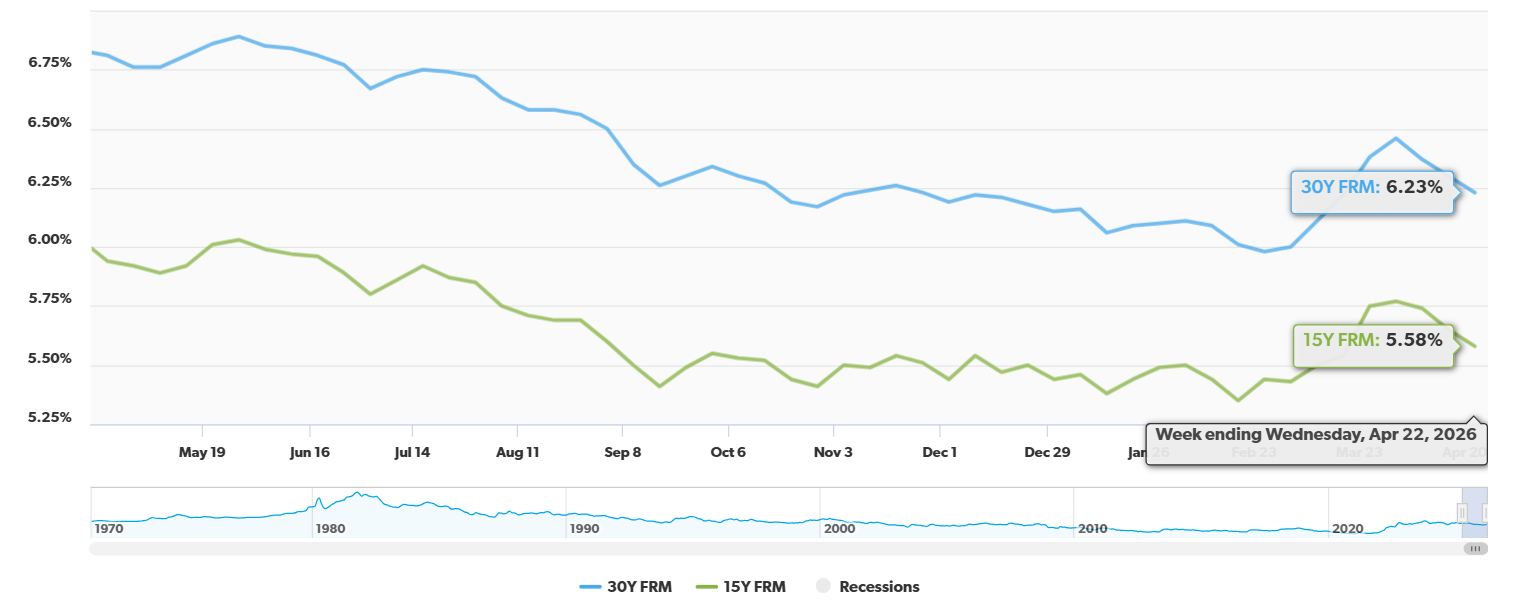
So, you've been dreaming of owning a home, maybe picturing yourself settling in just in time for warmer weather. Well, I've got some news that's a bit of a buzzkill. For the third week in a row, mortgage rates have been climbing, hitting their highest point in more than three months. As of March 21, 2026, you're looking at an average of 6.22% for a 30-year fixed mortgage, according to Freddie Mac. This jump is a tough pill to swallow, especially after we saw rates dip below 6% earlier in February. It’s a stark reminder that the housing market is a dynamic beast, and external forces can shift things faster than you might think.

Mortgage Rates Surge to the Highest Level in Over Three Months

The Triple Threat: What's Driving This Rate Hike?

I always try to break down these market movements into understandable pieces, and in this case, there are three main culprits behind this recent spike in mortgage rates:

1. The Shadow of Geopolitical Conflict

Let’s be frank, the ongoing war with Iran has cast a long, unsettling shadow over financial markets. When major global conflicts erupt, uncertainty takes hold. Investors get nervous, and that nervousness always translates into higher borrowing costs. It’s like a ripple effect; a shaky global picture makes lenders want more for their money, and that translates to higher mortgage rates for us.

2. Energy Prices: The Inflationary Spark

Directly tied to the geopolitical situation, we’ve seen oil prices skyrocket, pushing past the $100 a barrel mark. This isn't just about the gas you put in your car; high energy prices are a fundamental driver of inflation. Think about it: everything from the food you buy to the materials used to build a house has to be transported. When fuel costs go up, those costs get passed along. This surge in energy prices is feeding fears that inflation won't be as quick to tamedown as we'd hoped.

3. The Federal Reserve's “Wait-and-See” Approach

Up until recently, many of us (myself included!) were anticipating the Federal Reserve to start lowering interest rates, which would almost certainly bring mortgage rates down with them. However, those plans have been put on hold. The Fed, on March 18th, decided to keep the federal funds rate steady at 3.5%–3.75%. This signals a cautious stance, a “wait-and-see” when it comes to future rate cuts. With inflation still a concern and the global situation unstable, the Fed is holding its cards close to its chest, which means less downward pressure on mortgage rates than we’d hoped for.

From the Fed's Perspective: Why the Pause?

I find it crucial to understand the Fed's reasoning. They’re tasked with balancing a lot: keeping inflation in check and fostering economic growth. While they’ve made progress on inflation, the lingering threats of geopolitical instability and those stubborn energy prices mean they’re not ready to declare victory. Their recent decision to hold rates steady suggests they’re looking for more sustained evidence that inflation is truly under control before they start making borrowing cheaper. This cautious approach, while sensible from an economic stability standpoint, directly impacts our ability to afford homes.

How This is Affecting Your Wallet and the Housing Market

So, what does this all mean for you, the potential homebuyer? It’s not just about a number on a screen; it has real-world consequences.

The Application Slump: A Clear Sign of Hesitation

The numbers don’t lie. The week ending March 13th saw a significant drop in mortgage applications – down a whopping 10.9%. Refinance applications took an even bigger hit, falling nearly 26%. This tells me that as borrowing costs have risen, many people are hitting the pause button on their homebuying plans. It’s a natural reaction when the monthly payment suddenly becomes a lot more daunting.

Spring Season Setback: Not the Warm Welcome We Expected

This is the time of year when the housing market usually heats up. Families are looking to move before the new school year, and a lot of buyers are eager to get into a new home for the summer. However, these surging rates are throwing a wrench into that traditional spring buying season. The increased cost of borrowing means buyers have less purchasing power, or they might need to adjust their expectations on the type of home they can afford. It’s a real setback for many who were counting on this period.

The “Locked-In” Homeowner Dilemma

Now, let's talk about inventory. While the good news is that inventory has actually increased by about 20% year-over-year, there’s a catch. Many homeowners who secured mortgages when rates were significantly lower are hesitant to sell. Why would they trade a 3% or 4% rate for a 6% or 7% rate when buying their next home? This “locked-in” effect continues to limit the supply of existing homes on the market, which can keep prices from falling even with higher rates. It’s a bit of a stalemate for some.

Looking Ahead: What Do the Experts Say?

As for the rest of 2026, the outlook is a bit murky, but there are some projections. Agencies like Fannie Mae and the Mortgage Bankers Association are forecasting rates to settle between 6.1% and 6.2% for the year. That’s still higher than what we saw recently, but it suggests a potential stabilization. However, they also emphasize that volatility remains high. This means we could still see ups and downs.

Many economists and Fed officials still believe there's a good chance of at least one more rate cut before the end of 2026, provided inflation continues to trend downwards. This is the crucial “if.” If inflation proves stubborn, or if other global events cause further economic shocks, those rate cuts could be delayed or even cancelled.

My Take: Navigating the Current Climate

From my perspective, this situation demands a patient and informed approach. If you were planning to buy, it's essential to re-evaluate your budget. Can you still afford the home you had in mind with these higher rates, or do you need to look at less expensive options or save for a larger down payment? For those looking to refinance, unless you have a very specific financial situation, refinancing now probably doesn't make much sense.

The key takeaway is that the days of incredibly low mortgage rates might be behind us for a while. We're in a period of adjustment. Staying informed about economic news, understanding the drivers behind rate movements, and working closely with a trusted mortgage professional will be more important than ever as you navigate your homeownership journey. It's a complex time, but with the right knowledge and strategy, you can still make smart decisions.

🏡 Two Rentals With Strong Investor Potential

Pleasant Grove, AL
🏠 Property: 4th Ave (1549 sqft)
🛏️ Beds/Baths: 3 Bed • 2 Bath • 1549 sqft
💰 Price: $265,000 | Rent: $1,850
📊 Cap Rate: 6.2% | NOI: $1,368
📅 Year Built: 2026
📐 Price/Sq Ft: $172
🏙️ Neighborhood: B+

VS

Pleasant Grove, AL
🏠 Property: 4th Ave (1856 sqft)
🛏️ Beds/Baths: 3 Bed • 2 Bath • 1856 sqft
💰 Price: $410,000 | Rent: $3,200
📊 Cap Rate: 5.8% | NOI: $1,981
📅 Year Built: 2026
📐 Price/Sq Ft: $221
🏙️ Neighborhood: B+

Two Pleasant Grove rentals—one affordable with higher cap rate vs one larger with stronger NOI. Which fits YOUR investment strategy?

We have much more inventory available than what you see on our website – Let us know about your requirement.

📈 Choose Your Winner & Contact Us Today!

Speak to a Norada Investment Counselor (No Obligation):

(800) 611-3060

View All Properties

Build Passive Income & Wealth with Turnkey Rentals

Mortgage rates remain near 6%, but rental properties continue to deliver strong cash flow and appreciation. Savvy investors know that turnkey real estate is the path to passive income and long‑term wealth.

Norada Real Estate helps you secure turnkey rental properties designed for immediate cash flow and appreciation—so you can invest smartly regardless of interest rate trends.

🔥 HOT INVESTMENT Properties JUST ADDED! 🔥
Request a Callback / Fill Out the Form Online

Contact Us

Also Read:

  • Will Mortgage Rates Drop to 5% in 2026: Expert Forecast
  • How to Get a 3% Mortgage Rate in 2026 With Assumable Mortgages?
  • How to Get a 4% Interest Rate on a Mortgage in 2026?
  • What Leading Housing Experts Predict for Mortgage Rates in 2026
  • Mortgage Rate Predictions for 2026: What Leading Forecasters Expect
  • Mortgage Rate Predictions for the Next 3 Years: 2026, 2027, 2028
  • 30-Year Fixed Mortgage Rate Forecast for the Next 5 Years
  • 15-Year Fixed Mortgage Rate Predictions for Next 5 Years: 2025-2029
  • Will Mortgage Rates Ever Be 3% Again in the Future?
  • Mortgage Rates Predictions for Next 2 Years
  • Mortgage Rate Predictions for Next 5 Years
  • Mortgage Rate Predictions: Why 2% and 3% Rates are Out of Reach
  • How Lower Mortgage Rates Can Save You Thousands?
  • How to Get a Low Mortgage Interest Rate?
  • Will Mortgage Rates Ever Be 4% Again?

Filed Under: Financing, Mortgage Tagged With: 30-Year Fixed Mortgage Rate, mortgage, mortgage rates

Today’s Mortgage Rates, March 21: Rates Hit 6-Month High, 30-Year Fixed Rises to 6.31%

March 21, 2026 by Marco Santarelli

Today's Mortgage Rates, July 21: Buyers Catch a Small Break as 30‑Year Fixed Dips to 6.40%

If you're looking to buy a home or refinance an existing mortgage, you've probably noticed that borrowing money has gotten more expensive. On Saturday, March 21, 2026, mortgage and refinance interest rates jumped to their highest point in six months. According to Zillow, the popular 30-year fixed mortgage rate climbed to 6.31%. This isn't just a small bump; it's the highest we've seen since late September of last year, and it's a clear sign that inflationary pressures and global market ups and downs are really making their mark.

Today's Mortgage Rates, March 21: Rates Hit 6-Month High, 30-Year Fixed Rises to 6.31%

Let's break down where things stand right now. These numbers from Zillow reflect what lenders are offering, and it's helpful to see how different loan types are performing.

Loan Type Interest Rate
30-Year Fixed 6.31%
20-Year Fixed 6.29%
15-Year Fixed 5.77%
5/1 ARM 6.36%
7/1 ARM 6.34%
30-Year VA 5.85%
15-Year VA 5.47%
5/1 VA 5.39%

As you can see, the increases aren't limited to just one type of loan. Both fixed-rate mortgages, which offer stability over the life of the loan, and adjustable-rate mortgages (ARMs), which can start lower but change over time, are seeing higher borrowing costs. It's a broad uptick that impacts a lot of people looking for their piece of the American dream.

What's Driving These Higher Rates?

It’s never just one thing that moves mortgage rates. It's usually a combination of factors. Right now, a couple of big ones are really at play:

The Shadow of Geopolitical Conflict

One of the biggest headaches for the global economy right now is the ongoing conflict in Iran. This isn't just a faraway problem; it has direct financial consequences. The situation has pushed oil prices up and over $100 per barrel. When oil gets more expensive, pretty much everything else follows suit. Transportation costs go up, manufacturing costs increase, and this all adds to the general pressure of inflation. Lenders see this inflation, and they adjust mortgage rates to account for the fact that their money will be worth a little less in the future.

The Federal Reserve's Cautious Step

Our central bank, the Federal Reserve, plays a huge role in setting the overall direction of interest rates. On March 18th, they decided to keep the federal funds rate, which influences borrowing costs across the economy, steady at 3.50%–3.75%. This decision wasn't a surprise, but what was notable was their indication that they only anticipate one rate cut for the rest of 2026. This signal of caution tells us they're still worried about inflation lingering and aren't ready to start lowering rates aggressively just yet. When the Fed holds steady or signals fewer rate cuts, it often puts upward pressure on mortgage rates.

The Bond Market's Nervousness

You might not think about the bond market when you're applying for a mortgage, but it's deeply connected. The 10-year Treasury yield, for instance, is a benchmark that mortgage rates tend to follow very closely. Right now, that yield has been climbing pretty sharply. Why? Economic uncertainty and those geopolitical tensions I mentioned. When investors are nervous about the future, they often demand higher returns to lend their money, and that pushes Treasury yields up. As those yields go up, so do mortgage rates.

Looking Ahead: 2026 Forecast and What to Expect

So, what does all this mean for the rest of the year? It's a bit of a mixed bag, and honestly, predicting the future of interest rates is always a challenge.

  • Annual Projections: Most of the big players in the mortgage industry and financial analysts are putting the average 30-year fixed rate somewhere between 6.1% and 6.4% for pretty much all of 2026. This suggests that while we've hit a high point, we might be settling into this higher range for a while. It’s not a comfortable range for many, but it’s the reality we’re facing.
  • A Glimmer of Hope? There's a possibility for some relief down the line. Fannie Mae, a major player in the housing finance system, is forecasting that rates could dip to around 5.7% by the end of the year. But, and it’s a big “but,” this is dependent on GDP growth slowing down significantly. If the economy stays strong, those lower rates are less likely.
  • Impact on Buyers: We're already seeing the effect this is having on people looking to buy homes. The Mortgage Bankers Association reported a significant 10.9% drop in purchase applications recently. When mortgage rates go up, the monthly payment on a home increases, making it harder for some people to afford the home they want. This can cool down demand, which is what we're starting to see.

My Takeaways: What Matters Most to You

For me, the key takeaways from today’s mortgage rate situation are pretty clear:

  • We're at a six-month high for mortgage rates as of March 21st, with the 30-year fixed hitting 6.31%. This is the most significant marker.
  • The root causes are quite serious: inflation fueled by expensive oil due to geopolitical events, and a cautious Federal Reserve. It’s a double whammy that’s keeping borrowing costs up.
  • Don't expect the Fed to swoop in with rapid rate cuts anytime soon. Their focus is on inflation, meaning we'll likely see only one cut this year, if that.
  • Homebuyers are feeling the pinch, with fewer people applying for mortgages. This is a direct consequence of making homeownership more expensive month-to-month.
  • The experts aren't seeing a huge drop in rates this year. Expect rates to generally stay within the 6.1% to 6.4% range, with any real relief being more of a possibility towards the very end of the year, and only if certain economic conditions are met.

The Bottom Line:

Right now, mortgage rates are telling a story of rising costs and a housing market that's having to adjust. While the prospect of borrowing money at its highest point in half a year is tough, understanding the forces behind it can help you make better decisions. It’s a rapidly changing situation, and for anyone looking to refinance or buy, navigating these choppy waters will require careful planning and a realistic understanding of the current borrowing costs in 2026.

🏡 Two Rentals With Strong Investor Potential

Pleasant Grove, AL
🏠 Property: 4th Ave (1549 sqft)
🛏️ Beds/Baths: 3 Bed • 2 Bath • 1549 sqft
💰 Price: $265,000 | Rent: $1,850
📊 Cap Rate: 6.2% | NOI: $1,368
📅 Year Built: 2026
📐 Price/Sq Ft: $172
🏙️ Neighborhood: B+

VS

Pleasant Grove, AL
🏠 Property: 4th Ave (1856 sqft)
🛏️ Beds/Baths: 3 Bed • 2 Bath • 1856 sqft
💰 Price: $410,000 | Rent: $3,200
📊 Cap Rate: 5.8% | NOI: $1,981
📅 Year Built: 2026
📐 Price/Sq Ft: $221
🏙️ Neighborhood: B+

Two Pleasant Grove rentals—one affordable with higher cap rate vs one larger with stronger NOI. Which fits YOUR investment strategy?

We have much more inventory available than what you see on our website – Let us know about your requirement.

📈 Choose Your Winner & Contact Us Today!

Speak to a Norada Investment Counselor (No Obligation):

(800) 611-3060

View All Properties

Build Passive Income & Wealth with Turnkey Rentals in 2026

Mortgage rates remain high in 2026, but rental properties continue to deliver strong cash flow and appreciation. Savvy investors know that turnkey real estate is the path to passive income and long‑term wealth.

Norada Real Estate helps you secure turnkey rental properties designed for immediate cash flow and appreciation—so you can invest smartly regardless of interest rate trends.

🔥 HOT 2026 INVESTMENT LISTINGS JUST ADDED! 🔥
Request a Callback / Fill Out the Form Online

Contact Us

Also Read:

  • Mortgage Rates Predictions Backed by 7 Leading Experts: 2025–2026
  • Mortgage Rate Predictions for the Next 3 Years: 2026, 2027, 2028
  • 30-Year Fixed Mortgage Rate Forecast for the Next 5 Years
  • 15-Year Fixed Mortgage Rate Predictions for Next 5 Years: 2025-2029
  • Will Mortgage Rates Ever Be 3% Again in the Future?
  • Mortgage Rates Predictions for Next 2 Years
  • Mortgage Rate Predictions for Next 5 Years
  • Mortgage Rate Predictions: Why 2% and 3% Rates are Out of Reach
  • How Lower Mortgage Rates Can Save You Thousands?
  • How to Get a Low Mortgage Interest Rate?
  • Will Mortgage Rates Ever Be 4% Again?

Filed Under: Financing, Mortgage Tagged With: mortgage, mortgage rates, Today’s Mortgage Rates

Mortgage Rates Today, March 21, 2026: 30-Year Refinance Rate Rises by 52 Basis Points

March 21, 2026 by Marco Santarelli

Mortgage Rates Today, July 21, 2026: 30-Year Refinance Rate Drops by 2 Basis Points

Buckle up, homeowners, because the mortgage refinance game just got a whole lot trickier. Today, March 21, 2026, we're seeing a significant jump in rates, with the popular 30-year fixed refinance rate climbing a noticeable 52 basis points. This isn't just a wiggle on the graph; it's a substantial move that’s already making waves, pushing many homeowners to rethink their strategies and explore alternatives like Home Equity Lines of Credit (HELOCs) and home equity loans.

Mortgage Rates Today, March 21, 2026: 30-Year Refinance Rate Jumps by 52 Basis Points

The rise to 7.12% for a 30-year fixed refinance, as reported by Zillow, isn't just a number; it’s a stark reminder that the era of ultra-low rates might be a distant memory. This surge is pulling back the reins on borrower enthusiasm, and frankly, it’s causing a bit of a stir in the housing finance world. As someone who's followed this market closely, I can tell you this kind of rapid escalation is a clear signal that we need to pay attention to what's driving these changes.

Where Do We Stand Today? The Latest Refinance Rates

Let's get straight to the numbers, direct from Zillow on this Saturday, March 21, 2026:

  • 30-Year Fixed Refinance: This is the big one, hitting 7.12%. Yesterday it was at 6.85%, and just last week, it was at a more palatable 6.60%. That’s a 52 basis point jump week-over-week.
  • 15-Year Fixed Refinance: For those looking to pay off their mortgage faster, this rate is now at 6.31%, up 31 basis points from 6.00% yesterday.
  • 5-Year Adjustable-Rate Mortgage (ARM) Refinance: These loans are currently sitting at 7.31%.

These aren’t minor tweaks; these are the sharpest weekly increases we've seen in a good while. It’s clear that the pressures of inflation are weighing heavily, and the global economic picture isn't exactly offering much comfort, contributing to this volatility.

What's Happening with Refinance Activity? Demand Takes a Hit

It's no surprise that when rates climb this quickly, people start to rethink their plans. The Mortgage Bankers Association (MBA) has provided some eye-opening data that shows this immediate impact:

  • Weekly Dip in Applications: For the week ending March 13, 2026, refinance applications took a significant nosedive, falling by 19%. That’s a substantial drop in activity.
  • Still Higher Than Last Year: While the weekly numbers are down, it's important to remember that refinance activity is still running hot compared to last year. It’s 69% higher than the same period in 2025. This shows that despite the current climb, there's still a strong desire to refinance from where we were.
  • Refinance's Shifting Market Share: Refinances now make up 52.3% of all mortgage applications. This is down from 57.8% the week before, indicating a shift in focus.
  • The Rise of Alternatives: We’re seeing a distinct trend where homeowners are increasingly looking at HELOCs and other home equity loans. Why? Because these often come with lower upfront costs and can allow homeowners to tap into their home’s equity without taking on a whole new, higher-interest mortgage. It’s a smart move for many, given the current rate environment.

Looking Ahead: What's Driving Rates and What's Next?

To understand these rate movements, we have to consider the bigger picture. My own experience in this industry tells me that mortgage rates don't exist in a vacuum. They're deeply tied to broader economic forces.

The Inflation Dragon Still Roars

The persistent worry about inflation is a major culprit. Reports of elevated oil prices and ongoing geopolitical tensions, particularly in the Middle East, are creating what economists call “inflationary shocks.” These shocks make it harder for lenders to offer lower rates because the cost of borrowing money is going up across the board.

The Fed's Stance: A Pause That Matters

The Federal Reserve’s recent decision to pause any further rate cuts has also played a crucial role. This move signals that the Fed is cautious about the economy and isn't ready to inject more liquidity or encourage borrowing just yet. For mortgage lenders, this means they're less likely to lower their own rates, and expectations of any immediate relief have been dashed. It’s a waiting game, and for now, the rates are staying put at these higher levels.

Forecasting the Rest of 2026: A Look into the Crystal Ball?

So, what can we expect for the remainder of 2026? The forecasts are mixed, but the general consensus is that we won’t be returning to the rock-bottom rates of early 2025 anytime soon.

  • Fannie Mae and the MBA: Both of these major housing institutions are predicting that 30-year fixed rates will likely hover around the 6.00% to 6.10% range for the rest of the year. This suggests a stabilization, but at a higher average than we've seen in recent months.
  • Analyst Consensus: The broader agreement among market analysts is that volatility will continue to be a factor. Rates will likely remain sensitive to any new developments in inflation and global markets. We’re not out of the woods yet when it comes to unpredictable swings.

Key Takeaways for Homeowners

Let’s boil down what this all means for you:

  • The 30-year fixed refinance rate has shot up to 7.12%, hitting its highest point since late last year.
  • While refinance demand has cooled significantly this past week, the overall volume of refinance activity is still much higher than it was in 2025.
  • A noticeable number of homeowners are now opting for HELOCs and home equity loans as alternative ways to access their home's equity.
  • The main forces pushing rates up are ongoing inflationary pressures, international political instability, and the Federal Reserve’s decision to hold off on rate cuts.
  • Looking ahead, experts believe rates might settle closer to 6%–6.1% by the end of 2026, but expect continued ups and downs in the meantime.

The Bottom Line:

As a homeowner looking to refinance, it’s crucial to understand that the mortgage market is dynamic. The significant rise in refinance rates today, March 21, 2026, is more than just a data point; it's a turning point that’s changing how people approach their finances. While traditional refinancing might be less appealing right now, there are still smart ways to leverage your home equity. The outlook for 2026 suggests that rates will likely remain elevated, so careful planning and exploring all your options are key.

🏡 2 New Rental Properties With Strong Cash Flow

Cibolo, TX
🏠 Property: Columbia Dr
🛏️ Beds/Baths: 3 Bed • 2 Bath • 1758 sqft
💰 Price: $245,000 | Rent: $1,795
📊 Cap Rate: 5.2% | NOI: $1,052
📅 Year Built: 2007
📐 Price/Sq Ft: $140
🏙️ Neighborhood: A

VS

San Antonio, TX
🏠 Property: Burning Lamp
🛏️ Beds/Baths: 3 Bed • 2 Bath • 1415 sqft
💰 Price: $237,500 | Rent: $1,750
📊 Cap Rate: 5.4% | NOI: $1,069
📅 Year Built: 2012
📐 Price/Sq Ft: $168
🏙️ Neighborhood: A

Two Texas rentals in A‑rated neighborhoods—Cibolo’s larger home vs San Antonio’s newer build with stronger cap rate. Which fits YOUR investment strategy?

We have much more inventory available than what you see on our website – Let us know about your requirement.

📈 Choose Your Winner & Contact Us Today!

Speak to a Norada Investment Counselor (No Obligation):

(800) 611-3060

View All Properties

Invest Smart — Build Long-Term Wealth Through Turnkey Real Estate in 2026

Market forecasts suggest steady demand, making turnkey real estate one of the most reliable paths to passive income and wealth creation.

Norada Real Estate helps investors capitalize on these trends with turnkey rental properties designed for appreciation and consistent cash flow—so you can grow wealth securely while others wait for clarity in the market.

🔥 HOT 2026 INVESTMENT LISTINGS JUST ADDED! 🔥
Send Us An Email or Request a Call Back

Contact Us

Recommended Read:

  • 30-Year Fixed Refinance Rate Trends – March 20, 2026
  • Best Time to Refinance Your Mortgage: Expert Insights
  • Should You Refinance Your Mortgage Now or Wait Until 2026?
  • When You Refinance a Mortgage Do the 30 Years Start Over?
  • Should You Refinance as Mortgage Rates Reach Lowest Level in Over a Year?
  • Half of Recent Home Buyers Got Mortgage Rates Below 5%
  • Mortgage Rates Need to Drop by 2% Before Buying Spree Begins
  • Will Mortgage Rates Ever Be 3% Again: Future Outlook
  • Mortgage Rates Predictions for Next 2 Years
  • Mortgage Rate Predictions for Next 5 Years

Filed Under: Financing, Mortgage Tagged With: mortgage rates, Mortgage Rates Today, Refinance Rates

Today’s Mortgage Rates, March 20: 30-Year Fixed Hits 6.25% Amid Market Volatility

March 20, 2026 by Marco Santarelli

Today's Mortgage Rates, July 21: Buyers Catch a Small Break as 30‑Year Fixed Dips to 6.40%

On Friday, March 20, 2026, owning a home likely felt a little more expensive for many Americans as mortgage rates continued their upward trek. Both Zillow Home Loans and Freddie Mac data show a clear trend: borrowing costs are higher this week, directly impacting the dreams of potential homeowners and those looking to refinance. It's a stark reminder that the housing market is a dynamic beast, constantly responding to bigger economic forces.

Today's Mortgage Rates, March 20: 30-Year Fixed Hits 6.25% Amid Market Volatility

Here’s a snapshot of what mortgage rates are looking like today, according to Zillow Home Loans. It’s important to remember these are averages, and your specific rate can depend on many things, like your credit score and loan type.

Loan Type Interest Rate
30-Year Fixed 6.25%
20-Year Fixed 6.375%
15-Year Fixed 5.75%
30-Year FHA 5.875%
30-Year VA 6.00%
30-Year Jumbo 6.125%
7/6 ARM 6.125%
10-Year Fixed 5.75%

A Look Back: Weekly Rate Changes

Seeing these numbers alone is helpful, but comparing them to last week gives us a clearer picture of the direction we’re headed.

  • The ever-popular 30-Year Fixed rate has nudged up by 17 basis points, moving from 6.08% last week to today's 6.25%. That might sound like a small jump, but over the life of a mortgage, it adds up.
  • For those looking at shorter terms, the 15-Year Fixed has also seen an increase, climbing by 13 basis points from 5.62% to 5.75%. This suggests that shorter-term debts are becoming pricier too.

Freddie Mac Agrees: The Upward Trend is Real

It’s not just Zillow Home Loans painting this picture. The widely watched Freddie Mac survey, which tracks rates from a broader range of lenders, echoes the same sentiment. Their data shows the 30-Year Fixed Mortgage at 6.22% as of today, up from 6.11% last week. This consolidation of data from different sources really underscores the reality of the market.

This 6.22% figure, according to Freddie Mac, is the highest we've seen in about three months. This isn't just a blip; it's a sign that borrowing costs have firmly entered a higher gear, a direct reflection of the economic winds blowing through our financial markets.

What’s Pushing Rates Higher? The Big Picture

So, why are we seeing these increases? It's rarely just one thing, but a combination of powerful forces.

The Federal Reserve's Steady Hand (for Now)

The Federal Reserve has been playing a careful game. At its most recent meeting on March 17–18, they decided to keep the federal funds rate right where it was, between 3.50% and 3.75%. This decision to hold steady, or “pause,” is a significant factor.

When the Fed keeps its key interest rate elevated, it’s often because inflation is still a concern. This pause removes some of the expected downward pressure on mortgage rates that many borrowers were hoping for. It’s like seeing a lifeguard tell swimmers to stay close to shore – caution is the keyword.

Global Tensions and Their Ripple Effect

The world feels a bit unsettled right now, and that often hits our economy. The ongoing conflict in the Middle East, for instance, has pushed oil prices past the $100 per barrel mark. Why does this matter for your mortgage?

  • Rising Energy Costs: When gas and oil get more expensive, it doesn’t just affect your commute. It increases the cost of transporting goods, making almost everything a little pricier.
  • Inflation Fears: This surge in energy costs feeds directly into inflation worries. Investors, and by extension lenders, become more anxious about the future purchasing power of money.
  • Treasury Yields Up: In response to inflation fears and the general uncertainty, yields on U.S. Treasury bonds tend to rise. Since mortgage rates are closely tied to these yields, they get pulled upward as well. It’s a chain reaction that travels from global headlines right to your loan application.

Stubborn Inflation’s Lingering Shadow

We've seen the Fed try to tame inflation with rate cuts in the past year, but it’s proving to be a tougher opponent than some anticipated. Even with those previous efforts, inflation is still not cooperating.

Fed Chair Jerome Powell’s recent remarks have been measured and cautious. This lack of clear signals about immediate rate cuts means that the downward pressure on mortgage rates that we might have expected in early 2026 is being held back. Borrowers are essentially left in a holding pattern, waiting for a clearer sign that the coast is truly clear.

How This is Affecting Us: Market Reactions

These rising rates aren’t happening in a vacuum. They have real, tangible effects on people’s decisions.

  • Refinancing Takes a Hit: When rates go up, the incentive to refinance an existing mortgage disappears for many. Why pay more if your current rate is lower? We've seen refinance applications drop dramatically, by nearly 27% in the past week alone. This is a significant pullback, signaling that homeowners are holding onto their current loans.
  • Homebuyers Feel the Squeeze: For those looking to buy, higher rates mean higher monthly payments. This affordability crunch is making potential buyers pause. Total mortgage applications, which include both purchases and refinances, have fallen by 10.9%. It’s a clear sign that buyers are being priced out or are opting to wait it out, hoping for better conditions.
  • A Shift in Future Predictions: Looking ahead, economists are recalibrating their expectations. The general consensus is now leaning towards only one more Fed rate cut by the end of 2026. This means that mortgage rates are expected to remain elevated, likely hovering between 6% and 6.5% for the remainder of the year. This is a crucial piece of information for anyone planning a home purchase in the coming months.

The Bottom Line: What You Need to Know Today

As of March 20, 2026, the market is clear: mortgage rates are on an upward swing.

  • The 30-year fixed rate is hovering around 6.25% according to Zillow and 6.22% according to Freddie Mac.
  • This increase is dampening both the desire to refinance and the activity of new buyers.
  • The main culprits behind this rise are persistent inflation, global economic uncertainties, and the Federal Reserve's cautious approach to monetary policy.
  • The general outlook suggests that we’ll likely be in this higher rate environment for a good part of 2026, with only modest potential for relief towards the year's end.

🏡 Two Rentals With Strong Investor Potential

Pleasant Grove, AL
🏠 Property: 4th Ave (1549 sqft)
🛏️ Beds/Baths: 3 Bed • 2 Bath • 1549 sqft
💰 Price: $265,000 | Rent: $1,850
📊 Cap Rate: 6.2% | NOI: $1,368
📅 Year Built: 2026
📐 Price/Sq Ft: $172
🏙️ Neighborhood: B+

VS

Pleasant Grove, AL
🏠 Property: 4th Ave (1856 sqft)
🛏️ Beds/Baths: 3 Bed • 2 Bath • 1856 sqft
💰 Price: $410,000 | Rent: $3,200
📊 Cap Rate: 5.8% | NOI: $1,981
📅 Year Built: 2026
📐 Price/Sq Ft: $221
🏙️ Neighborhood: B+

Two Pleasant Grove rentals—one affordable with higher cap rate vs one larger with stronger NOI. Which fits YOUR investment strategy?

We have much more inventory available than what you see on our website – Let us know about your requirement.

📈 Choose Your Winner & Contact Us Today!

Speak to a Norada Investment Counselor (No Obligation):

(800) 611-3060

View All Properties

Build Passive Income & Wealth with Turnkey Rentals in 2026

Mortgage rates remain high in 2026, but rental properties continue to deliver strong cash flow and appreciation. Savvy investors know that turnkey real estate is the path to passive income and long‑term wealth.

Norada Real Estate helps you secure turnkey rental properties designed for immediate cash flow and appreciation—so you can invest smartly regardless of interest rate trends.

🔥 HOT 2026 INVESTMENT LISTINGS JUST ADDED! 🔥
Request a Callback / Fill Out the Form Online

Contact Us

Also Read:

  • Mortgage Rates Predictions Backed by 7 Leading Experts: 2025–2026
  • Mortgage Rate Predictions for the Next 3 Years: 2026, 2027, 2028
  • 30-Year Fixed Mortgage Rate Forecast for the Next 5 Years
  • 15-Year Fixed Mortgage Rate Predictions for Next 5 Years: 2025-2029
  • Will Mortgage Rates Ever Be 3% Again in the Future?
  • Mortgage Rates Predictions for Next 2 Years
  • Mortgage Rate Predictions for Next 5 Years
  • Mortgage Rate Predictions: Why 2% and 3% Rates are Out of Reach
  • How Lower Mortgage Rates Can Save You Thousands?
  • How to Get a Low Mortgage Interest Rate?
  • Will Mortgage Rates Ever Be 4% Again?
Filed Under: Financing, Mortgage Tagged With: mortgage, mortgage rates, Today’s Mortgage Rates

  • « Previous Page
  • 1
  • …
  • 37
  • 38
  • 39
  • 40
  • 41
  • …
  • 377
  • Next Page »

Real Estate

  • Birmingham
  • Cape Coral
  • Charlotte
  • Chicago

Quick Links

  • Markets
  • Membership
  • Notes
  • Contact Us

Blog Posts

  • Best Real Estate Markets for First-Time Investors in 2026
    July 21, 2026Marco Santarelli
  • Today’s Mortgage Rates, July 21: Buyers Catch a Small Break as 30‑Year Fixed Dips to 6.40%
    July 21, 2026Marco Santarelli
  • Best Places to Invest in Real Estate for the Next 5 Years (2026-2030)
    July 21, 2026Marco Santarelli

Contact

Norada Real Estate Investments 30251 Golden Lantern, Suite E-261 Laguna Niguel, CA 92677

(949) 218-6668
(800) 611-3060
BBB
  • Terms of Use
  • |
  • Privacy Policy
  • |
  • Testimonials
  • |
  • Suggestions?
  • |
  • Home

Copyright 2018 Norada Real Estate Investments

Loading...