Norada Real Estate Investments

  • Home
  • Markets
  • Properties
  • Membership
  • Podcast
  • Learn
  • About
  • Contact

Archives for October 2025

Jerome Powell Opens Door to More Interest Rate Cuts in His Speech Today

October 15, 2025 by Marco Santarelli

Jerome Powell Opens Door to More Interest Rate Cuts in His Speech Today

Federal Reserve Chair Jerome Powell's recent speech has sent a clear signal: the door is open for more interest rate cuts. This move on October 14, 2025, comes as the central bank sees growing risks to employment, even as inflation appears to be staying in check. For anyone with savings, a mortgage, or plans for big purchases, this news is significant and hints at a shift in the economy's direction.

Jerome Powell Opens Door to More Interest Rate Cuts in His Speech Today

As a seasoned observer of financial markets, I can tell you that when the Fed Chair speaks, people listen. Powell's words aren't just opinions; they are carefully chosen signals that guide the entire economy. In his latest address, he painted a picture of an economy that's holding its own on growth but showing cracks in its labor market. This shift in focus from inflation worries to job market concerns suggests the Fed is preparing to act to prevent a slowdown from becoming a serious problem.

A Closer Look at Powell's Remarks: Leaning Towards Easing

During his speech at the National Association for Business Economics (NABE) conference in Philadelphia, Powell acknowledged that economic activity has been surprisingly strong. He mentioned that consumer spending, particularly among those with higher incomes, has been robust, and that businesses might be seeing productivity boosts, perhaps from the growing use of AI. This all sounds pretty good, right? The Atlanta Fed's GDPNow tracker, for instance, was pointing to a strong 4% growth for the third quarter.

However, beneath this surface of solid growth, Powell highlighted a growing concern: the labor market. He pointed out that while the unemployment rate of 4.3% still looks good on paper, the pace of job creation has slowed down considerably. Private data, like reports from ADP, even suggested job losses in September. He also noted that fewer people are reporting they can find jobs easily, and hiring activity has tapered off. This is a crucial point because a strong job market is the backbone of a healthy economy. When hiring slows, people have less money to spend, and that can ripple through everything from retail sales to housing.

Powell explained that these “rising downside risks to employment” have changed the Fed's assessment. This means the potential problems for people's jobs are starting to look more serious than the potential for inflation to spike. While inflation hasn't been a runaway train—core PCE inflation was around 2.9% in August—the Fed's primary job is to keep both prices stable and employment high. Right now, the balance is tipping towards protecting jobs.

The Shifting Economic Backdrop: Growth Holds, Jobs Wobble

Let's break down the economic picture Powell presented:

  • Economic Growth: Still holding up, with strong consumer spending and signs of productivity gains. Think of it like a sturdy car that's cruising along.
  • Labor Market: Starting to show signs of slowing down. Job gains are shrinking, and surveys indicate people feel it's harder to find work. This is like that sturdy car hitting a patch of bumpy road.
  • Inflation: Not a major worry right now. While tariffs on imported goods have pushed up prices for some items, this isn't seen as a broad, economy-wide inflation problem. The Fed's long-term inflation target of 2% still seems achievable.

This situation is somewhat unusual. Typically, when the economy grows strongly, the labor market booms. But here, we're seeing resilience in growth alongside increasing caution about jobs. This is why the Fed is watching the labor market so closely.

Policy Implications: Rate Cuts on the Horizon and QT's End

So, what does all this mean for monetary policy? Powell's speech was a clear nod to the possibility of further interest rate cuts. Remember, the Fed cut rates by 25 basis points in September, bringing the federal funds rate (the target interest rate for banks) down to 4.00%-4.25%. His comments strongly suggest that another cut could be on the table at their next meetings in late October and December.

He emphasized that policy decisions are made “meeting-by-meeting” and are “data-dependent.” This is standard Fed language, but the emphasis on the risks to employment tells us which data points they are watching most closely. If job growth continues to weaken, expect the Fed to lower rates.

One of the other interesting points Powell made was about the Fed's balance sheet normalization, also known as quantitative tightening (QT). For a while now, the Fed has been letting its holdings of assets shrink, which is a way of tightening financial conditions. Powell indicated that this process could be ending “in coming months.” This is significant because it means the Fed will stop withdrawing liquidity from the financial system, and might even start adding it back over time. This could ease some of the strains in money markets and provide a bit of a boost to the economy, almost like a gentle nudge from the sidelines.

My take on this is that the Fed is trying to be proactive. They saw the labor market softening and the potential for it to worsen, and instead of waiting for a full-blown downturn, they are signaling a willingness to ease policy to keep things on track. This approach, if executed well, can lead to what economists call a “soft landing”—where inflation is controlled, and the economy avoids a recession.

Market Reaction: A Sigh of Relief and Renewed Optimism

The stock market certainly heard what Powell was saying. Following his remarks, U.S. stocks, which had been wavering, closed higher. This is a typical reaction when the Fed signals a more accommodative stance. Investors tend to bet that lower interest rates will boost corporate profits and make equities more attractive compared to safer investments like bonds.

Here's a quick look at how things moved:

  • Dow Jones Industrial Average: Closed higher, showing broad market confidence.
  • S&P 500: Also saw gains, indicating that larger companies were benefiting from this outlook.
  • Nasdaq Composite: Showed some caution, perhaps because tech stocks can sometimes be more sensitive to even minor signs of slowdowns.
  • Bond Yields: Generally fell. This is because as interest rate cut expectations rise, bond prices go up, and their yields (which move inversely) go down. Lower yields make borrowing cheaper.
  • Cryptocurrencies: Experienced a rally. Some see the end of QT as a positive for riskier assets like Bitcoin, as it could lead to more money flowing into the markets.

It's important to remember that market reactions can be a bit jumpy. Geopolitical tensions, like the ongoing U.S.-China trade disputes and tariffs, and even the temporary government shutdown that delayed some economic data, can create volatility. But Powell's speech provided a sense of direction that the market seemed to appreciate.

My Opinion: Balancing Risks is Key

From my perspective, the Fed is walking a very fine line. They've successfully brought inflation down from its highs, but the job isn't entirely done. Now, the focus is shifting to employment. It's a classic Fed balancing act: fight inflation without crushing the job market. Powell's speech suggests they believe the risk of letting employment slide is now greater than the risk of inflation re-accelerating.

I've seen this before. Sometimes, the Fed's biggest challenge isn't inflation itself, but the unintended consequences of their actions. If they keep rates too high for too long, they could trigger a recession. Conversely, cutting rates too aggressively when inflation isn't fully tamed could reignite price pressures. Powell's emphasis on being “meeting-by-meeting” and “data-dependent” is a smart way to navigate this uncertainty. It means they're not locked into a specific path and can adjust as new information comes in.

The end of QT is another piece of this puzzle. It's a subtle form of easing, and its timing is crucial. By signaling its imminent end, the Fed is providing some forward guidance that can help stabilize financial markets and ease liquidity concerns.

What This Means for You

  • Borrowing Costs: With potential rate cuts, we could see lower interest rates on things like car loans and credit cards relatively soon. Mortgages might also become more affordable, though their rates are also influenced by longer-term bond yields.
  • Savings: If rates fall, the interest you earn on savings accounts and certificates of deposit (CDs) will likely decrease. This is the flip side of lower borrowing costs.
  • Investments: Lower interest rates generally make stocks a more attractive investment compared to bonds. This can be good news for your 401(k) or other investment portfolios, but remember that markets can be unpredictable.
  • Job Security: The Fed's focus on employment suggests they are committed to preventing a significant rise in unemployment. This offers some reassurance to individuals and families worried about their jobs.

Looking Ahead: Data Will Tell the Tale

Powell's speech was a significant indicator, but the real story will unfold as new economic data emerges. The delayed September jobs report and other key figures will be crucial in determining the Fed's next move. Will job growth continue to slow? Will inflation remain contained? These are the questions the Fed will be asking, and the answers will shape the economic path forward.

My personal view is that the Fed is on the right track by prioritizing employment risks. The recent history of the U.S. economy shows its resilience, and by being proactive with modest rate cuts and signaling the end of QT, Powell and the FOMC are aiming for a controlled economic trajectory. It's a delicate dance, but one where the steps taken today could shape the economic well-being of millions tomorrow.

“Build Wealth Through Turnkey Real Estate”

The Federal Reserve’s decisions on interest rates impact everything—from your mortgage payments to your savings yields. As of October 2025, the Fed’s target range stands at 4.00%–4.25% following a recent 25 basis point cut, with the effective rate hovering near 4.09%.

Market analysts now anticipate additional rate cuts over the coming months. This shift could open new opportunities for homebuyers and real estate investors looking to secure better financing terms.

🔥 Lower Rates Mean Smarter Investment Opportunities! 🔥

Talk to a Norada investment counselor today (No Obligation):

(800) 611-3060

Get Started Now

Want to Know More About Interest Rates?

Explore these related articles for even more insights:

  • Fed Interest Rate Predictions: October to December 2025
  • Fed Interest Rate Forecast for the Next 12 Months
  • Federal Reserve Cuts Interest Rate by 0.25%: Two More Cuts Expected in 2025
  • Fed Projects Two Interest Rate Cuts Later in 2025
  • Interest Rate Predictions for the Next 3 Years: 2025, 2026, 2027
  • When is Fed's Next Meeting on Interest Rate Decision in 2025?
  • Interest Rate Predictions for the Next 10 Years: 2025-2035
  • Interest Rate Predictions for 2025 by JP Morgan Strategists
  • Interest Rate Predictions for Next 2 Years: Expert Forecast
  • Fed Funds Rate Forecast 2025-2026: What to Expect?
  • Interest Rate Predictions for 2025 and 2026 by NAR Chief
  • Market Reactions: How Investors Should Prepare for Interest Rate Cut
  • Impact of Interest Rate Cut on Mortgages, Car Loans, and Your Wallet

Filed Under: Economy, Financing Tagged With: Economy, Federal Reserve, interest rates

New York Real Estate Market: Trends and Forecast 2025

October 14, 2025 by Marco Santarelli

New York Housing Market Trends 2025: Is the Tide Turning for Buyers?

The New York real estate market has seen some interesting shifts recently, and I’m here to break it down. Based on the latest reports, we're seeing a rise in available homes, which is great news for buyers, while mortgage rates are also starting to dip. This suggests a market that's becoming more balanced, and I’m optimistic about what this could mean for the rest of 2025 and beyond.

For a while now, it felt like a real challenge for anyone trying to buy a home in New York. Prices were soaring, and there just weren't enough houses on the market. But the latest numbers from the New York State Association of REALTORS® (NYSAR) for August 2025 show a significant change, and it feels like we're turning a corner.

New York Real Estate Market Trends in 2025

What the Latest Numbers Tell Us

Let's dive into the August 2025 report from NYSAR. It’s packed with information that paints a pretty clear picture of where we stand.

  • Inventory is Growing: One of the biggest takeaways is that the number of homes for sale across New York climbed to 30,684 in August 2025. That's a 5.5 percent increase compared to August 2024. This is the sixth month in a row that we've seen more homes listed, which is a trend I've been watching closely. It means buyers have more choices, and that's always a good thing.
  • New Listings Are Up: It's not just that old listings are sitting around longer; new homes are also coming onto the market. There was a 1.4 percent jump in new listings, bringing the total to 12,856 in August 2025. This steady stream of new properties is crucial for keeping inventory levels healthy.
  • Pending Sales Are On the Rise: Buyers are acting on these new opportunities. Pending sales, which are deals where an offer has been accepted but the sale hasn't closed yet, increased by 1.5 percent to 10,173 transactions. This shows renewed buyer confidence and activity.
  • Closed Sales See a Dip: Now, this might sound a bit confusing, but closed sales actually decreased by 4.7 percent, totaling 10,517 in August 2025 compared to the year before. However, I don't see this as a major warning sign. With pending sales up, it often means that deals made in previous months are now closing, and the dip simply reflects a shift in the timing of those closings. The increase in pending sales is a more forward-looking indicator.
  • Mortgage Rates Offer Relief: A huge factor in the housing market is mortgage rates. The average 30-year fixed rate dropped to 6.59 percent in August 2025. While this is slightly higher than August 2024 (6.50 percent), it's a welcome drop from the 6.72 percent seen just a month earlier. Lower rates make borrowing more affordable, which can significantly impact buyer purchasing power.
  • Median Prices Continue to Climb: Even with more inventory, home prices in New York are still on the rise. The median sales price jumped to $460,000 in August 2025, a 5.7 percent increase from $435,000 in August 2024. This shows that while the market is becoming more balanced, demand for well-priced homes remains strong.

My Take: What These Numbers Mean for Buyers and Sellers

As someone who's spent time understanding the ins and outs of real estate, I see these trends as a positive development.

For buyers, this is a much-needed shift. Having more homes to choose from means you have a better chance of finding a place that truly meets your needs and budget. The slight easing of mortgage rates also helps make those monthly payments more manageable. It's not a buyer's market yet, but it's certainly moving in that direction. Patience and good preparation will be key for buyers. Getting pre-approved for a mortgage and working with a knowledgeable agent will put you in a strong position.

For sellers, it’s essential to understand that while prices are still climbing, the days of getting multiple offers above asking price within hours might be less common. Strategic pricing and excellent presentation will be more important than ever. Homes that are well-maintained, staged attractively, and priced realistically are still likely to sell quickly and for a good price. It’s about meeting the market where it is, and right now, the market is offering more choices.

New York Real Estate Market Forecast 2025

Predicting the future is always tricky, especially in something as dynamic as real estate. However, based on these August 2025 indicators and my understanding of market drivers, I can offer some thoughts on what we might see as we move further into 2025.

Key Factors to Watch:

  1. Interest Rate Stability: The Federal Reserve's actions on interest rates will continue to be a major influence. If rates remain stable or continue to trend downward slowly, it will support continued buyer activity and potentially keep price growth steady. A sudden jump in rates, however, could cool things down. I'm hopeful that the current easing trend will continue, providing a stable environment.
  2. Economic Health: New York's economic performance, job growth, and overall consumer confidence will play a significant role. A strong economy generally translates to a stronger housing market. If businesses are hiring and the job market is robust, more people will feel secure in making a home purchase.
  3. Inventory Levels: The ability of builders to increase new housing starts and the rate at which existing homes are listed will be crucial. If inventory continues to climb steadily, it will help prevent rapid price appreciation and create a more balanced market. We’ve seen good progress here, and I expect this trend to continue for at least the first half of 2025.
  4. Geographic Variations: It's important to remember that New York is a big state with diverse markets. What happens in Manhattan might be different from what happens in Buffalo or the Hudson Valley. Demand for certain types of properties (like single-family homes in suburban areas) might remain higher than for others. I always advise looking at local data within the broader state trends.

Possible Forecast for 2025:

  • Continued Inventory Growth: I anticipate that inventory levels will likely continue to increase throughout the first half of 2025. This is a natural correction following a period of low supply.
  • Steady Price Appreciation: Median home prices will probably continue to rise, but likely at a more moderate pace than we've seen in previous years. I'm thinking around 3-4 percent annual appreciation for the state overall, though some areas might see higher or lower growth. This is a much healthier and sustainable growth rate.
  • More Competitive Buyer Environment: While inventory is up, the market might not be flooded. Buyers will likely still face competition, especially for desirable properties in sought-after locations. However, the extreme bidding wars might become less common, giving buyers a bit more breathing room.
  • Increased Days on Market: With more choices, homes might stay on the market a bit longer. The average days on market, which was 40 days in August 2025 (down from 42 in August 2024), might slowly tick up. This isn't necessarily a bad thing; it just means a more typical, less frenzied market.
  • Affordability Challenges Persist (but ease slightly): The Housing Affordability Index was 86 in August 2025, down from 93 the previous year. While prices are still high relative to incomes in many parts of New York, the slight easing of mortgage rates offers a small bit of relief. This is an area to watch closely.

Understanding the Nuances

It's vital to look beyond just the raw numbers. For example, the NYSAR data shows Median Sales Price increasing, which is the middle point of all sales. But the Average Sales Price ($602,760 in August 2025) is significantly higher. This tells me that there are still a good number of high-priced luxury properties selling, which can pull the average up. The median gives a better picture for the typical homebuyer.

Also, the Percent of List Price Received is still above 100% (102.5% in August 2025), indicating that, on average, homes are selling for more than their asking price. This suggests that while inventory is climbing, well-priced homes are still commanding a premium.

Final Thoughts

The New York real estate market in 2025 is shaping up to be more balanced and, dare I say, more reasonable than it has been in recent years. The increase in inventory and the slight easing of mortgage rates are positive signs for buyers, while steady price appreciation still offers value for sellers.

My personal opinion is that we're moving towards a more sustainable market. Things might not feel as “hot” as they did during the pandemic boom, but that's a good thing for long-term stability. It’s a market that rewards informed decisions, careful planning, and working with trusted professionals. Whether you're looking to buy or sell in New York, staying updated on these trends and understanding the local nuances will be your greatest asset.

“Invest Strategically in the Real Estate Market”

As inventory climbs and sales slow, real estate is entering a more balanced phase—creating unique buying opportunities for smart investors.

Norada helps you identify high-potential properties in evolving markets in the US—before the competition does.

SEIZE OPPORTUNITIES IN WHILE PRICES STABILIZE

Speak to a Norada Investment Counselor (No Pressure):

(800) 611-3060

Get Started Now 

Read More:

  • NYC Housing Market: Prices, Trends, Forecast 2025-2026
  • How Much Do Real Estate Agents Make in New York?
  • 5 Predictions That Will Define the NYC Housing Market in 2025
  • Albany Housing Market Trends and Forecast for 2025
  • Syracuse Housing Market Trends and Forecast for 2025
  • NYC Housing Market Report: Rent Prices Are Skyrocketting
  • Rent-to-Own Homes in NYC: A Pathway to Homeownership
  • Long Island's Housing Crisis: Can New York Fix This Market
  • New York Housing Market: These 3 Cities Are Hottest in the Nation
  • New York Real Estate Market: Should You Invest Here?
  • Worst Places to Live in the New York State

Filed Under: Housing Market, Real Estate Market Tagged With: Housing Market, New York

Today’s Mortgage Rates – October 14, 2025: Rates Fluctuate Offering Mixed Signals for Buyers

October 14, 2025 by Marco Santarelli

Today's Mortgage Rates - October 9, 2025: 30-Year FRM Nudges Up to 6.48%

Thinking about buying a home or refinancing your current mortgage? You're probably wondering what the deal is with today's mortgage rates on October 14, 2025. As of today, the 30-Year Fixed mortgage rate from Zillow Home Loans is sitting at 6.125%. While this is a concrete number, it's only part of the story. Understanding why rates are where they are, and what might happen next, is what truly helps you make smart financial decisions.

It's easy to get lost in the daily fluctuations of mortgage rates, but as someone who’s followed this market for a while, I know that what really impacts you is the bigger picture. We've had a significant event recently: the Federal Reserve made its first rate cut of 2025 back in September. This move has definitely put things in motion, and I want to explore exactly what that means for you and your homeownership dreams.

Today's Mortgage Rates – October 14, 2025: Rates Fluctuate Offering Mixed Signals for Buyers

Let’s start with the numbers for today, directly from Zillow Home Loans, as they offer a good picture of what’s available.

  • 30-Year Fixed Rate: This is the most common choice for homebuyers, offering predictable monthly payments for the entire life of the loan. Today's rate is 6.125% (with an APR of 6.265%). The points, which are essentially upfront fees, are 1.469%.
  • 15-Year Fixed Rate: If you want to pay off your mortgage faster and build equity quicker, this is a great option. The rate today is 5.375% (with an APR of 5.671%), and the points are 1.902%. You'll notice the interest rate is lower, but the monthly payments will be higher.
  • 30-Year FHA Loans: These are designed for borrowers who might have a lower credit score or a smaller down payment. Today's rate is 5.875% (with an APR of 6.542%), with points at 1.537%.
  • 30-Year VA Loans: For our veterans and eligible military members, these loans offer fantastic benefits. The rate today is 6.000% (with an APR of 6.296%), and points are 1.862%.
  • 30-Year Jumbo Loans: If you need to borrow a larger amount, these are for you. Today's rate is 6.000% (with an APR of 6.183%), with a higher point cost of 1.932%.

It's crucial to remember that “rate” and “APR” (Annual Percentage Rate) are different. The APR includes not just the interest rate but also other fees and costs associated with the loan, giving you a more accurate picture of your total borrowing cost.

Refinancing: What's Happening for Existing Homeowners?

For those of you who already own a home and are thinking about refinancing, the news is also encouraging. According to Zillow, the national average for a 30-year fixed refinance rate has dipped to 6.89%. This is a small but positive shift down from 6.91% recently. Over the past week, it’s come down by about 5 basis points (0.05%), which adds up over time.

The 15-year fixed refinance rate has also seen a decrease, now at 5.77%. However, it’s interesting to note that the 5-year Adjustable-Rate Mortgage (ARM) refinance rate has actually gone up slightly to 7.54%. This highlights how different loan types can behave differently based on market conditions.

The Fed's Influence: Why Rates Are Moving

Now, let’s dive into the bigger reason these numbers are what they are. The Federal Reserve's decision to cut its benchmark interest rate back on September 17, 2025, is a major factor. This was a quarter percentage point cut, bringing their target range down to 4.0%-4.25%. This marked the first cut after a period of holding steady.

Why does this matter for your mortgage? The Fed's benchmark rate influences what banks charge each other for borrowing money, and this ripples out to all sorts of loans, including mortgages.

The Economic Balancing Act:

The Fed is trying to navigate a tricky economic situation.

  • Inflation: While it’s been a big concern, the core PCE price index (which the Fed watches closely) is at 2.9% year-over-year. It's still above their 2% target, but it's moving in the right direction.
  • Economy: The U.S. economy is still showing strength. Real GDP grew at a strong 3.8% annualized rate in the second quarter of 2025, showing resilience.
  • Jobs: We're seeing some signs of the job market cooling down. Unemployment has risen to 4.3%, and job growth is slowing.

The Fed has to carefully balance supporting the job market while also making sure inflation doesn't get out of control.

Treasury Yields: The Direct Link to Your Mortgage

The most direct way the Fed's actions impact mortgage rates is through the 10-year U.S. Treasury yield. Think of this as the benchmark for 30-year fixed-rate mortgages.

  • Current 10-Year Treasury Yield: As of mid-October 2025, this is hovering around 4.12%. This is actually a bit lower than its long-term average of 4.25%.
  • The Spread: Here's where it gets a little technical but really important. Mortgage rates aren't just the same as the Treasury yield. Lenders add a “spread” on top to cover their costs and the risk involved. This spread is typically between 1% and 2%. Right now, the spread is more than 2 percentage points, which is why mortgage rates haven't fallen as much as Treasury yields might suggest. Many lenders are still being cautious.

What Today's Rates Mean for You

The Fed's cut is a positive sign, and we've seen mortgage rates move down from their highest points. However, that wider-than-usual spread means borrowers aren't seeing the full benefit of lower Treasury yields yet.

For Homebuyers:

The good news is that today's mortgage rates are more affordable than they were at their peak in 2024. This means your money can potentially go further. However, home prices in many areas are still high, which can still be a hurdle, especially for first-time buyers.

For Sellers:

With rates heading in a more favorable direction, some homeowners who've been “rate-locked” into lower mortgages might feel more comfortable listing their homes for sale. This could potentially increase the availability of houses on the market, which would be a relief for buyers.


Related Topics:

Mortgage Rates Trends as of October 13, 2025

Mortgage Rates Predictions for the Next 12 Months: Oct 2025 to Oct 2026

Mortgage Rates Predictions for the Next 6 Months: October 2025 to March 2026

Mortgage Rates Predictions for Next 90 Days: October to December 2025

Watching the Future: What to Keep an Eye On

The Fed hasn't finished its work, and they're watching the economic data very closely. Here’s what I’ll be looking at:

  • Inflation: Will it continue to move closer to the 2% target? If so, the Fed might feel more confident making more rate cuts.
  • Jobs: If the labor market continues to cool, that could also lead to more Fed easing.
  • Economic Growth: The “sweet spot” is for the economy to keep growing steadily without sparking more inflation.
  • The Spread: Whether that gap between Treasury yields and mortgage rates narrows will be key to seeing significant drops in mortgage rates.

My Take on Today's Mortgage Rates

From my perspective, today's mortgage rates – October 14, 2025 – represent a market that's stabilizing. The Fed's move has provided a tailwind, but it's not a runaway express train to super-low rates just yet. If you're looking to buy, this is a good time to explore your options. Get pre-approved, understand your budget, and be ready to act.

If you're thinking about refinancing, especially if your current rate is above 6.5%, it's worth keeping a close eye on the market. Those small dips can save you a significant amount over the life of your loan.

The message from the Fed seems to be one of gradual change. They're moving cautiously, and further shifts will depend on what the economic data tells them. This means we'll likely see more gradual improvements rather than sudden, dramatic drops. But for now, the direction is positive for borrowers.

Turn Rate Fluctuations Into Opportunity — Invest in Cash-Flowing Real Estate

Savvy investors are locking in properties that deliver consistent passive rental income and long-term appreciation.

Work with Norada Real Estate to find turnkey, cash-flowing homes in stable markets—helping you grow wealth no matter which way rates move.

HOT NEW INVESTMENT PROPERTIES JUST LISTED!

Speak with a seasoned Norada investment counselor today (No Obligation):

(800) 611-3060

Get Started Now

Also Read:

  • Mortgage Rates Predictions Backed by 7 Leading Experts: 2025–2026
  • Mortgage Rate Predictions for the Next 3 Years: 2026, 2027, 2028
  • 30-Year Fixed Mortgage Rate Forecast for the Next 5 Years
  • 15-Year Fixed Mortgage Rate Predictions for Next 5 Years: 2025-2029
  • Will Mortgage Rates Ever Be 3% Again in the Future?
  • Mortgage Rates Predictions for Next 2 Years
  • Mortgage Rate Predictions for Next 5 Years
  • Mortgage Rate Predictions: Why 2% and 3% Rates are Out of Reach
  • How Lower Mortgage Rates Can Save You Thousands?
  • How to Get a Low Mortgage Interest Rate?
  • Will Mortgage Rates Ever Be 4% Again?

Filed Under: Financing, Mortgage Tagged With: Interest Rate, mortgage, Mortgage Rate Trends, mortgage rates, Mortgage Rates Today

Interest Rate Predictions by Bank of America for 2025 and 2026

October 14, 2025 by Marco Santarelli

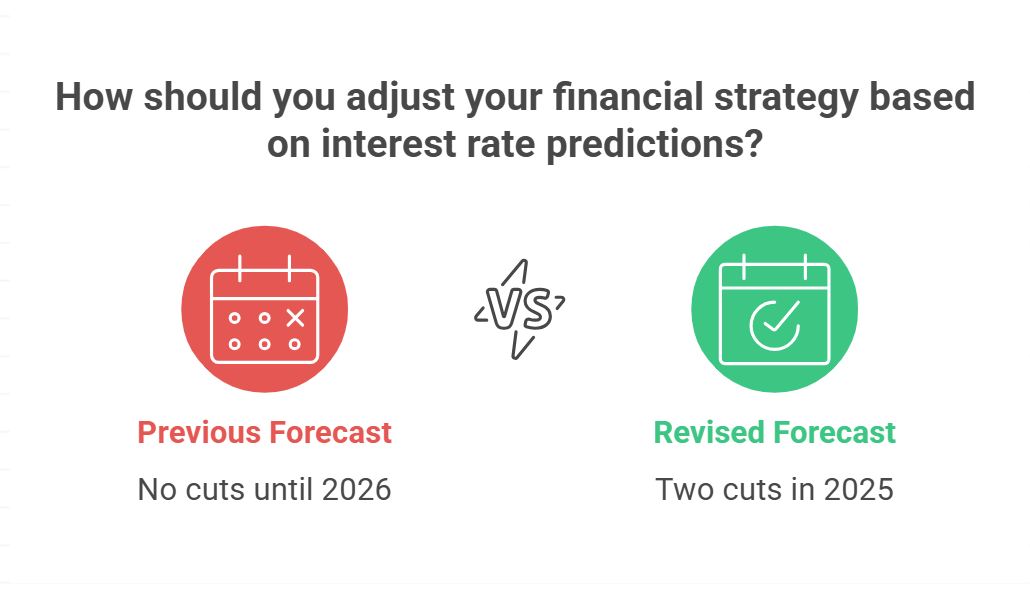
Are you keeping an eye on where interest rates are headed? You should be! Interest rate predictions by Bank of America have shifted, and it could impact your wallet. Bank of America now expects the Federal Reserve to cut interest rates twice in 2025. This is a change from their earlier forecast of no cuts until 2026. Expect two cuts of 25 basis points in September and December, bringing the federal funds rate down to 3.75%-4.00%.

This change of heart from Bank of America is a big deal. Why did they change their minds, and what does it mean for you, your savings, and your future investments? Let's dive into the details and break it down in a way that's easy to understand.

Interest Rate Predictions by Bank of America for 2025 and 2026

Background on Current Interest Rates

Before we get into Bank of America's predictions, let's remember where we are right now. The Federal Reserve (or “the Fed”) has kept the federal funds rate steady at 4.25%-4.50% throughout 2025. Think of this rate like a benchmark, influencing many other interest rates you see every day. This pause came after three cuts in late 2024, which brought rates down from a high of 5.25%-5.50%. The goal was and is to fight inflation, which has been hanging around 2.4%-2.5%, close to the Fed's target of 2%.

Why Bank of America Changed Its Tune

Okay, so what made Bank of America change their prediction from no cuts to two cuts? It all boils down to the economy, specifically some recent news about the job market. Earlier in the year, economists at Bank of America thought the economy was strong, growing steadily, and keeping inflation in check. This made them believe that the Fed wouldn't need to cut rates in 2025.

But then the August jobs report came out, and it wasn't pretty. Only 22,000 jobs were added, way below what experts predicted. This was the weakest job growth since 2020, apart from some weird times during the pandemic. On top of that, the unemployment rate rose to 4.3%.

This set of data made Bank of America realize that the economy might not be as strong as they thought. Weaker job growth is typically an indication that the Fed can loosen up on its strict stance.

Interest Rates Predictions by Bank of America: Expect 2 Cuts of 25 Basis Points

What this means for everyday Americans and the economy

If these rate cuts happen, what will it mean for you and me? Here are some possible effects:

  • Lower borrowing costs: Mortgages, auto loans, and credit cards could become cheaper.
  • Lower savings account yields: Your savings accounts and CDs might not earn as much interest.
  • Boost to investment: Businesses might be more likely to invest and grow.
  • Possible stock market rally: Cheaper capital could send markets higher, but inflation is always a worry.

Comprehensive Analysis of Bank of America's Revised Interest Rate Forecast

Let's get deeper into why Bank of America changed its forecast and what it really means for you.

Before, they were pretty optimistic, thinking the U.S. would avoid a recession even with high interest rates. They saw steady growth – around 2.5% GDP increase – and felt inflation was under control. But the August jobs report changed everything.

1. The Shift and New Numbers

The numbers speak for themselves. Just 22,000 jobs were added in August. Let's be honest, that is really low. Seeing this data made Bank of America rethink their plan, and they now expect the Fed to drop rates twice this year.

Specifically, cuts to bring the federal funds rate to 4.00%-4.25% and 3.75%-4.00% in September and December, respectively. They also predict three more cuts in 2026, landing rates to 3.00%-3.25%.

Now, even with these cuts coming, be reminded that inflation is at almost 3%, so don't expect super-aggressive easing.

2. Economic Indicators That Sparked the Change

The August jobs report was the big turning point. But it wasn't the only sign of a cooling economy. Here's a look at other key figures:

  • Job Growth and Unemployment: Only 22,000 jobs were added in August
  • Wage Pressures: Average hourly earnings rose 0.2% monthly (3.9% annually). So it is gradually decreasing.
  • Inflation Trends: The Consumer Price Index (CPI) stayed at around 2.5% year-over-year.
  • GDP and Consumer Confidence: GDP was growing at 2.8% earlier in the year.

3. How Bank of America Compares to the Rest

Bank of America's updated forecast puts them closer to other big banks and market predictions. However, they're still a bit conservative. While most think it's close to being a certainty, nothing is ever guaranteed.

Here's a sample view of 2025 cuts as envisioned at top financial institutions.

Institution Predicted 2025 Cuts (Basis Points) End-2025 Rate Range
Bank of America 50 (Sep & Dec) 3.75%-4.00%
J.P. Morgan 100 3.25%-3.50% (by Q1 2026)
Morgan Stanley 75 (Sep, Dec, potential third) 3.50%-3.75%
Goldman Sachs 50 3.75%-4.00%
Market (CME) 75-100 (probabilistic) 3.50%-3.75%

4. Historical context

Looking back at the past can shed light on what might happen next. The Fed's current situation is like past cycles where they paused rate hikes to tame inflation. They acted similarly in 2001 and 2008 with the central bank averting deeper downturns by cutting rates, but sometimes fueling bubbles.

The impact on you, businesses, and the market

Let's break down the potential effects of these rate cuts on different parts of the economy:

  • The Consumer.
    • Mortgages: Mortgage rates could dip below to around the low 6%, creating savings for borrowers.
    • Savings and Investments: Savings accounts and CDs might not earn as much, so people might look for other investments.
    • Everyday Spending: Big purchases might go up, but fear of job loss could keep spending under control.
  • The Business
    • Financing: Lower rates make it cheaper to borrow, which would encourage investment.

Financial Markets:

  • Stocks: Sectors such as Housing and Consumer spending are likely to jump and give a boost to investments in these segments. Bonds and housing would also likely see good times ahead.

The Fed's own Signals and Future Plans

Even the people involved like the head guys at the FED have grown to be “dovish” or more considerate of lowering the rates. What's more, they see gradual cuts being plausible for the period ahead.

Final Thoughts: Bank of American's shift to now include rate cuts encapsulates the uncertainties as well as the vulnerabilities of the US economy. What is most important that as things progress, you must consistently monitor all data and information along the way to make informed decisions.

Position Your Portfolio Ahead of the Fed’s Next Move

The Federal Reserve’s next rate decision could shape real estate returns through the rest of 2025. Whether or not a rate cut happens, smart investors are acting now.

Norada Real Estate helps you secure cash-flowing properties in stable markets—shielding your investments from volatility and interest rate swings.

HOT NEW LISTINGS JUST ADDED!

Talk to a Norada investment counselor today (No Obligation):

(800) 611-3060

Get Started Now

Recommended Read:

  • Fed Holds Interest Rates Steady for the Fifth Time in 2025
  • Fed Projects Two Interest Rate Cuts Later in 2025
  • Interest Rate Predictions for the Next 3 Years: 2025, 2026, 2027
  • When is Fed's Next Meeting on Interest Rate Decision in 2025?
  • Interest Rate Predictions for the Next 10 Years: 2025-2035
  • Will the Bond Market Panic Keep Interest Rates High in 2025?
  • Interest Rate Predictions for 2025 by JP Morgan Strategists
  • Interest Rate Predictions for Next 2 Years: Expert Forecast
  • Fed Holds Interest Rates But Lowers Economic Forecast for 2025
  • Fed Indicates No Rush to Cut Interest Rates as Policy Shifts Loom in 2025
  • Fed Funds Rate Forecast 2025-2026: What to Expect?
  • Interest Rate Predictions for 2025 and 2026 by NAR Chief
  • Market Reactions: How Investors Should Prepare for Interest Rate Cut
  • Impact of Interest Rate Cut on Mortgages, Car Loans, and Your Wallet

Filed Under: Economy, Financing Tagged With: Economy, Fed, Fed Rate Cut, Federal Reserve, inflation, Interest Rate

Mortgage Rates Today: 30-Year Average Refinance Rate Goes Down to 6.89%

October 14, 2025 by Marco Santarelli

Mortgage Rates Drop: Today's 30-Year Fixed Refinance Rate Goes Down by 23 Basis Points

Good news for homeowners looking to lower their monthly payments! The average 30-year fixed refinance rate has dipped to 6.89%, according to Zillow. This is a welcome drop and signals a potential shift in the housing market for those considering refinancing their homes.

This modest decrease, a slip from 6.91% to 6.89%, might seem small, but I’ve seen firsthand how even these small movements can make a difference for families. It represents a step in the right direction, especially after rates have been hovering at higher levels. For anyone with a mortgage, keeping an eye on these numbers is crucial, and this latest update offers a hopeful sign for potential savings.

Mortgage Rates Today: 30-Year Average Refinance Rate Goes Down to 6.89%

Understanding What This Rate Drop Means for You

So, what does a drop to 6.89% for a 30-year fixed refinance rate actually mean for your wallet? It’s not just a number on a screen; it translates into real dollars saved each month.

A 5 Basis Point Drop: The Real Impact

Let's break down that 5 basis point decrease from last week's average of 6.94% to today's 6.89%. A basis point is one-hundredth of a percentage point. So, we're talking about a change of just 0.05%.

While it might sound tiny, for a significant loan like a mortgage, it adds up. For example, if you have a $300,000 mortgage, a rate decrease from 6.94% to 6.89% could chop off around $10-$15 from your monthly payment. Over the life of a 30-year loan, that’s hundreds or even thousands of dollars in your pocket! It's these small, consistent savings that make refinancing a smart financial move.

Refinance Options: Weighing Your Choices

The current market offers a few different paths when it comes to refinancing. The most common are the 30-year fixed and the 15-year fixed. It’s really about finding the balance that works best for your financial goals and current situation.

  • 30-Year Fixed Refinance Rate: At 6.89%, this is still the go-to for many borrowers. It offers the longest repayment period, meaning your monthly payments will be the lowest. This is great for those who want predictable payments and more breathing room in their budget.
  • 15-Year Fixed Refinance Rate: This option has seen an even more significant drop, moving from 5.82% to 5.77%. While the monthly payments will be higher than a 30-year loan, you'll pay off your mortgage much faster and save a substantial amount on interest over the life of the loan. If you can comfortably afford the higher payments, this is a fantastic way to build equity quickly.
  • 5-Year ARM Refinance Rate: Now, this is an interesting one. The rate has increased by 10 basis points, going from 7.44% to 7.54%. Adjustable-Rate Mortgages (ARMs) often start with a lower interest rate than fixed-rate mortgages, but that rate can change over time. This increase suggests that lenders are anticipating potential future rate hikes or are adjusting for market conditions. For most people, especially with the current stability in fixed rates, a 30-year or 15-year fixed is likely a safer bet right now.

I often advise clients to consider their long-term plans. Are you planning to stay in your home for a long time? Do you want the lowest possible monthly payment, or are you focused on paying off your home sooner? Answering these questions helps guide the decision between a 30-year, 15-year, or even considering an ARM if the initial rate is exceptionally attractive and you plan to move before the adjustment period.

The Federal Reserve's Hand in Your Mortgage Rate

It’s important to understand that mortgage rates don’t just fluctuate randomly. They are influenced by much larger economic forces, and the Federal Reserve plays a significant role.

The Fed's First Cut of 2025 and What It Means

Back on September 17, 2025, the Federal Reserve decided to cut its main interest rate for the first time in 2025. They lowered it by a quarter of a percent. This was a big deal because it had been on pause for a while.

Why did they do this? The economy is a bit of a mixed bag. Inflation, which means prices going up for everything, is still a concern, but it's starting to come down. On the other hand, the economy is growing well, but the job market is showing some signs of cooling off, with unemployment creeping up a bit. The Fed is trying to find that sweet spot: keeping prices from going up too fast while also making sure people can still find jobs.

The Highway to Mortgage Rates: Treasury Yields

The Federal Reserve’s actions directly impact what are called Treasury yields, specifically the yield on the 10-year U.S. Treasury note. Think of this as the main highway that mortgage rates travel on.

  • Direct Link: Lenders use the 10-year Treasury yield as a starting point when they decide what to charge for a 30-year fixed mortgage. It's like the base price for a car before they add any options.
  • Investor Appeal: Investors can buy Treasury bonds, which are considered very safe. To get people to invest in mortgages instead, mortgage-backed securities (which are tied to mortgages) have to offer somewhere around the same return.
  • The “Spread”: Mortgage rates are almost always higher than Treasury yields. This difference is called the “spread,” and it’s like a fee lenders add to cover their risks and make a profit. Right now, this spread is a bit wider than usual, which means even when Treasury yields go down, mortgage rates don't always fall as much. This is why we're seeing rates at 6.89% and not, say, 5.89% if you just looked at the Treasury yield.

Right now, the 10-year Treasury yield is around 4.12%. This is good because it’s below its usual average. The Fed's rate cut helped stabilize this. However, that wider spread is still holding mortgage rates back from dropping as much as they could.

Recommended Read:

30-Year Fixed Refinance Rate Trends – October 13, 2025

Best Time to Refinance Your Mortgage: Expert Insights

Should I Refinance My Mortgage Now or Wait Until 2026? 

How Your Credit Score Plays a Role

I can't stress this enough: your credit score is a superpower when it comes to getting a good mortgage rate. Lenders see a good credit score as a sign that you're a reliable borrower who pays bills on time.

  • Excellent Credit (740+): You’ll typically get the best advertised rates, like the 6.89% or even lower if you have perfect credit.
  • Good Credit (670-739): You’ll still get competitive rates, but maybe a tiny bit higher than the advertised best.
  • Fair Credit (580-669): Rates will likely be higher, and you might have more fees.
  • Poor Credit (Below 580): It can be very difficult to get approved for a refinance, or the rates will be extremely high.

If your credit score isn't where you want it to be, focus on improving it before you apply. Paying down credit card balances, avoiding late payments, and checking your credit report for errors can make a real difference. A few extra points can save you a lot of money over time.

Refinancing: Is Now the Right Time?

With rates at 6.89% for a 30-year fixed refinance, many homeowners are wondering if they should jump in. My professional opinion, based on years in the financial world, is that if your current rate is significantly higher – say, above 6.5% or 7% – it's definitely worth exploring.

  • For Current Buyers: The good news is that borrowing has become a little more affordable compared to the highest rates we saw recently. If you've been priced out of the market, these slightly lower rates might make it possible to enter the housing market.
  • For Refinance Candidates: Homeowners with rates above 6.5% should really be looking into refinancing. The potential savings are substantial, and it could mean lowering your monthly payment, paying off your loan faster, or cashing out some home equity if you need it.
  • Market Watchers: The Fed is being cautious. They're waiting to see more data before making big moves. Mortgage rates will likely see gradual changes, not sudden dramatic drops.

The Federal Reserve’s decision to cut rates has set a new tone. While mortgage rates are improving, the path forward depends on what economic data rolls in. It's a good time to be paying attention, especially if you’re looking to adjust your financial situation with your home.

“Invest Smart — Build Long-Term Wealth Through Real Estate”

Norada's team can guide you through current market dynamics and help you position your investments wisely—whether you're looking to reduce rates, pull out equity, or expand your portfolio.

Work with us to identify proven, cash-flowing markets and diversify your portfolio while borrowing costs remain favorable.

HOT NEW TURNKEY DEALS JUST LISTED!

Speak with a seasoned Norada investment counselor today (No Obligation):

(800) 611-3060

Get Started Now

Recommended Read:

  • When You Refinance a Mortgage Do the 30 Years Start Over?
  • Should You Refinance as Mortgage Rates Reach Lowest Level in Over a Year?
  • NAR Predicts 6% Mortgage Rates in 2025 Will Boost Housing Market
  • Mortgage Rates Predictions for 2025: Expert Forecast
  • Half of Recent Home Buyers Got Mortgage Rates Below 5%
  • Mortgage Rates Need to Drop by 2% Before Buying Spree Begins
  • Will Mortgage Rates Ever Be 3% Again: Future Outlook
  • Mortgage Rates Predictions for Next 2 Years
  • Mortgage Rate Predictions for Next 5 Years
  • Mortgage Rate Predictions for 2025: Expert Forecast

Filed Under: Financing, Mortgage Tagged With: mortgage, mortgage rates, Mortgage Refinance Rates

Mortgage Rates Today: 5-year ARM Goes Down 9 Basis Points to 6.94%

October 13, 2025 by Marco Santarelli

Today's 5-Year Adjustable Rate Mortgage Drops from 7.56% to 7.54% - June 28, 2025

Today's mortgage rates show a welcome dip in one popular loan type: the 5-year Adjustable-Rate Mortgage (ARM). According to Zillow's latest figures from Monday, October 13, 2025, the national average 5-year ARM rate has decreased by 9 basis points, settling at 6.94%. This move down from last week's 7.03% provides a glimmer of relief as we navigate the home buying and refinancing market. While the 30-year fixed-rate mortgage saw a slight uptick, this ARM rate drop could be a signal for many to reconsider their mortgage strategy.

It’s not just about a number; it’s about how that number impacts your ability to afford a home, how much you'll pay over the life of the loan, and your overall financial peace of mind. Today’s news on the 5-year ARM specifically catches my eye because ARMs can offer a powerful advantage when rates are trending downwards, or when you anticipate moving or refinancing before the rate adjusts.

Mortgage Rates Today: 5-year ARM Goes Down 9 Basis Points to 6.94%

Digging Deeper: Why the 5-year ARM is Turning Heads

Let's break down what this 9-basis point drop actually means and who it could benefit. A basis point, remember, is just one-hundredth of a percent. So, a 9-basis point decrease is a solid move of 0.09%.

  • For New Buyers: This lower rate on a 5-year ARM can translate to a more affordable initial monthly payment compared to a fixed-rate mortgage. If you’re looking at a $300,000 loan, a 0.09% difference might seem small, but over a year or two, it adds up to real savings that can help with other moving costs or initial home expenses.
  • For Refinancers: If you have an existing ARM that's about to reset, or if you're considering refinancing a fixed-rate loan, this lower ARM rate might present an attractive option, especially if you plan to sell your home within the next five years.

Fixed vs. Adjustable: A Strategic Choice

The biggest question for most people looking at mortgages is always: should I choose a fixed-rate loan or an Adjustable-Rate Mortgage (ARM)? Zillow’s data shows the current national average for a 30-year fixed-rate mortgage is 6.43%, just a hair above yesterday’s rate. Meanwhile, the 15-year fixed rate is at 5.65%.

Here’s how today’s rates stack up:

Loan Type Current Average Rate 1-Week Change
30-Year Fixed 6.43% Up 0.02%
15-Year Fixed 5.65% Down 0.01%
5-Year ARM 6.94% Down 0.09%
7-Year ARM 7.66% Up 0.24%

As you can see, the 5-year ARM, at 6.94%, is higher than the 30-year fixed rate of 6.43%. This is typical. The initial rate on an ARM is usually lower than a 30-year fixed rate, but today, the fixed rate is actually lower than the ARM. This is the critical insight. This anomaly suggests that the market anticipates rates to potentially fall more in the future, making the initial lower rate of a fixed mortgage more attractive than the ARM's starting point. However, the drop in the ARM rate is significant. It means that if you were looking at ARMs, the entry point has just gotten better.

How a 5-year ARM Works (and Why It Matters Now)

A 5-year ARM works like this: for the first five years, your interest rate is fixed. Then, it adjusts periodically (usually once a year) based on market conditions. This means your monthly payment could go up or down after that initial five-year period.

Why it’s interesting today:

  • Lower Initial Payment Potential: While the rate is 6.94% compared to the 30-year fixed at 6.43%, many prospective buyers seek out ARMs expecting rates to eventually fall. If you believe rates will be lower in five years, you're essentially betting on that future decrease. The most recent drop makes this bet more appealing if you're considering an ARM.
  • Anticipation of Future Drops: The fact that the 5-year ARM rate has dropped by a notable 9 basis points, while the 30-year fixed rate inched up, might suggest a shift in how lenders are perceiving future rate movements for shorter-term products versus longer-term ones. Lenders might be more willing to offer better rates on ARMs if they foresee a more stable or decreasing rate environment in the medium term.
  • Strategic Exit Plan: If you're someone who plans to move, sell, or refinance within the first five to seven years of buying your home, an ARM can be a smart move. You benefit from a potentially lower initial payment and avoid the risk of being locked into a higher fixed rate if market rates decline.

Recommended Read:

Fixed vs. Adjustable Rate Mortgage in 2025: Which is Best for You

The Impact of Today’s Rate Drop on Monthly Payments

Let's put this 9-basis point drop into perspective. Imagine borrowing $400,000.

  • At 7.03% (previous rate): Your principal and interest payment would be roughly $2,675 per month.
  • At 6.94% (today's rate): Your principal and interest payment drops to approximately $2,652 per month.

That's a saving of about $23 per month. While seemingly modest, over five years, this adds up to nearly $1,400 in savings. This kind of “found money” can be reinvested, used for home improvements, or simply put into savings.

However, it’s crucial to remember the flip side. The 7-year ARM has actually gone up by 0.24% to 7.66%. This highlights that not all ARMs are moving in the same direction, and the term of the ARM is a significant factor. The longer fixed period of a 5-year ARM offers more stability than a 7-year ARM as it approaches its adjustment period.

Opinion: What This Really Means for You

From my perspective, this movement in 5-year ARM rates is a sign that the market is still trying to find its equilibrium. We're seeing slight nudges up in some fixed rates and noticeable drops in certain ARMs. This is precisely why staying informed and consulting with a trusted mortgage professional is so important.

When I speak with clients, I always emphasize that there's no one-size-fits-all answer. A 30-year fixed mortgage offers unparalleled predictability. You know exactly what your principal and interest payment will be for the entire30 years. This peace of mind is invaluable for many.

However, for those with specific financial plans or a more aggressive approach to managing interest costs, the 5-year ARM, especially with this recent rate decrease, becomes a more compelling discussion point. You’re getting an initial rate that, while higher than the current 30-year fixed, is becoming more attractive due to the drop. If you are confident you'll sell the home or refinance before the rate adjusts, or if you believe interest rates will fall significantly by the time your ARM resets, this could be a strategic play.

The key is to understand your own financial situation, your risk tolerance, and your long-term plans for the property. Don't just look at the headline rate; look at the APR (Annual Percentage Rate), which includes fees and provides a more accurate comparison on the true cost of the loan. Today, the 5-year ARM has an APR of 7.52%.

At the end of the day, these rate movements are not just numbers on a screen. They are opportunities and decisions that can impact your financial future significantly. The 9-basis point drop in the 5-year ARM rate today is good news, and it's worth exploring if it aligns with your homeownership goals.

Earn Passive Income Through Smart Real Estate Investments

With fluctuating adjustable-rate mortgages (ARMs), savvy investors are exploring flexible financing options to maximize returns.

Norada offers a curated selection of ready-to-rent properties in top markets, helping you capitalize on current mortgage trends and build long-term wealth.

HOT NEW LISTINGS JUST ADDED!

Connect with an investment counselor today (No Obligation):

(800) 611-3060

Get Started Now

Also Read:

  • Will Mortgage Rates Go Down in 2025: Morgan Stanley's Forecast
  • Expect High Mortgage Rates Until 2026: Fannie Mae's 2-Year Forecast
  • Mortgage Rate Predictions 2025 from 4 Leading Housing Experts
  • Mortgage Rates Forecast for the Next 3 Years: 2025 to 2027
  • Will Mortgage Rates Ever Be 3% Again in the Future?
  • Mortgage Rates Predictions for Next 2 Years
  • Mortgage Rate Predictions for Next 5 Years
  • Mortgage Rate Predictions: Why 2% and 3% Rates are Out of Reach
  • How Lower Mortgage Rates Can Save You Thousands?
  • How to Get a Low Mortgage Interest Rate?
  • Will Mortgage Rates Ever Be 4% Again?

Filed Under: Financing, Mortgage Tagged With: Adjustable Rate Mortgage, Interest Rate, mortgage, Mortgage Rate Trends, mortgage rates

Best Time to Buy a House in California’s Largest Metros in 2025

October 13, 2025 by Marco Santarelli

Best Time to Buy a House in California's Largest Metros in 2025

Dreaming of buying a house in the sunny state of California? You're probably wondering, “When is the ultimate time to buy a house in California's housing market?” Well, if you're looking for a sweet spot packed with more choices, potentially better prices, and less competition, you'll want to mark your calendars for late September through October. While national trends point to this fall window, the absolute best week can actually shift depending on the specific California metro area you're eyeing.

It’s not just about how much money you have saved; it’s about understanding the subtle ebbs and flows of the market. Many people think spring is the busiest and best time to buy, but from my experience, that's often when the most competition is – think bidding wars and homes flying off the market. The “best” time, for many, is when you have more power as a buyer, and that often happens when things cool down a bit.

Let's dive deep into what makes this fall period so advantageous here in California, looking at major metro areas from San Diego up to Sacramento, and what you can expect.

Best Time to Buy a Home in California's Housing Market in 2025

Why Fall is California's Secret Buying Season

You might be surprised to learn that fall, specifically late September and October, is often cited as a prime time to buy a house across the nation, and California is no exception. Realtor.com's research often highlights this period for several compelling reasons:

  • Increased Inventory: As the frenzied summer buying season winds down, sellers who might have been holding out might decide to list their homes before the colder, less active winter months. This means more options for you to sift through.
  • Less Competition: The eager buyers who were set on moving before the school year starts or the holidays hit have likely already made their moves. This can lead to fewer offers on the table for the homes you're interested in.
  • Motivated Sellers: Sellers in the fall might be more inclined to negotiate. They have been on the market for a while, and the holiday season is approaching, making them more eager to close a deal.
  • Potentially Better Prices: With less competition and more motivated sellers, there's a greater chance to snag a home at a more favorable price or even negotiate a better deal than you might in the spring or summer.

Of course, owning a home in California is a dream for many, and the market here is known for its unique dynamics. While national trends provide a great baseline, understanding your local California market is crucial.

California Metro Areas: Pinpointing Your Prime Buying Window

California is a vast state with incredibly diverse housing markets. What might be the “best week” to buy in Los Angeles could be different for someone looking in Sacramento or San Diego. Based on research by Realtor.com, we can see some of these regional differences. Let's break it down for some of California's largest metro areas:

  • Los Angeles-Long Beach-Anaheim, CA: According to Realtor.com's findings, the ideal window for this sprawling Southern California market often falls around October 12-18. This means you're looking at late October as a strong contender for finding your new home in this bustling region.
  • San Diego-Chula Vista-Carlsbad, CA: For those eyeing the stunning coastal city of San Diego, the suggested sweet spot is October 12-18. Similar to LA, late October presents a favorable time.
  • San Francisco-Oakland-Fremont, CA: The Bay Area's market is notoriously competitive. Realtor.com data suggests the prime buying time here is October 12-18. This is when you might find a slight edge in inventory and seller willingness.
  • San Jose-Sunnyvale-Santa Clara, CA: Silicon Valley often operates on its own timeline. However, for optimal buying conditions, Realtor.com points to October 19-25. This pushes the ideal window slightly later into October compared to some other major metros.
  • Riverside-San Bernardino-Ontario, CA: This Inland Empire region, often offering more affordable options compared to coastal areas, shows a best buying week of September 28 – October 4. This suggests that early October might be your golden ticket here.
  • Sacramento-Roseville-Folsom, CA: Heading north to the state capital, the prime buying time is identified as October 12-18. This aligns with the general fall trend for many significant California markets.

It's fascinating how these windows are clustered. The overwhelming trend for most of California's major metro areas points towards mid to late October. This gives buyers a very clear target to aim for.

Table: Best Buying Weeks for Key California Metro Areas

Metro Area Best Week to Buy
Los Angeles-Long Beach-Anaheim, CA October 12-18
San Diego-Chula Vista-Carlsbad, CA October 12-18
San Francisco-Oakland-Fremont, CA October 12-18
San Jose-Sunnyvale-Santa Clara, CA October 19-25
Riverside-San Bernardino-Ontario, CA September 28 – October 4
Sacramento-Roseville-Folsom, CA October 12-18

Note: Data is based on Realtor.com's analysis for the top 50 largest metro areas, and specific timing can vary slightly year to year.

Beyond the Calendar: What Else Influences the “Best” Time?

While that specific week in October might be statistically ideal, I always tell my clients that a few other factors you should keep in mind:

  1. Your Personal Readiness: Are you financially ready? This is paramount. Do you have a solid down payment saved, your credit score in good shape, and have you been pre-approved for a mortgage? If not, the calendar date might be less important than getting your personal finances in order. Don't let a “good time” rush you into a situation you're not ready for.
  2. Mortgage Interest Rates: This is a huge variable. While inventory might be up in October, if interest rates are soaring, it could significantly impact your monthly payment and overall affordability. Keeping an eye on interest rate trends is just as important as looking at the calendar. Sometimes, a slightly less “ideal” week with lower rates can be a better financial move.
  3. Local Market Conditions: Every neighborhood can have its own micro-market. Even within Los Angeles, a specific zip code might have different trends. Talk to local real estate agents, attend open houses, and get a feel for how quickly homes are selling in the specific areas you're interested in.
  4. Your Lifestyle and Needs: Do you need to move before the end of the year for a job, to be closer to family, or for school? Your personal deadlines and needs will always trump a generic “best time.”

My Take: The Power of Preparation and Patience

In my years of observing and participating in California real estate, I've seen that preparation and patience are the real keys to success, no matter the season. If you're financially prepared and understand your local market's nuances, you can find a great home at a fair price at almost any time of year.

However, the data suggesting late September and October as a prime buying window for many California metro areas is definitely worth paying attention to. It's a time when the market typically experiences a shift towards being more buyer-friendly. You might find more houses to choose from, and sellers could be more open to negotiation.

So, while that October window is a great indicator, remember to combine that knowledge with your personal readiness and a keen understanding of your target California neighborhood. That combination is what will truly help you find the best time for YOU to buy a house in California.

Looking to Build Wealth Like Smart Real Estate Investors?

Norada helps you navigate volatility by connecting you with turnkey, cash-flowing rental properties in resilient markets—so you can protect purchasing power and pursue steady income regardless of short-term rate moves.

🔥 HOT NEW LISTINGS JUST ADDED! 🔥

Talk to a Norada investment counselor today (No Obligation):

(800) 611-3060

Get Started Now

Related Articles:

  • California Housing Market Forecast 2026: Will it Crash or Recover?
  • California Housing Market Rebounds Driven by Lower Mortgage Rates
  • Home Prices Drop in 21 Counties in the California Housing Market
  • California Leads With Most At Risk Housing Market Counties in 2025
  • California Housing Market Decline: Sales Drop for 4th Straight Month
  • California Housing Affordability Drops in Q2 2025 Amid High Mortgage Rates
  • Is the California Housing Market Heading for a Crash or Correction?
  • California Housing Market: Forecast and Trends 2025-2026
  • California Housing Market Graph 50 Years
  • The Great Recession and California's Housing Market Crash: A Retrospective
  • California Dominates Housing With 7 of Top 10 Priciest Markets
  • Real Estate Forecast Next 5 Years California: Boom or Crash?
  • Anaheim, California Joins Trillion-Dollar Club of Housing Markets
  • California Housing Market: Nearly $174,000 Needed to Buy a Home
  • Most Expensive Housing Markets in California
  • Abandoned Houses for Free California: Can You Own Them?
  • Homes Under 50k in California: Where to Find Them?

Filed Under: Growth Markets, Housing Market, Real Estate Market Tagged With: california, Housing Market

San Diego Housing Market: Best Time for Buyers is Mid-October 2025

October 13, 2025 by Marco Santarelli

San Diego Housing Market: Best Time for Buyers is Mid-October 2025

Dreaming of owning a home in beautiful San Diego? If you're a buyer aiming for the sweet spot in 2025, the optimal time to jump into the San Diego housing market is around mid-October. While national trends point to this period as a prime opportunity, understanding the nuances of San Diego’s unique market is key to making your homeownership dreams a reality. For those looking to buy in San Diego, think of the week of October 12th to October 18th, 2025, as your potential golden ticket. This period, based on data from Realtor.com, suggests a favorable shift offering more choices and potentially better deals.

San Diego Housing Market: Best Time for Buyers is Mid-October 2025

As a real estate enthusiast who's navigated countless transactions, I can tell you that the “best time to buy” isn't just a catchy phrase; it's about aligning yourself with market conditions that favor buyers. And for San Diego, that sweet spot often means fewer bidding wars, a wider selection of homes, and sellers who are more motivated to make a deal. Let's dive deeper into why this timing is so crucial and what you can expect as a buyer in San Diego in 2025.

Why Mid-October is Your San Diego Advantage in 2025

The housing market, much like the weather, has its seasons. For buyers, the fall, particularly mid-October, often signals a welcoming shift. Several factors contribute to this:

  • Inventory Rebounds: After a typically busy spring and early summer, the market often sees a drop in new listings. However, by mid-fall, there's often a secondary surge of inventory as some sellers need to sell before the end-of-year holidays or before the winter slowdown. This means more homes to choose from, increasing your chances of finding the perfect fit.
  • Reduced Competition: The frenzied competition of the spring and summer months usually starts to wane. Families are often settling into school routines, and the holiday rush is just beginning to loom. This can translate into fewer buyers actively looking, giving you more breathing room to make decisions and less pressure in negotiations.
  • Seller Motivation: Sellers looking to close a deal before the year ends might be more open to offers and negotiations. They've likely seen their home on the market for a while, and the desire to avoid carrying costs through the holidays can increase their willingness to compromise.
  • Potential Price Adjustments: With less competition and more motivated sellers, prices can sometimes see a slight dip or at least become more negotiable compared to the peak buying seasons. Realtor.com projects that buyers during this window could see significant savings, potentially tens of thousands of dollars, compared to peak summer prices for a median-priced home.

San Diego's Local Flavor: Beyond the National Trend

While the national “best week” points to mid-October, it's vital to remember that real estate is intensely local. San Diego, with its desirable climate and lifestyle, has its own unique market dynamics. Based on the Realtor.com data, San Diego-Chula Vista-Carlsbad, CA is specifically highlighted as having its best buying week from October 12th to October 18th, 2025. This is incredibly significant because it means the general trend aligns perfectly with our vibrant city.

However, as an observer of this market, I've seen that while this window offers advantages, San Diego's desirability means that well-priced, move-in-ready homes can still fly off the market quickly. The key is to be prepared and act decisively when the right property appears.

What Buyers in San Diego Can Expect in 2025

The housing market in 2025 is shaping up to be more balanced than the frenzy of recent years. This is good news for buyers. Here's why:

  • Steadying Rates and Prices: We've seen mortgage rates and home prices become more stable. This allows buyers to plan and budget effectively, taking some of the panic out of the process.
  • Increased Time on Market: Homes are spending a more typical amount of time on the market, giving you the opportunity to thoroughly evaluate properties rather than feeling rushed into a decision.
  • Buyer Negotiation Power: In a more balanced market, buyers have a better chance of negotiating on price, terms, and even for repairs. It’s a shift back towards a more traditional real estate environment where buyers regain some control.

Here's a look at how San Diego stacks up against other major metros:

Metro Area Best Week to Buy
Atlanta-Sandy Springs-Roswell, GA September 28 – October 4
Austin-Round Rock-San Marcos, TX September 28 – October 4
San Diego-Chula Vista-Carlsbad, CA October 12 – 18
Los Angeles-Long Beach-Anaheim, CA October 12 – 18
San Francisco-Oakland-Fremont, CA October 12 – 18
San Jose-Sunnyvale-Santa Clara, CA October 19 – 25
Seattle-Tacoma-Bellevue, WA October 19 – 25

Data Source: Realtor.com

As you can see, San Diego aligns perfectly with the national trend, making mid-October a crucial period to focus your search. While Los Angeles and San Francisco also have their prime buying windows in early to mid-October, San Diego's specific slot is a definite advantage.

Strategies for Savvy San Diego Buyers in 2025

Even with favorable timing, success in the San Diego market requires preparation and a smart approach:

  • Get Pre-Approved: Before you even start seriously browsing, talk to a mortgage lender and get pre-approved for a loan. This shows sellers you're a serious buyer and helps you understand your budget clearly.
  • Define Your Priorities: What's most important to you? Location, size, price, specific features? Knowing this will help you narrow your search and make quick decisions.
  • Line Up Your Agent: Work with a local San Diego real estate agent who understands the market inside and out. They can provide invaluable insights, spot opportunities, and guide you through the negotiation process.
  • Set Up Listing Alerts: Be sure to have your agent set up instant alerts for new listings that match your criteria. In a market like San Diego, the best homes can receive multiple offers within days.
  • Be Ready to Act: When you find a home that checks all your boxes, be prepared to act quickly. The mid-October window offers more choices, but desirable properties still move fast.

A Note on Affordability

While 2025 offers better conditions for buyers, affordability remains a significant consideration, especially in a high-cost-of-living area like San Diego. Mortgage rates, while potentially easing, are still a factor. Economic uncertainties can also influence buyer confidence. It's crucial to ensure that the home you choose is not just a good market buy, but also a sound financial decision for your household.

The Bottom Line for San Diego Homebuyers

If owning a piece of San Diego is your goal, the best time for buyers in 2025 is projected to be the week of October 12th to October 18th. This period offers a confluence of increased inventory, reduced competition, and motivated sellers, creating a buyer-friendly environment. By being prepared, knowing your priorities, and working with local experts, you can capitalize on this opportune window and find the San Diego home of your dreams. Don't let this chance slip you by – the perfect time to buy your San Diego home is closer than you think!

Do You Want to Invest in Income-Producing Real Estate?

With mid-October 2025 shaping up as the best time for buyers, investors have a unique chance to secure properties at competitive prices before demand rebounds.

Work with Norada Real Estate to identify turnkey, cash-flowing opportunities—so you can build wealth while others hesitate.

HOT TURNKEY DEALS JUST ADDED!

Speak with a seasoned Norada investment counselor today (No Obligation):

(800) 611-3060

Get Started Now 

Recommended Read:

  • San Diego Housing Market Predictions for the Next 2 Years
  • San Diego Housing Market: Trends and Forecast 2025-2026
  • San Diego Housing Market Graph 50 Years: Analysis and Trends
  • Is San Diego’s Housing Getting Very Expensive: Experts Predict
  • San Diego Housing Market Booms With 9.4% Growth: Expert Predictions
  • San Diego Housing Market Predictions: Soaring and Expensive!
  • San Diego Housing Market Predictions: Prices Skyrocket 11.4%; What's Next?
  • Is San Diego Real Estate a Good Investment?

Filed Under: Growth Markets, Housing Market Tagged With: Housing Market, san diego

Today’s Mortgage Rates – October 13, 2025: 30-Yr FRM Ticks Up to 6.55%, Refi Rates Drop

October 13, 2025 by Marco Santarelli

Today's Mortgage Rates - October 9, 2025: 30-Year FRM Nudges Up to 6.48%

As of today, October 13, 2025, national 30-year fixed mortgage rates have nudged upward to 6.55%, a slight increase from yesterday’s 6.41%, according to Zillow’s latest report. This movement signifies a subtle but important shift in the cost of borrowing for aspiring homeowners and those looking to refinance. While rates haven’t dramatically spiked, this upward tick is a reminder that mortgage rates are influenced by a complex interplay of economic factors, and now is the time to understand what’s driving them.

Today's Mortgage Rates – October 13, 2025: 30-Yr FRM Ticks Up to 6.55%, Refi Rates Drop

Key Takeaways

  • 30-Year Fixed Rates Rising: The average 30-year fixed mortgage rate is now at 6.55%, up from 6.41% on October 12th.
  • Weekly Trend: This rate is also higher than the previous week’s average of 6.46%.
  • 15-Year Fixed Rates Also Up: The 15-year fixed mortgage rate saw a smaller increase, moving to 5.71% from 5.66%.
  • Jumbo Loans and ARMs: Adjustable-Rate Mortgages (ARMs), especially the 5-year option, are seeing more significant jumps, with the 5-year ARM now at 7.23%.
  • Refinance Rates Soaring Downwards: In a stark contrast, refinance rates have seen a dramatic drop. The 30-year fixed refinance rate is down to 6.43%.

Understanding Today's Mortgage Rate Movements

It’s easy to get caught up in the daily fluctuations of mortgage rates. I’ve been following this market for a while, and what I see today is a market reacting to several key economic signals. We’re not just looking at one number; it’s a dynamic situation.

The 30-year fixed mortgage rate climbing to 6.55% from 6.41% might seem small, but it’s a noticeable change, especially when you’re talking about the largest loan most people will ever take out. This increase, while modest week-over-week, shows that the market is a bit sensitive right now.

On the flip side, the news for those looking to refinance is quite different. Zillow’s data shows a significant plunge in 30-year fixed refinance rates, down to 6.43%. This is a substantial drop of 53 basis points and highlights a divergence in rates for new purchases versus those looking to improve their existing loan terms. It appears lenders are more eager to capture refinance business with more attractive terms.

Dissecting the Data: Purchase vs. Refinance

Let's break down the numbers from Zillow as of October 13, 2025:

For New Home Purchases:

Program Rate 1W Change APR 1W Change
30-Year Fixed 6.55% Up 0.09% 7.07% Up 0.17%
20-Year Fixed 6.55% 0.00% 6.95% 0.00%
15-Year Fixed 5.71% Up 0.06% 6.06% Up 0.12%
10-Year Fixed 5.84% 0.00% 6.23% 0.00%
5-Year ARM 7.23% Up 0.19% 7.93% Up 0.27%
7-Year ARM 7.66% Up 0.24% 8.32% Up 0.53%

Note: Data from Zillow as of October 13, 2025. 1W Change refers to the change from the previous week.

For Refinancing:

Program Rate 1W Change APR 1W Change
30-Year Fixed 6.43% Down 0.53% — —
15-Year Fixed 5.34% Down 0.55% — —
5-Year ARM 6.53% Down 1.04% — —

Note: Data from Zillow as of October 13, 2025. APR data not provided for all refinance options in the source.

The difference in the 30-year fixed refinance rate at 6.43% compared to the purchase rate of 6.55% is significant. This gap suggests that lenders are actively trying to attract homeowners looking to lower their monthly payments. If you’ve been thinking about refinancing, now might be a very opportune time to explore those options.

Government Loans: A Different Story

Government-backed loans, like FHA and VA loans, often have different rate structures. For those who qualify, these can offer more favorable terms, especially for borrowers with less-than-perfect credit or those seeking reduced down payments.

Government Loans Snapshot:

Program Rate 1W Change APR 1W Change
30-Year Fixed FHA 5.63% Down 0.58% 6.63% Down 0.59%
30-Year Fixed VA 6.08% Up 0.04% 6.30% Up 0.05%
15-Year Fixed FHA 5.25% Down 0.16% 6.21% Down 0.17%
15-Year Fixed VA 5.80% Up 0.07% 6.16% Up 0.07%

It's interesting to see the FHA rates actually decreasing significantly, with the 30-year fixed FHA falling by 0.58%. This could be due to specific market dynamics or adjustments in how these loans are priced. However, VA loans, while still competitive, saw minor increases.

The Federal Reserve's Influence: A Mid-October Outlook

To truly understand today’s mortgage rates, we need to look at the bigger picture, and that inevitably leads us to the Federal Reserve. As the provided information notes, the Fed made its first rate cut of 2025 back on September 17th, bringing the benchmark rate down by a quarter percentage point. This was a significant move, especially coming after a pause.

The Fed is in a delicate balancing act. They’re trying to bring inflation, currently at 2.9% year-over-year for the core PCE price index, down to their 2% target. At the same time, the economy has shown resilience with strong GDP growth in Q2, but the labor market is softening, with unemployment ticking up to 4.3%. It's a classic mixed bag, and their decisions reflect this uncertainty.

The Treasury Yield Connection:

The Fed’s actions directly impact mortgage rates, primarily through the 10-year U.S. Treasury yield. This yield acts as a benchmark for 30-year fixed mortgages. When the Fed cuts rates, it typically puts downward pressure on Treasury yields. As of mid-October 2025, the 10-year Treasury yield is hovering around 4.12%, which is below its long-term average.

Here’s how it works:

  1. Benchmark: Lenders use the 10-year Treasury yield as a starting point because both have similar durations.
  2. Investor Demand: Mortgage-backed securities need to offer competitive returns to attract investors, who also have safer options like Treasury bonds.
  3. The Spread: Mortgage rates usually sit about 1% to 2% higher than the 10-year yield. This difference, or “spread,” covers the added risk of mortgages. Currently, this spread is still a bit wider than usual, meaning that even though Treasury yields have come down, mortgage rates haven't fallen as much as they could have.

What This Means: The stabilization of the 10-year Treasury yield around 4.12% following the Fed cut suggests that markets have absorbed the initial news. While mortgage rates are down from their absolute peaks, that wider spread is still holding them back from falling more dramatically. The Fed has signaled potential for two more cuts by the end of 2025. If those happen and the spread narrows, we could see more significant relief for borrowers.

The Housing Market Outlook

For buyers, the current rate environment is certainly more favorable than it was at the height of 2024's interest rates. However, the persistent challenge of high home prices is still a hurdle, especially for those trying to get into the market for the first time. The slight increase in purchase rates today, while not drastic, emphasizes the need for buyers to be ready to act decisively.

For sellers, the situation is also evolving. More homeowners who might have been “rate-locked” into lower mortgages in previous years might feel more inclined to explore selling now, potentially increasing inventory. This could be good news for buyers looking for more choices.

In my opinion, the market is moving towards increased transaction activity. However, in many desirable areas, the fundamental imbalance between supply and demand means that price increases might persist, even with higher rates.


Related Topics:

Mortgage Rates Trends as of October 12, 2025

Mortgage Rates Predictions for the Next 12 Months: Oct 2025 to Oct 2026

Mortgage Rates Predictions for the Next 6 Months: October 2025 to March 2026

Mortgage Rates Predictions for Next 90 Days: October to December 2025

What's Next on the Horizon?

The future direction of mortgage rates will depend heavily on upcoming economic data. Here are the key factors I'll be watching:

  • Inflation Data: Is it consistently moving towards that 2% target?
  • Labor Market Trends: Is unemployment continuing to rise, or is it stabilizing?
  • Economic Growth: Can the economy continue to grow without reigniting inflation?
  • Spread Normalization: Will the gap between Treasury yields and mortgage rates begin to shrink?

The Fed’s stance is cautious, and my sense is that we’ll see gradual adjustments rather than sudden, dramatic shifts. They’re being deliberate, and their decisions at the upcoming November and December meetings will be critical.

Why This Matters to You

  • Current Buyers: While today's purchase rates are slightly up, the overall environment has improved from the peaks of last year. The potential for more inventory could be a significant factor. It’s about finding the right home and securing a competitive rate.
  • Refinancing Candidates: If your current mortgage rate is above 6.5%, I strongly advise you to explore refinancing options. The dramatic drop in refinance rates presents a real opportunity to save money. Don't miss out on these current opportunities.
  • Market Observers: The message from the Fed is clear: changes will be data-dependent. This emphasizes stability with cautious optimism, rather than rapid swings in either direction that we saw last year.

The Bottom Line

As of October 13, 2025, the mortgage market is navigating a new course set by the Federal Reserve’s recent rate cut. While today’s purchase rates have nudged up to 6.55%, the significant drop in refinance rates to 6.43% presents a compelling opportunity for homeowners. The path forward for all mortgage rates will be shaped by incoming economic data, and my expert opinion is that while we've seen improvement, substantial further declines are contingent on both continued Fed action and a narrowing of the mortgage-Treasury spread. Stay informed, and be ready to act when the numbers align with your goals.

Turn Rate Fluctuations Into Opportunity — Invest in Cash-Flowing Real Estate

Savvy investors are locking in properties that deliver consistent passive rental income and long-term appreciation.

Work with Norada Real Estate to find turnkey, cash-flowing homes in stable markets—helping you grow wealth no matter which way rates move.

HOT NEW INVESTMENT PROPERTIES JUST LISTED!

Speak with a seasoned Norada investment counselor today (No Obligation):

(800) 611-3060

Get Started Now

Also Read:

  • Mortgage Rates Predictions Backed by 7 Leading Experts: 2025–2026
  • Mortgage Rate Predictions for the Next 3 Years: 2026, 2027, 2028
  • 30-Year Fixed Mortgage Rate Forecast for the Next 5 Years
  • 15-Year Fixed Mortgage Rate Predictions for Next 5 Years: 2025-2029
  • Will Mortgage Rates Ever Be 3% Again in the Future?
  • Mortgage Rates Predictions for Next 2 Years
  • Mortgage Rate Predictions for Next 5 Years
  • Mortgage Rate Predictions: Why 2% and 3% Rates are Out of Reach
  • How Lower Mortgage Rates Can Save You Thousands?
  • How to Get a Low Mortgage Interest Rate?
  • Will Mortgage Rates Ever Be 4% Again?

Filed Under: Financing, Mortgage Tagged With: Interest Rate, mortgage, Mortgage Rate Trends, mortgage rates, Mortgage Rates Today

Mortgage Rates Today: 30-Year Refinance Rate Plunges by Over 50 Basis Points

October 13, 2025 by Marco Santarelli

Mortgage Rates Drop: Today's 30-Year Fixed Refinance Rate Goes Down by 23 Basis Points

Mortgage rates today are showing a significant drop, with the 30-year refinance rate specifically plunging by over 50 basis points. This is a massive move, and it means that if you've been thinking about refinancing your home, now might be the perfect time to pull the trigger. This substantial decrease signals a welcome shift in the borrowing market, and I'm here to break down exactly what it means for you.

Mortgage Rates Today: 30-Year Refinance Rate Plunges by Over 50 Basis Points

Key Takeaways

  • Major Rate Drop: According to Zillow, the national 30-year fixed refinance rate has fallen to 6.43%, a significant drop of 53 basis points from last week's average of 6.96%.
  • Previous Week's Trend: Even before this latest drop, rates were trending down, with a 51 basis point decrease from the previous week.
  • 15-Year and ARM Rates Also Down: It's not just the 30-year fixed; the 15-year fixed refinance rate is now at 5.34% (down 55 basis points), and the 5-year ARM refinance rate is at 6.53% (down a whopping 104 basis points).
  • Federal Reserve's Influence: The Federal Reserve's initial rate cut of 2025 has played a crucial role in setting the stage for these falling mortgage rates.
  • Meaningful Savings: A drop this size can translate into substantial savings on your monthly mortgage payments.

A Welcome Drop: What This Means for Your Wallet

Let's talk numbers, because that's where the real impact of this 50+ basis point plunge is felt. When we saw the 30-year fixed refinance rate drop from 6.96% to 6.43% on Monday, October 13, 2025, according to Zillow, that’s not just a small tweak. We're talking about potentially saving hundreds of dollars a month, depending on your loan amount and current interest rate.

Imagine this: If you have a $300,000 mortgage and were looking to refinance at 6.96%, your monthly principal and interest (P&I) payment would be around $1,985. Now, if you can snag that same loan at 6.43%, your P&I payment drops to about $1,870 a month. That's a saving of over $115 every single month, or more than $1,380 per year! Over the life of your loan, these savings can add up to tens of thousands of dollars. It's a tangible benefit that can make a real difference in your household budget.

Why the Big Dive? The Fed's Role in the Rate Shift

You can't talk about mortgage rates without talking about the Federal Reserve. Their actions have a ripple effect across the entire economy, and this big drop in mortgage rates is a prime example. On September 17, 2025, the Fed decided to cut its benchmark interest rate for the first time in 2025. This move, to a target range of 4.0% to 4.25%, was a significant signal that they believe it’s time to ease up on borrowing costs.

After pausing for five meetings, this cut, following three in late 2024, suggests a shift in their strategy. They're trying to find that delicate balance: keeping inflation in check while also supporting a growing economy and a cooling job market. While the job market is showing some signs of cooling, with unemployment rising to 4.3%, and GDP growth is still strong, the Fed is signaling that they see room for lower rates. This change at the top is what ultimately influences the rates we see on our mortgages.

The Treasury Connection: How Fed Rates Filter Down

So, how does a Fed rate cut morph into lower mortgage rates? It's all about the 10-year U.S. Treasury yield. Think of this yield as the canary in the coal mine for mortgage rates. Lenders use it as a benchmark. When the Fed cuts its rates, it tends to push down the yields on Treasury bonds.

As of mid-October 2025, the 10-year Treasury yield is hovering around 4.12%, which is pretty good news. It’s below its long-term average. Now, mortgage rates aren't exactly the same as Treasury yields. There's usually a spread – an extra percentage point or two – that lenders add to cover risks and make a profit. This spread has been a bit wide lately, meaning that the full benefit of lower Treasury yields hasn't always translated directly into mortgage rate drops. However, with the recent Fed action and the stabilization of Treasury yields, we're finally seeing more of that goodness passed on to borrowers.

Beyond the 30-Year: Other Refinance Options See Gains

While the plunge in the 30-year fixed refinance rate is the headline-grabber, it’s important to note that other loan types are also offering better deals.

Here’s a quick look at the changes:

Loan Type Previous Avg. Rate Current Avg. Rate Basis Point Drop
30-Year Fixed 6.96% 6.43% 53
15-Year Fixed 5.89% 5.34% 55
5-Year ARM 7.57% 6.53% 104

As you can see, the 5-year Adjustable-Rate Mortgage (ARM) saw an even more dramatic decrease, dropping by over a full percentage point! If you're someone who plans to move or refinance again within a few years, an ARM might be worth considering, especially with these lower initial rates. The 15-year fixed also saw a substantial drop, offering a path to faster equity building and lower overall interest paid compared to a 30-year loan, albeit with a higher monthly payment.

What a 51 Basis Point Drop Means for Monthly Payments

I touched on this earlier, but let’s really drive home what a 51 basis point difference (which is essentially the same as 53 basis points in this context) means for your monthly budget. When we talk about basis points, it’s helpful to remember that 100 basis points equals 1 percentage point. So, a 51 basis point drop is a little over half a percentage point.

For a $400,000 loan:

  • At 6.94% (previous week's average), your estimated P&I payment is roughly $2,647.
  • At 6.43% (current rate), your estimated P&I payment drops to about $2,507.

That’s a saving of $140 a month, which adds up to $1,680 a year! These are significant savings that can free up cash for other financial goals, like saving for retirement, paying down other debts, or simply enjoying life a little more.

Refinance Timing: Locking in Rates Before Further Hikes

This is where my personal experience comes into play. As someone who has navigated the mortgage market for years, I’ve learned that timing is everything. While the current trend is downward, the economic picture is always shifting. The Fed’s next moves, inflation data, and global economic events can all influence interest rates.

My advice? If you’re considering refinancing and you’re seeing rates that significantly improve your financial situation, don't wait too long to lock. While more rate cuts might be on the horizon, there’s no crystal ball. Locking in a rate that saves you money now is a guaranteed win.

Think of it this way: the market has seen improvements, but the spread between Treasury yields and mortgage rates is still a factor. This means that while rates are good, they might not be as low now as they could be if that spread tightened further and Treasury yields continued to fall. However, relying on that could mean missing out on current savings. It’s a calculated risk, and for many, securing a lower rate today is the smarter play.

Comparing 30-Year Fixed vs. 15-Year Refinance Options

Choosing between a 30-year and a 15-year refinance depends on your financial goals and how much you can comfortably afford each month.

  • 30-Year Fixed:
    • Pros: Lower monthly payments, more flexibility in your budget.
    • Cons: You'll pay more interest over the life of the loan.
    • Ideal for: Homeowners who need manageable monthly payments or plan to pay extra towards the principal when possible.
  • 15-Year Fixed:
    • Pros: Lower interest rate (as seen in the data), pay off your mortgage much faster, save tens of thousands in interest.
    • Cons: Higher monthly payments.
    • Ideal for: Homeowners who can afford the higher payments and want to be mortgage-free sooner.

With the 15-year fixed option now sitting at 5.34%, the gap between it and the 30-year fixed has narrowed significantly. This makes the 15-year refinance a more attractive option for a lot of people who might have shied away from it due to higher monthly payments previously.

How Credit Score Impacts Your Refinance Rate Today

It's crucial to remember that these averages are just that – averages. Your personal credit score plays a vital role in determining the exact refinance rate you'll qualify for. Generally, the higher your credit score, the lower your interest rate will be. Lenders see borrowers with excellent credit (typically 740 and above) as less risky, and they reward that with better rates.

If your credit score has improved since you last took out your mortgage, you're in an even better position to take advantage of these dropping rates. If your score isn't as high as you'd like, it might be worth taking a few months to work on improving it before you apply, as even a small increase can lead to significant savings over time.

Recommended Read:

30-Year Fixed Refinance Rate Trends – October 12, 2025

Best Time to Refinance Your Mortgage: Expert Insights

Should I Refinance My Mortgage Now or Wait Until 2026? 

What's Next? Keeping an Eye on the Data

The Federal Reserve is watching the economic data very closely. They’ll be paying attention to:

  • Inflation: Is it consistently moving towards their 2% target?
  • Jobs: How is the labor market evolving?
  • GDP Growth: Is the economy expanding at a healthy pace without overheating?

These factors will guide their decisions on future interest rate adjustments. For us, as homeowners and potential refinancers, it means staying informed. A solid mortgage rate today is great, but understanding the forces at play can help us make smarter long-term financial decisions.

The Bottom Line

The mortgage rates today, particularly the 30-year refinance rate plunging by over 50 basis points, is fantastic news for homeowners. It's a clear sign that borrowing costs are becoming more favorable. Whether you're looking to lower your monthly payments, shorten your loan term, or tap into home equity, now is a prime time to explore your refinancing options. Don't miss out on this opportunity to potentially save a significant amount of money.

“Invest Smart — Build Long-Term Wealth Through Real Estate”

Norada's team can guide you through current market dynamics and help you position your investments wisely—whether you're looking to reduce rates, pull out equity, or expand your portfolio.

Work with us to identify proven, cash-flowing markets and diversify your portfolio while borrowing costs remain favorable.

HOT NEW TURNKEY DEALS JUST LISTED!

Speak with a seasoned Norada investment counselor today (No Obligation):

(800) 611-3060

Get Started Now

Recommended Read:

  • When You Refinance a Mortgage Do the 30 Years Start Over?
  • Should You Refinance as Mortgage Rates Reach Lowest Level in Over a Year?
  • NAR Predicts 6% Mortgage Rates in 2025 Will Boost Housing Market
  • Mortgage Rates Predictions for 2025: Expert Forecast
  • Half of Recent Home Buyers Got Mortgage Rates Below 5%
  • Mortgage Rates Need to Drop by 2% Before Buying Spree Begins
  • Will Mortgage Rates Ever Be 3% Again: Future Outlook
  • Mortgage Rates Predictions for Next 2 Years
  • Mortgage Rate Predictions for Next 5 Years
  • Mortgage Rate Predictions for 2025: Expert Forecast

Filed Under: Financing, Mortgage Tagged With: mortgage, mortgage rates, Mortgage Refinance Rates

  • « Previous Page
  • 1
  • …
  • 6
  • 7
  • 8
  • 9
  • 10
  • …
  • 14
  • Next Page »

Real Estate

  • Birmingham
  • Cape Coral
  • Charlotte
  • Chicago

Quick Links

  • Markets
  • Membership
  • Notes
  • Contact Us

Blog Posts

  • 20 Best Small Cities to Invest in Real Estate in 2026
    June 23, 2026Marco Santarelli
  • Best Places to Buy a House in the USA for Investment in 2026
    June 23, 2026Marco Santarelli
  • Best Places to Invest in Real Estate in 2026
    June 23, 2026Marco Santarelli

Contact

Norada Real Estate Investments 30251 Golden Lantern, Suite E-261 Laguna Niguel, CA 92677

(949) 218-6668
(800) 611-3060
BBB
  • Terms of Use
  • |
  • Privacy Policy
  • |
  • Testimonials
  • |
  • Suggestions?
  • |
  • Home

Copyright 2018 Norada Real Estate Investments

Loading...