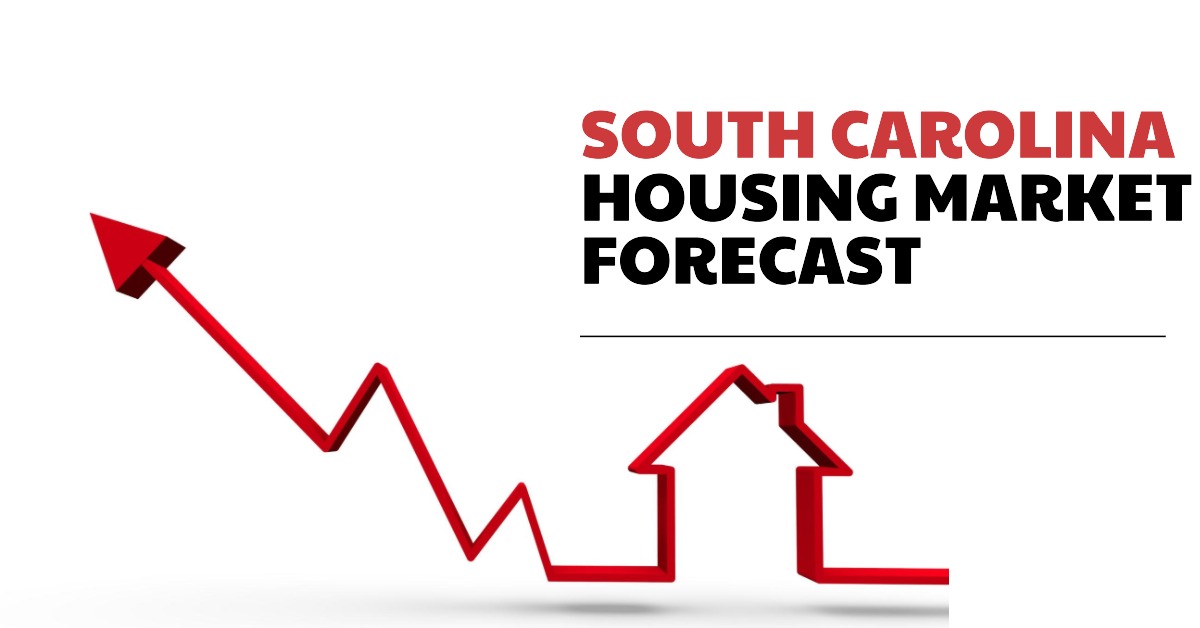
If you're thinking about buying or selling a home in South Carolina, you're probably wondering what's going on with the market. Well, the good news is that the South Carolina housing market is showing signs of stability and a mild, controlled cooling down, rather than an outright crash. As of late 2025, the average South Carolina home value sits around $302,294.
While this is a slight dip of 0.8% compared to the previous year, it's not a sign of panic. Instead, it suggests the market is adjusting after a period of rapid growth. Homes are moving, too – they're staying on the market for about 34 days before going under contract. This tells me that while there's still demand, buyers have a bit more breathing room than they did a year or two ago.
What's Happening with the South Carolina Housing Market Right Now?
I've been following housing trends for a while, and what I'm seeing in South Carolina feels more like a healthy recalibration. After the frenzy of recent years, where bidding wars were the norm and homes flew off the market in days, a slight cooling is to be expected. It's not a crisis, but more of a return to a more balanced environment where both buyers and sellers can approach negotiations with a clearer perspective. This is crucial for those looking to make a move, whether it's their first home or an investment property.
South Carolina Housing Market: Key Stats for 2025
Let's dive into some of the numbers that paint a clearer picture of where we stand today, based on data from Zillow as of late 2025. This isn't just about numbers; it's about understanding the pulse of our communities.
- Current Average Home Value: Around $302,294. This figure is the heart of our current market. It's important to remember this is an average, so values will vary greatly depending on location, size, and condition.
- Year-over-Year Change: A decrease of 0.8%. This might sound concerning, but in the grand scheme of things, it's a very modest adjustment. It signifies a move away from unsustainable price surges.
- Median Sale Price: Currently at $323,000. This is the midpoint of what homes are actually selling for. It reflects what buyers are willing and able to pay in the current market.
- Median List Price: Standing at $376,000. This is what sellers are asking for their homes. The gap between the median sale price and median list price can tell us a lot about negotiation power. Sellers are still hoping for higher prices, but buyers are negotiating them down.
- Days on Market (Pending): Homes are going pending in about 34 days. This is a healthy indicator of market activity. It’s not lightning fast, but it shows that homes are still selling at a steady pace.
- Inventory Available for Sale: As of September 30, 2025, there are 30,835 homes for sale. This is a critical statistic. Higher inventory generally means more options for buyers and less upward pressure on prices.
- New Listings: We're seeing 6,997 new homes hitting the market as of September 30, 2025. This indicates a steady stream of new opportunities for potential buyers.
- Median Sale-to-List Ratio: At 0.982. This means that, on average, homes are selling for about 98.2% of their asking price. This is a really important number for sellers to consider.
- Percent of Sales Over List Price: A modest 13.8%. This shows that while some homes are still attracting multiple offers and selling above asking, it's not the widespread phenomenon it was in recent years. This is good news for buyers trying to avoid bidding wars.
- Percent of Sales Under List Price: A significant 65.9%. This indicates that a larger portion of sales are happening below the asking price. This highlights a shift in negotiating power towards buyers.
From my perspective, these numbers are painting a much more balanced picture. The feverish pace has cooled, and while some sellers might need to adjust their expectations, buyers have more options and a better chance of negotiating favorable terms.
Will the South Carolina Housing Market Crash in 2025 or 2026?
This is the million-dollar question, isn't it? Based on current trends and expert forecasts, I don't see a major housing market crash in South Carolina for 2025 or 2026. Instead, the outlook suggests a continued, gradual stabilization or a very slight, controlled softening of prices, with regional variations. The data points towards a market that is moving from a seller's advantage to a more balanced playing field.
Here's what the projections tell us about different areas across South Carolina:
Forecasting Home Value Changes Across South Carolina (2025-2026)
This table gives us a peek into the future for various metropolitan statistical areas (MSAs) in South Carolina, along with their projected home value changes. These are estimates, of course, but they help us understand the general direction.
| Region Name | Projected Home Value Change (Oct 2025) | Projected Home Value Change (Dec 2025) | Projected Home Value Change (Sep 2026) |
|---|---|---|---|
| Greenville, SC | +0.3% | +0.8% | +2.6% |
| Columbia, SC | +0.3% | +0.4% | +2.3% |
| Charleston, SC | +0.2% | +0.4% | +3.0% |
| Myrtle Beach, SC | +0.1% | +0.1% | +2.1% |
| Spartanburg, SC | +0.3% | +0.6% | +3.0% |
| Hilton Head Island, SC | +0.2% | +1.1% | +4.8% |
| Florence, SC | +0.4% | +1.1% | +2.1% |
| Sumter, SC | -0.1% | -0.3% | -1.1% |
| Orangeburg, SC | +0.2% | +0.2% | -0.2% |
| Seneca, SC | +0.4% | +0.9% | +3.4% |
| Greenwood, SC | 0% | -0.1% | +0.6% |
| Georgetown, SC | -0.1% | -0.1% | +2.5% |
| Gaffney, SC | -0.1% | -0.9% | -3.7% |
| Newberry, SC | -0.5% | -0.8% | -2.0% |
| Bennettsville, SC | -1.2% | -3.4% | -10.7% |
What does this table really tell us?
- Most areas are projected for modest growth: Look at places like Greenville, Charleston, Spartanburg, and Seneca. They are all showing positive, albeit small, growth projections for the next year. This indicates a resilient market in these popular regions.
- Coastal areas show strong potential: Hilton Head Island stands out with a significant projected increase by September 2026. Coastal properties, especially those with desirable amenities, often maintain their value and can see strong appreciation.
- Some areas might see slight dips: Notice areas like Sumter, Orangeburg, and Greenwood having slight negative projections. This doesn't necessarily signal a crash but could mean slower sales or minor price adjustments.
- A few areas are showing significant negative forecasts: Towns like Gaffney and Bennettsville are projected to see more substantial declines. This often happens in smaller markets that might be more sensitive to economic shifts or have less diverse job growth. These areas require careful consideration for both buyers and sellers.
Based on my read of this, a widespread crash across all of South Carolina isn't on the horizon. Instead, we're looking at a divergent market, where some areas will continue to grow steadily, others might stabilize, and a few could experience localized softening.
Factors Shaping the South Carolina Housing Market
It's not just about national trends; several on-the-ground factors influence what happens in the South Carolina housing market.
- Economy and Job Growth: South Carolina has been attracting new businesses and industries, particularly in manufacturing and automotive sectors. This job growth is a HUGE driver for housing demand. When people have jobs, they need places to live, which keeps the market active. However, any slowdown in job creation or new company expansions could temper this demand.
- Interest Rates: The cost of borrowing money (interest rates) directly impacts how much buyers can afford. While rates have fluctuated, if they remain elevated, it will continue to put a lid on how high prices can go. On the flip side, if rates begin to fall, that could provide a boost to demand.
- Population In-Migration: South Carolina continues to be a popular state for people moving from other parts of the country, often seeking lower costs of living, a warmer climate, and a more relaxed pace of life. This ongoing influx of new residents is a persistent support for housing demand.
- Inventory Levels: As we saw, inventory is currently at a decent level. If new construction keeps pace with demand and existing homeowners are willing to sell, this can prevent the kind of scarcity that fuels price spikes. If inventory starts to dwindle significantly, that could put upward pressure on prices again.
- Affordability: Compared to many other states, South Carolina remains relatively affordable, especially outside of the most popular coastal areas. This affordability is a major draw and helps keep the market accessible for a wider range of buyers.
- Local Market Dynamics: It's crucial to remember that “South Carolina” is a big place! The market in Charleston is very different from the market in Greenville or the market in a smaller town in the Pee Dee region. Factors like local job markets, university presence, tourism, and specific lifestyle amenities all play a significant role.
My Take: What This Means for You
The South Carolina housing market is offering opportunities, but it requires a smart, informed approach. For homebuyers, this is a more balanced market than we've seen recently. You have more negotiating power. It’s still competitive in desirable areas, so be prepared, but you're less likely to be in a frantic bidding war. Take your time, do your research on specific neighborhoods, and work with a good local real estate agent who understands the nuances of your target area. Don't overpay based on past market highs; focus on value.
The Bottom Line
The South Carolina housing market is in a phase of adjustment. It’s not heading for a crash, but rather a period of more sustainable growth and stability. While the average home value has seen a slight dip, this is a sign of a healthy market maturing, not failing. The forecasts suggest continued, modest growth in most areas, with some regional exceptions that require closer examination. By understanding the key stats, the influencing factors, and the prevailing market sentiment, you can make informed decisions whether you're looking to buy, sell, or invest in the South Carolina real estate scene.
Build Wealth with Turnkey Real Estate — Even in a High-Rate Market
High interest rates don’t have to hold you back. Turnkey rental properties still deliver steady cash flow and long-term appreciation—especially in markets with strong rental demand and job growth.
Work with Norada Real Estate to identify profitable, cash-flowing markets that thrive even when borrowing costs rise—so your investments stay strong and stress-free.
NEW TURNKEY DEALS JUST ADDED!
Talk to a Norada investment counselor today (No Obligation):
(800) 611-3060
Recommended Read:
- Greenville Housing Market: Prices, Trends, Forecast
- Charleston Housing Market: Prices, Trends, Forecast
- Columbia SC Housing Market: Prices, Trends, Forecast
- Myrtle Beach Housing Market Trends and Forecast
- 10 Best Places To Retire In South Carolina
- Best Places To Live In South Carolina Near The Beach
- Best Places to Live in South Carolina for Families