Norada Real Estate Investments

  • Home
  • Markets
  • Properties
  • Membership
  • Podcast
  • Learn
  • About
  • Contact

Bakersfield Housing Market Prices and Forecast 2025-2026

February 16, 2025 by Marco Santarelli

Bakersfield Housing Market

If you're wondering about the current Bakersfield housing market trends, here's the scoop: As of January 2025, the market is somewhat competitive. The median sale price for a home in Bakersfield is around $410,000, which is up 5.1% compared to last year. While prices have increased, the number of homes sold has decreased slightly, and homes are staying on the market longer. Let's dive into the details and see what these trends mean for buyers and sellers like you.

Current Bakersfield Housing Market Trends:

Home Sales

The number of home sales is a key indicator of the overall health of the housing market. In Bakersfield, we've seen a slight dip in the past year. Here's the breakdown:

  • According to Redfin, in January 2025, there were 210 homes sold in Bakersfield.
  • This is a 12.5% decrease compared to the 240 homes sold in January of the previous year.

This decrease in home sales could indicate several things:

  • Lower demand from buyers due to factors like higher mortgage rates.
  • Limited inventory of homes available for sale.
  • Hesitation from sellers to list their homes, perhaps waiting for more favorable market conditions.

Home Prices

Despite the decrease in home sales, home prices in Bakersfield have continued to rise. Here's what you need to know:

  • The median sale price of a home in Bakersfield in January 2025 was $410,000.
  • This represents a 5.1% increase compared to the median sale price in January of the previous year.
  • The median sale price per square foot is $237, which is up 7.7% since last year.

These figures suggest that while fewer homes are being sold, the demand for housing in Bakersfield is still strong enough to push prices upward.

Are Home Prices Dropping?

While the overall trend is upward, it's important to look at other indicators to get a complete picture. One such indicator is the percentage of homes with price drops.

  • In January 2025, 26.7% of homes in Bakersfield had price drops.
  • This is a 5.9% increase compared to the previous year.

This suggests that some sellers are finding it necessary to reduce their asking prices in order to attract buyers. This could be due to overpricing initially, or it could indicate that buyer resistance is growing at current price levels.

Comparison with Current National Median Price

To put Bakersfield's home prices in perspective, let's compare them to the national median price.

  • The national median sale price in December 2024 was $407,500.
  • This represents a 6% year-over-year change.
  • Bakersfield's median sale price of $410,000 is 2% lower than the national average.

This comparison shows that Bakersfield's housing market is relatively in line with the national market. Bakersfield is still an affordable option compared to many other parts of California.

Housing Supply

The housing supply, or inventory of homes for sale, plays a crucial role in determining market dynamics. A low housing supply typically favors sellers, while a high supply favors buyers.

Unfortunately, the exact inventory numbers for Bakersfield specifically weren't available in this dataset. However, the fact that homes are staying on the market longer (50 days compared to 35 days last year) suggests that the housing supply may be increasing slightly.

Is It a Buyer's or Seller's Housing Market?

Determining whether it's a buyer's or seller's market involves looking at several factors, including:

  • Sale-to-List Price Ratio: This ratio compares the final sale price to the original list price.
  • Homes Sold Above List Price: The percentage of homes that sell for more than the asking price.
  • Days on Market: How long homes stay on the market before being sold.

Here's how Bakersfield fares in these categories:

  • Sale-to-List Price: 98.8% (-0.66 pt year-over-year)
  • Homes Sold Above List Price: 25.7% (-6.0 pt year-over-year)
  • Median Days on Market: 50 (+15 year-over-year)

Based on these numbers, I'd say the Bakersfield housing market is slightly leaning towards a buyer's market, but is still overall somewhat competitive. Here's why:

  • The sale-to-list price ratio is slightly below 100%, indicating that homes are, on average, selling for a bit below the asking price.
  • The percentage of homes sold above list price has decreased, suggesting that bidding wars are becoming less common.
  • The increased days on market shows that homes are taking longer to sell, giving buyers more time to consider their options.

Market Trends

Beyond the numbers, it's important to understand the broader trends shaping the Bakersfield housing market. Some key trends include:

  • Migration Patterns: People are still moving to Bakersfield from larger metros like Los Angeles and San Francisco, likely seeking more affordable housing. However, many Bakersfield residents are looking to move to places like San Luis Obispo, Portland, and Denver.
  • Increased Price Drops: More sellers are having to reduce their asking prices to attract buyers.
  • Longer Days on Market: Homes are staying on the market longer, giving buyers more negotiating power.

Impact of High Mortgage Rates

One of the biggest factors influencing the housing market right now is mortgage rates. Currently hovering around 7% (as of February 2025), these rates have a significant impact on affordability.

  • Higher mortgage rates mean that buyers have to pay more each month for their mortgage, which can reduce their purchasing power.
  • This can lead to lower demand for homes, which can put downward pressure on prices.
  • Many potential buyers may be delaying their home purchases until rates come down.

Here's a simple table summarizing the key metrics:

Metric January 2025 Year-over-Year Change
Median Sale Price $410,000 +5.1%
Number of Homes Sold 210 -12.5%
Median Days on Market 50 +15
Sale-to-List Price Ratio 98.8% -0.66 pt
Homes Sold Above List Price 25.7% -6.0 pt

My Thoughts

Based on these trends, my take is that the Bakersfield housing market is in a transitional phase. While prices are still up compared to last year, the market is showing signs of cooling down. The increase in homes with price drops and the longer days on market suggest that buyers are becoming more cautious.

Given the current mortgage rate environment, I expect this trend to continue in the coming months. While I don't anticipate a major crash in home prices, I do think we'll see a more balanced market with less intense competition among buyers.

What Does This Mean for You?

If you're a buyer, this could be good news. You may have more negotiating power and more time to find the right home. Don't rush into a purchase, and be sure to shop around for the best mortgage rates.

If you're a seller, it's important to be realistic about your asking price. Don't overprice your home, and be prepared to negotiate with buyers. Consider making improvements to your home to make it more attractive to potential buyers.

Bakersfield Housing Market Forecast: What to Expect in 2025 and Beyond

Wondering what's going to happen with the Bakersfield housing market in the near future? Based on the latest projections, the Bakersfield, CA housing market is expected to see moderate growth in 2025, with Zillow predicting a 3.9% increase in home values by the end of the year. This growth, though, needs a detailed exploration for us to plan our next move.

Let's dive deeper into what the numbers suggest and what it might mean for you.

What the Experts are Saying:

Zillow's latest MSA Forecast paints an interesting picture of the Bakersfield real estate scene. Here's a breakdown of what they're predicting:

  • Near-Term (January 2025): A 0.4% increase in home values.
  • Next Quarter (March 2025): A further increase, reaching 1.1%.
  • End of Year (December 2025): An overall increase of 3.9%.

Here is a summary of the data for a better view:

Forecast Period Predicted Home Value Change
January 2025 0.4%
March 2025 1.1%
December 2025 3.9%
  • Source: Zillow MSA Forecast, December 2024.

Bakersfield vs. Other California Markets: How Does it Compare?

It's always helpful to see how Bakersfield stacks up against other major California cities. Here's a comparison of Zillow's forecasts for some key areas, which I have compiled from their data:

Region Predicted Home Value Change (December 2025)
Bakersfield, CA 3.9%
Los Angeles, CA 1.8%
San Francisco, CA 0%
Riverside, CA 3.2%
San Diego, CA 3.6%
Sacramento, CA 1.1%
San Jose, CA 0.2%
Fresno, CA 2.8%

As you can see, Bakersfield is projected to experience stronger growth than many of the larger, more expensive markets like Los Angeles and San Francisco. It's also pacing ahead of its neighbor Fresno. This could indicate that Bakersfield offers a more affordable entry point into the California housing market, leading to increased demand and price appreciation.

Will Home Prices Drop in Bakersfield? Is a Crash Coming?

While predicting the future is impossible, the current data doesn't point to a significant price drop or a market crash in Bakersfield. The forecast suggests steady, moderate growth. Of course, unforeseen economic events could always change the trajectory, so it's crucial to stay informed.

Looking Ahead for the Bakersfield Housing Market in 2026

Based on current trends and the projected growth for 2025, I anticipate that the Bakersfield housing market will continue to see moderate appreciation in 2026. Assuming interest rates don't skyrocket and the local economy remains stable, a growth rate of 2-4% seems plausible.

Factors Influencing the Market

Several factors are likely to play a role in shaping the Bakersfield housing market:

  • Interest Rates: Mortgage rates have a huge impact on affordability.
  • Job Growth: A strong local economy attracts new residents and drives housing demand.
  • Inventory Levels: The number of homes available for sale will influence price competition.
  • Population Growth: An increase in population adds to housing needs.

Final Thoughts

The Bakersfield housing market appears poised for continued, albeit moderate, growth in the coming year. While a crash seems unlikely based on current data, potential buyers and sellers should always do their research, consult with local real estate professionals, and consider their individual circumstances before making any major decisions.

Should You Invest in the Bakersfield Real Estate Market?

Bakersfield Home Appreciation: A Decade of Above-Average Growth

Over the last ten years, Bakersfield has experienced a noteworthy trend in home appreciation rates, surpassing the national average. According to data from NeighborhoodScout, the cumulative appreciation rate for homes in Bakersfield during this period stands at an impressive 110.25%. This places Bakersfield's real estate market in the top 30% nationwide in terms of overall appreciation.

Breaking down the figures, Bakersfield has seen an annual average house appreciation rate of 7.71% over the past decade. This consistent and above-average growth reflects the city's robust real estate market, making it an attractive destination for homeowners and investors alike.

Population Growth and Trends

Bakersfield, with its strategic location in California's Central Valley, has experienced consistent population growth over the years. The city's population trends indicate a steady increase, which is a positive sign for real estate investors seeking areas with a potential demand for housing.

  • Population Dynamics: The city's diverse population contributes to a dynamic real estate market, catering to various housing preferences.
  • Migration Patterns: Analyzing migration patterns reveals a consistent influx of residents, creating a stable demand for housing options.
In the larger Bakersfield metro area, the population in 2023 was 730,000, a 1.67% increase from 2022. In 2022, it was 718,000, a 1.84% increase from 2021. In 2021, it was 705,000, a 2.03% increase from 2020.

Economy and Jobs

The economic landscape of Bakersfield is a crucial factor for real estate investors. Understanding the city's economy and job market is pivotal for making informed investment decisions.

  • Job Opportunities: Bakersfield's economy is anchored in industries like agriculture, oil, and manufacturing, providing a diverse range of job opportunities.
  • Employment Stability: The stability of key industries contributes to a resilient job market, fostering economic stability that positively impacts the real estate sector.

Livability and Other Factors

Livability is a key consideration for both residents and investors. Factors such as amenities, education, and safety contribute to the overall appeal of the Bakersfield real estate market.

  • Amenities: Bakersfield boasts a range of amenities, including parks, cultural attractions, and recreational facilities, enhancing the overall quality of life for residents.
  • Educational Institutions: The presence of reputable educational institutions is a crucial factor, attracting families and students, positively influencing the demand for housing.
  • Safety Measures: A focus on safety and community well-being adds to the city's appeal, making it an attractive destination for potential real estate investors.
  • Affordability: The cost of living in Bakersfield is significantly lower than the California average, attracting businesses and residents alike.

Rental Property Market Size and Growth

For investors interested in rental properties, analyzing the market size and growth potential is essential to maximize returns on investment. The city's housing landscape is diverse, catering to both homeowners and renters, with 59.27% owning their residences and 40.73% opting for rental accommodations.

  • Market Size: Bakersfield's rental property market has shown substantial growth, with a diverse range of rental options catering to various tenant demographics.
  • Rental Demand: Factors like job opportunities and population growth contribute to a sustained demand for rental properties, creating a lucrative market for investors.
  • Single-family Detached Homes: When it comes to housing types, single-family detached homes dominate the Bakersfield real estate scene, constituting a significant 71.35% of the city's housing units. Other prevalent housing options include large apartment complexes or high-rise apartments (13.40%), duplexes, homes converted to apartments, or other small apartment buildings (9.06%), and a small percentage of row houses and other attached homes (3.39%).

Other Factors Related to Real Estate Investing

Several additional factors play a role in the attractiveness of the Bakersfield real estate market for investors.

  • Infrastructure Development: Ongoing and planned infrastructure projects can positively impact property values, making it a promising prospect for long-term investors.
  • Market Affordability: Bakersfield's real estate market offers affordability compared to some other California cities, making it an enticing option for investors looking for reasonable entry points.

In summary, the Bakersfield real estate market presents a compelling opportunity for investors. With a growing population, diverse economy, and favorable livability factors, the city offers a robust environment for real estate growth and profitability.

Read More:
  • California Housing Market: Prices, Trends, Forecast 2025-2026
  • Real Estate Forecast Next 5 Years California: Crash or Boom?
  • Southern California Housing Market: Trends and Forecast 2025
  • Los Angeles Housing Market: Prices, Trends, Forecast 2025-2026
  • San Diego Housing Market: Trends and Forecast 2025

Filed Under: Growth Markets, Housing Market, Real Estate Investing Tagged With: Bakersfield, Housing Market

Del City Housing Market Prices and Forecast 2025-2026

February 16, 2025 by Marco Santarelli

Del City Housing Market

Wondering what's happening in the Del City real estate market? Well, to put it simply, the Del City housing market is currently somewhat competitive. Home prices are up slightly from last year, but sales are down. Let's dive into the specifics of what's going on so you can make informed decisions whether you're buying, selling, or just keeping an eye on the market.

Del City Housing Market Trends and Forecast 2025

Home Sales

Looking at the numbers, home sales in Del City have decreased recently. According to Redfin, in January 2025, there were 17 homes sold, which is down 15% compared to the 20 homes sold in January of the previous year. It's essential to note that the sales are down YOY (year-over-year).

Home Prices

The good news for homeowners? Home prices in Del City are still rising, albeit modestly. The median sale price in January 2025 was $149,000, which is a 4.6% increase compared to January 2024. However, the median sale price per square foot is $110, which is down 13.4% since last year. This could indicate that while overall prices are up, the size of homes being sold might be smaller or that the cost of space in Del City is slowly decreasing, requiring further investigation.

Are Home Prices Dropping?

While the overall median sale price is up, it's a natural question to wonder if prices are on the verge of dropping. It's tough to say definitively, but here's what I'm seeing: The median sale price per square foot has fallen and the increase in price is less than other cities across the nation. I wouldn't say that home prices are necessarily dropping, but the market may be cooling off slightly.

Comparison with Current National Median Price

The current national median price is around $407,500 which is about $258,500 higher than the median price for Del City which is $149,000. This means you can buy about 2.74 Del City homes for the price of one national median. The national median saw a Year-over-Year Change +6% (December 2024). The rate of increase across the nation is higher.

Here's a simple comparison table:

Metric Del City, OK (Jan 2025) National (Dec 2024)
Median Sale Price $149,000 $407,500
Year-over-Year Change +4.6% +6%

Housing Supply

I'm seeing a decrease in the available housing supply in Del City. The numbers indicate that homes are spending a bit longer on the market as well. Homes spent an average of 36 days on the market in January 2025, which is up from 30 days in the previous year. This change is interesting because homes are taking longer to sell, but prices are still increasing.

Is It a Buyer's or Seller's Housing Market?

This is the million-dollar question! Given the data, I'd classify Del City as leaning slightly towards a seller's market, but it's not as strong as it once was. Here's why:

  • Prices are up: This favors sellers.
  • Homes are selling faster than the national average: While time on market has increased, 36 days is still a relatively short timeframe.
  • Inventory is still somewhat limited: Although sales have decreased, there's still demand outpacing supply.

In conclusion, it's more advantageous for sellers, though not as hot as it was in recent years. It's not strongly a seller's market, and a buyer can find some wiggle room in the negotiation in this somewhat competitive market.

Market Trends

Several factors are driving the current market trends in Del City. Let's break them down:

  • Migration Patterns: Data shows that more people are moving into Del City from major metropolitan areas like Dallas, Los Angeles, and Miami. This influx of buyers can put upward pressure on prices. However, people are leaving for McAlester and other smaller towns.
  • Sale-to-List Price Ratio: In January 2025, the sale-to-list price ratio was 96.1%, which is down 0.98 points year-over-year. This suggests that buyers are having slightly more success negotiating prices down from the initial listing price than they were a year ago. This is a key aspect to consider.
  • Homes Sold Above List Price: Only 23.5% of homes sold above list price in January 2025, down 6.5 points from the previous year. Again, this points toward a slightly less competitive market where bidding wars aren't as common.
  • Homes with Price Drops: 27.1% of homes had price drops in January 2025, down 15.0 points year-over-year. This could mean sellers are initially pricing their homes higher, and only dropping the prices when necessary, and could be a good opportunity for buyers.

Impact of High Mortgage Rates

One of the biggest factors impacting housing markets nationwide is the presence of high mortgage rates. With rates currently hovering around 7% (as of February 2025), it's definitely affecting affordability and buyer demand.

  • Reduced Affordability: Higher rates mean larger monthly mortgage payments, which can price some potential buyers out of the market.
  • Slower Sales: As a result of reduced affordability, homes may take longer to sell, and the number of sales can decline.
  • Price Pressure: While prices in Del City are still up, rising rates could eventually put downward pressure on prices as demand softens.

My Perspective: I think it's important to remember that real estate is local. National trends can give you a general idea, but what really matters is what's happening in your specific area. Del City has its own unique dynamics at play, including its proximity to Oklahoma City, its affordability compared to other areas, and the specific industries that drive its economy.

Table of Market Data

Metric January 2024 January 2025 Year-over-Year Change
Median Sale Price $142,500 $149,000 +4.6%
Number of Homes Sold 20 17 -15.0%
Median Days on Market 30 36 +6
Sale-to-List Price Ratio 97.08% 96.1% -0.98 pt
Homes Sold Above List Price 30% 23.5% -6.5 pt
Homes with Price Drops 42.1% 27.1% -15.0 pt
Median Sale Price Per Sq Ft $127 $110 -13.4%

What This Means for You

  • For Buyers: Be prepared to act quickly, but don't feel rushed into overpaying. Do your research, get pre-approved for a mortgage, and work with a knowledgeable real estate agent who understands the Del City market. Don't hesitate to negotiate, as the market is showing signs of becoming slightly less competitive.
  • For Sellers: Price your home strategically, considering recent sales in your area. Make sure your home is in top condition to attract buyers. Work with an agent who can market your property effectively and help you navigate the negotiation process.

Factors to Watch

Here are a few things I'll be keeping an eye on in the coming months:

  • Mortgage Rates: Any significant changes in mortgage rates will have a direct impact on the market.
  • Inventory Levels: An increase in the number of homes for sale could shift the market balance.
  • Economic Growth: The overall health of the economy, both locally and nationally, will play a role in housing demand.
  • Local Development: Any new construction or development projects in Del City could affect the housing supply.
  • Local Migration Trends: Are people still moving into Del City from Dallas and LA, or are these trends shifting?

Should You Invest in the Del City Real Estate Market

1. Population Growth and Trends:

The population growth in Del City is a key factor for real estate investors to consider. Del City has experienced consistent population growth trends, contributing to the demand for housing. A growing population often indicates a need for residential properties, making it a favorable environment for real estate investments.

2. Economy and Jobs:

  • Strong Local Economy: Del City boasts a robust local economy with factors such as job diversity and economic stability. A thriving economy enhances the overall real estate market, attracting potential homebuyers and renters.
  • Job Opportunities: The presence of job opportunities, including the proximity to the Tinker Air Force Base, provides a steady source of employment. A stable job market is a positive indicator for real estate investors as it influences demand for rental properties and homeownership.

3. Livability and Other Factors:

  • Quality of Life: Del City's livability factors, such as amenities, schools, and community services, contribute to its appeal. A city with a high quality of life tends to attract individuals and families, boosting the demand for housing.
  • Infrastructure and Development: Ongoing infrastructure projects and urban development can enhance the overall attractiveness of the real estate market. Investors should assess the city's commitment to infrastructure improvements for long-term investment potential.

4. Rental Property Market Size and Growth:

The size and growth of the rental property market in Del City present lucrative opportunities for investors:

  • Market Size: Analyzing the current size of the rental market provides insights into the potential tenant pool. Del City's growing population and economic stability contribute to a sizable rental market.
  • Growth Trends: Assessing the growth trends in rental demand helps investors anticipate future opportunities. Factors such as job growth and population influx can influence the demand for rental properties.

5. Other Factors Related to Real Estate Investing:

  • Market Appreciation: Historical and potential future appreciation in property values can be a compelling reason for investment. Del City's steady increase in home values is a positive indicator.
  • Regulatory Environment: Understanding the local regulatory environment for real estate investments is crucial. Stay informed about zoning laws, property taxes, and any upcoming regulatory changes that may impact your investment strategy.
  • Community Development Plans: Investigate any community development plans that may affect the real estate market. City initiatives and planned developments can influence property values and rental demand.

In summary, investing in the Del City real estate market offers a range of opportunities. From a growing population and a strong job market to a thriving rental property sector, the city presents a favorable environment for investors seeking long-term growth and stability.

Before making any investment decisions, it is advisable for potential investors to conduct thorough research, seek professional advice, and stay informed about both local and broader market trends.

Read More:

  • Oklahoma City Housing Market: Trends and Forecast
  • Oklahoma Housing Market: Trends and Forecast 2025-2026
  • Edmond OK Housing Market: Prices and Forecast 2025-2026
  • Tulsa Housing Market: Trends and Forecast 2025

Filed Under: Housing Market, Real Estate Market Tagged With: Del City, Housing Market

Harrisburg Housing Market Prices and Forecast 2025-2026

February 16, 2025 by Marco Santarelli

Harrisburg Housing Market

Let's dive into what's happening in the Harrisburg housing market right now. If you're thinking of buying, selling, or just curious about the real estate scene, you've come to the right place. In short, the Harrisburg housing market is currently very competitive, with home prices up significantly compared to last year. Let’s take a closer look at the key trends shaping the market.

Current Harrisburg Housing Market Trends:

Home Sales

Let’s start with the numbers. According to Redfin, in January 2025, there were 59 homes sold in Harrisburg. That's an increase of 9.3% compared to the 54 homes sold in January of the previous year. This tells us that even with other market pressures, people are still actively buying and selling homes in the area. This increase in home sales year-over-year indicates a sustained level of interest in the Harrisburg area.

Home Prices

Now, for the big question: how much are homes selling for? The median sale price of a home in Harrisburg in January 2025 was $165,000. This is a significant jump, representing a 21.3% increase compared to January 2024.

Are Home Prices Dropping?

While we can never say never, the current data doesn’t suggest that home prices are dropping in Harrisburg. In fact, the opposite is happening. The 21.3% year-over-year increase shows a strong upward trend. Of course, the market can shift, so it’s important to stay informed and work with a real estate professional who knows the local market inside and out. I am observing this trend based on market data, and on-the-ground realities.

Comparison with Current National Median Price

For context, let's compare Harrisburg to the national average. The national median home price is $407,500 (December 2024), which is up 6% year-over-year. Harrisburg's median sale price of $165,000 is significantly lower – 61% lower in fact – than the national median. This makes Harrisburg a potentially attractive option for buyers looking for more affordable housing compared to other parts of the country. This discrepancy also highlights the unique regional dynamics at play within the real estate market.

Housing Supply

While the exact number of homes currently on the market isn't available in the provided data, the fact that homes are selling relatively quickly (we'll get to that in a moment) suggests that inventory is likely tight. A limited supply of homes combined with continued buyer demand is a key factor driving up prices. When there are fewer houses to choose from, buyers are often willing to pay more to secure a property.

Is It a Buyer's or Seller's Housing Market?

Based on the data, Harrisburg currently favors sellers. Homes are selling quickly, prices are up significantly, and nearly 40% of homes are selling above list price. This means sellers have the upper hand in negotiations. Buyers need to be prepared to act fast and potentially make competitive offers to have a chance at securing a home.

Here's a quick summary in a table:

Metric January 2025 Year-over-Year Change
Median Sale Price $165,000 +21.3%
Number of Homes Sold 59 +9.3%
Median Days on Market 38 +20
Sale-to-List Price 99.6% +2.6 pts
Homes Sold Above List Price 39.0% +5.6 pts

Market Trends

  • Speed of Sales: Homes are selling faster than they were last year. The median days on market in January 2025 was 38 days, compared to just 18 days in January 2024. While 38 days might not sound super fast, it’s still a relatively quick turnaround, indicating strong buyer demand. The median days on market indicates high demand and competition.
  • Sale-to-List Price Ratio: The sale-to-list price ratio is 99.6%, up 2.6 percentage points year-over-year. This means that, on average, homes are selling for just slightly below their asking price.
  • Homes Sold Above List Price: 39% of homes sold above list price in January 2025, an increase of 5.6 percentage points compared to the previous year. This further emphasizes the competitive nature of the market, where buyers are willing to bid up prices to win a home.
  • Homes with Price Drops: Interestingly, the percentage of homes with price drops has decreased slightly, down 3.6 percentage points year-over-year. This suggests that sellers are pricing their homes more accurately from the start, likely due to increased market awareness. It also means, from a seller's point of view, there is less of a need to drop prices.
  • Migration Patterns: Data from November 2024 to January 2025 shows that 44% of Harrisburg homebuyers were searching to move out of Harrisburg, while 56% were looking to stay within the metropolitan area. People are moving to Harrisburg primarily from Washington, D.C., Philadelphia, and New York. Those leaving Harrisburg are most commonly heading to Myrtle Beach, Salisbury, and Sarasota. This information can be useful to inform realtors on where to promote houses to potential buyers.

Impact of High Mortgage Rates

The current mortgage rates, hovering around 7% (as of February 2025), play a significant role. Higher rates make buying a home more expensive, which could potentially cool down the market in the long run. However, so far, the Harrisburg market has remained relatively resilient, with prices continuing to rise despite these higher rates. The housing shortage in the Harrisburg area is more than compensating for the high interest rates.

My Thoughts on the Market

From what I'm seeing, Harrisburg is attracting buyers for a few key reasons:

  • Affordability: Compared to national averages and nearby metropolitan areas like Philadelphia and New York, Harrisburg offers more affordable housing options.
  • Location: Its proximity to major cities makes it an attractive option for those who want access to urban amenities but prefer a more affordable and less hectic lifestyle.
  • Quality of Life: Harrisburg boasts a decent quality of life with access to parks, recreation, and a growing job market.

Factors to Watch

  • Mortgage Rate Fluctuations: Keep a close eye on mortgage rates. Any significant increase could impact buyer demand.
  • New Construction: An increase in new construction could help ease the supply shortage and potentially slow down price growth.
  • Economic Conditions: Overall economic conditions, both locally and nationally, will play a role in the housing market's future.

Climate Risk:

A lot of potential home buyers also look at data related to climate.

  • Flood Factor: Data indicates that 44% of properties in Harrisburg are at risk of severe flooding over the next 30 years.
  • Fire Factor: Less than 1% of properties are at risk of wildfire over the next 30 years.
  • Wind Factor: 93% of properties are at moderate risk of a severe wind event over the next 30 years.
  • Heat Factor: 99% of properties are at major risk of heat over the next 30 years.

The Bottom Line

The current Harrisburg housing market is competitive, with rising prices, quick sales, and high demand. If you're looking to buy, be prepared to act fast and potentially make a strong offer. If you're a seller, now might be a good time to list your home, but work with an agent to price it strategically. As always, it's crucial to do your research and consult with local real estate professionals to make informed decisions.

Harrisburg Housing Market Forecast 2025-2026

You're probably wondering what the future holds for the Harrisburg housing market. Here's the short answer: experts predict moderate growth in home values. According to Zillow's latest forecast, the Harrisburg, PA housing market is expected to see a 3.4% increase in home values by the end of 2025. Let's dive into the details and see what this means for you.

A Closer Look at the Numbers

Zillow publishes regular forecasts for metropolitan statistical areas (MSAs) across the country. These predictions give us a glimpse into where home values are headed. Here's a breakdown of the forecast for Harrisburg, based on data from December 31, 2024:

Region January 2025 Forecast December 2025 Forecast
Harrisburg, PA 0.4% 3.4%
  • Near-Term Growth: For January 2025, the projection is a 0.4% rise.
  • Next Quarter: By the end of March 2025, they anticipate a 1.3% increase.
  • Year-End Outlook: The prediction suggests an overall growth of 3.4% by December 2025.

What does this tell us? It suggests a steady, but not explosive, rise in home values in the Harrisburg real estate market.

How Does Harrisburg Compare to Other Pennsylvania Cities?

It's always helpful to put things in perspective. Here's how the Harrisburg housing market forecast stacks up against some other major cities in Pennsylvania:

Region January 2025 Forecast December 2025 Forecast
Philadelphia, PA 0.4% 3.4%
Pittsburgh, PA 0.4% 1.7%
Allentown, PA 0.4% 4.5%
Scranton, PA 0.4% 3.5%
Lancaster, PA 0.5% 4.1%
York, PA 0.7% 4.0%
Reading, PA 0.7% 4.8%
Erie, PA 1.0% 5.2%

As you can see, Harrisburg's projected growth is comparable to Philadelphia. Cities like Erie, Reading, and Allentown are expected to see slightly stronger growth.

Will Home Prices Drop in Harrisburg? Is a Housing Crash Coming?

That's the million-dollar question, isn't it? Based on the current data, a significant drop or crash seems unlikely. The forecast points toward continued, albeit moderate, appreciation in home values. However, keep in mind that these are just predictions. Economic factors, interest rate changes, and local market conditions can all influence the real estate market.

I don’t have a crystal ball, and no one can predict the future with 100% certainty. But the data I'm seeing suggests that the Harrisburg housing market is on solid footing.

Looking Ahead: A Possible Forecast for 2026

While we don't have specific forecasts for 2026 yet, we can make some educated guesses. If the current trends continue, we can expect moderate, single-digit growth in home values. However, keep an eye on these factors:

  • Interest Rates: Rising interest rates can cool down the market by making mortgages more expensive.
  • Inventory: An increase in the number of homes for sale could slow down price appreciation.
  • Economic Growth: A strong local economy typically supports a healthy housing market.

In my opinion, the Harrisburg housing market presents a good opportunity for both buyers and sellers. While prices aren't expected to skyrocket, they are likely to continue to appreciate, providing a solid investment for homeowners. The key is to stay informed, work with a trusted real estate professional, and make decisions that align with your personal financial goals.

Should You Invest in the Harrisburg Real Estate Market?

1. Population Growth and Trends

The population growth in Harrisburg is a key factor contributing to the attractiveness of its real estate market. As of recent data, the city has experienced a steady increase in population, signaling a growing demand for housing. This upward trend is often indicative of a thriving community and a favorable environment for real estate investment.

2. Economy and Jobs

The strong local economy and employment opportunities in Harrisburg further enhance its real estate investment appeal. With major employers such as Hersheypark, The Pennsylvania State University, and Harrisburg University of Science and Technology, the city provides a stable job market, attracting residents and potential tenants. A robust economy typically translates to increased housing demand, making it an advantageous location for real estate investors.

3. Livability and Other Factors

  • Harrisburg offers a four-season climate, making it appealing to a diverse range of residents.
  • The city is located in a beautiful area with easy access to the mountains and the Susquehanna River.
  • Harrisburg is home to parks, trails, and rivers, providing recreational opportunities for residents.
  • Historical attractions such as the Pennsylvania State Capitol and the National Civil War Museum add to the city's cultural appeal.

These factors collectively contribute to the overall livability of Harrisburg, making it an enticing location for real estate investment.

4. Rental Property Market Size and Growth

The rental property market in Harrisburg is significant, and its growth potential adds to the investment allure. With 47.5% of sales over list price and 32.1% of sales under list price as of October 31, 2023, the market dynamics indicate opportunities for investors. The median sale to list ratio of 1.000 emphasizes the competitiveness of the rental market, ensuring a potentially lucrative venture for real estate investors.

5. Other Factors Related to Real Estate Investing

  • The Harrisburg job market is growing, providing a stable tenant base for rental properties.
  • The city is home to colleges and universities, attracting students and faculty in need of housing.
  • Harrisburg's affordability compared to the national average makes it an appealing destination for first-time homebuyers and renters alike.
  • The proximity to major cities like Philadelphia and Baltimore enhances the city's connectivity and attractiveness for potential residents.

Considering these factors, investing in the Harrisburg real estate market appears to be a promising opportunity with growth potential and a range of appealing dynamics for investors.

Read More:

  • Pennsylvania Housing Market: Trends and Forecast 2025-2026
  • Pittsburgh Housing Market Trends and Forecast 2025
  • Philadelphia Housing Market Trends and Forecast

Filed Under: Housing Market, Real Estate Market Tagged With: Harrisburg, Housing Market

How is the London Housing Market Doing Currently?

February 16, 2025 by Marco Santarelli

london housing market

Navigating the current London housing market trends can feel like trying to solve a complex puzzle. So, what's really going on? In short, the market is showing signs of increased activity with home prices seeing their fastest year-on-year increase since April 2023. However, housebuilding activity in London maintains a steady decline since 2022, with housing completions in 2024 at the lowest rate so far in the 2020s. Let's dive into a detailed breakdown to help you understand what's happening and what it means for you.

Current London Housing Market Trends:

Home Sales

The London property market is a world of its own, and understanding the sales figures is crucial. According to recent data by the Greater London Authority,  there's a noticeable shift in buyer activity.

  • Increased Activity: We're seeing increased activity in the market as a changing balance of new buyer enquiries compared to instructions to sell shows. After a period of falling demand, enquiries grew in the last quarter following the first Bank of England rate cut since May 2022.
  • Net Positive Market Activity: Additionally, a growing majority of respondents have reported an increase in the supply of homes for sale, resulting in the first net positive market activity since 2022.

Home Prices

What's happening with home prices in London? This is a question on everyone's mind, whether you're a potential buyer, seller, or just curious about the market.

  • Rising Prices: The average house price in London experienced a significant rise in the average price of homes sold from March to August 2024, showing the highest growth rate in the last two years.
  • Average Asking Price: The average asking price in London was £694,906 in October 2024 (not adjusted to account for the mix of homes sold).
  • Borough Variations: It’s not uniform across the city. Newham, Havering, and Harrow experienced the highest annual growth, while Kensington and Chelsea, Westminster, and Camden saw the biggest price falls.

Are Home Prices Dropping?

While overall prices have generally increased, it's essential to look closer to get a full picture.

  • Mixed Signals: While the average price has gone up, some boroughs are experiencing price drops. This highlights the importance of looking at local data rather than relying solely on city-wide averages. Some sales professionals also noted a greater prevalence of price reductions and negotiated discounts.
  • Inflation Impact: In real terms, it's worth considering how inflation affects these figures. Even if nominal prices are rising, the real value might be different when adjusted for inflation.

Housing Supply

The availability of homes is a critical factor in determining market dynamics. Limited supply often leads to increased prices, while an abundance of supply can create a buyer's market.

  • Declining Housebuilding: Measures of housebuilding activity in London have declined since 2022.
  • Low Completion Rate: Housing completions in 2024 are at the lowest rate in the 2020s so far.
  • Starts, Completions, and Sales Decline: Compared to the year to September 2023, starts in the last year fell by 13%, completions by 6% and sales by 19%.

Is It a Buyer's or Seller's Housing Market?

This is the million-dollar question! Is now the right time to buy, or should you wait? Should sellers list their properties now, or hold off for a better opportunity?

  • Shifting Balance: Previously, the market favoured sellers due to high demand and limited supply. However, the recent increase in homes listed for sale suggests the balance is shifting. The increase in sales, however, hints that it is a seller's market for the time being.
  • Complex Picture: As of the moment I believe it is more balanced than it has been for some time. If I was considering either buying or selling, I would do so.

Market Trends

Beyond prices and supply, several broader market trends are shaping the London housing market.

  • Rental Market Dynamics: Growth in average private rents across all tenancies remains very high, but growth in rents for new tenancies has slowed markedly.
  • Construction Material Costs: Prices of construction materials in the UK have been falling gradually since their peak in mid-2022, but remain comparatively stable after very rapid growth in 2021 and 2022.
  • Rental Demand Fluctuation: The number of available rooms advertised for houseshares maintains an overall increase since 2023 while demand for rented rooms fluctuates.
  • Rising Affordability Issues: Data shows a worsening in affordability in the last two years as rents outpaced earnings growth. Londoners starting new tenancies in October were spending 39% of their income on rent, down slightly from the peak of 40% in February.

Impact of High Mortgage Rates

Mortgage rates play a significant role in housing affordability and demand. High rates can deter potential buyers, while low rates can stimulate the market.

  • Mortgage Rate Impact: This affects affordability. Though it has decreased by 1.35% in the last year, potential buyers are still very wary.
  • Bank of England Expectations: Construction firms are expecting growth to return as a result of rate cuts.

Summary in a Table

To give you a clearer picture, here's a quick summary table:

Category Trend Key Data Point
Home Prices Increasing, but varies by borough Average asking price: £694,906 (October 2024)
Housing Supply Declining Housing completions in 2024 are at the lowest rate in the 2020s so far.
Rental Market High rents but growth slowing, demand fluctuates Average monthly private rent: £2,145 (September 2024)
Mortgage Rates Hovering around 7% Average quoted interest rate for a 2-year fixed-rate mortgage at a 75% loan-to-value ratio was 4.59% in September.
Construction Material Prices Stable, but still high 0.3% increase in the price index of materials used in New Work in September 2024 compared to September 2023
Market Activity More positive Increase in the supply of homes for sale, resulting in the first net positive market activity since 2022.

My Take on the London Housing Market

I see a market at a critical juncture. The recent growth in prices is encouraging for sellers, but affordability remains a major challenge for many. The decline in housebuilding is a concern, as it could exacerbate supply issues in the long run. I think buyers should be cautious and do their research, while sellers should be realistic about pricing.

It's also clear to me that the London market isn't monolithic. What's happening in one borough might be completely different in another. That's why it's so important to look at the local data and trends before making any decisions.

Summary:

The current London housing market trends are complex and dynamic. Prices are generally rising, but there are significant variations across boroughs. Housing supply is constrained, and affordability remains a concern. Mortgage rates are high, but there are expectations of future cuts. Understanding these factors is essential for anyone looking to buy, sell, or invest in London property. By staying informed and seeking expert advice, you can navigate the market with confidence.

Read More:

  • UK Interest Rate Forecast for the Next 5 Years
  • UK Housing Market Forecast 2025: Crash or Correction?
  • IMF Predicts High Interest Rates for the Long-Term in the US and UK
  • Barclays & HSBC Slash Mortgage Rates: Will UK Housing Market Rebound?
  • UK House Prices Hit Record Highs: Will They Keep Climbing?

Filed Under: Housing Market, Real Estate, Real Estate Market Tagged With: Housing Market, London

Melbourne FL Housing Market Prices and Forecast 2025-2026

February 16, 2025 by Marco Santarelli

Melbourne Housing Market

If you're wondering what's happening with the current Melbourne housing market trends, here's the short version: as of January 2025, home prices in Melbourne, Florida, are down compared to last year. The median sale price is around $292,000, a decrease of 13.6% year-over-year. While prices have dipped, the number of homes sold has actually increased. Let's explore these dynamics further.

As someone who keeps a close watch on the real estate market, I know how important it is to understand what's happening before you make a move – whether you're buying, selling, or just keeping an eye on your investment. Melbourne, Florida, with its beautiful beaches and growing community, is a desirable place to live, but the housing market can be tricky to navigate.

Current Melbourne Housing Market Trends:

Home Sales in Melbourne

Let's start with the number of homes being sold. According to Redfin, in January 2025, there were 86 homes sold in Melbourne. That's a significant increase of 34.4% compared to the same time last year. This jump in sales could indicate several things: perhaps more people are choosing to buy in Melbourne, or maybe there were fewer homes on the market last year. This indicates that demand for the place is still there, but the pricing is more adjusted than before.

Home Prices in Melbourne

The median sale price of a home in Melbourne in January 2025 was $291,500. As mentioned earlier, that's a decrease of 13.6% compared to January 2024. The median sale price per square foot is $196, down 8.2% since last year.

Are Home Prices Dropping in Melbourne?

Yes, based on the most recent data, home prices in Melbourne have dropped year-over-year. This decline could be attributed to a number of factors, including:

  • Higher Mortgage Rates: As rates increase, buying homes becomes less affordable for people as their repayments increase substantially
  • Increased Inventory: More homes on the market give buyers more choices and put downward pressure on prices.
  • Economic Uncertainty: Broader economic concerns can lead to a cooling of the housing market as people become more cautious.

Comparison with Current National Median Price

How does Melbourne stack up against the rest of the country? As of December 2024, the national median home price was $407,500, with a year-over-year change of +6%. So, while the national market is seeing price increases, Melbourne is experiencing a decrease. This shows that real estate is heavily location-dependent, and national trends don't always reflect what's happening on the ground in specific cities.

Here is a table summarizing the price comparison:

Location Median Sale Price (Jan 2025) Year-over-Year Change
Melbourne, FL $291,500 -13.6%
United States $407,500 (Dec 2024) +6%

Housing Supply in Melbourne

While I don't have exact figures on the number of homes currently on the market in Melbourne, the fact that sales are up suggests that there's a decent amount of inventory available. More homes on the market mean buyers have more options, which can lead to more negotiation power. This increase in homes with price drops also points towards increased supply. Homes with price drops stand at 40.7%, which is an increase of +10.5% year-over-year.

Is It a Buyer's or Seller's Housing Market in Melbourne?

Based on the data, Melbourne is leaning towards a buyer's market. Homes are selling for about 4% below the list price, and there is a decrease in the sale-to-list price of 0.4% year-over-year to 95.9%. Additionally, the homes are staying on the market for a median of 63 days, implying that the buyers are taking their time and are not forced to put in bids quickly. However, it's also somewhat competitive, so it’s not a completely one-sided scenario. Some homes still receive multiple offers, but it's not as widespread as it might have been in previous years.

Market Trends in Melbourne

Here are some key trends I'm seeing in the Melbourne real estate market:

  • Price Corrections: After years of rapid price increases, the market is experiencing a correction. This doesn't necessarily mean prices will plummet, but it does suggest a return to more sustainable levels.
  • Increased Negotiation Power for Buyers: With more homes on the market and prices softening, buyers have more leverage to negotiate.
  • Focus on Value: Buyers are becoming more discerning and are prioritizing properties that offer good value for money.
  • Migration Patterns: There is also a significant impact from people moving into and out of Melbourne.
    • Inbound: Miami, Orlando, and New York are the top metros where people are moving in from.
    • Outbound: Pittsburgh, Greensboro and Johnson City are the top metros where people are moving out to.
  • Environmental factors: Properties are at risk of severe flooding, wildfire, severe wind events, and heat over the next 30 years

Impact of High Mortgage Rates

Mortgage rates, currently hovering around 7% (as of February 2025), are playing a significant role in the housing market. Higher rates mean that it costs more to borrow money, which can reduce demand and put downward pressure on prices.

How High Mortgage Rates Affect Buyers

  • Reduced Affordability: Higher rates mean buyers can afford less house for the same monthly payment.
  • Slower Decision-Making: Buyers are taking more time to shop around and compare options.
  • Increased Scrutiny: Buyers are being more careful about their purchases and are less willing to overpay.

How High Mortgage Rates Affect Sellers

  • Fewer Buyers: The pool of potential buyers shrinks as affordability decreases.
  • Longer Time on Market: Houses may take longer to sell as demand cools.
  • Need for Price Adjustments: Sellers may need to lower their prices to attract buyers.

I believe that while the current market presents challenges, it also offers opportunities. For buyers, the Melbourne housing market is a chance to find better value and negotiate favorable terms. For sellers, it's important to be realistic about pricing and to focus on highlighting the unique features of your property.

In my opinion, long-term, Melbourne remains an attractive place to live. Its strong community, beautiful environment, and growing economy will continue to draw people in. While the market may experience short-term fluctuations, I am confident that Melbourne real estate will remain a solid investment over time.

Melbourne Housing Market Forecast 2025

Melbourne, Florida, has consistently been a hotspot for those seeking a vibrant coastal lifestyle. In 2025, the housing market continues to show signs of strength, but with some interesting nuances.

Looking Ahead: A Forecast of Continued Growth with Nuances

While the exact figures can vary depending on the source, the overall forecast for Melbourne's housing market in 2025 points towards continued growth, albeit at a more measured pace than earlier in the year. Here's a breakdown of anticipated trends:

  • Modest Price Increases: Experts predict a moderation in the rate of price growth throughout the rest of 2025. The double-digit increases witnessed in the first half of the year are likely to settle into a single-digit range, reflecting a more sustainable market trajectory. This doesn't necessarily signify a slowdown, but rather a stabilization after a period of rapid appreciation.
  • Inventory Challenges: The limited inventory is expected to persist throughout 2024. This may put a damper on the pace of sales compared to the breakneck speed experienced earlier. However, it's unlikely to cause a significant dip in prices. Sellers may still enjoy a competitive advantage, but buyers may have a bit more breathing room in negotiations.
  • Market Shift?: As affordability becomes a bigger concern for some buyers, particularly first-time homebuyers, a slight shift towards a more balanced market is a possibility in the latter half of 2024. This doesn't necessarily mean a complete swing towards a buyer's market, but rather a potential increase in inventory levels, giving buyers more options and potentially moderating the level of competition for available properties.

Beyond the Numbers: Factors to Consider

When navigating the Melbourne housing market, it's essential to consider these additional factors:

  • Interest Rates: Rising interest rates can affect affordability and buyer demand. Monitor this factor closely, especially if you're financing your purchase.
  • Economic Conditions: The broader economic climate can influence the housing market. Stay informed about local and national trends.
  • Specific Neighborhoods: Market conditions can vary between neighborhoods. Research the specific area you're interested in to understand its unique trends.

Should You Invest in the Melbourne Real Estate Market?

1. Population Growth and Trends:

Investing in the Melbourne real estate market is promising due to the city's steady population growth and positive trends. The influx of new residents, evidenced by the data, indicates a robust demand for housing, potentially driving property values higher.

2. Economy and Jobs:

  • Economic Stability: Melbourne's stable economy provides a solid foundation for real estate investment.
  • Job Opportunities: The city's job market is a key factor, offering diverse employment opportunities that contribute to housing demand.

3. Livability and Other Factors:

Melbourne's high livability index, coupled with its proximity to beaches and natural attractions, makes it an attractive location for residents. A desirable living environment often correlates with a strong and stable real estate market.

4. Rental Property Market Size and Growth:

  • Market Size: The rental property market in Melbourne is sizable, catering to a diverse tenant population.
  • Growth Potential: With the city's population growth and economic stability, the rental market is poised for expansion, providing income opportunities for investors.

5. Other Factors Related to Real Estate Investing:

  • Infrastructure Development: Ongoing infrastructure projects can positively impact property values and overall real estate investment potential.
  • Government Initiatives: Keep an eye on any government incentives or initiatives supporting real estate development and investment in Melbourne.
  • Market Competitiveness: Melbourne's competitive real estate market suggests a high demand, offering opportunities for appreciation and favorable returns on investment.
  • Resilience to Market Fluctuations: Analyzing historical data to understand how Melbourne's real estate market has weathered economic downturns can provide insights into its resilience.

Considering Melbourne's population growth, economic stability, livability, expanding rental market, and other positive factors, investing in the Melbourne real estate market appears to be a prudent choice for investors seeking long-term growth and returns.

Read More:

  • When Will the Housing Market Crash in Florida?
  • South Florida Housing Market: Prices and Forecast 2025-2026
  • Florida Housing Market: Predictions for Next 5 Years (2025-2030)
  • Florida Housing Market Forecast for Next 2 Years: 2025-2026

Filed Under: Housing Market, Real Estate Market Tagged With: Housing Market, Melbourne

20 Hottest Housing Markets in America – January 2025

February 13, 2025 by Marco Santarelli

20 Hottest Housing Markets in America - January 2025

Ready to dive into the real estate scene of the new year? Based on a recent Realtor.com report, Manchester, New Hampshire, claims the top spot as America's Hottest Housing Market in January 2025. This means the demand for homes is incredibly high there while the number of available properties is low. Keep reading to learn more about what's driving this trend and which other cities made the top 20!

America's Hottest Housing Markets – January 2025

The Heat is On: Understanding the Hottest Markets

So, what exactly makes a housing market “hot”? It boils down to a few key factors:

  • High Demand: Lots of people are looking to buy in these areas.
  • Low Inventory: There aren't many homes available.
  • Quick Sales: Homes don't stay on the market for long.
  • Rising Prices: The combination of high demand and low supply usually pushes prices up.

When these elements come together, you've got a market that's sizzling! And right now, the Northeast and Midwest are where most of the action is.

Manchester, NH: The Reigning Champ

Manchester, New Hampshire, has clinched the No. 1 position, showcasing its appeal to homebuyers. According to Realtor.com's senior economic research analyst, Hannah Jones, Manchester's appeal is attributed to high demand meeting a scarce supply of available homes. This sustained demand has prevented the replenishment of inventory, keeping interest in properties high.

Here's a quick look at what makes Manchester so attractive:

  • Median List Price: $579,000 in January 2025, an increase of almost 4% from the previous month.
  • Days on Market: A speedy 46 days, much faster than the national median of 73 days.
  • High Interest: Listings in Manchester received close to four times the typical views on Realtor.com compared to the national average.
  • Location, Location, Location: Situated just 55 miles from Boston, it offers a blend of city access and smaller-town charm.
  • Tax Benefits: New Hampshire residents enjoy no sales or income tax.
  • Low Poverty: In 2023, the poverty level in the state was a low 7.2%, according to the U.S. Census Bureau.

The “Live Free or Die” state definitely offers something special! In my experience, the tax benefits alone can be a huge draw for people looking to relocate. Add in the proximity to Boston and the quality of life, and it's easy to see why Manchester is so popular.

The Top 20 Hottest Housing Markets: January 2025

Here's a rundown of the top 20 markets, according to Realtor.com:

Rank Metro Hotness Rank YoY Median List Price
1 Manchester, NH 0 $579,000
2 Hartford, CT -6 $408,000
3 Kenosha, WI -4 $335,000
4 Norwich, CT -2 $384,000
4 Worcester, MA 1 $527,000
6 Concord, NH -13 $541,000
7 Rockford, IL -11 $235,000
8 Lancaster, PA -2 $409,000
9 Providence, RI -8 $521,000
10 Rochester, NY 9 $258,000
11 Milwaukee, WI -10 $363,000
12 Racine, WI -13 $335,000
13 Springfield, MA 9 $328,000
14 Reading, PA -13 $330,000
15 Boston, MA 0 $799,000
16 Peoria, IL -28 $143,000
17 Bloomington, IL -172 $291,000
18 Toledo, OH -4 $220,000
19 Oshkosh, WI 14 $305,000
20 Canton, OH -9 $237,000

Data: Realtor.com

Several cities on this list also deserve a closer look:

  • Hartford, CT: Ranking second, Hartford saw particularly high listing views per property, exceeding the national median by over four times.
  • Bloomington, IL: This city made its debut in the top 20, showing significant growth in popularity from within the top 50 markets.
  • Boston, MA: Boston is a major metropolitan city with top educational institutions

What strikes me about this list is the strong presence of smaller to mid-sized cities in the Northeast and Midwest. This suggests that people are increasingly drawn to areas offering a balance of affordability, opportunity, and quality of life outside of major urban centers.

Regional Trends: Northeast and Midwest Dominate

For 16 months straight, the Northeast and Midwest have held the most spots on the Hottest Housing Markets list. Hannah Jones explains that this trend started around mid-2022 when mortgage rates began to rise. This suggests that buyers may be prioritizing affordability and value, which these regions often offer.

The real estate market is always influenced by economic factors like mortgage rates. When rates go up, people often look to areas where their money can go further.

Price Trends: Hot Markets See Slight Increases

Nationally, home prices fell by 2.2% year-over-year in January. However, the hottest markets saw a slight price increase of 1.5%. Demand in these hot markets was almost three times the national level, proving that high demand can still drive up prices even in a softening market.

In Manchester, for instance, the median list price rose by nearly 2.5% year-over-year. This shows that even though the national trend is downward, these high-demand areas are resisting that trend to some extent.

Inventory Challenges Persist

While the national increase in active listings was around 24.6% year-over-year, the hottest markets only saw an average increase of 12.7%. This indicates that inventory remains a significant challenge in these areas.

Even with the increase, the hottest markets had only about half the number of homes for sale in January compared to pre-pandemic levels. This is a much steeper decline than the national average, which is just under 25%.

These low inventory levels are a major factor in driving up competition and keeping homes selling quickly in these markets. It’s a tough situation for buyers, as there are fewer options and more people vying for the same properties.

Cooling Markets: Where's the Shift?

While the Northeast and Midwest are heating up, some Southern and Western markets are cooling down. Cities like Spokane, WA; Savannah, GA; and Rocky Mount, NC have seen the most significant declines in popularity.

This shift could be due to a variety of factors, including changing economic conditions, shifting demographics, and perhaps even a return to normalcy after the pandemic-fueled boom in certain areas. It's important to remember that real estate is local, and what's happening in one region may not be reflected in another.

Large Markets Showing Improvement

The 40 largest U.S. markets cooled by an average of seven spots in the hotness ranking compared to last year. However, they still drew 13.3% more views per listing than typical. Homes in these areas also spent nine fewer days on the market, despite list prices shrinking by 1.4%.

Cities like Philadelphia, New York City, and Kansas City, MO saw the biggest improvements in their hotness rankings among large cities. This suggests that these markets are starting to adjust to subdued buyer demand by lowering prices and offering more affordable options.

This is good news for buyers in these larger markets, as it indicates that they may have more negotiating power and a wider selection of homes to choose from.

Navigating the Hottest Markets: Tips for Buyers

If you're looking to buy in one of these hot markets, here are a few tips to keep in mind:

  • Get Pre-Approved: This shows sellers you're a serious buyer and can move quickly.
  • Work with a Local Agent: An agent who knows the market inside and out can be invaluable.
  • Be Prepared to Act Fast: Homes in these markets don't stay on the market for long, so be ready to make a quick decision.
  • Consider New Construction: As Hannah Jones mentioned, new construction can offer attractive prices and incentives.
  • Be Flexible: You may need to compromise on some of your wish-list items to find a home that fits your budget and needs.

Looking Ahead: What's Next for the Housing Market?

Predicting the future of the housing market is always tricky, but a few trends seem likely to continue:

  • Affordability will remain a key concern: As long as interest rates remain elevated, affordability will be a major factor for buyers.
  • Inventory will continue to be a challenge: The lack of available homes is likely to persist in many markets, particularly the hottest ones.
  • Regional differences will continue: The housing market is not a monolith, and different regions will experience different trends.

The housing market in 2025 is dynamic, with certain areas experiencing robust demand and others cooling off. It's crucial for both buyers and sellers to stay informed and work with experienced professionals who can help them navigate the complexities of their local market. I believe that understanding these trends and adapting to the changing conditions is key to making smart real estate decisions.

Work with Norada in 2025, Your Trusted Source for

Real Estate Investment in the Country

Discover high-quality, ready-to-rent properties designed to deliver consistent returns.

Contact us today to expand your real estate portfolio with confidence.

Contact our investment counselors (No Obligation):

(800) 611-3060

Get Started Now

Recommended Read:

  • Top 20 Hottest Housing Markets Predicted for 2025
  • Top 10 Hottest Housing Markets Where Home Prices Are Soaring
  • 5 Hottest Real Estate Markets for Buyers & Investors in 2025
  • Hottest Real Estate Markets in Maine: Top Locations
  • The Hottest Housing Markets in Seattle Area
  • Top 10 Hottest Real Estate Markets in the World
  • Hottest Housing Markets Predicted for 2024
  • 68 Housing Markets Where Prices Have Doubled the Fastest

Filed Under: Growth Markets, Housing Market Tagged With: 2025 Forecast, Hottest Housing Markets, Housing Market, real estate, Top Housing Markets

When Will the Housing Market Crash in Florida?

February 12, 2025 by Marco Santarelli

When Will the Housing Market Crash in Florida?

Florida's recent housing boom has been nothing short of spectacular. Fueled by low interest rates, remote work opportunities, and an influx of retirees, home prices skyrocketed, with some coastal havens experiencing double-digit growth year after year. However, the winds of change are blowing. Rising mortgage rates, inflation, and economic headwinds have cast a shadow over the once-sizzling market.

The Florida housing market is currently in a state of moderation and slight growth, with different indicators presenting a nuanced picture.

Prices:

  • Slowly rising: Median home prices in Florida are seeing gradual increases.
  • Regional variations: While the statewide trend is upward, price changes vary within the state. Some areas, like Miami and Tampa Bay, experienced higher price jumps, while others saw slower growth or even slight declines.

Sales:

  • Holding steady: The number of homes sold isn't experiencing dramatic swings, remaining relatively stable compared to the previous year.
  • Days on the market: Homes are spending a bit longer on the market compared to the peak of the seller's market, indicating a shift towards buyer equilibrium.

When Will the Housing Market Crash in Florida?

No crash coming in Florida. Instead, the market is exhibiting signs of stabilization with slower but continued growth. A chorus of voices suggests a slowdown rather than a dramatic crash.

Here's why:

  • Demand Still Outpaces Supply: Florida's inventory remains tight, with more buyers chasing fewer homes. This imbalance, while easing slightly, prevents a glut that could trigger a freefall.
  • Stronger Financial Footing: Unlike the 2008 crisis, homeowners today boast better credit scores and equity built from years of appreciation. This reduces the risk of mass defaults and forced sales.
  • No “Subprime” Specters: Stricter lending regulations have choked out the risky subprime mortgages that fueled the last crash. Most Florida mortgages are secured by solid borrowers.
  • More balanced market: Buyers are gaining slightly more leverage compared to the previous strong seller's market, with less competition and slightly reduced sale-to-list ratios.

However, clouds on the horizon cannot be ignored:

  • Affordability Squeeze: Higher interest rates have made homes significantly more expensive. This could price out first-time buyers and eventually dampen demand.
  • Economic Downturn Looms: Recessionary fears might lead to job losses and decreased consumer confidence, impacting the housing market indirectly.
  • Local Variations: While the statewide picture might be stable, specific regions, particularly luxury segments, could experience sharper corrections.

Riskiest Florida Markets to Avoid in 2025

With interest rates rising and economic uncertainty looming, the riskiest Florida markets to avoid in 2025 are starting to emerge. Based on recent data, West Palm Beach-Boca Raton-Delray Beach, FL is at a very high risk of home price declines in the coming year. This market is showing signs that might lead to slower growth in home values or even a price drop in the near future.

Understanding the CoreLogic Market Risk Indicator (MRI)

The CoreLogic Market Risk Indicator (MRI) is a monthly report that gives insights into the overall health of housing markets across the country. It looks at a range of factors, including job growth, home price trends, inventory levels, and affordability. When the MRI shows a high risk of price declines, it suggests that those markets could be facing some challenges in the coming months.

As a real estate professional, I understand that these indicators don't guarantee a decline. However, they flag specific markets that deserve careful consideration, especially for people planning to buy a property. It's always a good idea to do your own thorough research before making any big real estate decisions.

Florida Market Facing Potential Price Declines

According to recent data, the following Florida market is at a very high risk of a price decline over the next 12 months:

  • West Palm Beach-Boca Raton-Delray Beach, FL: This area in South Florida is now flagged as one of the riskiest Florida markets to avoid in 2025. The risk factors include affordability challenges and a potential slowdown in economic growth.

My Take on the Situation

This is a good reminder that real estate is not always a one-way bet. While Florida remains a popular place to live, potential home buyers need to be mindful of the risks that certain markets are facing. It's always wise to be cautious in the face of a cooling market and uncertainty.

Navigating the Uncertain Shores:

So, what does this mean for sellers, buyers, and investors?

  • Sellers: Be prepared for longer listing times and potentially revised price expectations. Adapting to a buyers' market might be necessary.
  • Buyers: Patience is key. Bargains might emerge, but don't rush into impulsive purchases. Wait for the right fit and ensure financial stability.
  • Investors: Diversification is crucial. Research thoroughly and consider long-term holding strategies to weather potential fluctuations.

It's important to remember that “crash” might be an overblown term. A Florida housing market correction, characterized by slower growth or even minor price dips, is a more likely scenario. The Sunshine State's allure remains potent, fueled by its natural beauty, favorable tax climate, and growing job market.

The Final Thought:

Overall, it's still too early to predict the exact trajectory of the market in 2025 and beyond. Factors like rising interest rates and economic fluctuations could impact future trends. Florida's housing market might not face a devastating crash, but a period of readjustment is inevitable. Adaptability, caution, and a long-term perspective will be the anchors during this voyage.

Recommended Read:

  • Florida Real Estate: 9 Housing Markets Predicted to Rise in 2025
  • Florida Housing Market Forecast for Next 2 Years: 2025-2026
  • 3 Florida Housing Markets Are Again on the Brink of a Crash
  • Florida Housing Market Predictions 2025: Insights Across All Cities
  • Florida Housing Market Trends: Rent Growth Falls Behind Nation
  • South Florida Housing Market: Will it Crash in 2025?
  • South Florida Housing Market: A Crossroads for Homebuyers

Filed Under: Housing Market Tagged With: Florida, Home Price Crash, Housing Market, housing market crash, housing market predictions

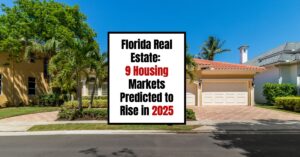
Florida Real Estate: 9 Housing Markets Predicted to Rise in 2025

February 12, 2025 by Marco Santarelli

Florida Real Estate: 9 Housing Markets Predicted to Rise in 2025

Are you thinking of buying a home in Florida? Realtor.com predicts that nine Florida metro areas are poised for significant housing market growth in 2025. These areas are attracting buyers due to a mix of factors like affordability, new construction, and a diverse population, making them attractive for those looking to invest in real estate. Let's explore which areas are on the rise and what makes them so appealing.

As a real estate enthusiast and someone who has closely followed Florida's housing trends for years, I've found that predicting future growth is a complex endeavor. Several factors contribute to the dynamic nature of this market, ranging from economic fluctuations to shifts in population demographics. But with the insights available from organizations like Realtor.com, we can see a clearer picture of which cities are likely to prosper.

While the housing market has gone through some dramatic swings in recent years, I've observed a consistent pattern in Florida. Many cities are experiencing a steady influx of new residents due to their attractive climate, job opportunities, and overall lifestyle. The increased demand, coupled with factors like new construction and potential increases in affordability, is creating a recipe for growth in certain markets.

Based on my experience and insights, I believe Florida's housing market is primed for a period of healthy growth, even in the face of national economic uncertainties. The factors that have made Florida attractive in the past, namely, its sunshine, beaches, and lifestyle, will likely continue to be significant drivers of the market.

Let's dive into the specific Florida markets predicted for growth in 2025.

Florida's Housing Markets Predicted for 2025 Growth

Realtor.com analyzed the 100 largest U.S. metropolitan areas and determined that 9 Florida markets are set to see a rise in both home prices and sales by 2025.

These Florida markets are:

  • Miami-Fort Lauderdale-Pompano Beach
  • Orlando-Kissimmee-Sanford
  • Jacksonville
  • Cape Coral-Fort Myers
  • Lakeland-Winter Haven
  • Tampa-St. Petersburg-Clearwater
  • Deltona-Daytona Beach-Ormond Beach
  • North Port-Sarasota-Bradenton
  • Palm Bay-Melbourne-Titusville

Why These Markets Are Predicted to Grow

1. Affordability (Relative to Other Areas):

While the cost of living in Florida can be a challenge compared to some other states, these specific markets offer more affordable home prices relative to other major metropolitan areas in the U.S. However, affordability is a complex issue. While home prices might be lower, it's important to consider the local income levels. In some cases, buyers might need to dedicate a larger portion of their income towards housing costs, making it crucial to carefully assess personal finances.

2. New Construction and Inventory Growth:

In many of these markets, new construction has been on the rise, which has helped to increase the supply of housing and hopefully, ease the tight competition that has characterized the housing market for the past few years. This translates into more options for buyers and can help to stabilize or even decrease prices in certain segments of the market.

3. Appealing to a Diverse Buyer Population:

Florida continues to attract young, diverse families and retirees, with many markets seeing a higher percentage of residents under 35 and households with children than the national average. These markets also have a higher concentration of active-duty military personnel and veterans, which can contribute to a vibrant and stable community.

4. Strong International Connections:

Many of the Florida cities on this list have seen a significant influx of international residents. This can create a more diverse and global economy and increase demand for housing.

5. Government-Backed Mortgage Options:

The presence of a larger than average percentage of military households and younger buyers translates to a greater need for government-backed mortgages such as FHA, VA, and USDA. These programs can facilitate homeownership for those who might not have the large down payments traditionally required.

A Closer Look at Each Florida Market

Let's take a more in-depth look at each of the nine Florida markets that Realtor.com has identified for 2025 growth.

Miami-Fort Lauderdale-Pompano Beach

The Miami metro area is predicted to be the second-fastest-growing housing market in the entire country by 2025, with an anticipated combined 33% growth in home sales and prices. While affordability is a concern here, with housing costs accounting for 42.1% of income, the area's vibrant economy, beautiful beaches, and international connections continue to drive demand.

  • Reasons for Growth: Strong economy, diverse population, proximity to the beach, international investment.
  • Considerations: Higher cost of living, potentially competitive market.

Orlando-Kissimmee-Sanford

The Orlando area is a popular destination for families and tourists, thanks to its world-renowned theme parks and attractions. The market is anticipated to experience 27.3% growth in sales and prices by 2025.

  • Reasons for Growth: Tourism industry, strong job market, family-friendly environment.
  • Considerations: Competition from other housing markets in the area.

Jacksonville

Jacksonville is the largest city in Florida by area, and it boasts a thriving economy with a variety of industries. It's predicted to see 23.3% growth by 2025.

  • Reasons for Growth: Strong job market, affordable housing options, growing population.
  • Considerations: Can be challenging to navigate a sprawling metro area, and competition for some homes is likely.

Cape Coral-Fort Myers

This southwest Florida area is known for its stunning waterways and beaches. With anticipated growth of 22.8% in 2025, it continues to draw in retirees and families seeking a relaxed lifestyle.

  • Reasons for Growth: Beautiful scenery, outdoor recreational activities, growing retiree population.
  • Considerations: Can be impacted by hurricane season, as are most coastal areas of Florida.

Lakeland-Winter Haven

This central Florida area is seeing rising popularity, especially among younger families. With a predicted 20.9% growth by 2025, it's a great area to consider if you want to be close to Orlando but want a slightly quieter and more affordable area.

  • Reasons for Growth: Growing job opportunities, affordable housing, close proximity to Orlando.
  • Considerations: A smaller market compared to other metro areas on this list, so the choices for buyers might be more limited.

Tampa-St. Petersburg-Clearwater

This western Florida area is home to vibrant cities, beautiful beaches, and a flourishing economy. The area is predicted to see 20.9% growth in 2025.

  • Reasons for Growth: Job growth, proximity to the Gulf Coast, diverse population.
  • Considerations: Competition can be fierce in areas with high demand.

Deltona-Daytona Beach-Ormond Beach

This east-central Florida area is famous for its beach communities and attractions. This area is predicted to see 18.7% growth in 2025.

  • Reasons for Growth: Tourism, outdoor recreation, beautiful beaches.
  • Considerations: Hurricane risk.

North Port-Sarasota-Bradenton

This southwest Florida area has experienced a recent surge in popularity, with a predicted growth of 13.5% in 2025. It's a blend of suburban and coastal living, with beautiful beaches and a more relaxed pace of life.

  • Reasons for Growth: Affordable housing options, access to outdoor recreation, growing population.
  • Considerations: It's a little further from major cities, which could be a deterrent for some.

Palm Bay-Melbourne-Titusville

This area in east-central Florida is located on Florida's Space Coast and is predicted to see a 10.4% growth in 2025. It is a popular area for aerospace and tech jobs.

  • Reasons for Growth: Growing job market (specifically in the aerospace and tech sectors), relatively affordable housing, and access to outdoor recreation.
  • Considerations: It's further from the popular tourist destinations and metropolitan areas.

Factors to Keep in Mind When Considering a Florida Market

While these Florida markets are anticipated to grow, it's important to remember that these are predictions. The actual performance of each market could vary based on several factors, including the following:

  • The national economy: Economic downturns and recessions can impact home prices and sales nationwide.
  • Interest rates: Increased mortgage interest rates can discourage buyers.
  • Local job market: Job growth is crucial to the health of the housing market.
  • Natural disasters: Florida is prone to hurricanes, which can cause significant damage and have a negative impact on the local market.

My Opinion

Having spent years analyzing the Florida housing market, I firmly believe that these nine metro areas are well-positioned for strong growth. However, before making a significant investment, I'd encourage you to do your own thorough research.

Consider these questions:

  • What is your budget and what are the available housing options in the area?
  • What are the local schools, job markets, and community like?
  • What are the potential risks associated with the area, like natural disasters or economic fluctuations?

By carefully considering your needs, goals, and doing your due diligence, you can maximize your chances of selecting a winning area.

Conclusion

Florida's housing market is dynamic and exciting, and it's clear that some markets are poised for significant growth. I am confident that these nine areas will offer fantastic opportunities in 2025 and beyond. By understanding the factors that contribute to their appeal, and making informed decisions, you can make a smart investment in your future and find the ideal place to call home.

Work With Norada, Your Trusted Source for

Turnkey Investment Properties in “FLORIDA”

Discover high-quality, ready-to-rent properties designed to deliver consistent returns. Contact us today to expand your real estate portfolio with confidence.

Reach out to our investment counselors:

(949) 218-6668 | (800) 611-3060

Contact Us Today


Recommended Read:

  • Florida Housing Market Forecast for Next 2 Years: 2025-2026
  • Housing Markets at Risk: California, New Jersey, Illinois, Florida
  • 3 Florida Housing Markets Are Again on the Brink of a Crash
  • Florida Housing Market Predictions 2025: Insights Across All Cities
  • Florida Housing Market 2025 & Predictions for Next 5 Years
  • Florida Housing Market Trends: Rent Growth Falls Behind Nation
  • When Will the Housing Market Crash in Florida?
  • South Florida Housing Market: Will it Crash in 2024?
  • South Florida Housing Market: A Crossroads for Homebuyers

Filed Under: Housing Market, Real Estate Market Tagged With: Florida, Housing Market, housing market crash, Housing Market Forecast, housing market predictions

Kissimmee Housing Market Forecast 2025-2026: Will it Crash?

February 12, 2025 by Marco Santarelli

Kissimmee Housing Market

Thinking about buying or selling a home in Kissimmee? You're not alone! The Kissimmee housing market is always changing, so it's important to stay up-to-date. Right now, the market is somewhat competitive. Homes are selling for a median price of $337K, which is a slight decrease compared to last year. This article dives into the key trends influencing the Kissimmee real estate scene, helping you make informed decisions.

Current Kissimmee Housing Market Trends: A Look at What's Happening

Home Sales

Let's start with the number of homes actually being sold. According to Redfin, in December 2024, there were 78 homes sold in Kissimmee. That's a drop of 28.4% compared to the 109 homes sold in December of the previous year. This decrease could indicate a few things, like fewer people actively buying or sellers holding off on listing their properties.

Location Data Growth % YoY
Kissimmee, FL 78 -28.4%

Home Prices

Of course, everyone wants to know about prices! As I mentioned earlier, the median sale price of a home in Kissimmee in December 2024 was $337,000. While that's down 0.89% from the previous year, it's important to remember that real estate is local. National trends don't always perfectly reflect what's happening in specific cities.

Location Data Growth % YoY
Kissimmee, FL $336,990 -0.89%
United States Add Location Compare

Are Home Prices Dropping?

The data shows a slight year-over-year decrease in median home prices in Kissimmee. However, a small dip doesn't necessarily mean a major crash is coming. It's more accurate to say the market is moderating after a period of rapid price growth. This slight decrease could be a welcome sign for buyers who've been feeling priced out of the market. Also, keep in mind that this data is a snapshot in time. Prices can fluctuate based on the season, interest rates, and overall economic conditions.

Comparison with Current National Median Price

It's interesting to see how Kissimmee compares to the national market. While Kissimmee saw a slight price decrease, the national median price is around $407,500, showing a +6% year-over-year increase (December 2024). This difference highlights the fact that real estate is hyper-local. Kissimmee offers a comparatively more affordable option than the national median price.

Housing Supply

Inventory, or the number of homes available for sale, plays a crucial role. I don't have specific inventory numbers for Kissimmee right now, but generally, a balanced market has about 6 months of housing supply. If there are fewer than 6 months, it's considered a seller's market, and if there are more than 6 months, it's a buyer's market.

Is It a Buyer's or Seller's Housing Market?

Based on the current data, Kissimmee is considered somewhat competitive. Homes receive around 2 offers on average and sell in about 66 days. Last year, homes were selling much faster, around 34 days on average.

The average homes sell for about 3% below list price and go pending in around 58 days. This indicates a slightly more balanced market, but likely still favors sellers.

Market Trends

Several factors are influencing the Kissimmee housing market right now:

  • Migration: Interestingly, a significant percentage of homebuyers in Kissimmee are looking to relocate. In the period from November 2024 to January 2025, 38% of Kissimmee homebuyers were searching to move out of Kissimmee, while 62% were looking to stay within the metropolitan area. People are coming into Kissimmee mainly from New York, Miami, and Washington, DC. People are leaving Kissimmee mostly for Cape Coral, Sarasota, and Palm Bay.
  • Sale-to-List Price Ratio: Homes are selling for 96.6% of the list price. This is a decrease of 0.65 percentage points compared to last year.
  • Homes Sold Above List Price: Only about 11.5% of homes are selling above list price, a decrease of 1.3 percentage points year-over-year.
  • Homes with Price Drops: The percentage of homes with price drops has increased to 19.1%, up 1.8 percentage points from last year.
Location Data Growth % YoY
Kissimmee, FL 96.6% -0.65 pt
United States Add Location Compare

Impact of High Mortgage Rates on the Kissimmee housing market

High mortgage rates are definitely playing a role. As of February 2025, mortgage rates are hovering around 7%. This makes buying a home more expensive, potentially cooling demand. When rates are higher, fewer people can afford to buy, and those who can might be looking at lower-priced homes than they initially planned. This can lead to longer days on market and some price adjustments. I personally believe rates will likely fluctuate throughout the year, so keeping a close eye on them is crucial if you're in the market.

In conclusion, the Kissimmee housing market is currently moderating with a slight decrease in median home prices and a longer time on market compared to last year. It's a somewhat competitive market, and factors like migration patterns and mortgage rates are playing a significant role. Whether you're buying or selling, working with a knowledgeable local real estate agent is more important than ever to navigate these trends.

Should You Invest in the Kissimmee Real Estate Market?

1. Population Growth and Trends:

Kissimmee, Florida, is experiencing significant population growth and positive demographic trends, making it an attractive prospect for real estate investors. The city's population has been steadily increasing, indicating a growing demand for housing.

  • Steady Population Growth: Kissimmee's population growth is a key factor for real estate investors. A growing population often translates to increased demand for housing, creating a favorable market for property investments.
  • Demographic Trends: Analyzing demographic trends, such as an influx of young professionals or families, can provide insights into the type of housing in demand, helping investors tailor their investment strategies accordingly.

2. Economy and Jobs:

The economic landscape and job market in Kissimmee contribute significantly to its real estate investment appeal.

  • Economic Growth: A thriving local economy can positively impact the real estate market. Kissimmee's economic growth may lead to increased employment opportunities, attracting more residents to the area.
  • Diverse Job Sectors: A city with a diverse range of job sectors can contribute to a stable housing market. Kissimmee's economy, possibly influenced by tourism and other industries, offers investors a chance to diversify their real estate portfolios.

3. Livability and Other Factors:

The overall livability of Kissimmee, including amenities, education, and safety, plays a crucial role in attracting residents and investors alike.

  • Amenities and Services: Access to amenities such as parks, restaurants, and entertainment venues enhances the appeal of Kissimmee as a place to live, potentially increasing property values.
  • Educational Institutions: The presence of quality schools and educational institutions can attract families, positively influencing the demand for housing in specific neighborhoods.
  • Safety and Infrastructure: A safe and well-maintained city with robust infrastructure can create a conducive environment for real estate investment, assuring investors of the long-term viability of their properties.

4. Rental Property Market Size and Its Growth for Investors:

The size and growth of the rental property market in Kissimmee make it an appealing option for investors looking to generate rental income.

  • Expanding Rental Market: Kissimmee's growing population and tourism industry contribute to an expanding rental market. Investors can tap into this demand by providing rental properties that cater to various needs.
  • Rental Income Potential: A city with a robust rental market provides investors with the potential for consistent rental income. Understanding rental trends and tenant preferences is crucial for maximizing returns.

5. Other Factors Related to Real Estate Investing:

Several additional factors make Kissimmee an enticing destination for real estate investment.

  • Tourism and Vacation Rentals: The proximity to major tourist destinations, such as Orlando, opens up opportunities for vacation rentals, appealing to a broad market of short-term tenants.
  • Development Projects: Ongoing or planned development projects in the city can positively impact property values. Investors should stay informed about infrastructure improvements and urban development initiatives.
  • Proximity to Orlando: Kissimmee's proximity to Orlando, a major economic and entertainment hub, adds to its appeal for real estate investors looking for diverse opportunities and potential appreciation.
Read More:

  • Hottest Florida Housing Markets in 2025: Miami and Orlando
  • Florida Real Estate: 9 Housing Markets Predicted to Rise in 2025
  • 10 Hottest Housing Markets Predicted for 2025: Sun Belt Boom
  • Florida Housing Market Forecast for Next 2 Years: 2025-2026
  • Florida Housing Sets New Bar With $285M New Construction Listing

Filed Under: Housing Market, Real Estate Market Tagged With: Housing Market, Kissimmee

When Will the Housing Market Crash Again: A 2025 Perspective

February 8, 2025 by Marco Santarelli

When Will the Housing Market Crash Again?

So, will the housing market crash again? Probably not. While it's always on our minds after the 2008 debacle, the current situation is different. It's unlikely we'll see a repeat of that kind of dramatic collapse. The market is expected to see moderate adjustments rather than a total meltdown.

The scars of the 2008 financial crisis run deep. I remember the fear and uncertainty. Many people lost their homes and their savings. It's natural to be worried about a repeat performance. But things have changed. Let's dive into why.

When Will the Housing Market Crash Again? A 2025 Perspective

The Housing Market Today: A Snapshot

To figure out where we're going, we need to understand where we are right now. As we look at the start of 2025, here's the picture I see:

  • Interest Rates: They're higher than they've been in recent years. The Mortgage Bankers Association thinks they'll settle around 6.6% for the start of the year. This means buying a home costs more each month, which definitely affects what people can afford.
  • Housing Supply: We still don't have enough houses. It's been a problem for a while. Some experts say we're short by millions of homes. This shortage keeps prices from falling too far.
  • Home Prices: Prices shot up during the pandemic. They've cooled off a bit as interest rates rose, but they're still pretty high in many areas.

Let's break down these factors a bit more:

Factor Current Situation Impact on Market
Interest Rates Higher than recent years (around 6.6%) Decreased affordability, slower sales
Housing Supply Significant shortage of homes Price stability, limited choices
Home Prices High, but some cooling in certain markets Buyer hesitation, market resilience

What's Driving the Housing Market Right Now?

It's never just one thing that makes the housing market tick. Several things are always at play:

1. The Economy's Health

The overall economy is a big deal. If the economy is doing well, people are more likely to buy houses.

  • Employment Rates: If people have jobs, they feel more secure and are more likely to buy a home. If unemployment rises, people get nervous, and home sales tend to drop.
  • Inflation: High inflation eats into your paycheck. If everything costs more, people have less money for a down payment and monthly mortgage payments.
  • Wage Growth: If wages are going up, people can handle those higher costs. It makes homeownership more attainable.

2. Who's Buying Homes? (Demographics)

The population plays a huge role.

  • Millennials and Gen Z: These generations are getting older and starting families. Many are ready to buy their first home.
  • Remote Work: More people are working from home. This means they might want a bigger house, or a house in a different location.
  • Changing Preferences: People are looking for different things in a home. Maybe they want a smaller, more sustainable house, or a “smart home” with all the latest technology.

I have seen firsthand, in my circle of friends, how remote work has changed the game. Several of them moved out of expensive city centers to find more space for their home offices.

3. Investors

Investors are always in the mix. They buy houses to rent them out, or hoping to sell them for a profit later.

  • Investor Activity: Investors see real estate as a good investment. They often compete with regular homebuyers, which can drive up prices.
  • Changes in Investor Sentiment: If investors get nervous and start selling, it can put downward pressure on prices.

What Could Go Wrong? Potential Risks

Even though I don't think we're headed for a crash, there are still things that could cause problems:

  1. Lending Standards: After 2008, lenders got much stricter about who they gave loans to. If they start loosening those standards again to make more money, we could see more risky loans, which could lead to trouble.
  2. Market Speculation: If prices rise too fast, people might start buying homes just because they think prices will keep going up. This kind of speculation can create a bubble that eventually bursts.
  3. Geopolitical Events: Things like wars, trade disputes, or even another pandemic can shake up the economy and affect the housing market.

Remember, nobody has a crystal ball. It's impossible to predict the future with certainty. We have to be aware of the risks.

What the Experts Are Saying

I always pay attention to what the experts are saying. Here's a general overview:

  • Moderate Adjustments, Not a Crash: Most experts think we'll see some price corrections in the coming months. This means prices might go down a bit in some areas, but it won't be a huge, widespread crash.
  • Location, Location, Location: The housing market is always local. What's happening in New York City might be completely different from what's happening in Boise, Idaho.
  • Interest Rate Impact: If the Federal Reserve starts to lower interest rates, that could boost the housing market. Lower rates make it cheaper to borrow money, which encourages people to buy homes.

One thing I've learned over the years is that the housing market is always changing. It's not a static thing. You have to stay informed and be ready to adapt.

Why This Isn't 2008 All Over Again

It's easy to get scared when you hear talk of a housing market downturn, especially if you remember the last one. But there are some key differences:

  • Stricter Lending: Lenders aren't giving out loans to just anyone anymore. They're doing a much better job of making sure borrowers can actually afford to repay their loans. This reduces the risk of widespread foreclosures.
  • More Equity: Homeowners have more equity in their homes now than they did back in 2008. This means they're less likely to end up underwater on their mortgage (owing more than the house is worth).

These factors make the housing market more resilient than it was before the last crash.

My Take: Cautiously Optimistic

If you have been following until here, you would have understood one thing – there are so many factors that play a crucial role in defining the outcome.

Personally, I'm cautiously optimistic about the housing market. I don't see a crash on the horizon, but I do think we'll see some adjustments.

  • Be Informed: If you're thinking about buying or selling a home, do your research. Talk to a real estate agent, a mortgage lender, and a financial advisor.
  • Don't Panic: Don't make any rash decisions based on fear. The housing market is always going to have its ups and downs.
  • Think Long-Term: Buying a home is a long-term investment. Don't focus too much on short-term fluctuations.

The Bottom Line

While the US housing market is unlikely to crash in 2025, understanding its complexities and potential risks is essential for buyers and investors. The market is expected to see moderate adjustments rather than a total meltdown.

I believe that by staying informed and making smart decisions, you can navigate the housing market successfully, no matter what the future holds.

Read More:

  • Housing Market Crash: When Will it Crash Again?
  • Housing Market Predictions for Next 5 Years (202-2029)
  • Housing Market Predictions for the Next 2 Years
  • Housing Market Predictions: 8 of Next 10 Years Poised for Gains
  • Housing Market Predictions: Top 5 Most Priciest Markets
  • Real Estate Forecast Next 5 Years: Top 5 Future Predictions

Filed Under: Housing Market, Real Estate Market Tagged With: Housing Market, housing market crash, Real Estate Market

  • « Previous Page
  • 1
  • …
  • 39
  • 40
  • 41
  • 42
  • 43
  • …
  • 94
  • Next Page »

Real Estate

  • Birmingham
  • Cape Coral
  • Charlotte
  • Chicago

Quick Links

  • Markets
  • Membership
  • Notes
  • Contact Us

Blog Posts

  • Today’s Mortgage Rates, August 13: 30-Year Falls to 6.58%, 5/1 ARM Drops 20 Basis Points
    August 13, 2026Marco Santarelli
  • Mortgage Rates Today, August 13, 2026: 30-Year Refinance Rate Rises by 4 Basis Points
    August 13, 2026Marco Santarelli
  • Should You Invest in the Indianapolis Housing Market in 2026?
    August 12, 2026Marco Santarelli

Contact

Norada Real Estate Investments 30251 Golden Lantern, Suite E-261 Laguna Niguel, CA 92677

(949) 218-6668
(800) 611-3060
BBB
  • Terms of Use
  • |
  • Privacy Policy
  • |
  • Testimonials
  • |
  • Suggestions?
  • |
  • Home

Copyright 2018 Norada Real Estate Investments

Loading...