Norada Real Estate Investments

  • Home
  • Markets
  • Properties
  • Membership
  • Podcast
  • Learn
  • About
  • Contact

Record 60,000 Home Sales Crashed in July: Causes, Trends, & Market Outlook

August 21, 2024 by Marco Santarelli

Record 60,000 Home Sales Crashed in July: Causes, Trends, & Market Outlook

July 2024 was a pivotal month in the U.S. housing market, marked by an astonishing 60,000 home sales crashing—the highest number of canceled agreements on record. This dramatic shift has thrown the real estate landscape into disarray, leading analysts and buyers alike to ask critical questions: What triggered this collapse, and what does it mean for the future of homeownership in America?

Record 60,000 Home Sales Crashed in July 2024

Key Takeaways

  • Significant Cancellations: According to Redfin, nearly 60,000 home-purchase agreements were canceled in July, representing 16% of homes that went under contract.
  • Declining Sales Rates: Existing home sales fell 2% year-over-year, with a seasonally adjusted annual rate of 4.1 million, marking the lowest July figures since 2012.
  • Interest Rates: Despite lower mortgage rates, home prices are 0.7% below their peak, causing potential buyers to hesitate.
  • Increased Home Inventory: The total supply of homes for sale rose dramatically, by a record 14% year-over-year, providing buyers with more options and negotiation power.
  • Historic Levels of Cancellations: The percentage of pending sales that fell through in July was the highest in any month since records began in 2017.

The Factors Behind the Cancellations

The record number of canceled home sales during this peak buying season raises eyebrows and compels us to look closer at the factors influencing buyer sentiment. A complex blend of economic, social, and market forces plays a role in this significant trend.

1. Economic Uncertainty

Economic anxiety looms large for many potential homebuyers. With discussions around recession at the forefront of financial news, many individuals are reluctant to commit to long-term, high-value investments. The fear of job loss, stagnant wages, and rising living costs creates a climate of hesitancy. For many, buying a home—a traditionally stable financial move—now feels fraught with risk.

2. Elevated Home Prices

The median home price in July 2024 reached $439,170, which is a 4.1% increase year-over-year. While this growth is modest compared to previous years, it still poses a significant barrier for buyers, especially first-time homebuyers and those with limited savings. Although prices have plateaued slightly compared to the record highs, the near-steady increase has forced many to reconsider their purchasing capabilities. High prices continue to put a damper on the enthusiasm of buyers who might otherwise engage robustly in the market.

3. Political and Social Climate

The current political landscape contributes to buyer apprehension, as individuals digest varying news cycles and predict potential impacts on the economy. Concerns about the upcoming elections, inflation, and changes in government policy can fuel buyer anxiety. For many, holding off on making a significant financial commitment like a home purchase feels safer under such uncertain conditions.

4. Increasing Mortgages Rates Influence

Although mortgage rates dipped to an average of 6.49% in July (down from 7.22% in May), many potential buyers remain skeptical of their purchasing power. This decline might not be sufficient for them to overcome their psychological barriers to entering the housing market. Additionally, with forecasts predicting further fluctuations in interest rates, some buyers prefer to wait rather than jump in at what they may perceive as a still relatively high rate.

Market Trends and Data Insights

Despite the pending sales cancellations, other market indicators tell a somewhat different story, shedding some light on potential buyer opportunities. For instance, the number of homes for sale has surged, providing buyers with more choices.

1. Inventory Growth

The housing inventory reached approximately 1.63 million active listings, a 14% increase year-over-year, which hints at a favorable shift for buyers. With more homes available, buyers can take their time finding the right property without the anxiety of stock depletion. In July, new home listings remained constant compared to the previous month, indicating sellers are cautious as they assess the market dynamics firsthand.

2. Extended Days on Market

Homes on the market experienced extended days before going under contract in July, averaging 34 days, compared with 29 days a year earlier. This increased timeframe means that buyers can assess properties more thoroughly, negotiate better deals, and compare multiple options before making their final decision.

3. Price Negotiation Potential

Interestingly, only one-third (about 33.2%) of homes sold in July exceeded their final list prices, which is a decrease from 38.2% the previous year. This percent signifies a competitive market landscape where buyers have increased power and backing-out capabilities, especially as homes linger longer in the listings.

Regional Variations and Insights

The withdrawal activity is not uniform across the country. Certain areas demonstrate a higher percentage of cancellations, mainly influenced by local market dynamics, economic conditions, and various pressures on potential homebuyers.

1. Hot States, Cooler Sales

In states like Florida and Texas, the rise in cancellations has been more pronounced. There's evidence that lingering high prices, alongside factors such as climate risks and rising insurance costs in regions like Tampa, are leading to fluctuations in buyer confidence. In Tampa, 21.9% of homes under contract saw agreements canceled, the highest rate among major U.S. metros.

2. Competitive Edge for Buyers in Slower Markets

Conversely, markets that have recently experienced fast-paced growth may see even greater buyer interest derived from growing inventories and declining pressure on prices. This atmosphere allows smart buyers to identify opportunities where they may not have been able to compete a year or two prior.

Adapting to New Market Realities

As the housing market evolves, both buyers and sellers must adapt to these emerging realities. Prospective buyers will benefit from clearly understanding their financial capabilities, remaining informed on market conditions, and being prepared to act when they identify an opportunity that meets their criteria.

  1. Buyers Should Keep an Eye on Trends: Staying informed not just about mortgage rates but also about economic indicators, local market conditions, and substantial housing data can help buyers feel secure in their decisions, enabling them to weigh risks effectively.
  2. Advisement from Real Estate Professionals: Collaborating with knowledgeable real estate agents can facilitate a more seamless experience as they guide buyers through negotiations and market insights.

Final Thoughts: Navigating a Changing Landscape

In summary, the cancellation of 60,000 home sales in July 2024 represents an astonishing, record-setting moment in U.S. real estate history. The accompanying anxieties—be they economic, political, or based on high prices—serve as significant hurdles for prospective purchasers. Yet, the market's expanding inventory and longer days on market provide buyers with distinct advantages.

As the dynamics of the housing market continue to evolve, understanding these trends is imperative for prospective buyers and sellers alike. With careful consideration, thoughtful strategy, and proper guidance, all participants in the housing market can navigate these tumultuous waters effectively.


ALSO READ:

  • Trump vs Harris: Which Candidate Holds the Key to the Housing Market (Prediction)
  • 2008 Forecaster Warns: Housing Market 2024 Needs This to Survive
  • Housing Market Predictions for the Next 2 Years
  • Housing Market Predictions for Next 5 Years (2024-2028)
  • Housing Market Predictions 2024: Will Real Estate Crash?
  • Housing Market Predictions: 8 of Next 10 Years Poised for Gains
  • Don't Panic Sell: Here's What Current Housing Market Trends Predict
  • 2024 Housing Market vs. 2008 Crash: Key Differences
  • Economist Predicts Stock Market Crash Worse Than 2008 Crisis
  • How Much Did Housing Prices Drop in 2008?

Filed Under: Housing Market, Real Estate Market Tagged With: Housing Market, housing market predictions, Housing Market Trends

Interest Rate Predictions from Leading Economists for August 2024

August 21, 2024 by Marco Santarelli

Interest Rate Predictions from Leading Economists for August 2024

As we dive into mid-August 2024, insights from economists regarding interest rates are shaping the financial landscape. Indeed, the predictions for interest rates in August 2024 revolve around the Federal Reserve's anticipated decisions on rate cuts, which are expected to exert a downward influence on mortgage rates as we finish the year. This dynamic stems from a complex interplay between inflation control measures and economic growth metrics.

Understanding the Current Economic Climate

The U.S. economy is currently feeling the weight of various factors impacting interest rates:

  • Inflation Trends: Recent data indicate a deceleration in inflation, which has become crucial as the Federal Reserve (the Fed) aims to calibrate monetary policy effectively. If inflation continues to decline, it may embolden the Fed to implement rate cuts.
  • Economic Growth: The slow growth projections for GDP and consumer spending also influence the Fed's policy stance. For instance, consumer spending on durable goods has been restricted due to rising prices and interest rates, limiting overall economic expansion.

According to the International Monetary Fund, despite the challenges posed by inflation and geopolitical tensions, there are signs that economic adjustments are underway. Economists are increasingly expecting the Fed to respond with a reduction in rates as early as mid-2024, following a more flexible approach to monetary policy.

Interest Rate Predictions from Leading Economists

According to Forbes' article, several economists have weighed in on the anticipated movements of interest rates this August and beyond:

1. Dr. Lisa Sturtevant, Chief Economist at Bright MLS

Dr. Sturtevant predicts that the Federal Reserve will soon adopt a more accommodative monetary policy. She states, “The Federal Reserve has indicated that there will likely be cuts to the short-term federal funds rate in 2024, which will put downward pressure on mortgage rates.” Despite this, she cautions that rates are expected to stay above 6% throughout 2024.

2. Melissa Cohn, Regional Vice President at William Raveis Mortgage

Melissa Cohn reinforces the sentiment that the peak of mortgage rates might be behind us. “The Fed and the markets will now closely analyze all data,” she notes. A consistent flow of weaker economic data could open the door for the Fed to initiate its first rate cut by the second quarter of 2024, hinting at a critical juncture lurking ahead.

3. Odeta Kushi, Deputy Chief Economist at First American

According to Kushi, “The ongoing deceleration in inflation, coupled with the Federal Reserve’s recent indication of potential rate cuts, suggests an environment supportive of modest declines in mortgage rates.” She emphasizes that unless unexpected inflationary pressures re-emerge, consumers might benefit from lower mortgage rates, albeit slowly.

4. Dan Burnett, Head of Investor Product at Hometap Equity Partners

Burnett shares insights on the cautious optimism surrounding mortgage rates: “While softening economic data hints that the rate cut cycle could begin sooner than expected, it is worth proceeding with caution as it pertains to mortgage rates.” He notes that Fed policy will largely depend on progress in inflation trends.

5. Skylar Olsen, Chief Economist at Zillow

In his forecast, Olson suggests that 2024 will see “mortgage rates be a bit less volatile… and continue to slowly ease down over the course of the year.” This gradual decline could offer relief to potential home buyers and those refinancing existing mortgages.

Implications for Mortgage Rates

With economists expressing cautious optimism, what does this mean for mortgage rates? Here are the key factors to consider:

  • Current Mortgage Rates: As of mid-August 2024, the average 30-year fixed-rate mortgage stands at approximately 6.47%, reflecting recent declines which many experts attribute to market adjustments following subdued employment data (Freddie Mac).
  • Future Outlook: The consensus among major housing authorities suggests further easing. For example, the Mortgage Bankers Association (MBA) predicts that mortgage rates might settle around 6.6% by the end of 2024 if trends continue positively.
  • Consumer Behavior: As rates begin to decline, we may see increased consumer confidence in the housing market. Potential home buyers may seize the opportunity to enter the market, anticipating further reductions in borrowing costs.

The Path Ahead

As we look towards the latter half of 2024, the expectations of interest rate cuts remind us of the fluidity of economic conditions. Here are several considerations for consumers and market participants:

  • Monitoring Economic Indicators: Keeping an eye on inflation metrics, employment data, and overall economic growth will be crucial in predicting the Fed's actions.
  • Planning for Home Buying: Potential buyers might benefit from the lower rates expected later in the year, allowing for better affordability compared to previous months.
  • Understanding Market Sentiment: Tracking expert opinions and market reactions will provide insights into how rates may move. For instance, any signs of inflation resurgence could stall potential rate cuts.

Final Thoughts

The predictions regarding interest rates in August 2024 are painted with a cautious yet hopeful brush by leading economists. While there remains uncertainty, the overall trend towards cuts could foster an environment conducive for reducing mortgage rates in the near future. Interested parties should align their strategies with these insights, ensuring they remain informed and agile in this evolving economic landscape.


ALSO READ:

  • How to Lower Your Mortgage Payment Without Refinancing?
  • How Lower Mortgage Rates Can Save You Thousands?
  • How to Get a Low Mortgage Interest Rate?
  • Will Mortgage Rates Ever Be 4% Again?
  • Will Mortgage Rates Ever Be 3% Again: Future Outlook
  • Mortgage Rates Predictions for Next 2 Years
  • Mortgage Rate Predictions for Next 5 Years
  • Mortgage Rate Predictions for 2025: Expert Forecast
  • Mortgage Rate Predictions: Why 2% and 3% Rates are Out of Reach

Filed Under: Financing, Housing Market, Mortgage Tagged With: Housing Market, mortgage, Refinance

Home Prices Predicted to Rise by 2.1% in 2024 and 0.6% in 2025

August 20, 2024 by Marco Santarelli

Home Prices Predicted to Rise by 2.1% in 2024 and 0.6% in 2025

The housing market predictions are heavily influenced by the persistent high mortgage rates and fluctuating home prices. Now the latest forecasts expect a modest increase of 2.1% in 2024, followed by 0.6% in 2025. With insights from reliable sources such as Freddie Mac and the National Association of Home Builders, we delve into the latest trends and forecasts impacting the housing market.

Home Prices Predicted to Increase by 2.1% in 2024 and 0.6% in 2025

Key Takeaways

  • High Mortgage Rates Persist: Mortgage rates remain elevated, which dampens buyer demand.
  • Home Sales Decline: Total home sales hit a low of 4.5 million in June, the lowest since July 2011.
  • Builder Sentiment Low: The National Association of Home Builders (NAHB) reported a builder confidence index of 42, indicating concerns over the market's future.
  • Inventory Issues: Although existing home inventories have increased, they are still below pre-pandemic averages.
  • Home Price Predictions: Home prices are expected to rise 2.1% in 2024, but with significant regional variations.

Current Market Trends

The housing market in the U.S. remains in a challenging phase marked by high mortgage rates and diminishing buyer activity. According to Freddie Mac, the average mortgage rate for 30-year fixed loans stood at 6.85% in July 2024, which is slightly lower than the 6.92% average recorded in June. Despite this decrease, the mortgage activity has not seen a significant uptick. As potential buyers remain hesitant, there has been a 2.6% decline in overall mortgage applications compared to the previous month (Freddie Mac).

Existing home sales were reported at 3.89 million in June, marking a 5.4% decrease from the previous month and a 5.4% decline year-over-year. New home sales also fell, reaching 617,000, which represents a 0.6% dip month-over-month (Freddie Mac). While total home inventories improved by 23% year-over-year to 1.32 million units, they are still significantly below the pre-pandemic average of 1.8 million units.

Builder Sentiment and Housing Construction

The builder confidence index, as reported by the National Association of Home Builders (NAHB), dropped to 42 in July, reflecting the persistent challenges faced by builders in today's market. A reading below 50 indicates negative sentiment among builders, highlighting a contraction in building activity over the next six months. The declining confidence is largely attributed to high mortgage rates and reduced buyer interest (NAHB).

Despite the low confidence, new residential construction saw a 3% increase month-over-month in June, reaching 1.35 million units, although single-family home starts dipped by 2%. In contrast, multifamily starts increased by 10%, indicating a potential shift in housing demand towards rental properties.

Price Dynamics in the Housing Market

According to Freddie Mac's House Price Index, house prices rose by 0.2% in June 2024, leading to an overall annual increase of 5.2%. However, it's important to note that the rapid price growth observed since 2019 has not translated into an equitable increase in affordability. The current economic conditions suggest that while nominal prices are on the rise, inflation-adjusted growth has not been as pronounced. This discrepancy highlights a crucial factor that is holding back many prospective homeowners.

Outlook for Home Sales and Prices

Looking ahead, the housing market is expected to see a gradual recovery in home sales. The anticipated cooling of mortgage rates could entice more first-time homebuyers back into the market. While the tight inventory is still a concern, it is expected that as conditions normalize, home sales could moderately increase toward the end of 2024 and into 2025, albeit remaining below 6 million annually.

Forecasts suggest home prices will continue to appreciate at a modest rate of 2.1% in 2024, followed by a smaller 0.6% increase in 2025. This prediction comes as a result of strengthening demand relative to ongoing inventory constraints and high mortgage costs.

Conclusion

In summary, the U.S. housing market in August 2024 is marked by high mortgage rates, decreasing home sales, and fluctuating builder confidence. While the outlook shows potential for recovery, affordability challenges remain a significant barrier for many buyers. As mortgage rates slowly decrease and inventory stabilizes, we may see a returning confidence among buyers and sellers alike in the coming months.

At the same time, it is essential for prospective homeowners and investors to stay informed about market trends, analyze their financial situations, and understand their local markets' dynamics as they plan their next steps.

FAQs

1. What are the main factors affecting the housing market in August 2024?

High mortgage rates, decreasing home sales, and builder confidence are significant factors.

2. How much are home prices expected to increase in 2024?

Home prices are projected to rise by approximately 2.1% in 2024.

3. What is the current state of inventory in the housing market?

Inventory has improved year-over-year, but it still falls short of pre-pandemic levels.

4. What is the builder sentiment index, and what does it indicate?

The builder sentiment index is currently at 42, indicating negative perceptions regarding future market conditions.

5. What should homebuyers consider when looking to purchase a home now?

Potential buyers should assess their financial readiness, stay updated on mortgage rate trends, and understand local market conditions.


ALSO READ:

  • Trump vs Harris: Which Candidate Holds the Key to the Housing Market (Prediction)
  • 2008 Forecaster Warns: Housing Market 2024 Needs This to Survive
  • Housing Market Predictions for the Next 2 Years
  • Housing Market Predictions for Next 5 Years (2024-2028)
  • Housing Market Predictions 2024: Will Real Estate Crash?
  • Housing Market Predictions: 8 of Next 10 Years Poised for Gains
  • Don't Panic Sell: Here's What Current Housing Market Trends Predict
  • 2024 Housing Market vs. 2008 Crash: Key Differences
  • Economist Predicts Stock Market Crash Worse Than 2008 Crisis
  • How Much Did Housing Prices Drop in 2008?

Filed Under: Housing Market, Real Estate Market Tagged With: Housing Market, housing market predictions, Housing Market Trends

SF Bay Area Housing Market Records 19% Sales Growth in July 2024

August 20, 2024 by Marco Santarelli

SF Bay Area Housing Market Records 19% Sales Growth in July 2024

As we dive into the San Francisco Bay Area housing market, July 2024 brought noteworthy shifts in home sales and pricing. The Bay Area, known for its vibrant tech culture and stunning landscapes, continues to showcase a dynamic real estate environment to which buyers and investors must pay attention. The latest data from the California Association of Realtors (C.A.R.) indicates that the area is experiencing a resurgence in home sales, despite fluctuating prices.

San Francisco Bay Area Housing Market – July Data

Key Takeaways:

  • Median Home Price: The median price for single-family homes in the Bay Area is $1,300,000, reflecting a 7.1% decrease from June.
  • Sales Growth: Home sales surged 19.2% compared to July 2023, marking a robust recovery.
  • Regional Insights: Alameda County led with a 24.9% increase in sales year-over-year.
  • Market Trends: The statewide median home price was $886,560, down 1.6% month-over-month, yet up 6.5% from the previous year.
  • Annual Comparisons: Four of the five major regions in California observed increased sales compared to last year, except for the Far North region which fell by 0.5%.

Current Market Overview

July's data illustrates a mixed picture for the real estate market in the San Francisco Bay Area. Despite a drop in median home prices, the volume of sales significantly increased. The median sold price of existing single-family homes in the Bay Area stood at $1,300,000, down from $1,400,000 in June but still 3.6% higher than the previous year’s value of $1,255,000.

Comparative Highlights

Region/County July 2024 Median Price June 2024 Median Price July 2023 Median Price MTM Change (%) YTY Change (%) Sales YTY Change (%)
San Francisco Bay Area $1,300,000 $1,400,000 $1,255,000 -7.1 3.6 19.2
Alameda $1,280,000 $1,369,210 $1,260,000 -6.5 1.6 24.9
Contra Costa $916,500 $903,000 $900,000 1.5 1.8 3.6
Marin $1,594,000 $1,800,000 $1,609,500 -11.4 -1.0 16.0
Napa $1,052,500 $952,500 $927,500 10.5 13.5 -4.1
San Francisco $1,600,000 $1,650,000 $1,460,000 -3.0 9.6 34.8
San Mateo $2,100,000 $2,110,000 $1,984,000 -0.5 5.8 18.2
Santa Clara $1,880,000 $1,955,000 $1,800,000 -3.8 4.4 30.5
Solano $586,400 $601,250 $600,560 -2.5 -2.4 15.2
Sonoma $850,000 $835,000 $850,960 1.8 -0.1 24.5

Regional Insights

In July, home sales across the San Francisco Bay Area surged, showing resilience against a backdrop of high mortgage rates. Notably:

  • Alameda County showcased exceptional growth, with sales increasing by 24.9% compared to last year, driven by affordable housing options relative to other parts of the Bay Area.
  • San Mateo County, while experiencing a slight decrease in price, recorded a healthy sales growth of 18.2%, attracting buyers despite high costs.
  • Santa Clara also proved strong, with a growth in sales by 30.5%, despite the slight decline in median price.

The data indicates a market that is adapting and responding to economic conditions, with homebuyers actively participating even as they face high-interest rates.

Future Projections

Looking ahead, analysts are keenly observing how the interplay of mortgage rates and housing supply will shape the market dynamics. For potential buyers in the Bay Area, moving quickly may be wise as inventory remains tight, despite the recent uptick in activity.

Summary

July 2024 marks a critical month in the San Francisco Bay Area housing market, demonstrating that even amid challenges, opportunities exist for buyers and investors alike. With rising sales figures and a slight dip in prices, the region continues to attract both local and national attention. It's crucial for prospective homeowners and investors to stay informed of these trends to make educated decisions.

For further insights, visit California Association of Realtors for detailed reports and updates.


ALSO READ:

Bay Area Home Prices Skyrocket: Wealthy Buyers Fuel Market

Bay Area Housing Market: Prices, Trends, Forecast 2024

Bay Area Housing Market Heats Up: Home Prices Soar 11.9%

Bay Area Housing Market Booming! Median Prices Hit Record Highs

Most Expensive Housing Markets in California

Filed Under: Housing Market, Real Estate Market Tagged With: Bay Area, california, Housing Market

California Housing Market Rebounds Amidst Falling Mortgage Rates

August 20, 2024 by Marco Santarelli

California Housing Market Rebounds Amidst Falling Mortgage Rates

The California housing market experienced a rebound in July, with home sales reaching a five-month high. This surge in activity was largely driven by a decline in mortgage rates, which fell to their lowest point since spring. The CALIFORNIA ASSOCIATION OF REALTORS® (C.A.R.) reported that existing single-family home sales totaled 279,810 on a seasonally adjusted annualized rate in July, representing a 3.6% increase from June and a 4.1% increase from July 2023.

Key Takeaways:

  • California housing sales rebounded in July, fueled by declining mortgage rates.
  • The statewide median home price dipped slightly, but remained elevated year-over-year.
  • Inventory levels continued to improve, with both active listings and new listings increasing.
  • The market is expected to remain moderate in the coming months, with continued growth in sales and prices.

Let's delve deeper into the factors shaping the California housing market in July:

California Housing Market in July: A Resurgence Fueled by Lower Mortgage Rates

The Rise of Home Sales

The upswing in sales is a welcome sign after a period of relative stagnation in the market. The seasonally adjusted annualized sales figure signifies the total number of homes that would be sold if the July pace persisted throughout the year, accounting for seasonal variations in sales. This metric rose 3.6% from June and 4.1% from the same period last year. Despite the improvement, sales remained below the 300,000 threshold for the 22nd consecutive month, indicating that the market is still navigating a delicate balance between buyer and seller activity.

The Impact of Lower Mortgage Rates

The key driver of the July surge was the decline in mortgage rates. C.A.R.'s Senior Vice President and Chief Economist, Jordan Levine, attributed this positive development to the “cooling economy” in recent months. With lower borrowing costs, homebuyers who had been sidelined due to higher rates found themselves in a more favorable position to enter the market. The allure of lower monthly payments, combined with the potential for price softening, motivated buyers to take the plunge.

Median Home Prices: A Mixed Bag

While sales picked up, the statewide median home price dipped slightly in July, marking the second consecutive monthly decline after reaching a record high in May. The median price fell from $900,720 in June to $886,560 in July, representing a 1.6% decrease. However, year-over-year, the median price remained elevated, reflecting a 6.5% increase from July 2023. This positive annual trend suggests that while prices may have started to soften, they are likely to continue on an upward trajectory for the remainder of the year, albeit at a more moderate pace.

Regional Variations in the Housing Market

The performance of the housing market varied across different regions of California in July. Here's a breakdown by region:

Sales Performance:

  • San Francisco Bay Area: Experienced the most significant year-over-year sales increase at 19.2%.
  • Southern California: Followed closely with a 11.4% annual increase in sales.
  • Central Valley: Also saw double-digit growth in sales, rising 10.3% from the previous year.
  • Central Coast: Sales grew by a more modest 5.8% from July 2023.
  • Far North: Was the only region to record a decline in sales, dropping by 0.5% year-over-year. This drop was partially attributed to the Park Fire, which began in late July.

Price Performance:

  • Central Coast: Posted the largest year-over-year price increase at 8.0%.
  • Southern California: Came in second with a 6.1% increase in median prices.
  • San Francisco Bay Area: Experienced a 3.6% annual price growth.
  • Far North: Saw a 3.1% increase in median prices.
  • Central Valley: Registered the smallest annual price gain at 2.2%.

Inventory: A Growing Supply of Homes

The statewide unsold inventory index (UII), a measure of the number of months needed to sell the available inventory at the current sales pace, showed mixed results in July. While the index declined from 3.0 months in June to 2.9 months in July, it was higher than the 2.5 months recorded in July 2023. This indicates that while the inventory is growing, it is still not at a level that would drastically shift the balance of power in favor of buyers.

The number of active listings at the state level rose significantly by 39.0% from a year ago, marking the sixth consecutive month of annual gains in available properties. This upward trend is likely to continue, particularly as the lock-in effect of low interest rates gradually dissipates, leading to more homeowners considering putting their properties on the market.

New Listings: Reflecting Market Sentiment

New active listings at the state level increased for the seventh straight month, with the pace of growth accelerating to 19.5% in July. This indicates that sellers are increasingly confident in the market, emboldened by the recent decline in interest rates and the potential for continued price appreciation.

Days to Sell: A Faster Pace

The median number of days it took to sell a California single-family home in July was 20, down from 16 days in July 2023. This decrease suggests that the market is moving at a slightly faster pace, driven by the increased demand and improved inventory levels.

Sales-Price-to-List-Price Ratio: A Steady Market

The sales-price-to-list-price ratio remained at 100.0% in July 2024, indicating that homes were selling at or close to their asking price. This stable ratio highlights the relative balance between buyer and seller activity, suggesting that neither party holds a significant advantage in negotiations.

Average Price Per Square Foot: Reflecting Demand

The statewide average price per square foot for an existing single-family home rose to $437 in July, up from $408 in the same month of the previous year. This increase reflects the continued demand for housing in California, particularly as buyers seek out more value in a competitive market.

Looking Ahead: A Moderate Forecast

The California housing market is likely to continue on a moderate path in the coming months. Lower mortgage rates and an improving inventory situation provide a positive outlook, but the market is still expected to be influenced by economic uncertainties and potential fluctuations in interest rates.

C.A.R. President Melanie Barker, a Yosemite REALTOR®, emphasized the importance of continued improvement in the availability of homes for sale and further moderation in mortgage rates in the third and fourth quarters to maintain the market's vibrancy.

The California housing market is showing signs of resilience, navigating through economic uncertainty and fluctuating interest rates. While the market is not expected to experience a dramatic upswing, the combination of lower mortgage rates, improved inventory, and continued demand suggests a moderate and balanced path forward.


ALSO READ:

  • California Dominates Housing With 7 of Top 10 Priciest Markets
  • Real Estate Forecast Next 5 Years California: Boom or Crash?
  • Anaheim, California Joins Trillion-Dollar Club of Housing Markets
  • California Housing Market: Nearly $174,000 Needed to Buy a Home
  • Most Expensive Housing Markets in California
  • Abandoned Houses for Free California: Can You Own Them?
  • California Housing in High Demand: 19 Golden State Cities Sizzle
  • Homes Under 50k in California: Where to Find Them?
  • California Housing Market: Prices, Trends, Forecast 2024
  • Will the California Housing Market Crash in 2024?
  • Will the US Housing Market Crash?
  • California Housing Market Crash: Is a Correction Coming Up?

Filed Under: Housing Market, Real Estate Market Tagged With: california, Housing Market

CoreLogic Flags Atlanta and Spokane as High-Risk Housing Markets

August 20, 2024 by Marco Santarelli

CoreLogic Flags Atlanta and Spokane as High-Risk Housing Markets

If you're keeping a pulse on real estate trends, you may have noticed something alarming. While the national housing market has witnessed gradual growth, certain areas are on a precarious cliff, threatening potential homebuyers and investors alike.

According to the latest report by CoreLogic, the housing markets in Atlanta-Sandy Springs-Roswell, GA, and Spokane-Spokane Valley, WA are at a very high risk for price crashes over the next year. Homeowners, investors, and prospective buyers in these regions ought to monitor these developments closely as potential turbulence looms ahead.

Atlanta and Spokane Valley Housing Markets at Very High Risk for Price Crash

Key Takeaways

  • High Risk of Price Decline: Both Atlanta-Sandy Springs-Roswell, GA, and Spokane-Spokane Valley, WA, are flagged by CoreLogic as having a 70%-plus probability of experiencing a sharp decline in home prices within the next 12 months.
  • Market Risk Indicator: CoreLogic’s Market Risk Indicator (MRI) highlights these metropolitan areas based on various economic and property factors signaling potential price corrections.
  • Anticipated Rate Cuts Insufficient: Although rate cuts by the Federal Reserve are on the horizon, they may not be enough to rejuvenate the cooling home price growth in these markets.
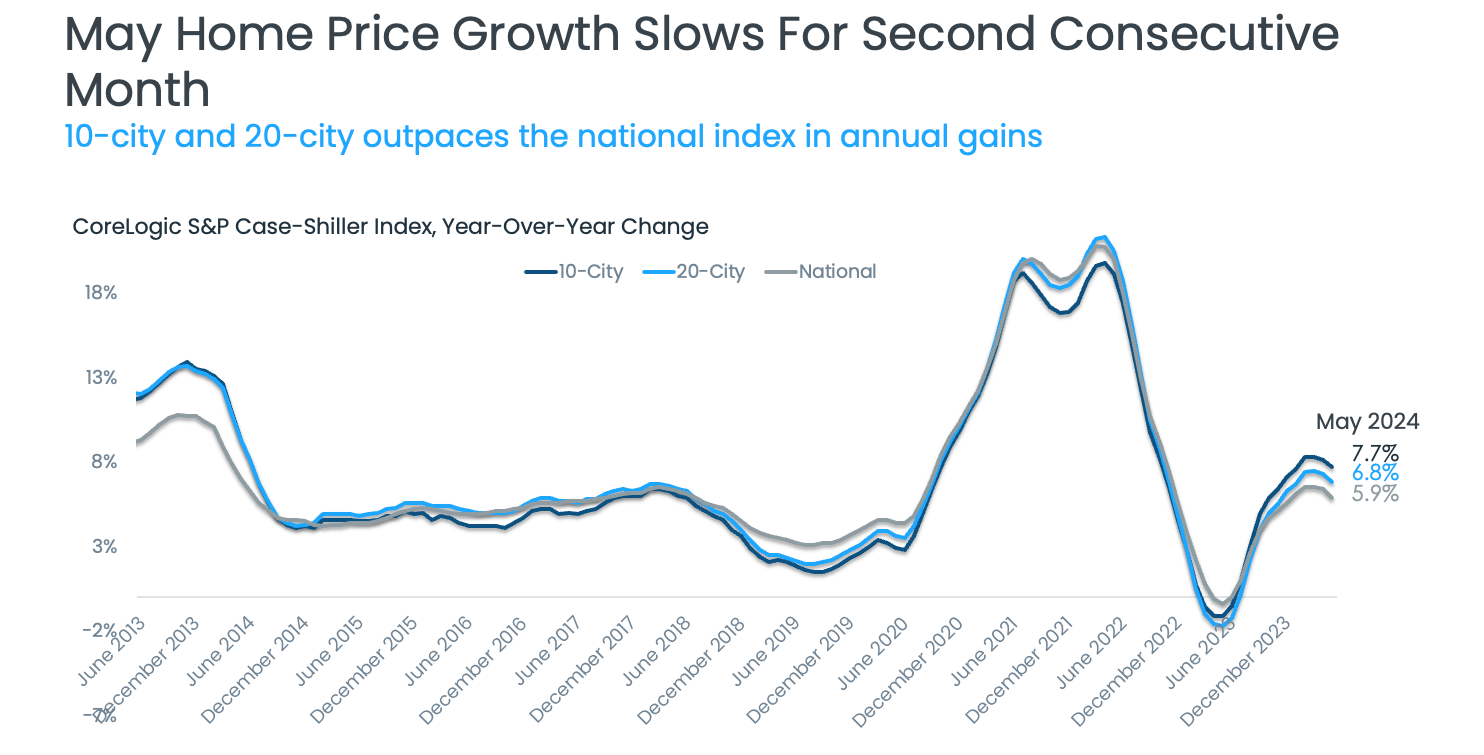
  • Nationwide Trends: Despite home prices rising 4.7% year-over-year as of June 2024, the pace of growth is slowing dramatically, particularly in the aforementioned high-risk markets.

CoreLogic's MRI Identifies At-Risk Markets

The CoreLogic Market Risk Indicator (MRI) is a powerful tool for analyzing the overall health of housing markets nationwide. Atlanta-Sandy Springs-Roswell, GA, and Spokane-Spokane Valley, WA are pinpointed in this analysis as part of a select group facing significant risks of home value declines over the next year Source: CoreLogic.

Why Are These Markets Vulnerable?

Understanding the underlying factors contributing to these risks is essential for anyone involved in the real estate sector.

Factors Contributing to the High Risk

1. High Mortgage Rates Compressing Affordability

The impact of high mortgage rates cannot be overstated in today’s housing market dynamics. When mortgage rates rise, the affordability for potential homebuyers declines sharply. High rates lead to decreased purchasing power, limiting the pool of qualified buyers. This situation is particularly evident in Atlanta, where a previously booming market is beginning to show signs of cooling.

Recent statistics reveal that many would-be buyers are finding it increasingly challenging to make the leap into homeownership. In fact, the Federal Reserve's decision to raise interest rates has radically reshaped the landscape, pulling the rug from underneath potential buyers who may have been poised to enter the marketplace just a year ago. This is a critical factor to consider in both Atlanta and Spokane Valley, as both areas were once seen as desirable due to their growing economies and population influx.

2. Erosion of Consumer Sentiment

Consumer sentiment has also taken a hit. Dr. Selma Hepp, Chief Economist for CoreLogic, explained that the sentiment among potential homebuyers has shifted dramatically, pointing to an increasing tendency to remain on the sidelines.

When consumers doubt the stability of home prices or anticipate further declines, they often choose to wait, which exacerbates stagnation in the market. The chilling effects are particularly potent in at-risk markets like Spokane Valley, where rapid price increases during the pandemic have created unrealistic expectations that are now tempered by economic realities.

A major concern is how shifts in consumer sentiment can impact future buying decisions. A slowdown in homebuying activity can create a vicious cycle—fewer sales lead to inventory buildups, which can further deflate prices and contribute to a perception of instability in the market.

3. Economic Slowdown & Job Market Shifts

Another vital factor contributing to housing market vulnerabilities is the potential for economic slowdowns. Much of the growth in areas like Atlanta and Spokane has been fueled by job market expansions in sectors such as technology, healthcare, and financial services. However, any shifts in job growth patterns—particularly layoffs or reduced hiring—can dampen housing demand, as potential buyers are less inclined to make substantial financial commitments amid uncertainty.

The socio-economic fabric of both regions is tightly woven with their employment prospects. As businesses reassess their workforce needs in the face of economic changes or slowdowns, consumer spending and confidence generally decline. If job growth stagnates or reverses, the housing market will likely follow suit, reflecting these shifts.

4. Increased Inventory Piling Up

The buildup of housing inventory is another critical consideration in determining market health. While markets with limited supply often evade price declines, a sudden influx of housing supply can tilt the scales dramatically. In Spokane Valley, reports suggest that inventory is accumulating, making it increasingly difficult for sellers to command high prices.

What’s concerning here is how the increased inventory in previously hot markets can lead to increased competition among sellers. More houses for sale without corresponding demand can cause prices to dip or stagnate, posing challenges for those who may have purchased at peak prices. Given the uncertainty surrounding mortgage rates and consumer confidence, savvy sellers and buyers must tread carefully when navigating the landscape.

National Trends and Contrasts

It's important to contrast the conditions in Atlanta and Spokane with trends occurring on a national scale. Nationally, home prices have increased by 4.7% year-over-year as of June 2024, according to CoreLogic. However, the pace of growth is decelerating, particularly in areas like Atlanta and Spokane where the economic indicators suggest potential downturns.

While certain regions—such as South Dakota, New Jersey, and Rhode Island—have seen considerable price increases, the discrepancies across various markets can be stark. Especially in the context of Atlanta and Spokane, where local dynamics significantly differ from broader national trends, it raises critical questions for investors and homeowners.

Comparison With Growing Markets

While Atlanta and Spokane are showing high risk, several other U.S. markets—like Austin, Texas, and Miami, Florida—continue to thrive, with strong demand and limited inventory. These areas are seeing different trends, where robust job growth and high desirability keep prices steady or climbing. Market observers will have to discern when to invest in high-growth regions versus when to exercise caution in declining markets.

This juxtaposition suggests that while the national narrative indicates some areas are reaching the peak of their cycles, localized factors in Atlanta and Spokane could yield drastically different outcomes, making vigilance paramount for all stakeholders involved.

What Can You Expect?

So, what does this mean for you? Awareness is critical, whether you're a homeowner, investor, or someone considering making a purchase. If you're situated in these high-risk areas, paying attention to market trends, economic signals, and other relevant data will be important.

For Homeowners

For homeowners in Atlanta or Spokane Valley, the spotlight is on you. Understanding the possibility of declining home values is crucial, particularly if you’re considering selling in the near future. It’s advisable to get an accurate appraisal and to be realistic about pricing against current market trends.

For Prospective Buyers

If you’re eyeing properties in these markets, you may have a unique window of opportunity. Despite the potential for price declines, purchasing a home at a lower price may result in long-term gains—especially if you’re willing to wait out the market fluctuations. However, ensure that your financial situation can weather short-term declines.

Consider consulting real estate experts who can give insights into local trends and future forecasts to inform your decision-making.

For Investors

For investors, this scenario requires careful evaluation. Entering high-risk markets with a strategy that mitigates exposure is vital. Look into sectors that may remain resilient—even in downturns—such as rental properties, which could stabilize your portfolio during turbulent times.

Conclusion

CoreLogic's recent report underscores the high-risk status of the Atlanta and Spokane Valley housing markets, highlighting a crucial juncture for potential buyers, sellers, and investors. By grasping the local and national trends at play, you can navigate this complex market with greater confidence.

It's worth repeating that the adage “location, location, location” has never been more relevant. While macroeconomic indicators might seem reassuring, the localized issues within Atlanta and Spokane signal caution. Being proactive, conducting thorough market analyses, and consulting experts will be instrumental in making informed financial decisions in these high-risk environments.

As the real estate market continues to adjust, those invested in or contemplating entry into Atlanta and Spokane Valley must remain vigilant and adaptive to navigate the impending changes.


ALSO READ:

  • Trump vs Harris: Which Candidate Holds the Key to the Housing Market (Prediction)
  • Is Sellers' Housing Market Over?
  • 2008 Forecaster Warns: Housing Market 2024 Needs This to Survive
  • Housing Market Predictions for the Next 2 Years
  • Housing Market Predictions for Next 5 Years (2024-2028)
  • Housing Market Predictions 2024: Will Real Estate Crash?
  • Housing Market Predictions: 8 of Next 10 Years Poised for Gains
  • Don't Panic Sell: Here's What Current Housing Market Trends Predict
  • 2024 Housing Market vs. 2008 Crash: Key Differences
  • Economist Predicts Stock Market Crash Worse Than 2008 Crisis
  • How Much Did Housing Prices Drop in 2008?

Filed Under: Housing Market, Real Estate Market Tagged With: Atlanta, corelogic, Housing Market, housing market predictions, Housing Market Trends, spokane

Florida Housing Markets Face Steep Risk: CoreLogic Prediction

August 20, 2024 by Marco Santarelli

Florida Housing Markets Face Steep Risk: CoreLogic Prediction

The housing markets in Palm Bay-Titusville-Melbourne, FL, and two other Florida areas are at very high risk for price crashes in the coming year. As these markets face critical financial turbulence, it's essential for current homeowners, prospective buyers, and investors to navigate the landscape with caution.

Florida Housing Markets at Very High Risk for Price Crash

Key Takeaways

  • High Risk of Price Decline: Palm Bay-Titusville-Melbourne, FL, along with Gainesville, and North Port-Sarasota-Bradenton, FL, are noted by CoreLogic as having a 70%-plus probability of experiencing a sharp decline in home prices over the next 12 months.
  • Market Risk Indicator: The CoreLogic Market Risk Indicator (MRI) is a valuable resource that assesses the health of housing markets, highlighting areas with potential price corrections.
  • Expectations of Rate Cuts May Fall Short: Although the Federal Reserve is anticipated to cut rates, these adjustments might not be sufficient to stimulate growth in Florida’s cooling housing market.
  • National Trends Contrast with Local Dangers: Despite the national average of home prices increasing 4.7% year-over-year, Florida markets are becoming outliers, showing signs of distress.

CoreLogic's MRI Identifies At-Risk Florida Markets

The CoreLogic Market Risk Indicator (MRI) has placed significant emphasis on the state of Florida’s housing markets, singling out areas like Palm Bay-Titusville-Melbourne and Gainesville as particularly vulnerable Source: CoreLogic.

Why Are These Markets Vulnerable?

To comprehend why these markets are pegged as high risk, it’s crucial to explore the underlying factors influencing these predictions.

Factors Contributing to High Risk in Florida Markets

1. High Mortgage Rates Compressing Affordability

High mortgage rates have become a defining feature of the current housing market, particularly affecting buyers in Florida. As interest rates soar, the cost of borrowing becomes more expensive, shrinking the pool of qualified homebuyers. This decline in affordability is especially poignant in fast-growing areas like Palm Bay and North Port, which saw significant price increases over recent years.

The Real Cost of Borrowing

Back in the pandemic years, aggressive lending and low-rate environments led to soaring prices in Florida. Now that the market has shifted, many potential buyers find themselves priced out. In Palm Bay, for example, the sharp rise in interest rates means that monthly payments for new mortgages are more stressful, leading to fewer people entering the market. This can ultimately result in price declines due to a lack of demand.

2. Consumer Sentiment in Flux

Consumer sentiment impacts real estate as much as hard data. Dr. Selma Hepp, Chief Economist for CoreLogic, highlights that diminished confidence in the economy and housing market can trigger a wait-and-see strategy among potential buyers. As consumers anticipate price drops, they may be less inclined to commit to purchases.

Fear of Missing Out vs. Market Realities

In a state like Florida, where owning a home is often seen as a key milestone, the fear of missing out can clash with stark market realities. When people perceive potential declines, however, they may choose to delay homebuying decisions. This leads to pent-up demand, but when sentiment swings too far in the direction of caution, it creates downward pressure on home prices.

3. Economic Backdrop and Job Market Pressures

In Florida, the traditional economic engines—such as tourism and agriculture—play a significant role in the real estate market. However, economic uncertainties or slowdowns in key sectors can disrupt consumer confidence and lead to decreased housing demand.

Recent shifts in the job market, influenced by global economic trends, could spell trouble for Florida’s housing markets. If layoffs or reduced hiring become prominent in sectors that sustain Florida’s economy, it will impact housing demand substantially, leading to further price adjustments.

4. Accumulating Inventory

Another critical aspect to monitor is the increasing inventory of homes on the market in Florida. In fast-paced housing markets, inventory levels are a telltale sign of market health. Economic shifts and increasing mortgage rates have led many sellers to list their properties, resulting in overcrowded listings.

Areas like North Port and Sarasota have experienced such surges in inventory, causing sellers to become more competitive on pricing in order to attract buyers. This trend can create a seller's market flipping into a buyer’s market, subsequently pushing home values down.

National Trends and Local Concerns

While the nationwide outlook presents a modest year-over-year increase of 4.7% in home prices as of June 2024, many Florida markets are starting to diverge dramatically from these trends.

Comparative Analysis with Other States

Some areas in the Midwest and Northeast have shown robust growth and steady demand. In contrast, places like Palm Bay and Gainesville are wrestling with different realities. While other markets are thriving, Florida’s economic peculiarities render its housing market vulnerable—especially with factors unique to the state such as high insurance costs and dependency on a few key industries.

What Can You Expect?

With the current environment presenting challenges, what should stakeholders in Florida's housing markets be considering?

For Homeowners

If you own a home in one of the at-risk markets, expect that you may need to adjust your expectations regarding your home’s value. Understanding the dynamics of the current market—especially the potential for price declines—will be crucial if you decide to sell. Working with a knowledgeable realtor who understands local market conditions will be beneficial.

For Prospective Buyers

Prospective homebuyers might find opportunities during this volatile market phase. Even though immediate price declines can be concerning, purchasing at a lower price may allow for long-term gains, especially if you are prepared to hold your investment through potential rough patches.

As you consider your options, make sure to secure financing and investigate grants or programs tailored to first-time homebuyers, especially in states that now face a precarious housing situation.

For Investors

For investors, Florida presents both risk and opportunity. A careful analysis of local dynamics will be essential when considering properties. Investors should focus on identifying distressed properties or markets that are likely to recover more quickly. Buying low and holding through cycles can be advantageous, but be sure to assess the local economy’s fundamentals before making any decisions.

Conclusion

The latest CoreLogic report brings to light the high-risk status of several Florida housing markets, highlighting a pivotal moment for anyone involved in real estate across the state.

By focusing on the local factors underlying these shifts in market dynamics, individuals can better position themselves to either capitalise on opportunities or safeguard their investments against potential downturns.

In a landscape where “location, location, location” still reigns supreme, Florida’s unique housing challenges illustrate the importance of localized knowledge and proactive planning.

As the market evolves, buyers, sellers, and investors alike must pay close attention to regional economic signals and adjust their strategies to navigate the landscape effectively.


Also Read:

  • 5 Worst Cities in Florida to Buy Real Estate
  • Florida Housing Market: Coastal Crisis vs Inland Opportunity
  • Worst Places to Live in Florida for Families & Retirees
  • Florida Housing Market Predictions for Next 2 Years
  • Florida Housing Market Warning: Insights from a Proven Predictor
  • Florida's Priciest Places: Top 35 Most Expensive Cities
  • Florida Housing Market: Will These 2 Metros Crash in 2025?
  • When Will the Housing Market Crash in Florida?
  • South Florida Housing Market: Will it Crash in 2024?
  • South Florida Housing Market: A Crossroads for Homebuyers
  • Florida Housing Market Trends: Rent Growth Falls Behind Nation

Filed Under: Housing Market, Real Estate, Real Estate Market Tagged With: Florida, Housing Market, housing market crash, Melbourne, Palm Bay

Is Sellers’ Housing Market Over: Emerging Trends in July 2024

August 19, 2024 by Marco Santarelli

Will the Upcoming Interest Rate Cut Drive Home Sales in 2024?

Is the sellers' housing market finally coming to an end? For the past few years, sellers have held the upper hand, enjoying bidding wars, skyrocketing prices, and quick sales. However, recent data suggests a potential shift in the market. Let's dive into the emerging trends in July 2024, analyzing whether the reign of sellers is truly over.

Is the Sellers' Housing Market Over: Emerging Trends in July 2024

Key Takeaways:

  • Neutral Territory: The Zillow market heat index transitioned to neutral in July 2024, indicating a more balanced market compared to the seller-dominated trends earlier in the year.
  • Increased Days on Market: Homes are staying on the market for longer durations compared to the previous year, signaling a potential decrease in buyer eagerness.
  • Inventory Growth: The inventory of available homes is expanding, with July marking the eighth consecutive month of year-over-year inventory increase.
  • Price Cuts on the Rise: An increasing number of sellers are resorting to price cuts to attract buyers, a trend attributed to the rising housing costs impacting affordability.
  • Mortgage Rates Influence: The recent dip in mortgage rates may motivate more buyers to enter the market, potentially reviving competition.

Shifting Dynamics: A Look at the Numbers

Zillow's market heat index reveals some intriguing trends that indicate a potential shift in the housing market dynamics:

  • Market Heat Cools Down: For the first time since December 2023, the national Zillow market heat index moved into neutral territory in July 2024. This shift suggests a more balanced playing field for buyers and sellers, unlike the seller-favorable conditions seen earlier.
  • Longer Sales Durations: Homes sold in July 2024 spent an average of 18 days on the market before going pending. This duration is six days longer than the same period last year, signifying a possible cooling in buyer demand.
  • Inventory Expansion Continues: Inventory saw a year-over-year increase for the eighth consecutive month in July 2024. While still below pre-pandemic levels, the gap is steadily closing, indicating a potential easing of the inventory crunch that has fueled seller advantage.
  • Price Cuts Gain Momentum: More than 26% of homes listed on Zillow in July 2024 had their prices reduced. This marks the highest percentage for any July since 2018, reflecting a growing trend of sellers adjusting their pricing strategies in response to market conditions.

Impact of Mortgage Rates

While the aforementioned trends highlight a potential shift in the housing market, the recent dip in mortgage rates adds another layer of complexity:

  • Buyer Incentive: Lower mortgage rates could entice more prospective buyers back into the market. The reduced borrowing costs enhance affordability, potentially leading to increased demand.
  • Limited Seller Motivation: Despite the lower rates, a significant wave of existing homeowners rushing to sell their properties is unlikely. Zillow surveys indicate that a majority of recent sellers were driven by life events rather than purely financial considerations.

Regional Variations

It's important to note that the real estate market varies significantly across different regions. While some areas might be experiencing a cooling effect, others could still exhibit strong seller-favorable conditions. Here's a look at some major metropolitan areas:

Metropolitan Area* July Zillow Home Value Index (ZHVI) (Raw) ZHVI Change, Month over Month (MoM) ZHVI Change Since Before the Pandemic Market Favors** Share of Listings With a Price Cut Inventory Change Since Before the Pandemic Typical Mortgage Payment*
United States $362,156 0.3 % 46.6 % Neutral 26.3 % -31.5 % $1,900
New York, NY $675,044 0.9 % 34.1 % Strong seller 14.4 % -52.6 % $3,522
Los Angeles, CA $967,944 0.3 % 43.8 % Seller 20.7 % -32.6 % $5,029
Chicago, IL $328,239 0.7 % 38.1 % Seller 25.4 % -51.7 % $1,718
Dallas, TX $378,091 -0.1 % 46.9 % Neutral 37.5 % -11.3 % $1,985
Houston, TX $310,998 0.1 % 39.2 % Neutral 28.8 % -17.3 % $1,632
Washington, DC $568,111 0.0 % 31.1 % Strong seller 23.2 % -44.6 % $2,975
Philadelphia, PA $365,874 0.4 % 45.5 % Seller 22.9 % -49.8 % $1,918
Miami, FL $492,157 0.2 % 62.4 % Buyer 23.2 % -13.9 % $2,580
Atlanta, GA $387,104 0.1 % 57.0 % Neutral 31.9 % -16.8 % $2,031
Boston, MA $706,598 0.5 % 44.4 % Strong seller 19.6 % -42.1 % $3,697
Phoenix, AZ $457,842 -0.3 % 52.4 % Neutral 34.3 % -23.1 % $2,406
San Francisco, CA $1,178,102 -0.2 % 25.3 % Strong seller 19.7 % -5.6 % $6,157
Riverside, CA $588,097 0.3 % 53.3 % Seller 23.5 % -33.8 % $3,075
Detroit, MI $255,620 0.4 % 42.3 % Seller 24.6 % -40.1 % $1,342
Seattle, WA $747,883 -0.1 % 45.0 % Seller 28.7 % -26.2 % $3,913
Minneapolis, MN $377,229 0.2 % 28.3 % Strong seller 26.5 % -37.4 % $1,983
San Diego, CA $953,488 -0.2 % 56.8 % Seller 27.9 % -39.2 % $4,994
Tampa, FL $380,626 -0.1 % 61.6 % Buyer 32.7 % 29.0 % $2,003
Denver, CO $590,525 -0.1 % 35.9 % Neutral 38.2 % -3.8 % $3,092
Baltimore, MD $387,557 0.1 % 31.9 % Seller 25.7 % -50.7 % $2,037
St. Louis, MO $255,516 0.4 % 42.2 % Strong seller 23.0 % -48.6 % $1,337
Orlando, FL $399,690 0.2 % 55.0 % Buyer 29.1 % 25.3 % $2,097
Charlotte, NC $385,392 0.1 % 59.8 % Neutral 28.0 % -6.8 % $2,024
San Antonio, TX $287,892 -0.1 % 34.7 % Neutral 34.5 % 10.8 % $1,514
Portland, OR $553,363 0.1 % 32.8 % Seller 30.5 % -24.9 % $2,899
Sacramento, CA $587,238 0.2 % 35.1 % Seller 28.5 % -34.7 % $3,077
Pittsburgh, PA $215,714 -0.2 % 34.9 % Neutral 28.7 % -43.9 % $1,136
Cincinnati, OH $289,362 0.5 % 49.7 % Seller 29.1 % -42.1 % $1,514
Austin, TX $459,270 -0.4 % 41.7 % Buyer 32.6 % 33.9 % $2,415
Las Vegas, NV $434,569 0.6 % 46.1 % Seller 27.2 % -32.6 % $2,269
Kansas City, MO $307,836 0.3 % 47.3 % Seller 29.6 % -45.7 % $1,612
Columbus, OH $316,724 0.4 % 51.4 % Seller 31.7 % -31.3 % $1,660
Indianapolis, IN $283,298 0.3 % 52.2 % Neutral 33.1 % -24.3 % $1,486
Cleveland, OH $234,178 0.8 % 49.8 % Strong seller 23.5 % -58.6 % $1,224
San Jose, CA $1,613,123 -0.4 % 42.0 % Strong seller 17.3 % -24.5 % $8,317
Nashville, TN $444,811 0.1 % 49.3 % Neutral 36.8 % -15.1 % $2,335
Virginia Beach, VA $353,704 0.3 % 42.4 % Seller 24.4 % -51.2 % $1,851
Providence, RI $492,405 1.0 % 55.1 % Strong seller 19.7 % -61.0 % $2,568
Jacksonville, FL $360,340 0.0 % 52.5 % Buyer 33.2 % 4.6 % $1,896
Milwaukee, WI $351,105 0.5 % 44.9 % Seller 16.4 % -32.6 % $1,841
Oklahoma City, OK $236,885 0.2 % 43.8 % Neutral 31.2 % -17.7 % $1,243
Raleigh, NC $446,704 0.0 % 53.8 % Seller 36.0 % -21.4 % $2,345
Memphis, TN $241,340 -0.1 % 46.9 % Buyer 29.4 % 1.6 % $1,269
Richmond, VA $373,333 0.3 % 48.5 % Strong seller 25.4 % -45.9 % $1,956
Louisville, KY $261,246 0.5 % 38.7 % Neutral 28.9 % -34.0 % $1,367
New Orleans, LA $245,134 0.4 % 5.3 % Buyer 26.4 % 38.3 % $1,293
Salt Lake City, UT $545,852 -0.1 % 46.4 % Seller 33.3 % -20.1 % $2,864
Hartford, CT $368,351 0.9 % 59.7 % Strong seller 16.5 % -67.2 % $1,927
Buffalo, NY $267,020 0.9 % 55.2 % Strong seller 19.7 % -43.7 % $1,400
Birmingham, AL $254,613 0.1 % 38.2 % Neutral 26.0 % -27.5 % $1,339

Source: Zillow Real Estate Market Report (July 2024)

What Does the Future Hold?

Predicting the future of the housing market is inherently complex. However, based on the emerging trends, several possibilities exist:

  • Continued Cooling: If inventory continues to increase and mortgage rates remain relatively stable, the market could continue its trajectory towards a more balanced state.
  • Renewed Competition: The lower mortgage rates could potentially attract a surge of buyers, leading to renewed competition, especially if inventory doesn't expand at a similar pace.
  • Regional Disparities: Different markets might follow different trajectories based on local economic factors, housing demand, and inventory levels.

Navigating the Shifting Market

Whether you're a buyer or a seller, understanding these evolving dynamics is crucial:

For Buyers:

  • Stay Informed: Keep a close eye on mortgage rates, inventory levels, and market trends in your desired area.
  • Act Decisively: With potentially increased competition due to lower rates, being prepared to act quickly when you find a suitable property is essential.

For Sellers:

  • Realistic Pricing: Setting realistic and competitive asking prices based on current market conditions is vital in a potentially cooling market.
  • Highlight Your Home's Strengths: Emphasize your property's unique features and benefits to stand out in a potentially more competitive market.

Conclusion

While it's still too early to definitively declare the end of the sellers' housing market, July 2024 data indicates a potential shift towards a more balanced environment. The interplay between increasing inventory, fluctuating mortgage rates, and evolving buyer behavior will continue to shape the housing market in the coming months. Staying informed and adapting to these changes will be crucial for both buyers and sellers.


ALSO READ:

  • Trump vs Harris: Which Candidate Holds the Key to the Housing Market (Prediction)
  • 2008 Forecaster Warns: Housing Market 2024 Needs This to Survive
  • Housing Market Predictions for the Next 2 Years
  • Housing Market Predictions for Next 5 Years (2024-2028)
  • Housing Market Predictions 2024: Will Real Estate Crash?
  • Housing Market Predictions: 8 of Next 10 Years Poised for Gains
  • Don't Panic Sell: Here's What Current Housing Market Trends Predict
  • 2024 Housing Market vs. 2008 Crash: Key Differences
  • Economist Predicts Stock Market Crash Worse Than 2008 Crisis
  • How Much Did Housing Prices Drop in 2008?

Filed Under: Housing Market, Real Estate Market Tagged With: Housing Market, housing market predictions, Housing Market Trends

Midyear Housing Market Forecast: Revised Predictions for 2024

August 19, 2024 by Marco Santarelli

Midyear Housing Market Forecast: Revised Predictions for 2024

Realtor.com‘s 2024 Midyear National Housing & Economic Forecast predicts some interesting shifts in the housing market as we navigate the latter half of 2024. Let's dive into the key takeaways and what they could mean for buyers, sellers, and the overall economy.

Midyear Housing Market Forecast 2024: What You Need to Know

Mortgage Rates: A Sigh of Relief

Remember the whispers of a potential recession? Well, the economy is showing its resilience, and that means mortgage rate forecasts are getting a slight downward revision. The average for 2024 is now projected to be 6.7%, down from the previous 6.8% prediction. Even better news? The year-end forecast is sitting pretty at 6.3%.

Why the dip? Signals suggest the Fed might just start cutting its Federal Funds rate in 2024, a move that typically translates to lower mortgage rates.

What does this mean for you? If you're looking to buy, this could be a good sign, especially as we head into 2025.

Home Price Appreciation: Resilience Is Key

Remember the initial prediction of a slight dip in home prices? Scratch that. The updated forecast throws a curveball, predicting a 4.6% home price growth in 2024. This complete turnaround from the previous -1.7% projection is a testament to the strong U.S. economy, which continues to defy expectations in the face of higher interest rates.

What's driving this? It's all about the economy! The U.S. economy is proving to be more robust than anticipated. This, coupled with the persistent undersupply of homes in many markets, is fueling price growth.

The takeaway? Sellers remain in a favorable position, but the pace of growth might ease as the year progresses.

Home Sales: Slow and Steady Wins the Race?

Don't expect a dramatic surge in home sales anytime soon. The 2024 forecast predicts a modest 0.8% increase, totaling roughly 4.1 million home sales for the year. This would mark the second-lowest annual total since 2012.

What's holding back sales? While inventory is improving, affordability remains a significant hurdle for many potential buyers. The recent rise in mortgage rates, even if temporary, has added to the affordability woes.

What to expect? The market is expected to remain relatively balanced, favoring neither buyers nor sellers significantly.

Inventory: A Welcome Shift

Here's a silver lining for buyers—housing inventory is on the rise! We're talking about a significant upward revision from an initial prediction of a 14% decline to a projected 14.5% increase in inventory for 2024.

What's behind this change? Two factors are at play:

  • Sellers returning to the market: Some sellers who were waiting for better mortgage rates are now listing their homes.
  • Increased time on market: Homes are staying listed for longer periods, leading to a buildup of inventory.

What does this mean? More inventory translates to more choices for buyers, potentially easing the competition and giving them more negotiating power.

The Economic Backdrop: A Balancing Act

The U.S. economy is walking a tightrope. Inflation, while easing, remains a concern. The Fed is carefully monitoring the situation, with expectations of potential rate cuts later in the year.

Key factors shaping the economic outlook:

  • Inflation: The Fed's preferred inflation gauge (PCE) remains above the 2% target, but recent months have shown some deceleration.
  • Job market: The labor market remains strong, with steady job growth, although at a slower pace than earlier in the year.
  • Consumer spending: Supported by a healthy job market, consumer spending remains a bright spot in the economy.

2024 Housing Forecast: A Side-by-Side Comparison

Housing Indicator Realtor.com 2024 Forecast REVISED Realtor.com 2024 Forecast (Nov. 2023) 2023 Historical Data
Mortgage Rates Average 6.7% throughout the year, 6.3% by end of year Average 6.8% throughout the year, 6.5% by end of year Average 6.8%, 6.6% at end of year
Existing-Home Median Sales Price Appreciation +4.6% -1.7% +1.1%
Existing-Home Sales +0.8%
4.1 million
+0.1%
4.07 million
-18.7%
4.09 million
Existing-Home for-Sale Inventory +14.5% -14.0%
Single-Family Home Housing Starts +10.5%
1.0 million
+0.4%
0.9 million
-5.0%
0.9 million
Homeownership Rate 65.5% 65.8% 65.9%
Rent Change -0.5% -0.2% +11.8%

What Does This Mean for You?

Whether you're a potential homebuyer, a seasoned investor, or simply someone interested in the real estate market, these insights offer valuable guidance. Understanding the dynamics of the market can empower you to make informed decisions that align with your financial goals.


ALSO READ:

  • 2008 Forecaster Warns: Housing Market 2024 Needs This to Survive
  • Housing Market Predictions for the Next 2 Years
  • Housing Market Predictions for Next 5 Years (2024-2028)
  • Housing Market Predictions 2024: Will Real Estate Crash?
  • Housing Market Predictions: 8 of Next 10 Years Poised for Gains
  • Don't Panic Sell: Here's What Current Housing Market Trends Predict
  • 2024 Housing Market vs. 2008 Crash: Key Differences
  • Economist Predicts Stock Market Crash Worse Than 2008 Crisis
  • How Much Did Housing Prices Drop in 2008?

Filed Under: Housing Market, Real Estate Market Tagged With: Housing Market, housing market predictions, Will the Housing Market Crash in 2026

Housing Market Boom: Home Prices Up in Nearly 90% of Metro Areas

August 19, 2024 by Marco Santarelli

Housing Market Boom: Home Prices Up in Nearly 90% of Metro Areas

In a stunning revelation, nearly 90% of metro areas registered home price gains in the second quarter of 2024, according to the latest report from the National Association of REALTORS® (NAR). This surge reflects a significant trend in the housing market, highlighting how the dynamics of home buying and selling continue to evolve despite economic fluctuations. Let's explore what factors have contributed to these gains, the implications for homebuyers and sellers, and the overall trajectory of the housing market.

Nearly 90% of Metro Areas Registered Home Price Gains in Second Quarter of 2024

A Record-Breaking Quarter

The data shows that 199 out of 223 tracked metro markets experienced price increases, accounting for an impressive 89% of the areas surveyed. The NAR's findings underscore the resilience of the housing market amidst varying economic challenges. The 30-year fixed mortgage rates, fluctuating between 6.82% to 7.22%, have played a role in shaping buyer behavior during this period.

NAR Chief Economist Lawrence Yun notes, “The record-high home prices in most metro markets bring good and bad news.” While it is fantastic news for homeowners who have seen their wealth increase, it poses a significant challenge for potential buyers seeking affordability in a market where the required income to qualify for a mortgage has roughly doubled over the past few years.

Key Insights from the Report

  • Overall, the national median single-family existing-home price rose to $422,100, a 4.9% increase compared to last year. This reflects a continual appreciation trend which is vital in assessing market health.
  • The South continued to be a powerhouse in real estate, accounting for 45.5% of single-family existing homes sold in Q2, with a 2.3% year-over-year price appreciation.
  • Other regions showed noticeable gains, including:
    • Northeast: 9.8%
    • Midwest: 5.5%
    • West: 5.4%

Metro Areas with the Most Significant Price Gains

An intriguing aspect of the NAR report is the identification of the top 10 metro areas that recorded the largest year-over-year median price increases, each exhibiting gains of at least 14.1%. Notably, the top performers included:

  • Racine, WI: 19.8%
  • Glens Falls, NY: 19.8%
  • El Paso, TX: 19.2%
  • Morristown, TN: 16.7%
  • Manchester-Nashua, NH: 16.2%

Five of these cities are located in the Northeast, showcasing that while some areas in the South are thriving, the Northeast continues to have competitive markets as well.

The Most Expensive Markets

The report revealed that seven of the top ten most expensive markets in the U.S. are located in California. The ranking is as follows:

  1. San Jose, CA: $2,008,000 (11.6% increase)
  2. San Francisco, CA: $1,449,000 (8.5% increase)
  3. Anaheim, CA: $1,437,500 (15% increase)
  4. Urban Honolulu, HI: $1,101,500 (3.8% increase)
  5. San Diego, CA: $1,050,000 (11.4% increase)

The sheer numbers demonstrate the ongoing challenges for those looking to enter these markets, particularly first-time homebuyers who may be priced out.

Challenges for First-Time Buyers

The report indicates a worsening trend of housing affordability as mortgage rates have risen. The monthly mortgage payment on a typical existing single-family home with a 20% down payment reached $2,262, marking an 11.1% increase from the previous quarter, and 10.3% higher than one year ago.

Additional highlights concerning first-time buyers include:

  • A typical starter home now valued at $358,800 incurs a monthly payment of $2,218, a stark increase of 11.1% from the prior quarter.
  • First-time buyers are now allocating about 40% of their family's income to mortgage payments, up from 36.5% previously.

This situation creates a challenging environment for many would-be homeowners trying to navigate through limited inventory and escalating prices.

Declining Markets

Interestingly, not every metro area is witnessing price gains. Approximately 10% of markets (22 of 223) observed declines in home prices during the second quarter, up from 7% in the first quarter. Markets that had previously seen rapid gains, such as Nashville, Durham, and Austin, have cooled off, while others that experienced price decreases last year, including San Francisco and New York, have begun to show signs of recovery.

Looking Ahead: Future Market Predictions

Yun remains optimistic about the housing market's future, stating, “Housing affordability will improve in upcoming months.” This projection hinges on the expectation of a decrease in mortgage rates, coupled with an influx of homes entering the market, which could ease the financial strain on potential buyers.

Conclusion

In summary, the housing market in the U.S. during the second quarter of 2024 has demonstrated remarkable resilience, with nearly 90% of metro areas registering price gains. While this may be good news for current homeowners, the implications for prospective buyers highlight the ongoing affordability crisis. As we anticipate a shift in mortgage rates and inventory levels, it will be essential to observe how these dynamics will shape the market moving forward.

Frequently Asked Questions (FAQs)

1. What percentage of metro areas experienced home price gains in Q2 2024?

Nearly 90% of metro areas (199 out of 223) registered home price gains in the second quarter of 2024.

2. What is the national median single-family existing-home price as of Q2 2024?

The national median single-family existing-home price increased to $422,100.

3. Which region accounted for the largest share of single-family existing-home sales?

The South region accounted for 45.5% of single-family existing-home sales in the second quarter.

4. What challenges are first-time homebuyers facing in the current market?

First-time homebuyers are facing limited inventory, rising home prices, and affordability issues, with 40% of their income typically going toward mortgage payments.

5. Are there markets where home prices declined in Q2 2024?

Yes, about 10% of markets (22 out of 223) experienced declines in home prices, up from 7% in the first quarter.

6. What does the future hold for housing affordability?

NAR Chief Economist Lawrence Yun projects that housing affordability will improve in upcoming months due to expected decreases in mortgage rates and increased housing supply.


ALSO READ:

  • Trump vs Harris: Which Candidate Holds the Key to the Housing Market (Prediction)
  • 2008 Forecaster Warns: Housing Market 2024 Needs This to Survive
  • Housing Market Predictions for the Next 2 Years
  • Housing Market Predictions for Next 5 Years (2024-2028)
  • Housing Market Predictions 2024: Will Real Estate Crash?
  • Housing Market Predictions: 8 of Next 10 Years Poised for Gains
  • Don't Panic Sell: Here's What Current Housing Market Trends Predict
  • 2024 Housing Market vs. 2008 Crash: Key Differences
  • Economist Predicts Stock Market Crash Worse Than 2008 Crisis
  • How Much Did Housing Prices Drop in 2008?

Filed Under: Housing Market, Real Estate Market Tagged With: Housing Market, housing market predictions, Housing Market Trends

  • « Previous Page
  • 1
  • …
  • 62
  • 63
  • 64
  • 65
  • 66
  • …
  • 93
  • Next Page »

Real Estate

  • Birmingham
  • Cape Coral
  • Charlotte
  • Chicago

Quick Links

  • Markets
  • Membership
  • Notes
  • Contact Us

Blog Posts

  • 20 Best Small Cities to Invest in Real Estate in 2026
    June 23, 2026Marco Santarelli
  • Best Places to Buy a House in the USA for Investment in 2026
    June 23, 2026Marco Santarelli
  • Best Places to Invest in Real Estate in 2026
    June 23, 2026Marco Santarelli

Contact

Norada Real Estate Investments 30251 Golden Lantern, Suite E-261 Laguna Niguel, CA 92677

(949) 218-6668
(800) 611-3060
BBB
  • Terms of Use
  • |
  • Privacy Policy
  • |
  • Testimonials
  • |
  • Suggestions?
  • |
  • Home

Copyright 2018 Norada Real Estate Investments

Loading...